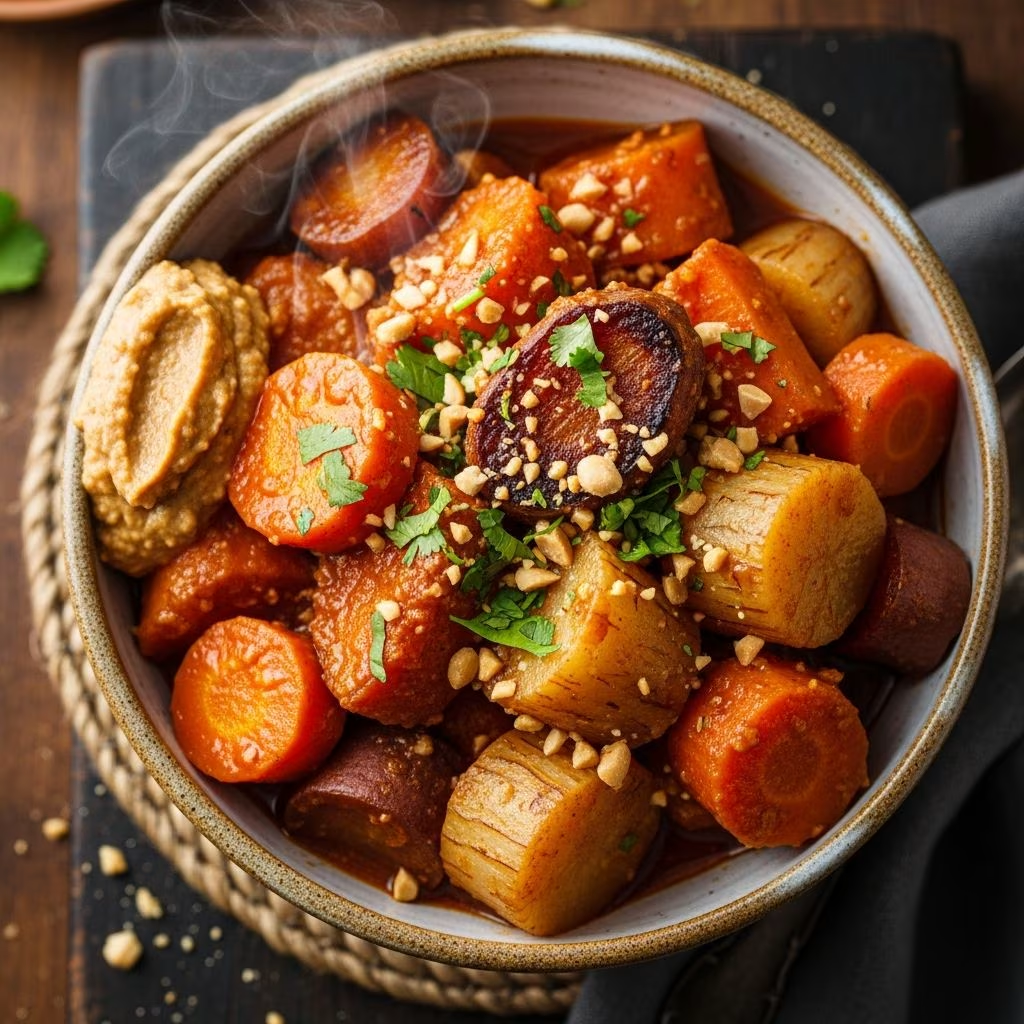
Root vegetable mafe stands as a vibrant example of West African culinary ingenuity, transforming simple peanuts and seasonal roots into a deeply satisfying stew. This vegan adaptation highlights the natural sweetness of sweet potatoes and carrots, enveloped in a velvety peanut base infused with spices that evoke the continent’s diverse flavors. Ideal for those seeking plant-powered comfort food, it offers nourishment without compromising on taste.
The Heritage of Mafe in West African Kitchens
Mafe, sometimes spelled mafé or known as groundnut stew, traces its roots to West Africa, where peanuts—locally called groundnuts—form the heart of this beloved dish. Popular across countries like Senegal, Gambia, and Mali, it traditionally features meat or chicken simmered in a rich peanut sauce, often paired with rice or fufu. The vegan version swaps proteins for an abundance of root vegetables, preserving the dish’s essence while aligning with modern dietary preferences.
Historically, peanuts arrived in Africa via the transatlantic trade, quickly integrating into local cuisines due to their affordability and versatility. In rural communities, mafe serves as a staple, utilizing whatever vegetables are in season—carrots, yams, or cassava—to create filling meals. This adaptability underscores its enduring appeal, making it a bridge between tradition and contemporary vegan cooking.
Essential Ingredients for Authentic Flavor
Crafting root vegetable mafe begins with selecting high-quality components that balance creaminess, heat, and earthiness. The peanut butter provides the signature silkiness, while root veggies add substance and subtle sweetness.
- Peanut butter: Opt for natural, unsweetened varieties to avoid overpowering sweetness. About ½ to 1 cup yields the perfect thickness.
- Root vegetables: Sweet potatoes (1-2 cups chopped) and carrots (½-1 cup) are stars for their hearty texture; include parsnips or turnips for variety.
- Aromatics: Onions, garlic (4-6 cloves), and ginger (1-2 tablespoons grated) build a flavorful foundation.
- Tomatoes: Tomato paste (2 tablespoons) or crushed tomatoes (14 oz can) for tangy depth.
- Spices: Cumin, coriander, cinnamon, cloves, and chili peppers like jalapeño or habanero for warmth and kick.
- Broth: Vegetable broth (4 cups) to simmer everything tenderly.
- Greens: Kale or spinach (5 cups chopped) added at the end for freshness.
These elements create a symphony of tastes: nutty, spicy, and slightly sweet, with each bite revealing layers of complexity.
Step-by-Step Guide to Cooking Your Mafe
Preparing mafe is straightforward, relying on low-and-slow simmering to meld flavors. Use a Dutch oven for even heat distribution. Total time: about 45-60 minutes for 4-6 servings.
Sauté the base: Heat 1-1½ tablespoons coconut or vegetable oil over medium heat. Add diced onion (1 large) and cook until translucent, 5 minutes. Stir in minced garlic, grated ginger, and diced chili peppers; cook 2 minutes until fragrant.
Bloom the spices: Incorporate tomato paste and spices—1 tsp each cumin and coriander, ¼ tsp cinnamon and cloves, salt, and pepper. Stir vigorously for 2 minutes to release aromas, adding a splash of water if needed to prevent sticking.
Build the stew: Pour in vegetable broth, scraping the pan bottom. Add chopped sweet potatoes, carrots, thyme sprigs, white beans (optional for protein, 1 can drained), and peanut butter. Bring to a boil, then simmer 20-25 minutes until veggies soften.
Finish with greens: Stir in chopped kale; cook 3-5 minutes until wilted. Squeeze in lemon or lime juice (1 tbsp) and fresh cilantro for brightness. Taste and adjust seasoning.
For extra creaminess, blend half the stew with an immersion blender, retaining chunks for texture. Serve hot over rice, couscous, or with flatbreads.
Nutritional Benefits of Root Vegetable Mafe
This stew is a powerhouse of nutrients, making it more than just comfort food. Root vegetables like sweet potatoes deliver beta-carotene for eye health and fiber for digestion, while peanuts provide plant-based protein and healthy fats.
| Ingredient | Key Nutrients (per serving) | Health Benefit |
|---|---|---|
| Sweet Potatoes | Vitamin A (over 100% DV), Fiber | Boosts immunity, supports gut health |
| Carrots | Vitamin A, Potassium | Improves vision, regulates blood pressure |
| Peanut Butter | Protein (8g), Healthy Fats | Sustains energy, heart-friendly |
| Kale | Vitamin K, Antioxidants | Strengthens bones, fights inflammation |
Low in processed ingredients, it’s naturally vegan, gluten-free, and customizable for low-sodium diets by reducing salt.
Customizing Mafe for Every Palate
Mafe’s beauty lies in its flexibility. For meat lovers, add cubed beef or chicken early in simmering, as in traditional recipes. Boost protein with lentils or chickpeas. Dial down heat by seeding peppers or using bell peppers instead.
Seasonal twists: Winter calls for squash or beets; summer for zucchini. Experiment with coconut milk for a creamier, Thai-inspired variant. Storage tip: Refrigerate up to 5 days or freeze for 3 months; flavors deepen over time.
Pairing Suggestions and Serving Ideas
Elevate mafe with simple sides. Steamed white rice absorbs the sauce perfectly, while fonio or millet offers a nutty West African touch. Fresh salads with citrus vinaigrette cut the richness.
Beverage matches: Ginger beer for spice synergy or hibiscus tea (bissap) for authenticity. For dessert, pair with mango sorbet to echo the stew’s sweetness.
Frequently Asked Questions (FAQs)
What is mafe, and where does it originate?
Mafe is a peanut-based stew from West Africa, notably Senegal and Gambia, traditionally made with meat but easily veganized with roots.
Can I make mafe without peanut butter?
Yes, substitute with almond butter or ground sunflower seeds for nut allergies, though flavor will vary slightly.
How spicy is root vegetable mafe?
Adjustable; start with one mild pepper and increase for heat. Habanero adds authentic fire.
Is this recipe freezer-friendly?
Absolutely—portion into bags, thaw overnight, and reheat on stovetop with a splash of broth.
What can I serve mafe with besides rice?
Try plantains, couscous, quinoa, or injera for diverse textures.
Expert Tips for Mafe Mastery
Stir peanut butter thoroughly to prevent clumping. Simmer gently to avoid breaking down veggies too much. Fresh herbs at the end brighten the dish. Scale up for crowds—it’s even better reheated.
Incorporate root veggies at different stages: denser ones like carrots first, softer sweet potatoes later, for uniform tenderness.
References
- African Peanut Stew (Mafe) — Precious Core. 2023-05-15. https://www.preciouscore.com/african-peanut-stew-mafe/
- Vegan Gambian Peanut Stew (Domoda) — Rainbow Plant Life. 2024-02-10. https://rainbowplantlife.com/vegan-west-african-peanut-stew/
- West African Mafé — Saladmaster Recipes. 2023-11-20. https://recipes.saladmaster.com/recipe/west-african-maf