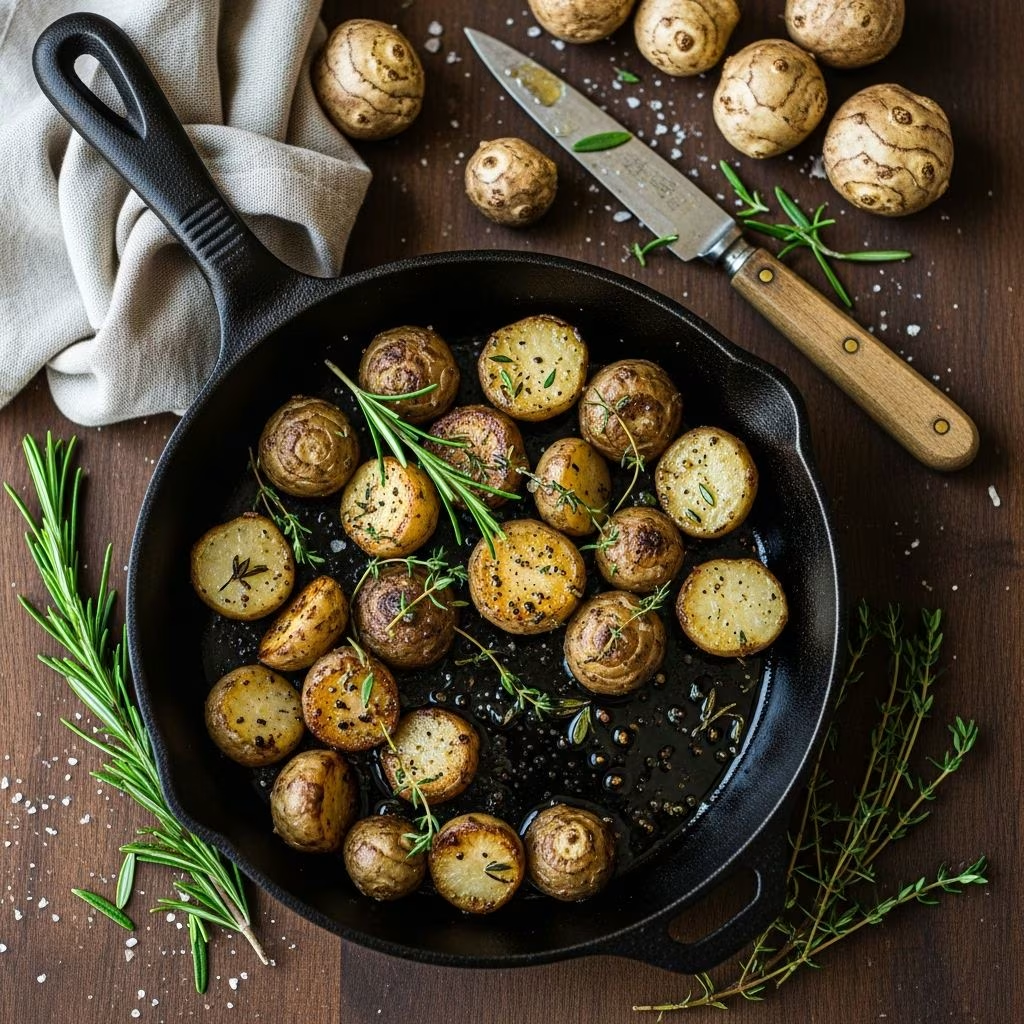
Jerusalem artichokes, commonly known as sunchokes, offer a unique nutty sweetness when roasted to perfection. These knobby tubers transform in the oven, developing crispy skins and creamy interiors that rival potatoes but with more earthy depth.
Understanding Sunchokes: Nature’s Hidden Gem
Sunchokes belong to the sunflower family and grow underground as clustered tubers. Unlike regular artichokes, they resemble ginger roots with thin, edible skins that crisp up beautifully during roasting. Their flavor profile combines hazelnut notes with a slight sweetness, making them versatile for sides, salads, or snacks.
Native to North America, sunchokes thrive in various soils and are harvested in late fall to winter. They store well in cool, dark places, providing a seasonal boost to winter menus. Nutritionally, they shine with high inulin content—a prebiotic fiber supporting gut health—plus potassium, iron, and antioxidants. A 100g serving delivers about 73 calories, 17g carbs, and 2g fiber, positioning them as a low-glycemic alternative to starchy vegetables.
Essential Prep Techniques for Perfect Texture
Preparation sets the foundation for roasting success. Start by selecting firm, unblemished tubers without soft spots or mold. Rinse thoroughly under cold water, then soak for 20-60 minutes to loosen dirt—this step also reduces inulin, minimizing potential gas.
- Scrubbing: Use a stiff vegetable brush to remove soil without peeling; the skin adds crunch and nutrients.
- Slicing: Halve or quarter larger pieces for even cooking; aim for 1/4 to 1/2-inch thickness to balance crispiness and tenderness.
- Drying: Pat completely dry with towels to promote browning via Maillard reaction.
A quick acid soak in water with lemon juice or vinegar for 30 minutes further aids digestion by breaking down complex fibers. Dry again before seasoning.
Classic Roasting Method Step-by-Step
Roasting at moderate heat yields the best results, caramelizing natural sugars without burning. Preheat your oven to 375-400°F (190-200°C).
- Season Base: Toss cleaned, sliced sunchokes with 2-3 tbsp oil (olive, avocado, or neutral like vegetable), salt, and pepper. Add garlic, herbs, or spices for depth.
- Arrange: Spread in a single layer on a parchment-lined baking sheet, cut-side down for maximum contact and crisp edges. Avoid overcrowding to prevent steaming.
- Bake: Roast 25-45 minutes, flipping halfway. Check at 25 minutes; they’re ready when golden-brown and fork-tender.
- Rest: Let cool 5 minutes off the heat to firm up textures.
Temperatures vary: lower (350°F) for softer results, higher (425°F) for extra crunch. Fan ovens cook faster, so reduce time by 5 minutes.
Flavor Variations to Elevate Your Roast
Experiment beyond basics to match any cuisine. Here’s a table of tested combinations:
| Variation | Key Ingredients | Roast Time | Best Pairing |
|---|---|---|---|
| Lemon-Herb | Lemon thyme, garlic, olive oil | 40-45 min | Fish or chicken |
| Garlic-Dill Butter | Melted butter, dill, feta crumble | 25-30 min | Salmon or lamb |
| Spicy Togarashi | Olive oil, shichimi togarashi, pepper | 30-40 min | Asian stir-fries |
| Thyme & Rosemary | Fresh sprigs, veg oil, salt | 35 min | Roast beef |
| Kale Medley | Kale, garlic, rosemary, olive oil | 25 min | Vegetarian mains |
For butter finishes, melt with herbs post-roast and drizzle while hot. Feta or parmesan adds salty contrast. Sweet profiles shine with maple syrup or balsamic glaze in the last 10 minutes.
Nutrition and Health Benefits
Sunchokes pack prebiotic inulin, fostering beneficial gut bacteria and stabilizing blood sugar. They’re naturally gluten-free and low-calorie, ideal for keto or diabetic diets. Roasting preserves most vitamins, including C and B-complex.
- Digestive Tip: Inulin ferments in the gut, potentially causing bloating. Mitigate by soaking, cooking thoroughly, or starting with small portions (1/2 cup).
- Antioxidant Boost: Polyphenols increase with roasting, combating inflammation.
Per 150g roasted serving: 110 calories, 3g protein, 20g carbs (low net due to fiber), negligible fat. Compare favorably to potatoes (77 calories, higher starch).
Pairing Ideas for Meals and Menus
Roasted sunchokes complement proteins universally. Serve with grilled meats for hearty dinners, fish for lightness, or toss into grain bowls for plant-based options.
- With proteins: Steak au poivre, herb-roasted turkey, seared tofu.
- In salads: Cool, chop, mix with greens, nuts, vinaigrette.
- As snacks: Thicker chips with dips like yogurt-tahini.
- Seasonal twists: Holiday roasts with Brussels sprouts; summer with fresh herbs.
Portion 4-6 oz per person as a side. Leftovers reheat crisply in an air fryer or enjoy cold.
Storage, Reheating, and Make-Ahead Strategies
Fresh sunchokes last 1-2 weeks refrigerated in perforated bags. Roasted versions keep 3-4 days in airtight containers.
- Freezing: Blanch slices 2 minutes, freeze flat; roast from frozen, adding 10 minutes.
- Reheating: Oven at 350°F for 10 minutes or air fryer 5 minutes for crisp revival.
- Prep Ahead: Slice, season, refrigerate up to 24 hours; bake fresh.
Batch-cook for meal prep: versatile base for wraps, soups, or hashes.
Frequently Asked Questions (FAQs)
Do I need to peel sunchokes before roasting?
No, scrubbing suffices—the skin crisps and is edible, retaining fiber and flavor.
Why do sunchokes cause gas?
High inulin content ferments; soak in acidified water and cook well to reduce effects.
Can I roast sunchokes whole?
Yes, small ones (under 2 inches); larger need slicing for even cooking.
What’s the best oil for roasting?
High-smoke-point options like avocado or olive; avoid butter until post-roast.
Are sunchokes keto-friendly?
Moderately—net carbs ~10g per 100g roasted, fitting low-carb plans in portions.
How do I know when they’re done?
Fork pierces easily, edges golden-brown; total time 25-45 minutes depending on size.
Troubleshooting Common Roasting Issues
Steamy results? Overcrowd fix: space out. Soggy skins? Insufficient drying or low heat. Bitter taste? Over-roast or poor quality—use freshest tubers.
For chips: mandoline-slice thin (1/8 inch), single layer, 400°F 15-20 minutes, shaking often.
References
- Roasted Jerusalem Artichokes with Lemon Thyme — Everyday Healthy Recipes. 2023. https://www.everydayhealthyrecipes.com/lemon-thyme-jerusalem-artichokes/
- Roasted Jerusalem artichokes {feta + garlic dill butter} — Viktoria’s Table. 2022. https://www.viktoriastable.com/roasted-jerusalem-artichoks-feta-garlic-dill-butter/
- The Best Roasted Jerusalem Artichokes — Greedy Gourmet. 2021. https://www.greedygourmet.com/roasted-jerusalem-artichokes/
- Roasted Jerusalem Artichoke – Crispy Skin, Soft Centre — W2 Kitchen (YouTube). 2023. https://www.youtube.com/watch?v=5eVlAcvFQXY
- Oven Roasted Jerusalem Artichokes (Sunchokes) — The Domestic Man. 2014-04-08. https://thedomesticman.com/2014/04/08/oven-roasted-jerusalem-artichokes-sunchokes/