As the seasons shift toward cooler weather, home cooks often seek dishes that embody warmth, visual appeal, and nutritional balance. One particularly compelling option combines roasted winter squash with creamy dairy elements and crispy textural components, creating a dish that satisfies multiple sensory preferences while delivering substantial nutritional value. This preparation method transforms humble produce into an elegant centerpiece suitable for both casual family gatherings and more formal entertaining occasions.
Understanding the Foundation: Selecting and Preparing Your Squash
The success of this dish begins with thoughtful ingredient selection. Honeynut squash, a smaller relative of butternut varieties, offers several advantages for home cooking. These specimens typically weigh between one to two pounds each, making them appropriately sized for individual or paired servings without excessive waste. Their natural sweetness intensifies through roasting, creating a caramelized exterior while maintaining a tender, yielding interior texture.
Preparation begins with basic knife work and sanitation practices. After washing the exterior thoroughly under running water, carefully slice the top portion of each squash and cut the body lengthwise. Using a sturdy spoon or melon baller, remove all seeds and stringy fibers from the interior cavity. This hollowed center becomes the perfect vessel for subsequent toppings. Pat the interior surfaces dry with paper towels to promote even browning during roasting and prevent excess moisture that might inhibit caramelization.
The Roasting Process: Temperature, Timing, and Technique
Proper oven preparation establishes the foundation for successful results. Preheat your oven to 400 degrees Fahrenheit, allowing the heating element sufficient time to reach consistent temperature throughout the cooking chamber. This particular temperature point balances cooking speed with browning capability, ensuring the squash develops golden, caramelized surfaces while the flesh beneath achieves ideal tenderness within approximately twenty minutes.
Arrange prepared squash halves cut-side up on a baking sheet lined with parchment paper or lightly coated with nonstick spray. Distribute olive oil across the exposed surfaces, ensuring even coverage. Season generously with kosher salt and freshly ground black pepper, which will form a seasoning crust during roasting. The initial high heat converts the surface starches into browned compounds through the Maillard reaction, developing complex flavors that simple steaming cannot achieve.
Monitor the squash during the final five minutes of cooking, removing it when the edges display light golden-brown coloring and a fork easily pierces the flesh. Slightly underbaked squash retains structural integrity better than fully softened specimens, particularly important when you intend to fill and serve them as vessels.
Building Textural Complexity: The Crispy Components
While the squash roasts, prepare the textural elements that transform this from simple to sophisticated. Hard chorizo, a cured Spanish sausage, serves as an excellent protein addition that renders its fat when heated, creating naturally flavored crispy bits. Dice the chorizo into small cubes and cook them in a skillet over medium-high heat until the edges brown and the fat renders. Transfer the cooked pieces to a paper towel-lined plate to drain excess grease while maintaining desirable crispness.
Raw pumpkin seeds, commonly known as pepitas, contribute nutritional density and textural interest without requiring additional cooking. If using unsalted varieties, you control the sodium content; lightly salted versions provide convenient flavor without excessive salt. These seeds remain crunchy even when combined with creamy elements, providing the type of bite that creates memorable eating experiences.
Fresh herbs and bright acidic elements round out the crispy mixture. Finely minced parsley adds herbaceous freshness and visual color contrast against the warm orange and cream tones of the finished dish. Lemon zest introduces aromatic qualities and subtle brightness that balances the dish’s richer components without requiring the sharp acidity of fresh juice.
The Creamy Element: Cottage Cheese as a Sophisticated Choice
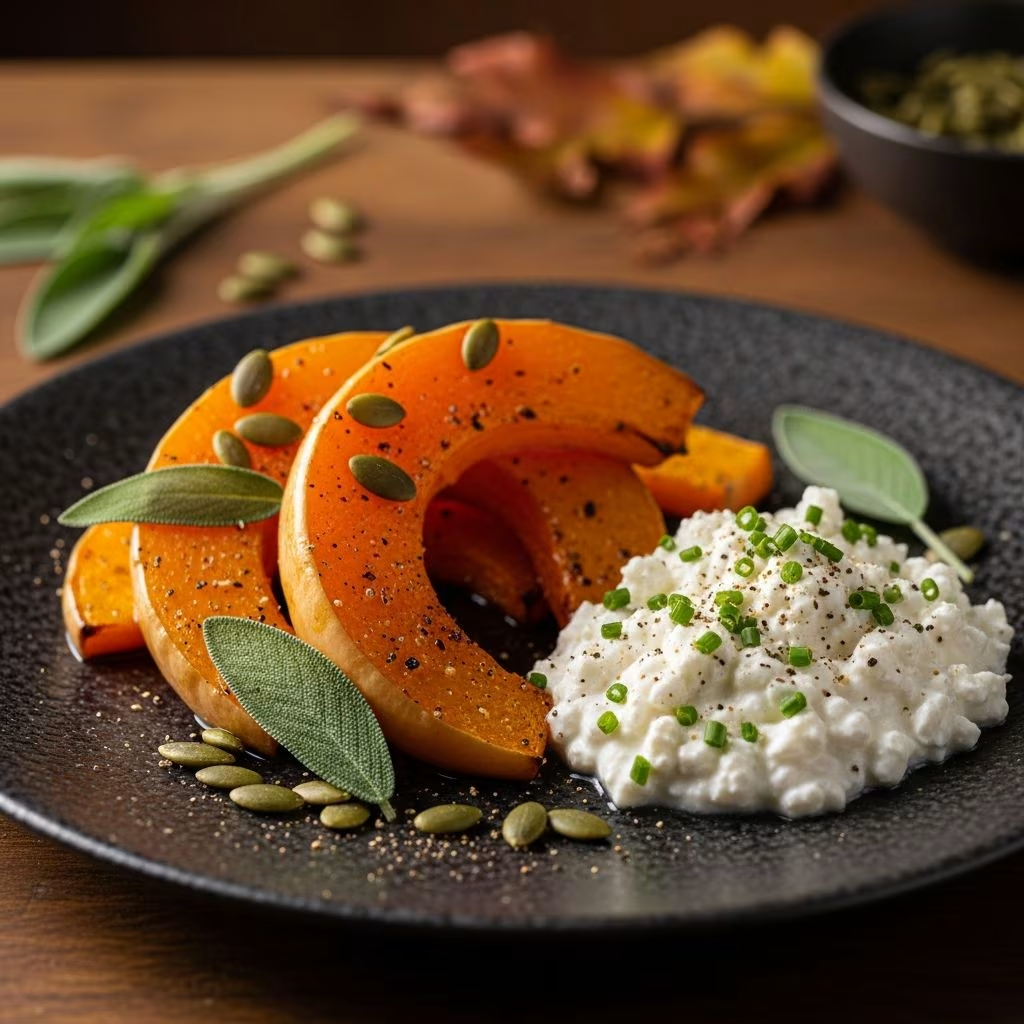
Cottage cheese occupies an interesting position in contemporary cooking—simultaneously perceived as both outdated and increasingly trendy among those seeking protein-rich, nutrient-dense ingredients. Whole-milk cottage cheese specifically provides the creaminess and richness necessary to stand up against robust toppings. The curds, when properly selected, maintain individual structure rather than dissolving into the squash, creating textural contrast and visual interest on the plate.
The mild, slightly tangy flavor profile of quality cottage cheese serves as a neutral canvas for the surrounding elements. Its protein content—approximately fifteen grams per half-cup serving—substantially increases the nutritional profile, transforming this from a side dish into something approaching a complete meal. For those avoiding dairy, Greek yogurt or cashew-based creams provide suitable alternatives that maintain similar textural and flavor characteristics.
Assembly and Presentation Techniques
Thoughtful plating elevates this dish from simple to impressive. After allowing the roasted squash to cool slightly, arrange the halves on a serving platter or individual plates with the hollowed centers facing upward. Spoon cottage cheese into each cavity, distributing it evenly to create an appealing visual foundation. The white or off-white color of the dairy provides striking contrast against the squash’s warm orange hue.
Top the creamy layer with the chorizo crisp mixture, combining chorizo pieces, pepitas, fresh parsley, and lemon zest in a uniform distribution. The mixture should cover the cottage cheese without overwhelming the individual squash vessel, maintaining the dish’s elegant appearance. A light drizzle of additional olive oil over the finished plate adds visual shine and ensures consistent flavor distribution.
Nutritional Considerations and Dietary Adaptations
This dish delivers substantial nutritional benefits across multiple categories. Winter squash provides beta-carotene and fiber, supporting digestive function and immune system health. Cottage cheese contributes complete protein containing all amino acids necessary for human nutrition. Chorizo, while higher in saturated fat, provides flavor compounds that allow for overall portion reduction compared to less flavorful proteins. Pepitas contribute mineral content including magnesium and iron.
Several modifications accommodate various dietary restrictions. Vegetarian preparations can omit chorizo entirely, substituting crispy chickpeas or lentils that provide similar textural contrast and protein content. Those avoiding pork can explore poultry-based chorizo varieties. Vegan adaptations might feature toasted nuts and seeds as primary crispy elements alongside dairy-free yogurt alternatives.
Flavor Profile Development and Pairing Possibilities
The finished dish balances multiple taste sensations simultaneously. Sweet elements from the roasted squash contrast with savory chorizo and salty pepitas. Creamy cottage cheese provides richness that coats the palate, while fresh parsley and lemon zest introduce brightness that prevents monotony. This balance represents fundamental principles of flavorful cooking, where multiple taste categories receive thoughtful consideration.
Serving this dish alongside complementary items enhances the overall dining experience. A simple green salad with vinaigrette provides acidic contrast and additional vegetable content. Crusty bread captures any escaping cooking juices and creamy elements. Light wines with sufficient acidity, such as Sauvignon Blanc or unoaked Chardonnay, complement the dish’s flavors without overpowering its delicate balance.
Seasonal Timing and Make-Ahead Strategies
Fall and early winter represent peak availability for quality squash varieties, making this dish particularly appropriate for these seasons. However, well-stored squash maintains quality well into spring, extending the window for this preparation. The dish can be partially prepared in advance—squash can be halved and cleaned several hours beforehand, stored in the refrigerator until roasting. Chorizo can be cooked and cooled earlier in the day, reheated briefly if desired before final assembly.
The pepita and herb mixture benefits from assembly shortly before serving, ensuring optimal texture and avoiding any wilting of fresh parsley. Cottage cheese should remain refrigerated until the final plating moment to maintain its cool, creamy consistency against the warm roasted squash.
Frequently Asked Questions
- Can I prepare this dish entirely in advance?
- Most components can be prepared separately and reheated, though optimal results occur when assembling shortly before serving. Reheating the roasted squash gently in a 325-degree oven for ten minutes refreshes the dish without overcooking.
- What squash varieties work best for this preparation?
- Honeynut, delicata, and small butternut squash all provide suitable options. Avoid larger varieties like Hubbard or pumpkins, which may require extended cooking and produce unwieldy portions.
- How can I adjust portions for larger gatherings?
- This dish scales effectively—simply multiply ingredient quantities proportionally. Individual squash halves work well for plated presentations, while halved squash served family-style on a shared platter creates a more casual presentation.
- Is there a substitute for whole-milk cottage cheese?
- Greek yogurt, ricotta, or cashew cream provide comparable creaminess and protein content. Adjust quantities based on consistency preferences.
Concluding Thoughts on This Versatile Preparation
This roasted squash preparation demonstrates how fundamental cooking techniques combine with quality ingredients to create dishes that satisfy both nutritional needs and aesthetic preferences. The simplicity of the method contrasts with the sophistication of the final presentation, making it accessible to cooks of varying skill levels while impressing even experienced diners. Whether served as a substantial side or light main course, this autumn-inspired preparation merits regular inclusion in seasonal menus.
References
- Nutrition Data for Winter Squash — USDA Agricultural Research Service. 2024. https://fdc.nal.usda.gov/fdc-app.html#/
- Maillard Reaction in Food Science — Institute of Food Technologists. 2023. https://www.ift.org/
- Cottage Cheese Nutritional Composition — National Dairy Council. 2024. https://www.nationaldairycouncil.org/