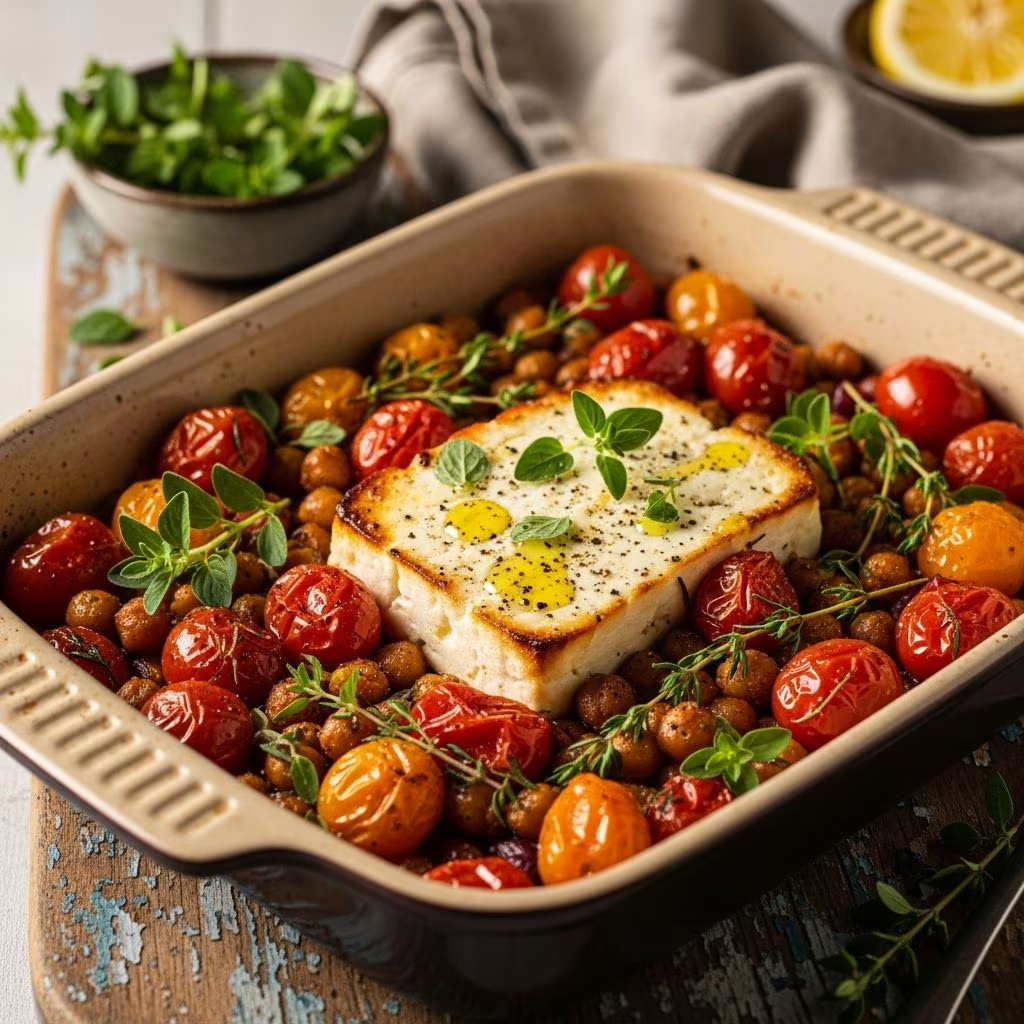
This Mediterranean-inspired dish has quietly become a staple in modern kitchens, earning its place through remarkable simplicity and exceptional flavor. The beauty of roasted feta with chickpeas and tomatoes lies in its minimal ingredient list combined with maximum culinary impact. When a block of creamy feta cheese meets the intense heat of the oven, it transforms into a warm, silky foundation that mingles with sweet, burst tomatoes and tender legumes. The result is a dish that feels both sophisticated enough for entertaining and easy enough for a casual weeknight dinner.
Understanding the Core Components
Before diving into preparation, it’s helpful to understand what makes each ingredient essential to this dish’s success. The feta cheese serves as the anchor, providing richness, saltiness, and a creamy texture that becomes almost spreadable when heated. Chickpeas contribute substantial protein and a subtle earthiness that balances the cheese’s intensity. Cherry or grape tomatoes deliver natural sweetness and acidity, their juices becoming a flavorful sauce as they release during roasting. Together, these three elements create a harmonious balance of flavors and textures.
Why This Combination Works
- Feta’s tangy saltiness complements the natural sweetness of roasted tomatoes
- Chickpeas provide plant-based protein and a hearty texture
- Tomato juices create a naturally occurring sauce without additional ingredients
- Olive oil acts as a conductor, distributing heat and flavor evenly
- The Mediterranean flavor profile appeals to diverse palates
Ingredients and Their Roles
| Ingredient | Quantity | Purpose |
|---|---|---|
| Feta Cheese Block | 8 ounces | Creates creamy base and savory depth |
| Chickpeas (Canned) | 2 cans (15 oz each) | Provides protein and hearty texture |
| Cherry or Grape Tomatoes | 3-4 cups | Offers sweetness and natural juices |
| Extra Virgin Olive Oil | ½ cup | Distributes heat and adds richness |
| Garlic Cloves | 4 cloves, sliced | Adds aromatic depth and complexity |
| Fresh Herbs | 2-3 tablespoons | Brightens final dish with freshness |
Preparation Fundamentals
Success with this recipe begins before the oven comes into play. Proper preparation ensures even cooking and maximum flavor development. Start by preheating your oven to 400 degrees Fahrenheit, allowing it to reach optimal temperature before your ingredients enter. This consistent heat source is crucial for developing the caramelized edges on tomatoes and creating the ideal texture for feta.
Select a baking dish measuring approximately nine by thirteen inches or any three-quart vessel. This size provides adequate surface area for ingredients to roast properly without crowding. Position your feta block in the center of the dish, then pour the olive oil around and over it. The oil serves multiple functions: it transfers heat, prevents sticking, and later becomes infused with flavor.
Initial Assembly Steps
- Preheat oven to 400 degrees Fahrenheit
- Place feta block in center of baking dish
- Pour half cup of olive oil over and around the cheese
- Add cherry tomatoes, distributing them around the feta
- Sprinkle garlic slices over tomatoes
- Season with salt and black pepper
- Add sliced red chili pepper if desired for heat
The Roasting Process
The cooking method is divided into strategic phases, each contributing to the final result. Initial roasting for approximately fifteen minutes allows tomatoes to begin releasing their juices while the feta gradually softens. During this first phase, the dish remains relatively gentle, with tomato skins beginning to wrinkle and the oil becoming fragrant with garlic and herbs.
After the first fifteen minutes, remove the dish and add your drained chickpeas, stirring them into the oil and tomato juices to coat thoroughly. This middle phase of roasting, lasting another ten minutes, allows chickpeas to absorb the flavorful oil while continuing to cook the tomatoes. By this point, the feta has begun its transformation into a creamy base.
The final phase involves transferring the dish to your broiler or cranking the oven to its highest setting for five to eight minutes. This intense final heat creates slightly caramelized edges on tomatoes and gives the feta a subtle golden hue. This step is optional but highly recommended for enhanced visual appeal and slightly deepened flavors.
Customization and Variations
While the core recipe remains beautifully simple, numerous variations exist to suit different preferences and dietary needs. Fresh herbs offer the most straightforward customization option. Traditional choices include parsley, cilantro, mint, or basil, but dill and rosemary also pair wonderfully with this combination. These herbs should be added after cooking to preserve their brightness.
For those seeking sweetness, drizzling honey over the finished dish creates an interesting sweet-savory dynamic. Some variations incorporate crushed red pepper flakes or fresh sliced chili for spice lovers. Lemon zest or fresh lemon juice can brighten the dish, while dried oregano adds Mediterranean authenticity.
Popular Ingredient Variations
- Add honey for subtle sweetness that complements tangy feta
- Include crushed red pepper flakes for heat enthusiasts
- Layer in thinly sliced shallots for additional depth
- Incorporate lemon peel during roasting for subtle citrus notes
- Use different fresh herbs based on availability and preference
- Include sun-dried tomatoes alongside fresh ones for concentrated flavor
Serving Suggestions and Pairings
The versatility of roasted feta with chickpeas and tomatoes extends to how you serve and accompany it. This dish works equally well as an appetizer, side dish, or light main course depending on portion size and accompaniments. The traditional approach involves serving it with warm flatbread or toasted pita wedges, allowing diners to scoop the warm feta mixture onto bread for a complete bite.
For heartier meals, this dish pairs beautifully with grains such as rice or couscous. Thin pasta shapes like orzo or angel hair pasta work particularly well, as the sauce coats the strands evenly. Some people enjoy eating it as a warm salad over mixed greens, while others serve it with yogurt for a tangy contrast.
The dish also functions well as part of a Mediterranean mezze platter, alongside hummus, olives, fresh vegetables, and bread. This presentation style makes it ideal for entertaining, as guests can serve themselves and customize their portions.
Storage and Reheating Considerations
This dish is best enjoyed immediately after cooking while the feta remains at its creamiest. However, leftovers store well in an airtight container in the refrigerator for up to three days. One important consideration: feta becomes firmer as it cools, so reheating is necessary to restore the ideal creamy texture.
To reheat, transfer leftovers to an oven-safe dish and warm at 350 degrees Fahrenheit for approximately ten to fifteen minutes until the feta softens and everything heats through. Alternatively, reheat gently in a skillet over medium-low heat, stirring occasionally. Microwave reheating is possible but tends to distribute heat unevenly.
Nutritional Considerations
This Mediterranean preparation offers genuine nutritional benefits alongside its exceptional flavor profile. Chickpeas deliver substantial plant-based protein and fiber, supporting digestive health and satiety. Feta cheese contributes calcium and probiotics, while olive oil provides heart-healthy monounsaturated fats. Fresh tomatoes offer lycopene and vitamin C, powerful antioxidants with potential health benefits. Together, these ingredients create a nutritionally complete meal that vegetarians and omnivores alike appreciate.
Equipment and Timing Overview
From start to finish, this recipe requires approximately forty minutes total, with most of that time being passive oven time. The hands-on preparation takes roughly five minutes, making it accessible even for busy schedules. You’ll need a nine by thirteen-inch baking dish or equivalent three-quart vessel, standard kitchen tools for measuring and slicing, and a functioning oven.
The passive cooking time makes this recipe ideal for meal preparation alongside other activities. While the dish roasts, you can prepare serving accompaniments, set the table, or handle other cooking tasks.
Frequently Asked Questions
- Can I use fresh chickpeas instead of canned?
- Yes, though you’ll need to adjust cooking times. Fresh cooked chickpeas should be prepared beforehand and may require slightly less roasting time than canned.
- What if I don’t have fresh herbs available?
- Dried herbs work but use about one-third the quantity of fresh herbs. Dried oregano or Italian seasoning blend both complement this dish well.
- Is this recipe suitable for vegan diets?
- The standard recipe contains feta cheese, making it vegetarian but not vegan. However, plant-based feta alternatives are available and work reasonably well in this application.
- How can I make this dish spicier?
- Add more sliced fresh chili pepper, increase crushed red pepper flakes, or use hot honey instead of regular honey for a more intense kick.
- Can I prepare this on a sheet pan instead of a baking dish?
- Yes, a sheet pan works perfectly and may actually promote better browning due to increased surface area exposure to heat.
- How do I prevent the feta from becoming too brown?
- Skip the broiler step or use it for just two to three minutes instead of five to eight. Alternatively, cover the feta loosely with foil during the initial roasting phases.
Final Thoughts on This Mediterranean Classic
Roasted feta with chickpeas and tomatoes represents modern Mediterranean cooking at its finest—humble ingredients transformed through simple techniques into something memorable. This dish succeeds because it doesn’t overcomplicate what already works beautifully together. The combination respects each ingredient’s inherent qualities while allowing them to shine individually and collectively.
Whether you’re seeking a quick weeknight solution, an impressive dish for entertaining, or simply a delicious way to enjoy Mediterranean flavors, this recipe delivers reliably. Its adaptability ensures it remains interesting through repeated preparations while its fundamental simplicity guarantees consistent success. Make this recipe once, and it will likely become a permanent addition to your rotation.
References
- Baked Feta with Tomatoes and Chickpeas — Smitten Kitchen. 2021-02-01. https://smittenkitchen.com/2021/02/baked-feta-with-tomatoes-and-chickpeas/
- Sheet-Pan Feta with Chickpeas and Tomatoes — Cooking with Candi. 2025-08-04. https://cookingwithcandi.com/2025/08/04/sheet-pan-feta-with-chickpeas-and-tomatoes/
- Baked Chickpeas with Tomatoes and Feta — Flavorful Eats. Retrieved 2026-04-07. https://flavorfuleats.com/baked-chickpeas-with-tomatoes-and-feta/
- Baked Chickpeas with Tomato and Feta (One-Pan Weeknight Win) — The East Coast Kitchen. Retrieved 2026-04-07. https://theeastcoastkitchen.com/baked-chickpeas-with-tomato-and-feta-one-pan-weeknight-win/
- Sheet Pan Feta and Chickpeas — I Heart Vegetables. Retrieved 2026-04-07. https://iheartvegetables.com/sheet-pan-feta-and-chickpeas/