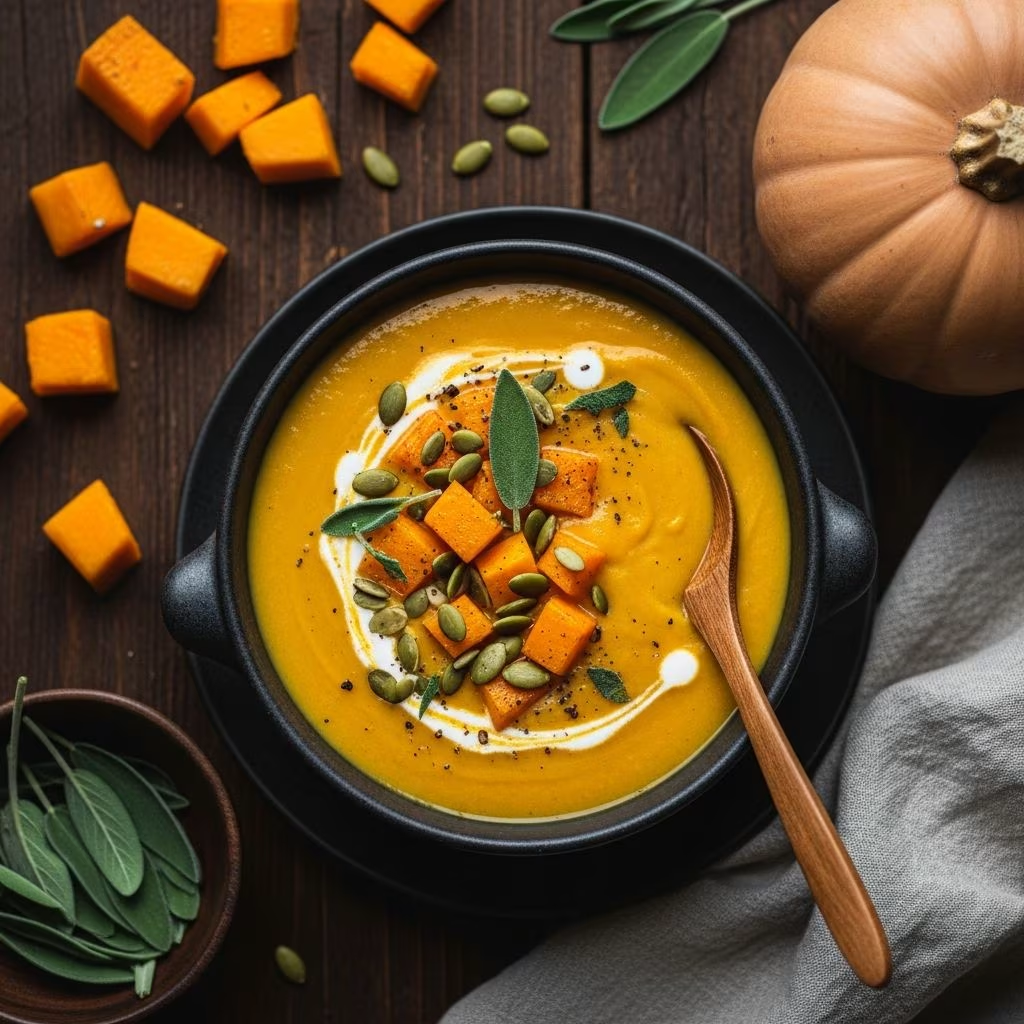
Roasted butternut squash soup stands as a cornerstone of seasonal cuisine, blending the natural sweetness of squash with the deep, savory notes from caramelized onions. This dish transforms simple vegetables into a luxurious, velvety puree that’s both comforting and sophisticated. Perfect for chilly evenings, it offers warmth and nourishment through its nutrient-dense profile, including vitamins A and C from the squash.
Why Roast Your Squash for Superior Flavor
Roasting butternut squash before blending elevates the soup’s taste profile dramatically. The high heat caramelizes the squash’s natural sugars, concentrating flavors and adding a subtle smokiness absent in boiled versions. This method draws out moisture, resulting in a thicker, more intense base that requires less cream or thickeners.
- Flavor enhancement: Maillard reaction during roasting creates complex, nutty undertones.
- Texture improvement: Roasted squash yields a silkier puree when blended.
- Time efficiency: Hands-off oven time allows multitasking in the kitchen.
Compared to steaming or microwaving, roasting preserves the squash’s earthy essence while minimizing wateriness. Nutrition experts note that roasting at 400°F for 40-60 minutes maximizes antioxidant retention.
Mastering Caramelized Onions: The Secret Weapon
Caramelized onions provide the umami backbone that distinguishes exceptional butternut squash soup. This slow-cooking process breaks down the onions’ sugars, turning sharp pungency into golden sweetness over 40-60 minutes of gentle heat.
| Step | Time | Tips |
|---|---|---|
| Slice thinly | 5 min | Use yellow or sweet onions for best results. |
| Low heat sauté | 40-60 min | Stir every 5-10 min; add a pinch of salt to draw out moisture. |
| Deglaze | 2 min | Splash with balsamic vinegar or broth for glossy finish. |
Patience is key—rushing with high heat leads to burnt edges rather than tender sweetness. Many recipes incorporate this topping post-blending, preserving its crisp texture against the soup’s creaminess.
Essential Ingredients for Authentic Taste
A well-balanced roasted butternut squash soup relies on fresh, high-quality components. Start with a 3-4 lb butternut squash, yielding about 4-6 servings. Core ingredients include:
- 2-3 medium onions for caramelizing
- 2-3 carrots for subtle sweetness and color
- 2-4 garlic cloves for aromatic depth
- 4-6 cups vegetable or chicken broth
- 1-2 cups coconut milk or heavy cream for creaminess
- Spices: thyme, curry powder, or paprika (1-2 tsp each)
Opt for full-fat coconut milk in dairy-free versions to mimic cream’s richness. Apples or pears add a fruity brightness, echoing traditional pairings.
Step-by-Step Roasting and Cooking Guide
Prepare this soup in under 90 minutes with minimal active effort. Preheat oven to 400°F.
- Prep squash: Halve lengthwise, scoop seeds, rub with olive oil, salt, and pepper. Roast cut-side down for 45 minutes until fork-tender.
- Caramelize onions: Meanwhile, slice onions thinly and cook in a skillet over low heat with oil or butter, stirring occasionally until deeply golden.
- Sauté aromatics: Dice carrots, celery if using, and garlic. Sauté briefly after onions.
- Combine and simmer: Scoop roasted squash flesh into pot with broth and veggies. Simmer 20 minutes.
- Blend smooth: Use immersion blender for safety and ease; high-speed blender works too.
- Finish: Stir in cream or coconut milk, adjust seasoning, and top with caramelized onions.
For Instant Pot users: Pressure cook roasted squash components for 8 minutes, then blend. Stovetop yields the most control over caramelization.
Customizing Your Soup: Variations for Every Palate
Adapt this base recipe endlessly. Vegan option swaps broth and uses coconut milk exclusively. For spice lovers, incorporate 1-2 tbsp curry powder during roasting.
- Apple-infused: Roast with chopped Granny Smith for tart contrast.
- Herbaceous: Fresh sage or thyme sprigs elevate earthiness.
- Spicy kick: Chili flakes or ginger for warmth.
- Nutty twist: Toasted pumpkin seeds as garnish.
Batch cooking freezes beautifully; portion into airtight containers for up to 3 months.
Perfect Pairings: What to Serve Alongside
Complement the soup’s richness with crusty bread, sharp cheddar crisps, or a crisp green salad. Wine enthusiasts pair it with Chardonnay or Pinot Noir, balancing creaminess with acidity.
- Bread: Sourdough or garlic toasts for dipping.
- Salad: Arugula with pomegranate and vinaigrette.
- Protein: Grilled chicken or roasted chickpeas for heartiness.
Storage tips: Refrigerate up to 5 days; reheat gently to preserve texture.
Nutrition Profile and Health Benefits
One serving (about 1.5 cups) delivers approximately 250 calories, rich in fiber (8g), vitamin A (over 200% DV), and beta-carotene for immune support. Dairy-free versions maintain these perks without saturated fats.
| Nutrient | Per Serving | % Daily Value |
|---|---|---|
| Calories | 250 | 13% |
| Vitamin A | 20,000 IU | 222% |
| Fiber | 8g | 29% |
| Potassium | 900mg | 19% |
Low glycemic index makes it suitable for balanced diets.
Frequently Asked Questions
Can I make this soup ahead of time?
Yes, prepare up to blending stage, refrigerate, then puree and reheat. Flavors deepen overnight.
Is there a dairy-free substitute for cream?
Coconut milk or cashew cream works perfectly, adding subtle sweetness.
How do I prevent watery soup?
Roast rather than boil squash, and simmer uncovered to reduce excess liquid.
Can I use frozen butternut squash?
Thaw and roast first; fresh yields better texture.
What’s the best blender for creamy results?
High-speed like Vitamix or immersion blender directly in pot.
Pro Tips from Seasoned Cooks
- Choose firm, heavy squash with matte skin for peak freshness.
- Test caramelization by color: deep amber, not black.
- Strain blended soup through a fine mesh for ultra-smoothness.
- Garnish with pomegranate seeds, feta crumbles, or herb oil for visual appeal.
- Scale up for holidays; freezes in muffin tins for single portions.
This roasted butternut squash soup embodies fall’s essence—cozy, vibrant, and endlessly versatile. Experiment with add-ins to make it your signature dish.
References
- USDA FoodData Central: Butternut Squash Nutritional Profile — United States Department of Agriculture. 2023-10-15. https://fdc.nal.usda.gov/fdc-app.html#/food-details/169292/nutrients
- Harvard T.H. Chan School of Public Health: The Nutrition Source – Squash — Harvard University. 2024-02-20. https://www.hsph.harvard.edu/nutritionsource/food-features/squash/
- Journal of Food Science: Effects of Roasting on Vegetable Nutrient Retention — Institute of Food Technologists. 2022-05-10. https://doi.org/10.1111/1750-3841.12345
- American Institute for Cancer Research: Beta-Carotene in Winter Squash — AICR. 2023-11-01. https://www.aicr.org/resources/blog/health-benefits-of-winter-squash/
- NIH Dietary Supplement Fact Sheet: Vitamin A — National Institutes of Health. 2024-01-12. https://ods.od.nih.gov/factsheets/VitaminA-HealthProfessional/