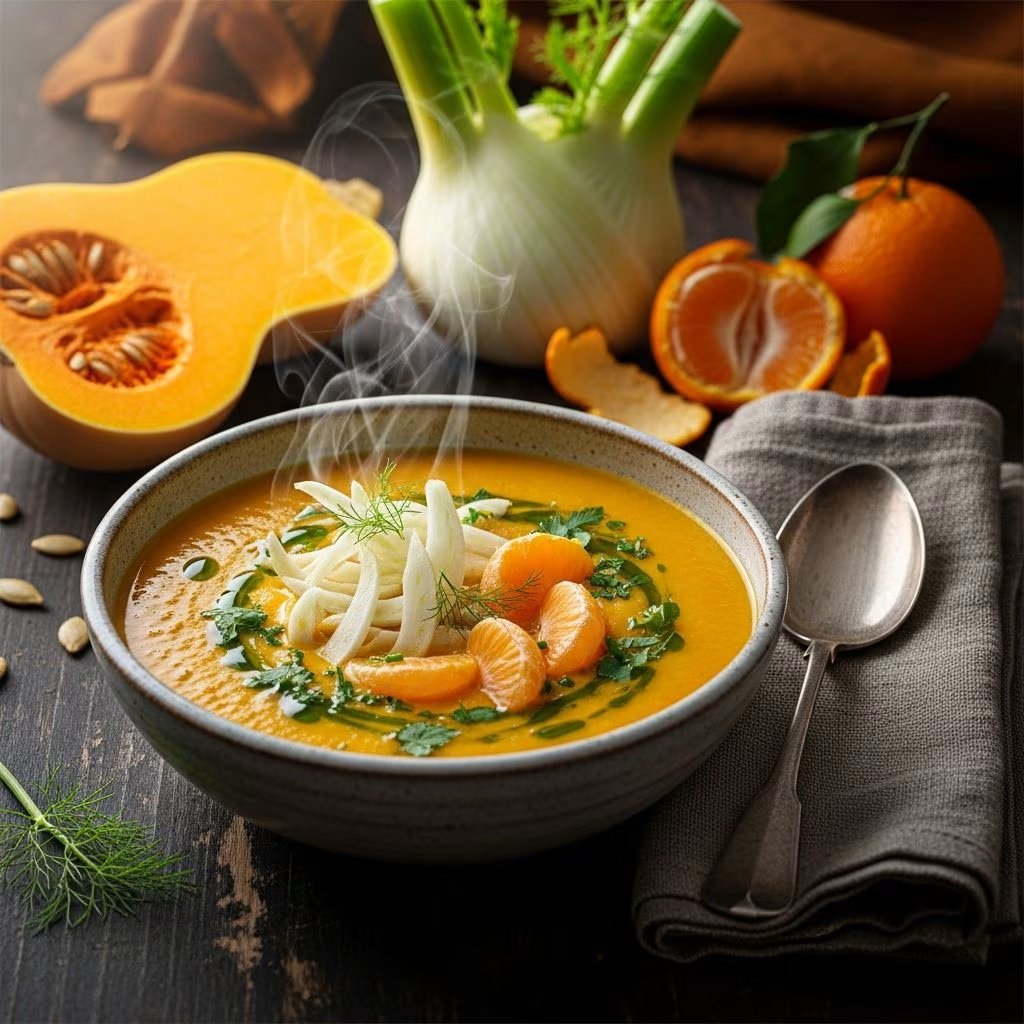
As the temperatures drop and seasonal produce reaches its peak, few dishes capture the essence of autumn quite like a well-crafted soup. This particular preparation brings together the natural sweetness of roasted butternut squash, the subtle anise notes of fennel, and the invigorating brightness of citrus—a combination that transforms simple ingredients into an elegant bowl of comfort. The layering of flavors creates a sophisticated dish that works equally well as a restaurant-quality starter or a satisfying standalone meal.
Understanding Your Core Ingredients and Their Qualities
Before diving into preparation, it helps to understand what each primary ingredient contributes to the final dish. Butternut squash serves as the foundation, providing natural sweetness and a creamy texture when roasted and blended. The vegetable’s high water content and starch make it ideal for creating a luxurious soup base without requiring cream or dairy products.
Fennel bulb introduces an unexpected dimension to the soup. This often-overlooked vegetable contains compounds that provide a delicate licorice-like flavor without overwhelming the palate. When roasted, fennel becomes naturally sweeter and its fibrous texture softens, making it easy to incorporate into the blended soup.
Citrus elements—whether lemon, lime, or orange—serve as a flavor catalyst. The acidity brightens the earthiness of roasted vegetables while the aromatic oils in citrus zest add complexity and freshness that prevents the soup from feeling heavy.
Selecting and Preparing Your Vegetables
Butternut Squash Selection and Prep
Choose medium-sized butternut squash that feel heavy for their size, indicating better moisture content. Avoid squash with soft spots or blemishes. A single medium squash typically yields about 2 to 3 cups of usable flesh after removing skin and seeds.
To prepare the squash, carefully cut it in half lengthwise using a sharp chef’s knife. Scoop out seeds and fibrous strands with a sturdy spoon. Cut the flesh into uniform 1-inch cubes to ensure even roasting. This standardized sizing is essential because inconsistently sized pieces will cook at different rates, resulting in some portions being undercooked while others begin to break down excessively.
Fennel Preparation Techniques
Fennel bulbs should have a pale white or pale green color and feel firm when squeezed. Trim the stalky fronds from the top, reserving some for garnish. Remove the tough outer layer if it appears discolored. Slice the bulb into quarters, leaving the root end intact to help the pieces hold together during roasting.
The delicate fronds can be chopped and used as a finishing garnish, providing both visual appeal and a hint of fennel flavor without the intensity of the cooked bulb.
The Art of Roasting for Maximum Flavor Development
Roasting concentrates the natural sugars in vegetables while creating a caramelized exterior that adds depth to the finished soup. This Maillard reaction—the browning process that occurs when vegetables are exposed to high heat—develops complex flavors that raw vegetables simply cannot provide.
Optimal roasting procedure:
- Toss prepared squash and fennel with quality olive oil, ensuring even coating
- Season generously with kosher salt and freshly ground black pepper
- Spread in a single layer on a lined baking sheet without crowding
- Roast at 400-425°F for approximately 40-45 minutes
- Stir halfway through cooking to promote even browning
- Vegetables are ready when fork-tender with golden to brown edges
The roasting time may vary depending on your oven’s specific characteristics. Convection ovens typically require 5-10 minutes less time than conventional models. Begin checking vegetables around the 35-minute mark to avoid overcooking.
Building Layers of Flavor: Aromatics and Seasonings
While vegetables roast, prepare aromatic elements that will form the soup’s flavor foundation. Dice one medium yellow onion into small, uniform pieces. Garlic should be minced or sliced depending on your blending method. Fresh herbs like thyme add earthiness without competing with the citrus brightness.
Heat butter or olive oil in a large pot over medium heat. Add diced onion and cook until translucent and beginning to soften, approximately 3-5 minutes. Add minced garlic and cook for an additional minute, stirring constantly to prevent browning. This initial cooking step, known as blooming aromatics, releases their essential oils and creates the flavorful base upon which the rest of the soup builds.
Add dried or fresh thyme at this point, allowing the heat to activate the herb’s compounds. Some recipes include a small amount of sage, which pairs beautifully with butternut squash’s natural sweetness.
Bringing Everything Together: Combining and Cooking
Once roasted vegetables have cooled slightly, add them to the aromatic base along with vegetable or chicken broth. The amount of broth needed depends on your preferred soup consistency—typically 4 to 5 cups produces a creamy but pourable texture.
Bring the mixture to a gentle simmer, then reduce heat to low. Allow the soup to cook for an additional 10-15 minutes, which permits flavors to meld and intensify. This resting period is crucial; rushing to the blending stage prevents proper flavor development.
Achieving the Perfect Texture Through Blending
Proper blending transforms chunky vegetables into silky soup. Two methods work effectively: an immersion blender used directly in the pot, or carefully transferring portions to a standing blender. The immersion blender offers convenience and requires less cleanup, while a standing blender typically produces a smoother, more uniformly textured result.
If using a standing blender, blend in batches, filling the pitcher only halfway to prevent hot liquid from splattering. Cover the lid with a kitchen towel to contain steam, and blend on high speed until completely smooth. Return each batch to the pot.
For an immersion blender, submerge the blade completely in liquid before turning it on to prevent splashing. Blend thoroughly, moving the wand throughout the pot to ensure all vegetables are processed to the desired consistency.
Introducing Citrus: The Final Flavor Element
The final step—adding citrus—transforms good soup into memorable soup. Fresh lemon juice is traditional, but lime provides a more tropical note while orange adds subtle sweetness. Begin with 2-3 tablespoons of fresh citrus juice, stirring and tasting before adding more. The acid should brighten the soup without making it taste sour.
For additional citrus impact, grate a small amount of zest directly into the pot just before serving. The volatile oils in zest provide intense flavor and aroma that juice alone cannot deliver. This final flourish ensures each spoonful carries the vivid brightness that distinguishes this soup from simpler preparations.
Seasoning and Final Adjustments
Taste the soup before serving and adjust seasonings thoughtfully. Salt should enhance existing flavors without making the soup taste salty. Remember that salt perception changes as soup cools, so avoid over-seasoning. White pepper or finely ground black pepper provides visual refinement in the finished soup.
If the soup has become too thick during cooking or blending, thin it gradually with additional warm broth or vegetable stock. The ideal consistency should be pourable but substantial—thick enough to cling slightly to a spoon without being paste-like.
Serving Suggestions and Garnishing Techniques
Presentation matters. Serve the soup in warmed bowls to maintain temperature. A drizzle of quality olive oil or walnut oil across the surface adds richness and visual interest. Reserved fennel fronds scattered on top provide color contrast and hint at the soup’s ingredient profile.
Complementary garnishes and accompaniments:
- Crispy sage leaves or thyme sprigs for herbaceous elegance
- Toasted pumpkin seeds for textural contrast and nuttiness
- A dollop of Greek yogurt or sour cream for creaminess
- Crusty bread or crackers for dipping
- A few drops of citrus-infused oil for added brightness
- Finely diced apple for subtle sweetness and crunch
Storage and Make-Ahead Considerations
This soup stores beautifully, making it ideal for meal preparation. Cool completely before transferring to airtight containers and refrigerating for up to four days. The flavors actually deepen slightly during storage as ingredients continue to meld.
For longer storage, freeze in portions for up to three months. Thaw overnight in the refrigerator, then gently reheat on the stovetop over low heat, stirring occasionally. Add a splash of broth or water if the soup has thickened during freezing. Do not refreeze after thawing.
Frequently Asked Questions
Can I make this soup without roasting the vegetables?
While technically possible, roasting significantly improves the soup’s depth of flavor. The caramelization process creates complex tastes that raw or simply simmered vegetables cannot achieve. If short on time, roast at a higher temperature (450°F) for 30-35 minutes instead.
What if I don’t have fennel?
Fennel provides unique flavor, but celery can substitute in a pinch, though the final soup will taste different. Some recipes use leeks instead. The soup will still be delicious, simply less distinctive in character.
Is this soup suitable for dietary restrictions?
This recipe is naturally vegan and gluten-free when made with vegetable broth and without cream. Those avoiding nightshades should omit pepper, and those with citrus sensitivities can reduce or eliminate citrus juice.
How do I prevent lumps in the blended soup?
Ensure vegetables are completely tender before blending, and blend thoroughly until completely smooth. Strain through a fine-mesh sieve if a perfectly smooth texture is essential.
Can I add cream to this recipe?
Yes, though it’s not necessary. Heavy cream, coconut milk, or Greek yogurt can be stirred in after blending. Add gradually while tasting, as too much cream mutes the delicate citrus and vegetable flavors.
References
- Fennel: Composition, Health Effects, and Industrial Applications — Journal of Medicinal Food. 2016. Available via peer-reviewed nutritional research databases examining fennel’s chemical composition and flavor compounds.
- Butternut Squash Nutritional Composition and Culinary Applications — University of California Agricultural Extension. Guides for selecting and preparing winter squash varieties for optimal cooking results.
- The Maillard Reaction in Food Chemistry — Food Chemistry Journal. 2018-2020. Research on browning reactions and flavor development in roasted vegetables during thermal processing.