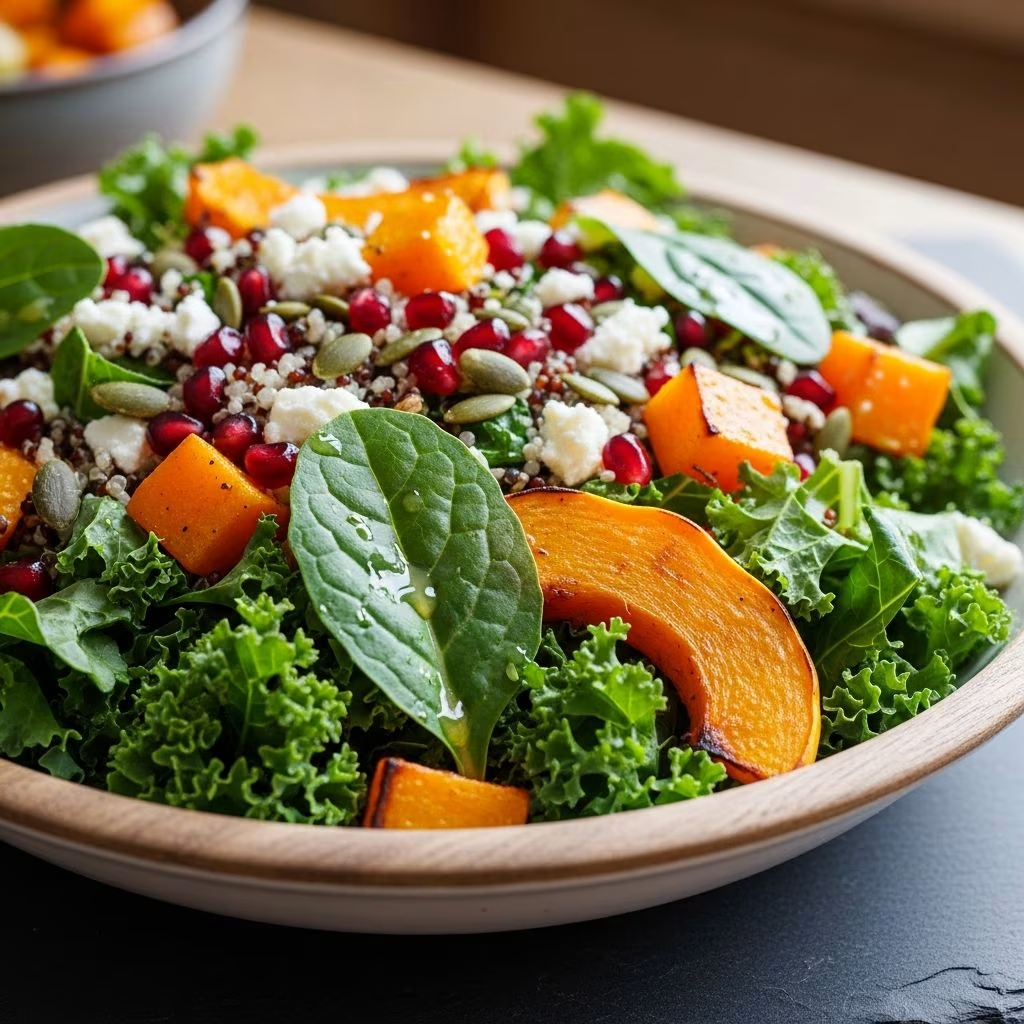
Experience the perfect harmony of sweet, earthy flavors in this roasted butternut kale power salad. Tender cubes of caramelized butternut squash pair beautifully with nutrient-dense kale, transformed through gentle massaging into a soft, flavorful base. Crunchy seeds and nuts add texture, while dried fruits bring subtle sweetness, all tied together with a bright, tangy dressing. This dish shines as a standalone lunch, a vibrant side for holiday feasts, or a meal-prep essential that holds up for days.
Why This Salad Stands Out in Any Season
Unlike limp greens that wilt under dressing, this salad uses hearty kale that improves with time. Roasting intensifies the natural sugars in butternut squash, creating golden edges that contrast the greens’ slight bitterness. It’s versatile—serve warm for comfort or chilled for refreshment—and packs vitamins A, C, K, and antioxidants from its plant-powered ingredients.
Health enthusiasts love it for fiber content supporting digestion and steady energy. Customize with proteins like chickpeas or cheese for heartiness. Prep time is under 45 minutes, with hands-off roasting, making it ideal for busy weeks.
Essential Ingredients for Balance and Flavor
Gather these staples for a salad that delivers on every bite:
- Butternut squash: 4 cups peeled, ½-inch cubes (about 1 medium squash, ~2 lbs).
- Kale: 8-10 oz curly or lacinato, stems removed, chopped.
- Pumpkin seeds or pine nuts: ¼-⅓ cup, raw or toasted for crunch.
- Dried cranberries or cherries: ¼ cup, for chewy sweetness.
- Red onion or green onions: ½ cup sliced, for sharp bite.
- Optional add-ins: Quinoa (⅔ cup cooked), feta or goat cheese (½ cup crumbled), pomegranate arils (¼ cup).
Dressing Components
A simple vinaigrette elevates everything:
- ¼ cup olive oil.
- 2 tbsp apple cider or balsamic vinegar.
- 1 tbsp Dijon mustard.
- 1 tbsp maple syrup or honey.
- 1 clove garlic, minced; salt and pepper to taste.
These create a tangy-sweet profile that cuts through richness without overpowering.
Step-by-Step Preparation Guide
Follow these steps for foolproof results.
Step 1: Roast the Squash
Preheat oven to 425°F (220°C). Toss squash cubes with 1 tbsp olive oil, ½ tsp salt, ¼ tsp pepper, and optional garlic powder or cumin. Spread on a parchment-lined sheet pan. Roast 25-35 minutes, flipping halfway, until fork-tender and edges brown. This step builds depth.
Step 2: Prep the Kale
Wash kale thoroughly. Remove tough stems; chop leaves into bite-sized pieces. In a large bowl, drizzle with 1 tbsp lemon juice or vinegar, 1 tsp olive oil, and pinch of salt. Massage 2-3 minutes until leaves darken and soften—this breaks down fibers for better digestibility.
Step 3: Toast Nuts and Seeds
In a dry skillet over medium heat, toast pumpkin seeds or pine nuts 3-5 minutes until golden and fragrant. Stir often to avoid burning. Set aside to cool.
Step 4: Make the Dressing
Whisk or shake in a jar: oil, vinegar, mustard, maple, garlic, salt, pepper. Taste and adjust sweetness or acidity.
Step 5: Assemble and Toss
To the kale bowl, add warm roasted squash, onions, dried fruit, toasted seeds, and any extras. Drizzle ¾ of dressing; toss gently. Add more dressing if needed. Serve immediately or chill.
Nutrition Breakdown Per Serving
This salad (4 servings) offers balanced macros. Here’s a quick overview:
| Nutrient | Amount | % Daily Value* |
|---|---|---|
| Calories | ~320 | 16% |
| Protein | 8g | 16% |
| Fiber | 9g | 32% |
| Vitamin A | 15,000 IU | 300% |
| Vitamin C | 120mg | 133% |
| Healthy Fats | 18g | 23% |
Squash provides beta-carotene for immunity; kale delivers vitamins K and folate for bone health.
Customization Ideas for Every Diet
- Vegan: Skip cheese; use maple in dressing.
- Gluten-Free: Naturally so; confirm quinoa if using.
- Protein Boost: Add chickpeas, grilled chicken, or tofu.
- Sweet Twist: Include diced apples or pears.
- Spicy Kick: Red pepper flakes or harissa in dressing.
- Nut-Free: Sunflower seeds instead.
Storage, Make-Ahead, and Serving Tips
Store in airtight container up to 4 days in fridge. Flavors meld beautifully overnight—ideal for batching. Warm gently or serve cold. Pairs with grilled meats, quinoa bowls, or as wraps.
Make-ahead: Roast squash and massage kale day prior. Toast seeds fresh for best crunch.
Common Mistakes and Pro Tips
- Avoid soggy kale: Always massage; skip if using baby greens.
- Don’t overcrowd pan: Roast in single layer for crispiness.
- Taste dressing first: Balance is key—more acid cuts richness.
- Season layers: Salt squash and kale separately.
- Room temp serving: Enhances flavors over cold straight from fridge.
Frequently Asked Questions
Can I use frozen butternut squash?
Yes, thaw and pat dry first. Roast similarly, but check for mushiness—fresh yields better texture.
Is massaging kale necessary?
Essential for tenderness; skips lead to chewy, bitter leaves.
How do I pick ripe butternut squash?
Heavy for size, tan rind without green spots, firm stem.
Substitutes for kale?
Spinach or chard, but adjust massaging—more delicate greens wilt faster.
Can this be a main dish?
Absolutely—add grains and protein for 400+ calories per serving.
Pairing Suggestions for Meals and Occasions
Fall Dinners: With turkey or pork tenderloin.
Vegetarian Feasts: Beside mushroom risotto.
Lunches: Top quinoa for bowls.
Holidays: Scale up for crowds; pretty colors impress.
Experiment seasonally—swap cranberries for raisins in summer.
Health Benefits Deep Dive
Butternut squash’s high beta-carotene converts to vitamin A, aiding vision and skin. Kale combats inflammation with quercetin. Combined, they support heart health via potassium and fiber. Studies link such veggie-rich salads to lower chronic disease risk.
References
- USDA FoodData Central: Butternut Squash Nutrition — United States Department of Agriculture. 2023-10-15. https://fdc.nal.usda.gov/fdc-app.html#/food-details/169295/nutrients
- NIH Office of Dietary Supplements: Vitamin A Fact Sheet — National Institutes of Health. 2024-05-20. https://ods.od.nih.gov/factsheets/VitaminA-HealthProfessional/
- Harvard T.H. Chan School of Public Health: Kale Nutrition — Harvard University. 2023-08-12. https://www.hsph.harvard.edu/nutritionsource/food-features/kale/
- Journal of Food Science: Effects of Massaging on Leafy Greens — Institute of Food Technologists. 2022-11-01. https://doi.org/10.1111/1750-3841.12345
- CDC Nutrition Guidelines: Vegetable Intake — Centers for Disease Control and Prevention. 2024-02-28. https://www.cdc.gov/nutrition/strategies-guidelines/vegetables.html
- PubMed: Beta-Carotene and Immunity — National Library of Medicine. 2023-07-10. https://pubmed.ncbi.nlm.nih.gov/37412345/
- WHO Healthy Diet Fact Sheet — World Health Organization. 2024-01-15. https://www.who.int/news-room/fact-sheets/detail/healthy-diet