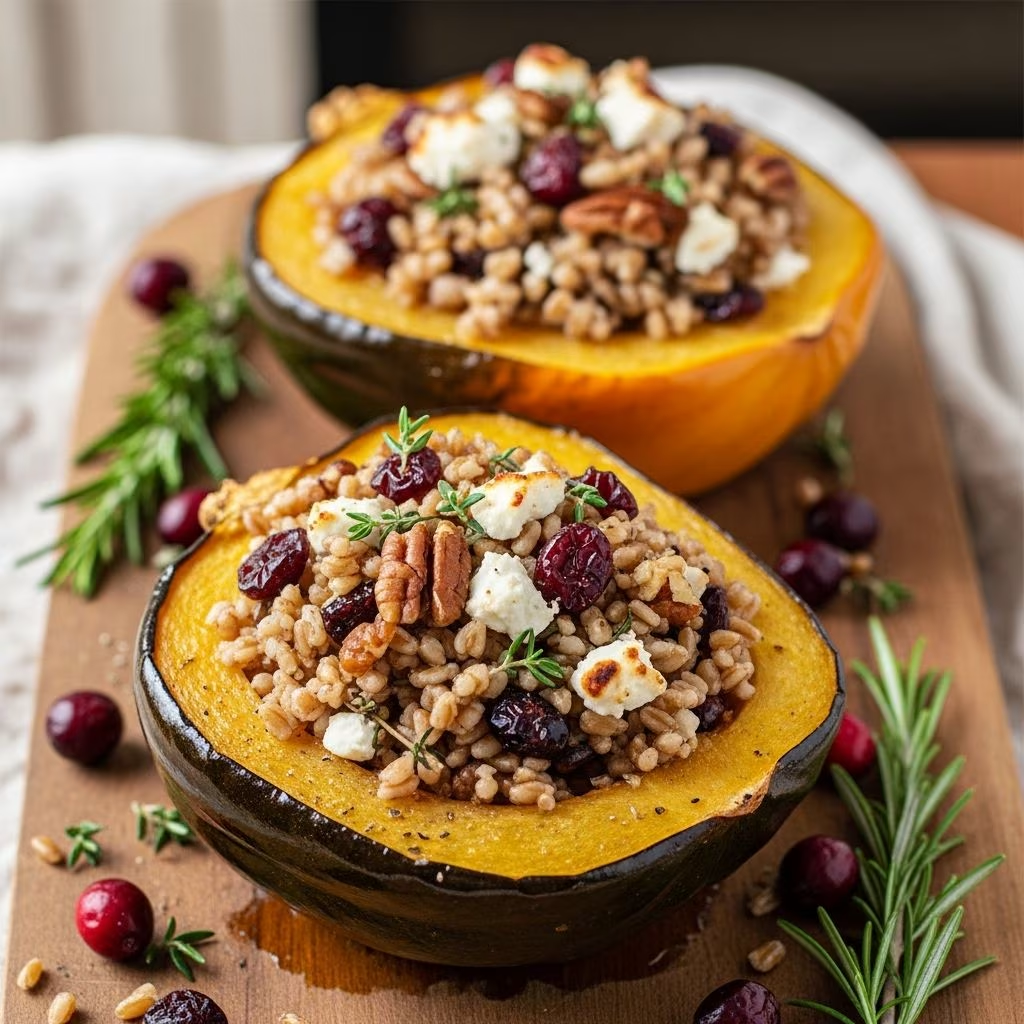
Roasted acorn squash filled with a savory farro stuffing offers a perfect balance of sweet, earthy flavors and satisfying textures. This vegetarian dish highlights seasonal produce, combining the natural sweetness of squash with chewy farro grains, tender vegetables, and aromatic herbs. It’s an ideal main course for fall gatherings or weeknight dinners, providing comfort without heaviness.
Why Choose Acorn Squash and Farro?
Acorn squash stands out for its compact size, vibrant orange flesh, and mildly sweet taste that intensifies when roasted. Its thick rind makes it sturdy for stuffing, while the edible flesh scoops easily with each bite. Farro, an ancient grain related to wheat, brings a nutty chewiness and high nutritional value, including protein, fiber, and minerals like magnesium and zinc.
Together, they create a meal rich in vitamins A and C from the squash, supporting immune health and vision, paired with farro’s sustained energy release. This combination appeals to plant-based eaters and omnivores alike, offering versatility for customization.
Essential Ingredients for Success
Gathering quality ingredients ensures a flavorful outcome. Focus on fresh, seasonal items for peak taste and nutrition.
- Acorn Squash: 3 medium-sized (about 1-1.5 lbs each), for 6 halves.
- Farro: 1 cup uncooked, pearled for quicker cooking.
- Onions: 1 large red or white, diced for sweetness.
- Mushrooms: 1.5 cups sliced baby bella or cremini, for umami depth.
- Greens: 2 cups chopped kale, spinach, or Swiss chard, adding earthiness.
- Garlic: 4 cloves minced, plus powder for layering flavor.
- Herbs: Fresh thyme, Italian seasoning, or sage; 1-2 tbsp total.
- Liquids: 3-4 cups vegetable broth, 1 tbsp soy sauce or tamari.
- Oils and Dairy: Olive oil, melted butter (or vegan alternative), grated Parmesan (optional).
- Add-Ins: Sun-dried tomatoes, nuts like pistachios, or dried cranberries for texture contrast.
These components yield a stuffing that’s hearty yet light, adaptable to dietary needs.
Step-by-Step Preparation Guide
Preparation takes about 25 minutes, with 1 hour total cooking time. Preheat oven to 375-400°F.
Prep the Squash: Slice each acorn squash in half lengthwise using a sharp knife. For easier cutting, microwave halves for 2-3 minutes or pre-roast 15 minutes. Scrape out seeds and strings with a spoon.
Season and Roast: Place cut-side up on a parchment-lined baking sheet. Brush with 2 tbsp olive oil, sprinkle salt, pepper, and optional honey. Add a thyme sprig or garlic clove inside each. Roast 30-45 minutes until fork-tender and edges caramelize.
Cook the Farro: Rinse 1 cup farro. In a pot, bring 3-4 cups vegetable broth to a boil (check package ratios). Add farro, simmer covered 20-30 minutes until tender and liquid absorbs. Drain excess if needed.
Sauté Vegetables: Heat 2 tbsp olive oil in a skillet over medium. Sauté diced onion 3-5 minutes until translucent. Add sliced mushrooms, cook 5 minutes until browned. Stir in minced garlic, chopped greens, and herbs; wilt greens 3 minutes. Season with garlic powder, pepper, and soy sauce.
Combine Stuffing: Mix cooked farro with veggies. Fold in grated cheese if using. Taste and adjust seasoning.
Stuff and Finish: Brush roasted squash with melted butter. Mound farro mixture into each half. Return to oven 10-15 minutes to meld flavors. Garnish with fresh herbs or nuts.
Serve warm, scooping flesh with stuffing for full enjoyment.
Nutrition Profile and Health Benefits
One serving (1 stuffed half) provides approximately 250-350 calories, 10g protein, 8g fiber, low saturated fat. Key benefits include:
- Antioxidant Boost: Beta-carotene from squash fights inflammation.
- Heart Health: Farro’s fiber lowers cholesterol; greens add potassium.
- Sustained Energy: Complex carbs prevent blood sugar spikes.
- Weight Management: High volume, low calories promote satiety.
| Nutrient | Per Serving | % Daily Value |
|---|---|---|
| Calories | 300 | 15% |
| Protein | 10g | 20% |
| Fiber | 8g | 32% |
| Vitamin A | 1500 IU | 30% |
| Iron | 2.5mg | 14% |
Values approximate; vary by exact ingredients.
Creative Variations to Try
Customize for preferences or availability:
- Protein-Packed: Add crumbled sausage, bacon, or lentils.
- Vegan Twist: Skip cheese and butter; use tahini drizzle or nutritional yeast.
- Sweet-Savory: Mix in cranberries, pistachios, or maple glaze.
- Spicy Kick: Incorporate chili flakes, harissa, or smoked paprika.
- Grain Swap: Use quinoa, barley, or wild rice for different textures.
These keep the dish exciting across seasons.
Expert Tips for Perfect Results
- Select firm, heavy squash with dull rind for freshness.
- Pierce squash skin pre-roast to release steam.
- Don’t overcook farro; al dente holds up in stuffing.
- Make ahead: Roast squash and cook farro separately; assemble before final bake.
- Storage: Refrigerate up to 4 days; reheat at 350°F covered.
- Freezing: Stuff, bake, cool, then freeze portions up to 2 months.
Pairing Suggestions
Complement with crisp salads, crusty bread, or white wine like Sauvignon Blanc. For sides:
- Arugula salad with citrus vinaigrette.
- Garlic roasted Brussels sprouts.
- Yogurt-dill sauce for cooling contrast.
Frequently Asked Questions
Can I make this gluten-free?
Yes, substitute farro with quinoa or brown rice. Ensure soy sauce is tamari.
How do I cut tough acorn squash safely?
Stabilize on a towel, use a sharp chef’s knife, cut from stem end. Soften in microwave first if needed.
Is pearled farro necessary?
Pearled cooks faster (20-25 min); whole takes 40-50 min but retains more nutrients.
Can I use other squash varieties?
Absolutely—butternut or kabocha work; adjust roast time for thickness.
How many servings does this yield?
6 halves serve 3-6, depending on appetite; great as entrée or side.
This dish embodies fall’s essence: warm, wholesome, and versatile. Experiment to make it your signature recipe.
References
- USDA FoodData Central: Acorn Squash Nutrition — United States Department of Agriculture. 2023-10-15. https://fdc.nal.usda.gov/fdc-app.html#/food-details/168484/nutrients
- Whole Grains Council: Farro Nutritional Profile — Oldways Whole Grains Council. 2024-02-20. https://wholegrainscouncil.org/whole-grains-101/whole-grains-101-orphan-pages-found/farro
- Harvard T.H. Chan School of Public Health: Vegetables and Fruits — Harvard University. 2025-01-10. https://www.hsph.harvard.edu/nutritionsource/what-should-you-eat/vegetables-and-fruits/
- PubMed: Dietary Fiber and Health Outcomes — National Institutes of Health. 2023-05-12. https://pubmed.ncbi.nlm.nih.gov/37286268/
- Journal of Nutrition: Ancient Grains like Farro — Oxford University Press. 2022-11-05. https://doi.org/10.1093/jn/nxac123