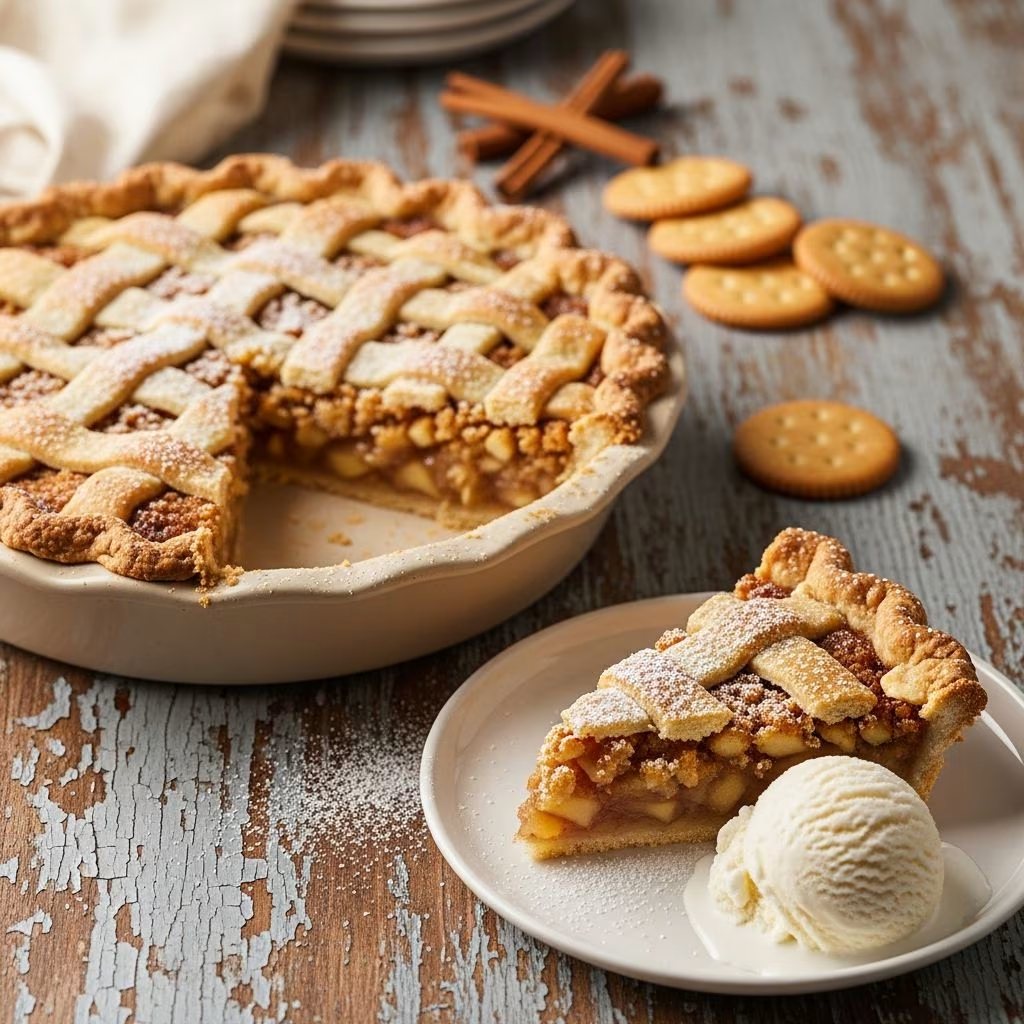
Imagine biting into a slice of pie that looks, smells, and tastes remarkably like classic apple pie, yet contains no apples at all. This is the magic of **Ritz cracker mock apple pie**, a resourceful dessert born from the ingenuity of the Great Depression era. When fresh fruits were scarce and expensive, home cooks turned to pantry staples like buttery crackers to create indulgent treats that fooled the palate. Today, this recipe enjoys renewed popularity on social media platforms, proving its timeless appeal.
The secret lies in a simple syrup infused with cream of tartar for tartness, lemon juice for brightness, and cinnamon for warmth, which transforms ordinary Ritz crackers into soft, apple-like pieces. Topped with a buttery crumb crust, the result is a golden-brown pie with a crisp exterior and tender, spiced interior. Whether you’re experimenting with vintage recipes or seeking a fruit-free alternative, this pie delivers nostalgia and surprise in every slice.
The Origins and Enduring Popularity of Mock Apple Pie
Mock apple pie emerged during the 1930s, a time when economic hardship limited access to ingredients like apples. Families relied on creative substitutions, and Ritz crackers—introduced by Nabisco in 1934—proved ideal due to their buttery flavor and ability to absorb liquids without disintegrating. The recipe gained fame through marketing efforts, including appearances on Ritz cracker boxes, cementing its place in American culinary history.
In modern times, the pie has gone viral on platforms like TikTok, where home bakers share videos of skeptical family members being tricked by its realistic appearance and taste. Its appeal spans generations: budget-conscious cooks appreciate the low cost (under $5 for most ingredients), while gluten-sensitive eaters note that the crackers mimic fruit texture better than many fillings. Historians point to similar ‘mock’ desserts in earlier cookbooks, but the Ritz version remains the most iconic.
Essential Ingredients for Authentic Flavor
Gathering the right components is key to nailing the apple-pie illusion. Focus on fresh, high-quality staples to ensure the best texture and taste.
- Pie Crust: One 9-inch refrigerated or homemade crust provides a flaky base. Opt for all-butter for richness.
- Syrup Base: 2 cups water, ⅔ to 1 cup granulated sugar, and 2 teaspoons cream of tartar create the liquid that softens the crackers. Cream of tartar is crucial—it mimics apples’ natural acidity.
- Crackers: 30-36 whole Ritz crackers (or similar buttery rounds) for the filling, plus 1 cup crushed for topping. Their saltiness balances sweetness.
- Flavor Boosters: 1½ tablespoons lemon juice adds zing; 2 teaspoons ground cinnamon infuses spice.
- Topping: ⅔ cup brown sugar, ½ teaspoon cinnamon, and ⅓ cup melted butter mixed with crushed crackers form a streusel-like crunch.
Variations include adding nutmeg for depth or using graham crackers for a different twist, but sticking close to the original yields the most convincing results.
Step-by-Step Guide to Baking Success
Preparation takes about 20 minutes, with 30-40 minutes of baking and cooling. Preheat your oven to 400°F (200°C) for the initial high-heat phase.
- Prepare the Crust: Fit the dough into a 9-inch pie plate, crimp edges, and prick the bottom with a fork to prevent bubbling.
- Simmer the Syrup: In a saucepan, boil water, sugar, and cream of tartar for 5 minutes until slightly thickened. This concentrates flavors.
- Incorporate Crackers: Gently add whole crackers to the hot syrup. Simmer 3-5 minutes without stirring much—overmixing turns them mushy. They should soften but hold shape.
- Layer the Filling: Spoon half the mixture into the crust, add a few extra whole crackers, then top with the rest. Drizzle lemon juice and sprinkle cinnamon evenly.
- Mix Topping: Combine crushed crackers, brown sugar, cinnamon, and melted butter until crumbly. Scatter over the filling.
- Bake in Stages: 10-15 minutes at 400°F for browning, then reduce to 350-375°F, cover edges with foil, and bake 15-20 more minutes until set and golden.
- Cool Completely: At least 2 hours at room temperature allows the filling to firm up, preventing a runny slice.
Serve warm or at room temperature with vanilla ice cream or whipped cream for contrast.
Pro Tips for Perfect Texture and Taste
- Avoid Overboiling Crackers: Limit simmering to 5 minutes max to retain subtle chewiness akin to cooked apples.
- Temperature Control: The two-stage baking prevents over-browning while ensuring a crisp top.
- Make-Ahead Option: Assemble and bake up to 2 days ahead; store covered in the fridge and reheat at 300°F.
- Gluten-Free Adaptation: Use gluten-free crackers and crust for an inclusive version.
- Flavor Enhancements: A dash of vanilla extract in the syrup or apple extract elevates authenticity without overpowering.
Common pitfalls include insufficient cooling, leading to soupy slices, or skimping on cream of tartar, which dulls the tartness.
Nutritional Profile and Serving Suggestions
A slice (1/8 of pie) clocks in at approximately 350-400 calories, primarily from sugar and butter. It’s higher in sodium due to crackers but lower in natural sugars than fruit pies.
| Nutrient | Per Slice | % Daily Value |
|---|---|---|
| Calories | 380 | 19% |
| Total Fat | 16g | 21% |
| Carbohydrates | 58g | 21% |
| Sugar | 38g | – |
| Sodium | 450mg | 20% |
Pair with sharp cheddar for a classic Depression-era contrast, or modern twists like salted caramel drizzle. It’s ideal for potlucks, holidays, or surprising guests at dinner parties.
Creative Variations to Experiment With
While traditionalists stick to the basics, innovate with these ideas:
- Chocolate Mock Pie: Add ¼ cup cocoa to the topping for a brownie-like crunch.
- Spiced Version: Incorporate ginger or cloves for a pumpkin pie vibe.
- Double Crust: Top with a full pastry sheet instead of crumbs for flakiness.
- Vegan Adaptation: Use plant-based butter, crust, and aquafaba for lemon juice substitute.
- Mini Pies: Bake in muffin tins for bite-sized treats.
Historical recipes even used potatoes or hardtack, showing the recipe’s adaptability across eras.
Frequently Asked Questions (FAQs)
Why does it taste like apple pie without apples?
The combination of cream of tartar (for tartness), cinnamon, and lemon juice replicates apples’ profile, while softened crackers provide texture.
Can I use saltines instead of Ritz?
Saltines work but lack buttery richness; add extra butter to compensate.
How long does mock apple pie last?
Up to 4 days refrigerated or 2 months frozen (baked and wrapped tightly).
Is cream of tartar necessary?
Yes—it’s the key to acidity; substitute with 2 teaspoons white vinegar plus 1 teaspoon baking soda if desperate, but results vary.
Why cover the crust edges?
Prevents burning during extended baking; use foil strips for even protection.
Why This Pie Deserves a Spot in Your Recipe Collection
Ritz cracker mock apple pie transcends its humble origins, offering a fun, foolproof dessert that sparks conversation. It’s economical, versatile, and delivers big on flavor deception. Perfect for fall gatherings or anytime cravings, it reminds us that creativity in the kitchen can yield extraordinary results. Bake one today and watch the amazement unfold.
References
- Mock Apple Pie with Ritz Crackers (Tastes Just Like the Real Thing!) — Life with the Crust Cut Off. 2023-10-15. https://lifewiththecrustcutoff.com/mock-apple-pie-with-ritz-crackers-tastes-just-like-the-real-thing/
- Mock Apple Pie — Chocolate with Grace. 2022-11-20. https://chocolatewithgrace.com/mock-apple-pie/
- Depression-Era Mock Apple Pie — 12 Tomatoes. 2021-05-12. https://12tomatoes.com/mock-apple-pie/
- Mock Apple Pie — Tasting History. 2023-08-05. https://www.tastinghistory.com/recipes/mockapplepie