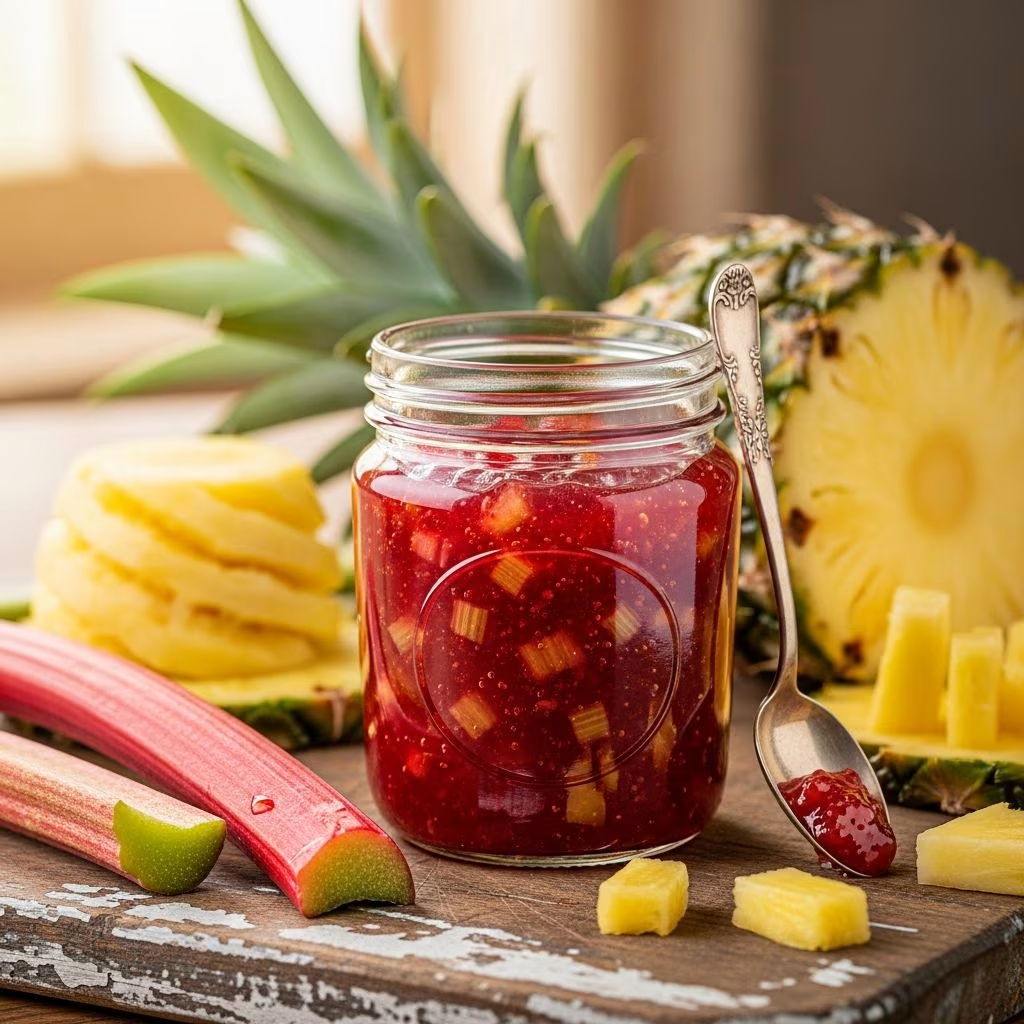
This vibrant jam combines the sharp tang of fresh rhubarb with the juicy sweetness of pineapple, creating a versatile spread that’s perfect for toast, desserts, or gift-giving. Whether you’re new to preserving or a seasoned canner, this recipe delivers consistent results with minimal equipment.
Why Rhubarb and Pineapple Make the Perfect Pair
Rhubarb, often called the ‘vegetable masquerading as fruit,’ brings a crisp acidity that balances pineapple’s natural sugars. This duo reduces the need for excessive sweeteners while enhancing flavor complexity. Home cooks appreciate how pineapple’s enzymes help break down rhubarb’s fibrous texture during cooking, leading to a smooth, spreadable consistency without hours of simmering.
Seasonal rhubarb peaks in spring, making this jam an excellent way to capture its essence. Pineapple adds tropical notes, evoking pie-like warmth. Variations across recipes highlight flexibility: some incorporate pectin for quick set, others rely on fruit sugars and gelatin alternatives for no-pectin ease.
Essential Ingredients for Success
Gathering quality components ensures your jam sets properly and tastes exceptional. Here’s a breakdown:
- Fresh Rhubarb: 3-4 cups diced (about 1-2 pounds). Trim leaves and ends; cut into 1/2-inch pieces for even cooking.
- Crushed Pineapple: One 14-20 oz can, undrained. Provides moisture, pectin-like thickening, and sweetness.
- Sugar: 4-5.5 cups granulated. Adjust based on pectin type; low-sugar options exist for healthier twists.
- Pectin: 1 package (Sure-Jell or low-sugar pink box). Optional for no-pectin versions using gelatin like strawberry or cherry Jello.
- Flavor Boosters: Optional cinnamon (1/2 tsp), apricot brandy (2 tbsp), or orange zest for depth.
Pro tip: Use precise measurements—slight deviations can affect gelling. For organic preferences, source local rhubarb and no-added-sugar pineapple.
Step-by-Step Cooking Guide
Preparation takes about 30-45 minutes, yielding 6-7 half-pint jars. Always prioritize food safety.
- Prep Workspace: Sterilize jars in boiling water or dishwasher. Simmer lids in hot water. Measure sugar into a bowl.
- Combine Fruits: In a heavy-bottomed pot, mix diced rhubarb and pineapple (with juice). Heat to simmer over medium-high, then cover and cook 5 minutes until rhubarb softens slightly.
- Add Pectin: Stir in pectin mixed with 1/2 cup sugar. Bring to full rolling boil on high heat, stirring constantly.
- Incorporate Sugar: Add remaining sugar. Boil exactly 1 minute, stirring vigorously to prevent scorching.
- Finish and Rest: Remove from heat. Stir in optional flavors. Let sit 5 minutes, skimming foam. This minimizes fruit floating.
- Fill Jars: Ladle hot jam into jars, leaving 1/4-inch headspace. Wipe rims clean, apply lids fingertip-tight.
For no-pectin method: Simmer rhubarb, pineapple, and sugar 20 minutes, then dissolve 2 boxes strawberry Jello. Proceed to jarring.
Safe Canning and Storage Techniques
Proper processing preserves safety and shelf life. Use a water bath canner or large stockpot with rack.
- Submerge filled jars in boiling water, ensuring 1-inch coverage.
- Process half-pints 5-10 minutes (adjust for altitude: add 1 min per 1,000 ft above sea level).
- Cool undisturbed 12-24 hours. Check seals: lids should not flex when pressed.
Sealed jars store in a cool, dark pantry up to 1 year. Refrigerate after opening (lasts 3 weeks) or freeze unsealed jars up to 1 year. Freezer jam skips processing: fill containers, cool, and freeze.
| Method | Processing Time | Yield | Storage |
|---|---|---|---|
| Water Bath Canning | 5-10 min | 6-7 half-pints | Pantry 1 year |
| Freezer Jam | None | 6 cups | Freezer 1 year |
| Refrigerator | None | Small batches | 3 weeks |
Troubleshooting Common Issues
Jam-making hiccups are common but fixable:
- Runny Jam: Reboil with 1/2 pectin package per 4 cups. Process again.
- Too Firm: Overcooked pectin; use in recipes or soften with boiling water.
- Fruit Floating: Stir after 5-minute rest before jarring.
- No Seal: Refrigerate immediately; check for nicks on jar rims next time.
- Scorching: Use heavy pot and constant stirring on medium heat.
Altitude adjustments prevent under-processing: consult USDA guidelines for precise times.
Creative Ways to Enjoy Your Jam
Beyond toast, elevate everyday meals:
- Baking: Swirl into muffins, scones, or thumbprint cookies for fruity bursts.
- Cheese Pairing: Serve with brie or goat cheese on crackers for sweet-tart contrast.
- Yogurt Parfaits: Layer with granola and Greek yogurt for breakfast.
- Glazes: Thin with vinegar for ham or pork tenderloin glaze.
- Gifts: Decorate jars with fabric tops and labels for holidays.
Incorporate into no-bake cheesecakes or ice cream toppings for dessert magic.
Nutritional Profile and Variations
A 1-tablespoon serving offers about 50 calories, mostly from sugar, with vitamin C from pineapple and fiber from rhubarb. For lower sugar, use low-sugar pectin and reduce by 1 cup.
Variations spark creativity:
- Spiced: Add ginger or cardamom.
- Citrus Twist: Zest of one orange plus juice.
- Berry Boost: Mix in strawberries for deeper color.
- No Jello Freezer: Increase sugar to 4 cups, simmer longer for natural set.
Frequently Asked Questions (FAQs)
Can I use frozen rhubarb?
Yes, thaw and drain excess liquid first, then measure exactly.
Is canning equipment necessary?
No, opt for freezer or fridge methods if you lack a canner.
How do I know if pectin is needed?
Pectin ensures quick set; without it, longer cooking or gelatin works.
Can I double the recipe?
Best not to—pectin activation suffers in large batches.
What if my jam doesn’t set?
Test on a cold plate; reboil with more pectin if needed.
Experiment confidently with these tips for jam perfection every time.
References
- National Center for Home Food Preservation Guidelines — USDA/University of Georgia. 2022-05-15. https://nchfp.uga.edu/
- Complete Guide to Home Canning — USDA. 2020-08-01. https://www.fsis.usda.gov/food-safety/safe-food-handling-and-preparation/food-safety-basics/complete-guide-home-canning
- Rhubarb Pineapple Jam Recipe — Fountain Avenue Kitchen. 2023-04-12. https://fountainavenuekitchen.com/rhubarb-pineapple-jam/
- Processing Times for Water Bath Canning — Ball Mason Jars (Newell Brands). 2024-01-10. https://www.ballmasonjars.com/resources/water-bath-canning.html
- Rhubarb Pineapple Jam — Bowl Me Over. 2022-11-05. https://bowl-me-over.com/rhubarb-pineapple-jam/