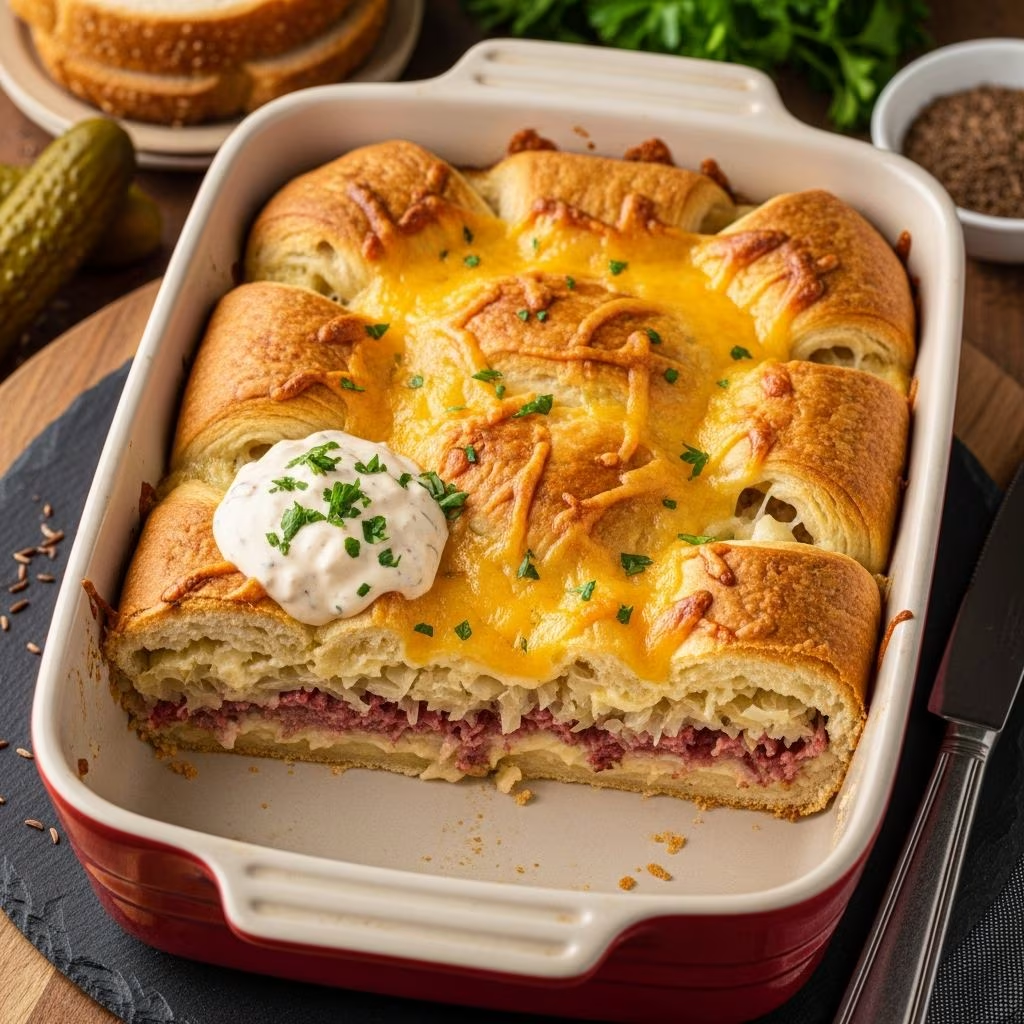
The iconic Reuben sandwich has long been a favorite for those who appreciate the combination of hearty corned beef, pungent sauerkraut, melty cheese, and tangy dressing stacked between rye bread. However, transforming this beloved sandwich into a casserole format creates an entirely new dining experience that’s perfect for families and gatherings. A Reuben crescent bake takes all the distinctive flavors you love from the deli counter and reimagines them as a warm, comforting dish that comes together with minimal effort. This casserole-style preparation proves that classic flavors don’t need complicated techniques to be impressive and satisfying.
Understanding the Components of a Traditional Reuben
Before diving into the baked version, it’s worthwhile to understand what makes a Reuben sandwich so distinctive. The traditional sandwich features five essential components working in harmony. Corned beef provides a savory, slightly salty protein base with a distinctive brined flavor that’s unmistakable on the palate. Swiss cheese, with its characteristic holes and mild, slightly nutty taste, melts beautifully and adds richness without overpowering other ingredients. Sauerkraut contributes a sharp, acidic note that cuts through the richness of the meat and cheese, providing textural contrast and probiotic benefits. Thousand Island dressing ties everything together with its creamy, tangy profile that includes hints of ketchup and relish. Finally, rye bread traditionally serves as the foundation, though in the baked casserole version, refrigerated crescent roll dough replaces traditional bread.
Why Crescent Roll Dough Works for This Dish
Refrigerated crescent roll dough has become a pantry staple for many home cooks because of its convenience and reliability. When used in this casserole format, crescent rolls create multiple layers of golden, buttery pastry that become crispy on the exterior while remaining tender on the interior. The dough’s natural butter content means it requires minimal additional fat to achieve that desirable golden-brown appearance. Unlike traditional sandwich bread, crescent roll dough expands as it bakes, creating a more substantial crust that provides textural interest. The perforated nature of the dough also allows it to seal together easily, creating a cohesive casserole structure. Additionally, the mild flavor of crescent rolls doesn’t compete with the robust tastes of corned beef, sauerkraut, and dressing, allowing each component to shine through.
Essential Ingredients and Their Roles
Creating a successful Reuben crescent bake depends on using quality ingredients in appropriate proportions. The following components work together to deliver authentic Reuben flavors in casserole form:
- Crescent Roll Dough (8 ounces): One tube contains enough dough to create both a bottom crust and a top layer. This amount produces a casserole with a proper ratio of bread to filling.
- Corned Beef (3/4 pound): Thinly sliced corned beef from the deli counter provides the characteristic protein element. This quantity ensures adequate meat distribution throughout the casserole without making it overwhelmingly heavy.
- Swiss Cheese (8 slices): Real Swiss cheese slices work better than pre-shredded varieties, as they melt more smoothly and create better texture. Eight slices provide sufficient coverage for layering.
- Sauerkraut (3/4 cup): Thoroughly drained sauerkraut prevents excess moisture that could make the casserole soggy. Squeezing the sauerkraut dry ensures proper texture integration.
- Thousand Island Dressing (1/3 cup): This dressing serves as both a flavor component and a binding agent. Using quality store-bought dressing or homemade versions both work effectively.
- Egg White (1 beaten): Applied as a wash to the top crust, egg white creates a glossy, golden finish that improves visual appeal and adds slight structural integrity to the baked top layer.
Preparation Techniques and Best Practices
The success of this dish relies on understanding proper assembly techniques. Starting with a preheated oven set to 375°F ensures that the casserole bakes evenly throughout. An 8×8-inch baking dish provides the appropriate dimensions for the dough and filling, creating an ideal depth for proper cooking. Coating the dish with nonstick spray facilitates easy removal of finished pieces.
The crescent roll dough requires careful handling during the assembly process. Unrolling the dough onto a floured surface prevents sticking. Gently pressing the seams together creates a more uniform sheet that behaves more like a traditional pastry crust rather than remaining in individual triangular sections. Rolling the dough to approximately 12 inches square ensures adequate coverage of the baking dish with slight overlap for secure edges.
Pre-baking the bottom crust for 8-10 minutes prevents it from remaining doughy after the casserole finishes baking. This partial baking step is crucial for achieving a crispy base layer that provides textural contrast to the filling and topping.
Layering Strategy for Optimal Flavor Distribution
The order in which ingredients are layered affects how flavors meld and how the casserole maintains structural integrity. After pre-baking the bottom crust, place four slices of Swiss cheese directly on this base layer. This cheese creates a barrier that prevents the crust from becoming soggy while providing a flavorful base. Layer the sliced corned beef over the cheese, distributing it evenly across the casserole to ensure every bite contains adequate protein.
The sauerkraut mixture comes next. Pre-mixing the sauerkraut with Thousand Island dressing ensures that the acidic and creamy components combine evenly, preventing pockets of unmixed dressing or overly concentrated sauerkraut flavor. Spreading this mixture evenly ensures consistent seasoning throughout. The final four cheese slices cap off the filling, creating another barrier that helps contain moisture while adding an additional layer of richness.
The second half of the crescent roll dough completes the casserole. Pinching the seams together on this top layer and pressing it gently into position ensures proper sealing with the bottom crust. This seal is important for keeping ingredients from leaking out during baking.
Baking and Finishing Techniques
Once the casserole is assembled, an egg white wash applied to the top creates both visual appeal and slight structural reinforcement. The beaten egg white should be brushed evenly across the entire top surface. This step typically takes just two minutes but significantly improves the final appearance.
The casserole bakes for 15-20 minutes at 375°F. During this time, the top crust should turn golden brown, the cheese should melt completely, and bubbling should be visible around the edges where filling meets the crust. These visual cues indicate that the casserole is done. The aroma during the final minutes of baking becomes noticeably rich and appetizing.
Allowing the casserole to cool for five minutes after removing it from the oven serves multiple purposes. This resting period allows the cheese to set slightly, making cutting cleaner and preventing excessive melted cheese from running out when pieces are removed. Five minutes is sufficient to reduce the temperature enough for safe handling while maintaining the warm, melted quality of the filling.
Variations and Adaptations
While the traditional Reuben crescent bake follows a proven formula, several adaptations allow for personalization based on dietary preferences or ingredient availability. Substituting turkey breast for corned beef creates a lighter version sometimes called a Rachel bake, offering similar flavor profiles with less richness. Provolone cheese can replace Swiss cheese, providing a different but complementary flavor dimension.
For those who prefer additional tangy notes, increasing the Thousand Island dressing proportion or adding extra sauerkraut intensifies these flavors. Conversely, those who find these components too bold might reduce quantities slightly. Some cooks add Dijon mustard to the dressing mixture for additional complexity. Caraway seeds sprinkled on top before baking reference traditional rye bread flavors and add aromatic interest.
The casserole format also allows for scaling recipes up. Doubling the recipe and using a 9×13-inch baking dish with two tubes of crescent rolls accommodates larger gatherings, with baking time increased to approximately 25-30 minutes.
Serving Suggestions and Accompaniments
A Reuben crescent bake serves as a complete meal on its own, but thoughtful accompaniments enhance the dining experience. A simple green salad with vinaigrette provides textural contrast and helps cut through the richness of the casserole. Pickles or pickle spears reference traditional deli accompaniments and aid digestion. Coleslaw offers another traditional pairing that complements the sauerkraut flavors without feeling repetitive.
For casual service, cutting the baked casserole into squares and serving directly from the baking dish creates a rustic presentation. For more formal occasions, removing squares with a spatula and plating individually allows for better presentation control. The casserole’s natural golden color and visible layers make it visually appealing without requiring elaborate plating techniques.
Storage and Make-Ahead Considerations
Leftovers store well when covered and refrigerated, maintaining quality for three to four days. Reheating can be accomplished in a standard oven at 350°F for approximately 10-15 minutes, or in a microwave for 2-3 minutes per serving. Microwaving individual portions helps prevent the crust from becoming tough, which can occur with larger quantities.
The casserole can also be assembled in advance and refrigerated before baking. Preparing it the morning of serving and baking it for dinner works particularly well for weeknight meal planning. Assembled casseroles keep refrigerated for up to 12 hours before baking. Add 5-10 minutes to the total baking time if baking directly from refrigeration.
Frequently Asked Questions
Can I use fresh sauerkraut instead of canned? Yes, fresh sauerkraut works well and often provides superior flavor. Ensure it’s thoroughly drained and squeezed dry to prevent excess moisture.
Is there a homemade Thousand Island dressing recipe? Absolutely. Mix mayonnaise with ketchup, relish, and vinegar to create a homemade version that often exceeds store-bought quality.
What if I don’t have Swiss cheese? While Swiss provides authentic flavor, mild cheddar, provolone, or even mozzarella can substitute, though the flavor profile will differ slightly.
Can this be made in a different baking dish size? Yes, though adjusting cooking time may be necessary. Shallower dishes may require slightly less time, while deeper dishes might need additional minutes.
Is this appropriate for freezing? Freezing before baking yields better results than freezing after baking. Allow the frozen casserole to thaw partially before baking, and increase baking time accordingly.
Nutritional Considerations
A Reuben crescent bake provides protein from corned beef and cheese, along with carbohydrates from the crescent roll base. The sauerkraut contributes probiotics and minimal calories while adding volume and satisfaction. Portion size and frequency of consumption should consider individual dietary goals, as this dish is moderately calorie-dense due to cheese and dressing components.
Conclusion
The Reuben crescent bake successfully translates beloved deli flavors into an accessible, crowd-pleasing casserole that bridges the gap between simple weeknight dinners and impressive entertaining dishes. By understanding each component’s role and following proper assembly and baking techniques, home cooks can consistently produce excellent results. Whether serving family or guests, this dish delivers authentic Reuben satisfaction in a format that’s easier to prepare and serve than traditional sandwiches, making it an excellent addition to any home cook’s recipe collection.
References
- Swiss Cheese Characteristics and Applications — Wisconsin Cheese Association. 2024. https://www.wischeeseinfo.org
- Corned Beef: History, Preparation, and Culinary Uses — U.S. Department of Agriculture, Food Safety and Inspection Service. 2025. https://www.fsis.usda.gov
- Sauerkraut and Fermented Foods: Nutritional Benefits and Safety — National Center for Biotechnology Information. 2024. https://www.ncbi.nlm.nih.gov
- Baking Temperature and Food Safety Guidelines — U.S. Food and Drug Administration. 2024. https://www.fda.gov