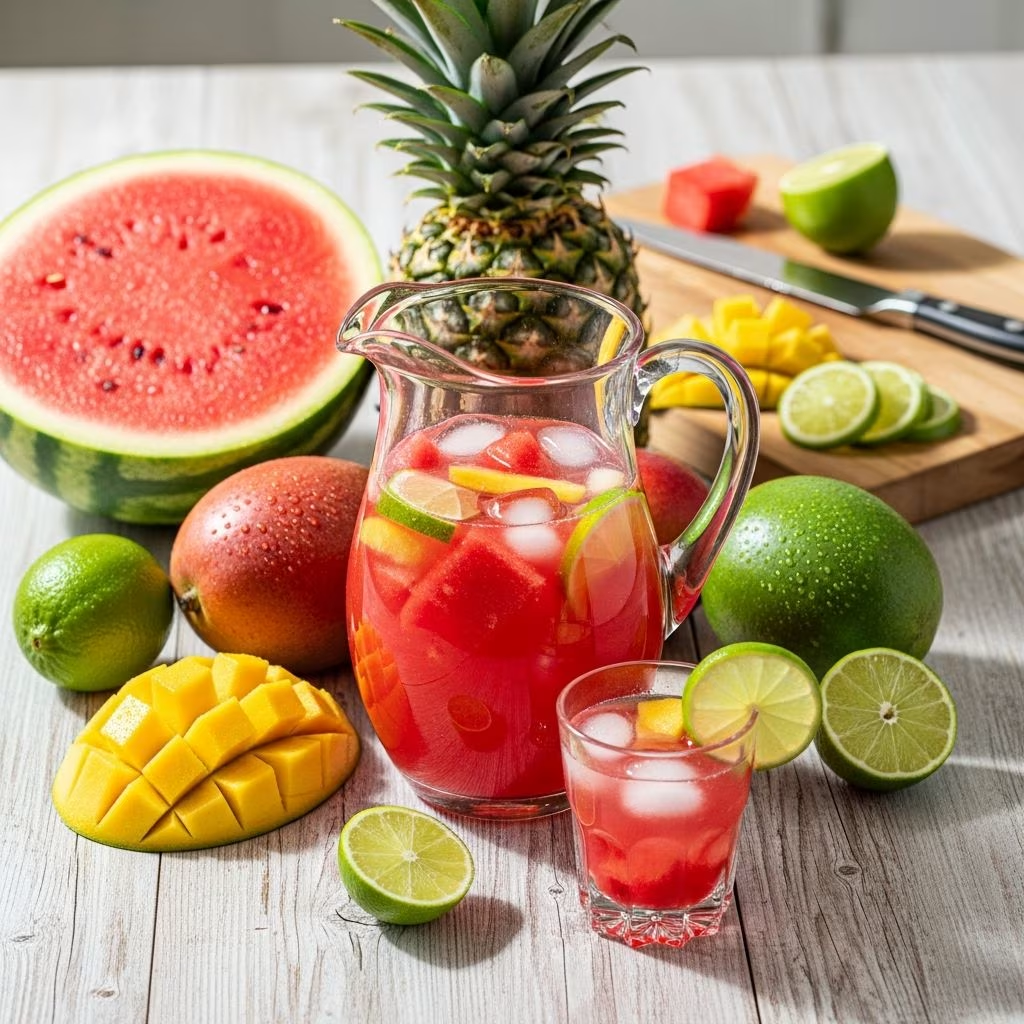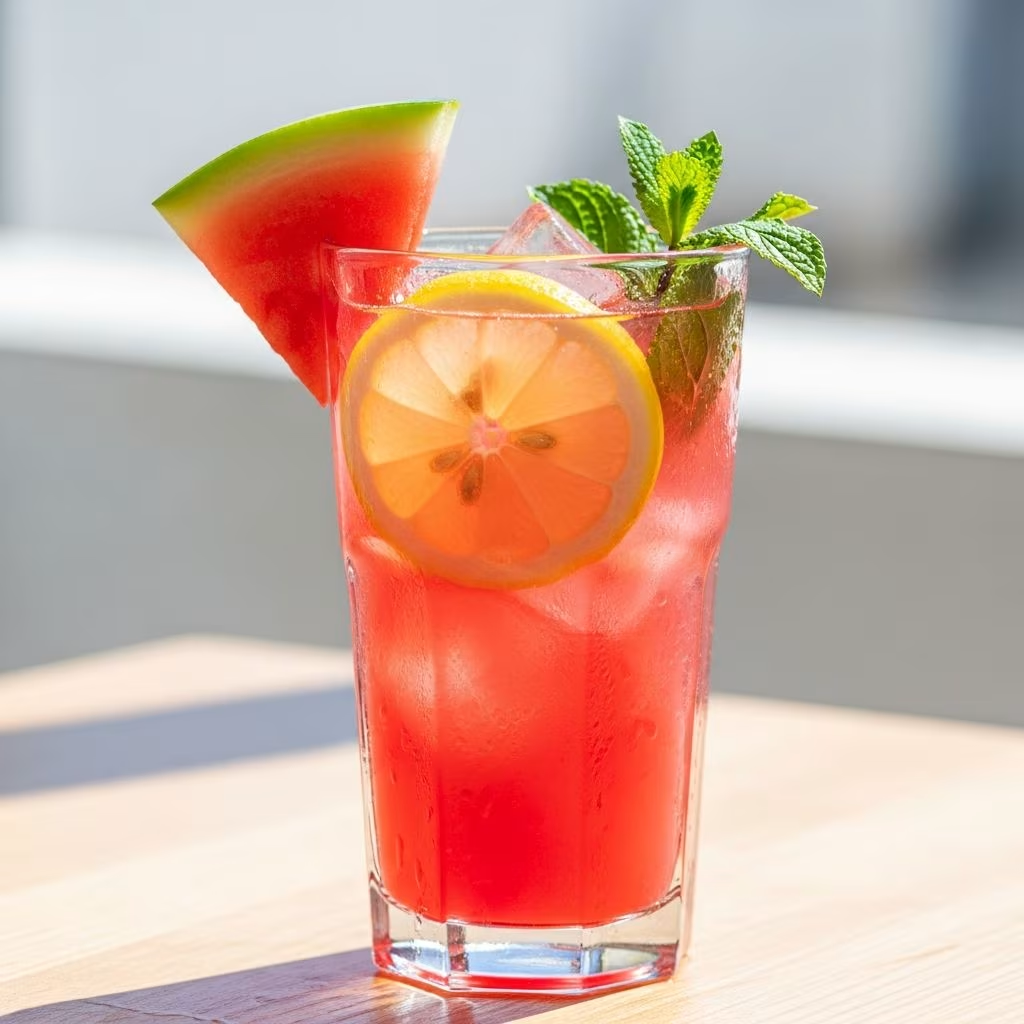
Watermelon lemonade stands out as a delightful fusion of summer’s finest flavors, combining the natural sweetness of ripe watermelon with the sharp citrus kick of fresh lemons. This beverage not only hydrates but also invigorates, making it an ideal choice for scorching afternoons, backyard barbecues, or casual gatherings. Unlike store-bought versions loaded with artificial additives, homemade watermelon lemonade lets you control the ingredients, ensuring a pure, vibrant taste that’s both healthy and customizable.
Why Watermelon Lemonade Captivates Taste Buds
The magic of watermelon lemonade lies in its harmonious balance. Watermelon’s high water content—about 92%—provides a juicy base that’s naturally sweet and subtly floral, while lemons deliver acidity to cut through the richness, preventing it from becoming cloying. This combination results in a drink that’s refreshing without being overly sugary. Nutritionally, it’s a powerhouse: watermelon offers vitamins A and C, potassium for electrolyte balance, and lycopene, an antioxidant linked to heart health. Lemons boost vitamin C intake, supporting immune function. Together, they create a low-calorie sipper that’s far superior to sodas or sugary juices.
Historically, lemonade traces back to ancient Egypt around 1000 BCE, evolving through Mediterranean cultures before becoming a staple in American summers. Adding watermelon is a modern twist, popularized in the U.S. South and Caribbean regions where both fruits abound seasonally. Today, it’s a global favorite, adaptable for vegan diets, kids’ parties, or adult mocktails.
Essential Ingredients for Perfect Results
Gathering the right components is key to success. Focus on peak-season produce for maximum flavor and nutrition.
- Ripe Watermelon: Opt for seedless varieties like Crimson Sweet or Sugar Baby. Aim for 6-8 cups cubed flesh, roughly half a medium melon, yielding about 4 cups of juice.
- Fresh Lemons: You’ll need 6-8 medium lemons for 1-1.5 cups juice. Choose firm, heavy fruits with bright yellow peels for the best yield and aroma.
- Sweetener: Granulated sugar, cane sugar, or alternatives like honey, agave, or maple syrup (3/4 to 1 cup). Adjust based on melon’s ripeness.
- Water: Filtered cold water (4-6 cups) dilutes and chills the mix.
- Optional Enhancers: Mint leaves, lime juice, a pinch of salt, or sparkling water for fizz.
Pro Tip: Test ripeness by thumping the watermelon—it should produce a deep, hollow sound. For lemons, roll them firmly on the counter before juicing to loosen membranes and maximize extraction.
Step-by-Step Guide to Preparation
Creating watermelon lemonade is straightforward, requiring minimal equipment: a blender, strainer, pitcher, and glasses. Total time: 15-20 minutes, plus chilling.
- Prep the Watermelon: Wash the exterior. Slice in half, remove rind and seeds if present, then cube into 1-2 inch pieces. For easier handling, cut on a rimmed baking sheet to catch juices.
- Juice the Lemons: Halve lemons and squeeze using a citrus press or hand juicer. Strain pulp to avoid bitterness. Expect 2-3 tablespoons per lemon.
- Blend the Base: In a high-speed blender, combine watermelon cubes and lemon juice. Puree until smooth, 1-2 minutes. This yields a frothy pulp mixture.
- Strain for Clarity: Pour through a fine-mesh sieve or cheesecloth into a pitcher, pressing solids to extract juice. Discard pulp for a silky texture, or keep some for fiber.
- Sweeten and Dilute: Stir in sugar until dissolved—warm water helps here. Add cold water gradually, tasting for balance. Start with 4 cups and adjust.
- Chill and Serve: Refrigerate 1-2 hours or serve over ice. Garnish with lemon wheels, mint sprigs, or watermelon triangles.
Yield: 8-10 servings (about 1 gallon). Store in the fridge up to 3 days; stir before serving as natural separation occurs.
Customizing Your Watermelon Lemonade
Elevate the classic with these variations to suit any palate or occasion.
| Variation | Key Additions | Best For |
|---|---|---|
| Mint Infusion | 1 cup fresh mint leaves in simple syrup (1:1 sugar-water, simmered) | Garden parties, spa vibes |
| Sparkling Twist | Replace half water with club soda | Brunches, non-alcoholic spritzers |
| Tropical Boost | 1/2 cup pineapple juice or coconut water | Beach days, kids |
| Spicy Kick | Jalapeño slices or ginger (1-inch grated) | Adult gatherings, bold flavors |
| Low-Sugar Version | Stevia or monk fruit, blend with pulp | Health-conscious diets |
For alcohol versions, add vodka, rum, or tequila post-chilling. A salted rim—dip glass edge in lime juice then coarse sea salt—enhances flavors via contrast.
Nutrition and Health Benefits
Per 8-oz serving (unsweetened base): ~60 calories, 15g carbs, 1g protein, negligible fat. Watermelon contributes citrulline, aiding muscle recovery and blood flow. Lemons provide flavonoids for anti-inflammatory effects. Hydration is superior due to electrolytes. It’s naturally vegan, gluten-free, and kid-friendly. For diabetics, use low-glycemic sweeteners and monitor portions.
Compared to commercial lemonades (often 120+ calories with high-fructose corn syrup), this version slashes sugar by 50% while boosting nutrients. Studies from USDA highlight watermelon’s role in post-exercise rehydration, comparable to sports drinks.
Seasonal Sourcing and Storage Tips
Buy watermelon June-August for peak sweetness; store whole at room temp up to 1 week or cubed in fridge 3-4 days. Lemons last 2 weeks refrigerated. Freeze watermelon cubes for off-season use—thaw before blending. Make ahead: Prepare base, store separately from water, mix day-of.
Troubleshooting: Too watery? Add more puree. Too tart? Increment sugar. Pulp issues? Double-strain. Blender struggles? Work in batches.
Pairing Ideas for Meals and Events
This versatile drink complements grilled meats, salads, seafood, and picnics. Pair with spicy BBQ for cooling contrast, or light fare like cucumber sandwiches. At events, serve in pitchers with self-serve garnishes for interactivity.
Frequently Asked Questions
Can I make watermelon lemonade without a blender?
Yes—mash watermelon through a sieve or use a juicer, then mix with lemon juice and sweetener manually.
Is it safe for large batches?
Absolutely; scale up proportionally. Use food-safe containers and consume within 3 days to avoid bacterial growth.
How do I reduce sugar further?
Rely on ripe melon; sweeten with fruit purees like dates or infuse with herbs for perceived sweetness.
Freezing instructions?
Pour into ice cube trays with mint; use in punches or blended slushies.
Seedless or seeded watermelon?
Seedless simplifies, but black seeds are edible—strain them out.
Conclusion: Your New Summer Staple
Watermelon lemonade embodies effortless summer joy—simple to craft, endlessly adaptable, and bursting with refreshment. Experiment with twists to make it yours, and share the bounty at your next gathering. Stay cool and savor every sip.
References
- Watermelon Composition and Health Benefits — USDA Agricultural Research Service. 2023-05-15. https://www.ars.usda.gov/nutrient-data/
- Hydration Properties of Watermelon — National Institutes of Health (PubMed). 2022-08-10. https://pubmed.ncbi.nlm.nih.gov/
- Lemon Juice Nutritional Profile — USDA FoodData Central. 2024-01-22. https://fdc.nal.usda.gov/
- Antioxidant Effects of Lycopene in Watermelon — Harvard T.H. Chan School of Public Health. 2023-11-05. https://www.hsph.harvard.edu/nutritionsource/
- Simple Syrup Preparation Guidelines — FDA Food Safety Resources. 2021-07-14. https://www.fda.gov/food/