When exploring the rich tapestry of Middle Eastern cuisines, few condiments command as much reverence and daily usage as red zhoug, a traditional Yemenite hot sauce that has transcended its regional origins to become a staple in Israeli and contemporary global kitchens. This vibrant, intensely flavored sauce represents more than just a blend of ingredients—it embodies centuries of culinary tradition, cultural significance, and the art of balancing heat with herbaceous brightness.
Understanding the Essence of Zhoug
Red zhoug, known by various transliterations including schug, z’hug, and zhoug, originated in Yemen and has become deeply embedded in the culinary identity of the Levantine region and Israel. The sauce belongs to a category of herb-based condiments that echo the characteristics of Latin American chimichurri, yet distinguishes itself through its fiery heat profile and unique spice composition. Unlike its green counterpart, which relies on fresh green chiles and herbs, red zhoug utilizes mature red peppers and chiles, creating a distinctly different flavor profile that is simultaneously bold, warming, and complex.
The foundation of red zhoug rests on understanding its dual nature: it functions as both a humble table condiment in Yemenite households and as a sophisticated flavor enhancement in modern culinary contexts. This versatility stems from the sauce’s ability to complement rather than overwhelm, despite its pronounced spiciness.
The Cultural Significance in Middle Eastern Tables
In traditional Yemenite kitchens, red and green zhoug exist as indispensable seasonings, appearing at virtually every meal in small bowls alongside other condiments and fresh vegetables. This ubiquity reflects a deeper cultural practice of layering flavors and allowing diners to customize their dishes according to personal preference. The sauce particularly shines when paired with rich, fatty foods, where its acidic brightness and spicy intensity cut through heaviness and stimulate the palate.
The presence of zhoug at the table often accompanies specific traditional dishes, including malawach (Yemenite flaky pancakes), jachnun (Shabbat breakfast pastries), bourekas (Israeli breakfast pastries), kubaneh (braided brioche-like breads), and shawarma. In each context, the sauce serves a functional purpose beyond mere flavoring—it acts as a palate cleanser and textural contrast that elevates the dining experience.
Core Ingredients and Their Roles
Authentic red zhoug requires careful selection of quality ingredients, each contributing essential elements to the final product:
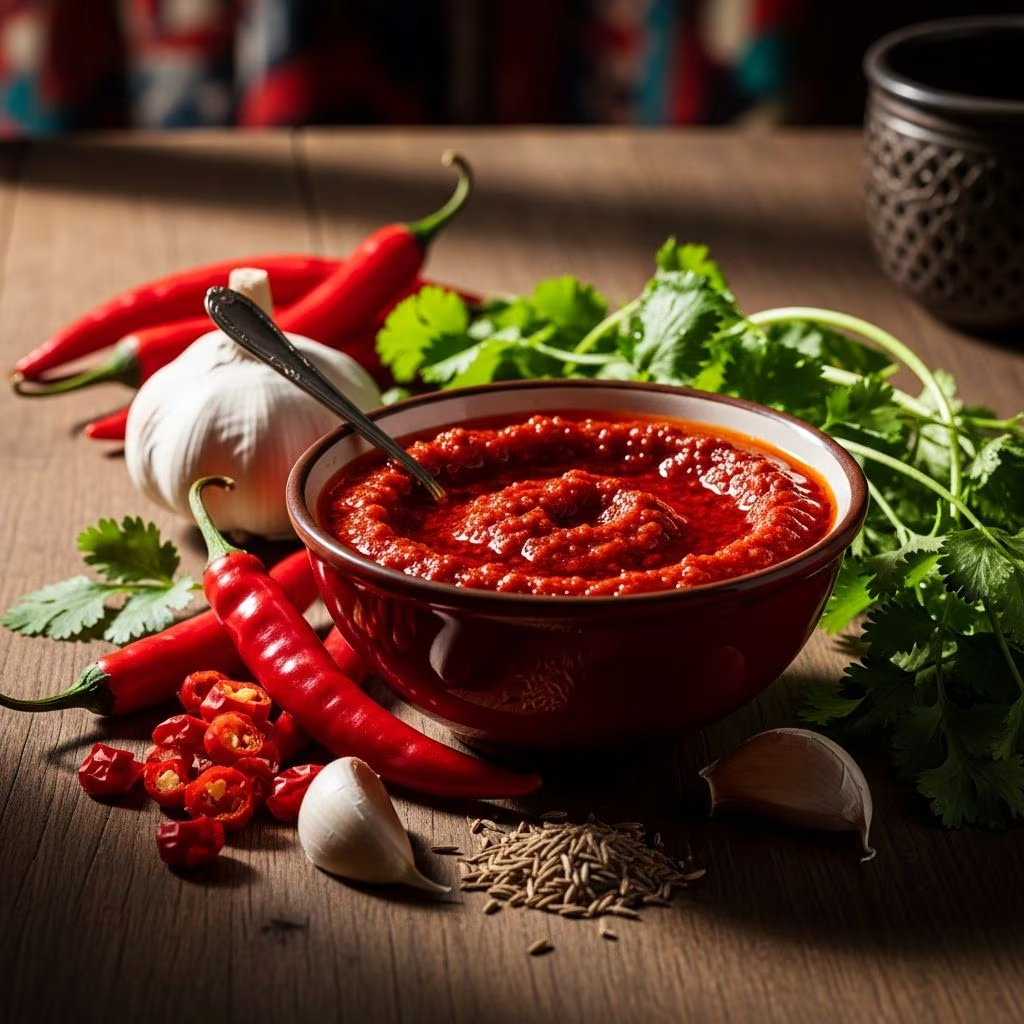
- Red Chiles: The backbone of the sauce, typically Fresno chiles, red jalapeños, or other hot red chile varieties provide the characteristic heat and fruity undertones. Some traditional recipes incorporate dried red chiles, which intensify the spice profile and add depth through their concentrated flavors.
- Red Bell Peppers: Modern adaptations frequently include red bell peppers alongside chiles, serving a dual purpose of adding volume, sweetness, and slightly moderating the overall heat level while maintaining the red color and certain flavor characteristics.
- Garlic: A substantial quantity of garlic—typically between 3 to 15 cloves depending on the recipe—provides pungency, umami depth, and acts as a natural preservative that extends shelf life.
- Fresh Cilantro: This herb dominates the herbaceous character of the sauce, offering brightness, slight bitterness, and a cooling sensation that paradoxically complements rather than contradicts the heat.
- Quality Oil: Either extra virgin olive oil or grapeseed oil serves as the emulsifying medium, creating the sauce’s characteristic texture while contributing richness and carrying fat-soluble flavors.
- Spice Composition: Ground cardamom, cumin, paprika, turmeric, coriander, and cloves create a warm, aromatic spice foundation that transforms the sauce from a simple chile paste into a nuanced condiment.
- Acid Component: Fresh lemon juice brightens the overall flavor profile, providing the aforementioned cutting quality and preventing the sauce from becoming one-dimensional in its heat and richness.
- Salt: Beyond basic seasoning, salt acts as a flavor amplifier and preservative that enables longer storage without refrigeration in traditional contexts.
Preparation Methodology and Technique
Creating authentic red zhoug involves sequential steps that each contribute meaningfully to the final product. The preparation process typically begins with handling the fresh chiles and peppers—removing stems, halving them lengthwise, and extracting seeds. This seed removal represents a critical decision point for controlling heat intensity; some cooks remove all seeds for a milder version, while others retain them for maximum fire.
The cilantro preparation requires particular attention, as the leaves must be separated from larger stems while incorporating the more tender stem portions that add textural interest. Some contemporary adaptations employ rough chopping before processing, while traditional methods may add entire leaf clusters to the food processor.
The actual blending process typically follows this sequence: combining chiles, peppers, garlic, and salt in a food processor, pulsing until the mixture reaches a granular consistency, then adding the spice blend, and finally slowly drizzling in oil while the processor runs to achieve proper emulsification. This gradual oil addition prevents the sauce from becoming overly separated and ensures a cohesive texture.
Flavor Profile and Versatility
The resulting sauce presents a complex sensory experience that defies simple categorization. The initial impact delivers considerable heat that builds gradually across the palate, followed by the emergence of spice warmth from the cardamom and turmeric, the earthiness of cumin, and ultimately the bright, herbaceous finish of cilantro and lemon juice. This layering of sensations distinguishes red zhoug from more straightforward hot sauces that often provide undifferentiated burning.
The versatility of red zhoug extends remarkably across numerous culinary applications. It functions excellently as a dipping sauce for toasted pita bread, falafel, or roasted vegetables. It enhances grilled meats, fish, and lamb through its ability to add complexity without masking natural flavors. It transforms simple rice, pasta, or soup through a modest drizzle. It can crown hummus with visual appeal and spicy sophistication. Unconventional applications include pizza topping, egg accompaniment, and marinade base for kebobs.
Variations and Customization Strategies
While traditional red zhoug maintains recognizable characteristics, regional and personal variations create distinct iterations suited to different preferences and availability of ingredients:
| Variation Type | Modification Method | Result |
|---|---|---|
| Milder Heat Version | Substitute dried red chiles or fresh chiles with equal parts red bell peppers; remove all seeds from hot peppers | Reduced spiciness while maintaining color and flavor complexity |
| Roasted Pepper Method | Broil or sauté peppers and chiles before blending | Deeper, smoky undertones with slightly reduced raw heat |
| Dried Chile Adaptation | Soak dried red chiles in warm water for 30 minutes before processing | Concentrated spice flavor and different heat profile |
| Schug Damadis | Add grated tomato to prepared zhoug | Creamier texture with reduced intensity and added sweetness |
| Extended Storage Version | Increase garlic proportion and salt content slightly | Enhanced preservation capability extending refrigerator life |
Storage and Preservation Guidelines
Properly stored red zhoug maintains quality and safety for extended periods. In airtight glass containers, refrigerated zhoug typically remains suitable for two weeks to one month, depending on the specific recipe formulation and individual ingredients used. The high salt, acid, and garlic content naturally inhibit bacterial growth, while the protective oil layer further extends shelf life.
For those seeking maximum storage longevity, increasing the salt and garlic proportions while minimizing added water creates preservation conditions suitable for up to a month of refrigeration. Some traditional methods involved preserving zhoug in oil-sealed jars at room temperature, though modern food safety standards recommend refrigeration.
Selecting and Preparing Ingredients for Success
The quality of finished red zhoug directly correlates with ingredient selection and preparation care. Fresh, unblemished chiles free from soft spots or discoloration provide superior flavor and texture. Extra virgin olive oil, while more expensive than refined alternatives, delivers nuanced flavor that justifies the investment in this condiment. Freshly ground spices rather than long-stored powders ensure aromatic intensity and prevent stale, flat flavors.
Cilantro selection requires understanding that bunches vary considerably in leaf-to-stem ratio and overall freshness. Younger, more tender cilantro produces less bitter results than mature plants. Removing the herbs shortly before processing prevents oxidation and flavor degradation.
Contemporary Applications and Modern Adaptations
Beyond traditional usage, modern chefs and home cooks continue discovering innovative applications for red zhoug. Fine dining establishments incorporate it into composed plates as a contemporary interpretation of Middle Eastern cuisine. Home cooks drizzle it over avocado toast, stir it into cream cheese for party dips, incorporate it into salad dressings, or swirl it into soups for sophisticated finishing touches.
This expansion reflects the sauce’s fundamental versatility and the growing global appreciation for Yemenite and broader Middle Eastern culinary traditions. Red zhoug represents the contemporary movement toward bold, flavorful condiments that reflect authentic cultural traditions while accommodating modern preparation and consumption contexts.
Frequently Asked Questions
Can I make red zhoug without a food processor?
While a food processor creates the ideal texture through efficient pulsing, you can achieve acceptable results using a blender, mortar and pestle, or even careful hand mincing followed by thorough hand mixing. The resulting texture may be less uniform but will still develop the desired flavors.
How spicy is authentic red zhoug compared to other hot sauces?
Red zhoug presents considerable heat, but the specific intensity varies based on chile variety and seed removal. It typically exceeds sriracha in immediate heat while offering more nuanced spice complexity. The flavor profiles differ substantially—zhoug emphasizes herbaceous brightness alongside heat, while many commercial hot sauces prioritize pure burning sensation.
What can I substitute for Fresno chiles?
Any hot red chile works, including red jalapeños, cayenne peppers, red serranos, or even dried red chiles rehydrated through soaking. Each substitution slightly alters the final heat level and flavor profile, so experimentation helps identify personal preferences.
Does red zhoug require cooking or sterilization?
Traditional recipes involve no cooking—all components remain raw, which preserves bright cilantro flavors and fresh lemon characteristics. Some modern adaptations roast peppers before processing, which creates different flavor profiles. Neither approach requires sterilization if properly stored in refrigeration.
Can I freeze red zhoug for extended storage?
While zhoug can technically freeze, the texture may separate upon thawing as the oil and herb components don’t freeze uniformly. Refrigeration remains the preferred storage method for maintaining quality and texture.
Mastering the Balance Between Heat and Complexity
The true skill in creating exceptional red zhoug involves understanding how to balance its various components so that no single element overwhelms the others. The heat from chiles provides the foundational excitement, but cilantro’s brightness, lemon’s acidity, and spices’ warmth create a sophisticated palate experience that evolves across multiple taste sensations rather than delivering a monolithic burn.
This complexity explains why red zhoug consistently ranks among preferred condiments for adventurous eaters and why it has gained recognition beyond its traditional cultural context. It demonstrates how simple, quality ingredients, when properly combined and respectfully prepared, can create something far greater than the sum of individual components.
Red zhoug invites experimentation within respected traditional parameters, allowing cooks to develop personal versions that reflect available ingredients, individual heat tolerances, and creative applications while maintaining the essential character that has defined this condiment for generations.
References
- Red Zhoug Recipe — Epicurious/Bavel. Chef Ori Menashe. https://www.epicurious.com/recipes/food/views/red-zhoug-ori-menashe-bavel
- Red Zhug (Yemenite Hot Sauce) — Karen’s Kitchen Stories. 2023. https://www.karenskitchenstories.com/2023/06/red-zhug-yemenite-hot-sauce.html
- Red Zhug (Yemenite Hot Sauce) — SunnysideHanne. https://www.sunnysidehanne.com/red-zhug-yemenite-hot-sauce/
- Red Schug — Jewish Food Society. https://www.jewishfoodsociety.org/recipes/red-schug