Red onion marmalade represents a sophisticated approach to preserving one of the kitchen’s most fundamental ingredients. This rich, glossy condiment transforms humble onions into a deeply flavored spread through patient cooking and careful caramelization. Whether you’re an experienced home cook or exploring the world of homemade preserves for the first time, red onion marmalade offers an accessible yet impressive project that delivers professional-quality results.
Understanding Red Onion Marmalade
Red onion marmalade occupies a unique space between traditional jam and savory condiment. Unlike fruit marmalades that emphasize sweetness and acidity, this preparation highlights the natural umami and subtle sweetness that emerges when red onions undergo extended, gentle cooking. The transformation occurs as onion sugars caramelize and water content reduces, creating a concentrated, intensely flavored preserve.
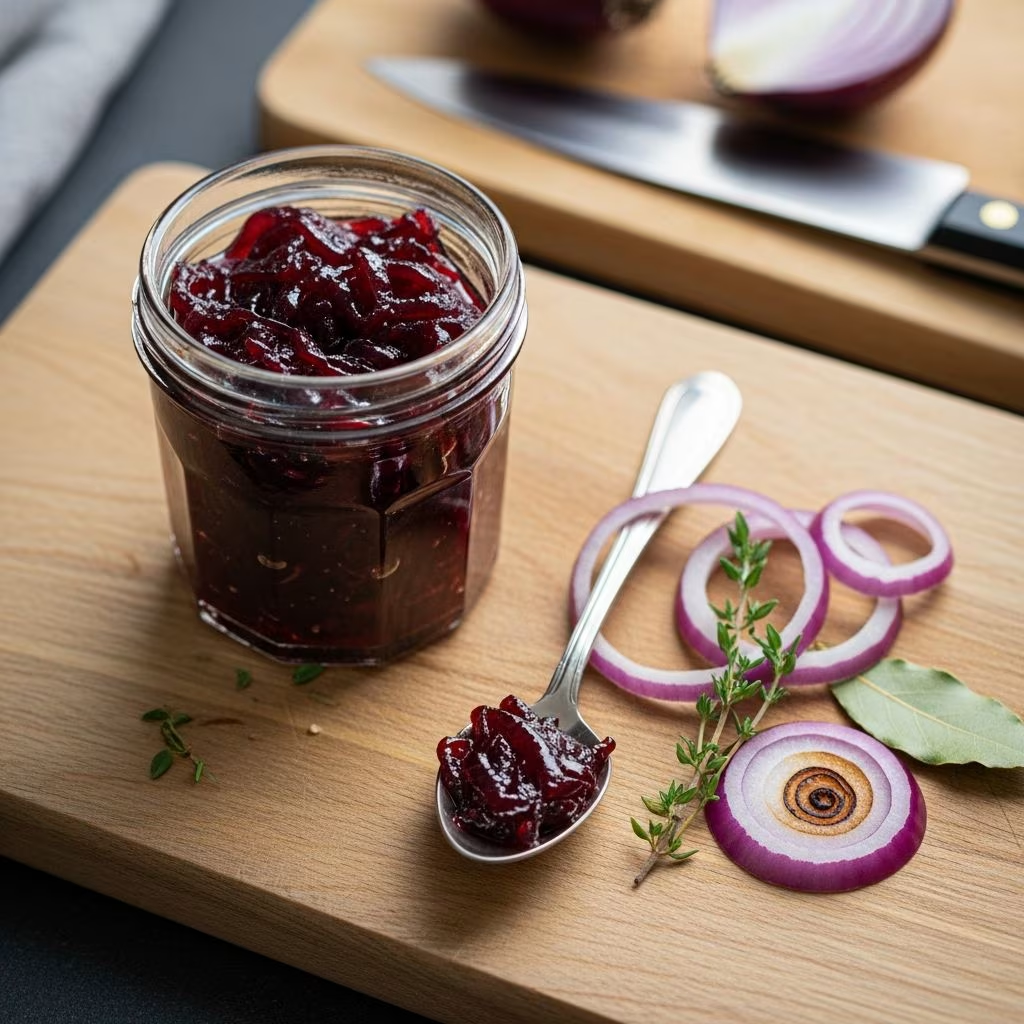
The defining characteristic of quality red onion marmalade is its texture—neither too thin nor overly gelatinous, but rather a spreadable consistency with visible onion strands suspended in a glossy matrix. The color deepens from bright red to deep burgundy or mahogany as cooking progresses, indicating proper caramelization has occurred.
Essential Ingredients and Their Functions
Creating exceptional red onion marmalade requires understanding how each ingredient contributes to the final product:
- Red onions: The foundation of this condiment, providing natural sugars and the characteristic mild, slightly sweet flavor. Typically requiring 1-2 kilograms per batch.
- Fat (butter or oil): Facilitates even heat distribution and prevents sticking during the extended cooking process. Combinations of both butter and olive oil create superior flavor development.
- Sweetening agents: Sugar, honey, and dried fruit contribute sweetness while promoting caramelization. Golden caster sugar and honey offer distinct flavor profiles.
- Acidic components: Red wine vinegar, balsamic vinegar, and red wine add complexity and balance sweetness with acidity, preventing the preserve from becoming cloying.
- Aromatics: Fresh thyme, garlic, and optional chili flakes add depth and sophistication to the finished product.
- Fortified wines: Port and red wine contribute rich, complex flavors that develop further during reduction.
Preparation and Cooking Techniques
Initial Preparation Phase
Begin by peeling red onions and slicing them uniformly into thin, even pieces approximately 1/4 inch thick. Consistency in slicing ensures even cooking and creates the desired final texture. Uniform pieces cook at the same rate, preventing some onions from becoming overly soft while others remain firm.
Crush or mince garlic cloves if including them in your recipe. Some cooks prefer adding garlic toward the end of cooking to preserve its bright flavor, while others incorporate it from the beginning for deeper, more integrated garlic notes.
The Caramelization Process
Heat your chosen fat (butter, olive oil, or both) in a large, heavy-bottomed saucepan over medium to medium-high heat. The weight of the pan matters significantly—thinner cookware promotes burning and uneven heating, while heavy-based pans distribute heat uniformly.
Add onions and salt, stirring well to coat thoroughly with the fat. This initial coating prevents sticking and promotes even cooking. Cook uncovered for 40-50 minutes, stirring occasionally to ensure uniform caramelization. During this phase, onion moisture gradually evaporates, and their natural sugars begin converting to caramelized compounds.
When onions become completely soft and translucent, sprinkle sugar and add fresh thyme and any optional spices. Continue cooking for several minutes, allowing sugar to combine with onion juices and begin forming a syrupy consistency.
Wine and Vinegar Integration
Add your chosen combination of red wine, vinegar, and fortified wines (if using). These liquid additions initiate the reduction phase, where alcohol evaporates and remaining liquid reduces to a syrupy consistency. Continue cooking uncovered over medium heat, stirring frequently to prevent sticking and ensure even reduction.
This phase typically requires 25-30 minutes, though duration varies based on onion moisture content and desired final consistency. You’ll recognize completion when drawing a wooden spoon across the pan bottom leaves a path that fills slowly with syrupy liquid, indicating proper gel formation.
Ingredient Variations and Flavor Profiles
Red onion marmalade adapts beautifully to ingredient substitutions and creative additions:
| Ingredient Category | Options | Flavor Impact |
|---|---|---|
| Wine Choices | Red wine, white wine, rosé, dry sherry | Red wine adds earthiness; white wine provides brightness; sherry contributes nuttiness |
| Sweeteners | Granulated sugar, honey, maple syrup, brown sugar | Honey creates mellowness; maple adds complexity; brown sugar contributes depth |
| Dried Fruits | Raisins, currants, dried figs, dried cranberries | Adds textural interest and concentrated fruity sweetness |
| Heat Elements | Red chili flakes, cayenne pepper, black pepper | Creates subtle to pronounced warming sensations |
| Aromatics | Fresh thyme, rosemary, bay leaves, garlic | Herbaceous notes that complement natural onion sweetness |
Storage and Preservation Methods
Red onion marmalade keeps successfully under several storage approaches. Allow the prepared marmalade to cool completely before transferring to clean, dry jars. The mixture will continue thickening slightly as it cools.
For short-term storage, refrigerate in airtight containers for up to three months. For longer preservation, employ traditional canning techniques by pouring hot marmalade into sterilized jars and processing according to established food preservation guidelines. Properly canned marmalade stored in a cool, dark location maintains quality for up to one year.
Creative Serving Suggestions
Red onion marmalade serves multiple culinary functions beyond simple bread spreads. Serve alongside charcuterie boards with cured meats, aged cheeses, and crackers for sophisticated entertaining. The sweet-savory profile complements rich, salty cured products beautifully.
Layer onto burgers and sandwiches to add complexity and moisture without overwhelming other ingredients. Spread on crostini or toasted bread rounds topped with creamy cheeses like goat cheese or mascarpone for elegant appetizers.
Pair with roasted or grilled poultry, pork, and beef dishes as a sophisticated condiment alternative to traditional sauces. The acidity cuts through richness while caramelized onion flavor enhances meat savory notes.
Incorporate into composed salads with bitter greens, candied nuts, and crumbly cheeses. Mix into cream cheese or soft cheese spreads to create flavored dips and spreads for entertaining.
Troubleshooting Common Issues
Understanding potential problems ensures successful marmalade-making:
- Texture too thin: Continue cooking, uncovered, over medium heat until mixture reaches proper consistency. Thicker-bottomed pans allow better evaporation control.
- Onions not caramelizing: Ensure adequate fat coats onions and heat remains sufficiently high during the initial cooking phase. Patience is essential—proper caramelization requires 45-60 minutes.
- Burnt bottom layer: Use heavy-bottomed cookware and reduce heat if browning appears too dark. Stir more frequently during the final reduction phase.
- Excessive saltiness: Reduce salt amounts in future batches, or balance with additional acid or sweetness in current batch.
- Lack of flavor depth: Extend cooking time and incorporate wine and aromatics for enhanced complexity.
Frequently Asked Questions
How long does homemade red onion marmalade last?
Refrigerated marmalade maintains quality for approximately three months in airtight containers. Properly canned and processed marmalade stored in cool, dark conditions lasts up to one year.
Can I freeze red onion marmalade?
Yes, marmalade freezes successfully in freezer-safe containers for up to six months. Thaw overnight in the refrigerator before using.
What’s the difference between marmalade, chutney, and jam?
Marmalade traditionally refers to fruit preserves with a gel-like consistency. Red onion marmalade is a savory variation. Chutney typically contains more spices and varied ingredients like ginger and chilies. Jam emphasizes fruit pulp texture.
Can I use regular onions instead of red onions?
Yes, though red onions provide superior color and slightly different flavor. Yellow or white onions work but produce less visually appealing results. Red onions’ natural anthocyanin pigments create the characteristic deep burgundy color.
How do I know when the marmalade is properly done?
When a wooden spoon drawn across the pan bottom creates a path that fills slowly with syrupy liquid, the marmalade has reached proper consistency. The mixture should hold its shape on a plate when cooled.
Scaling and Batch Considerations
The basic techniques scale effectively from small single-jar batches to large quantity preservation projects. Doubling or tripling recipes requires using proportionally larger cookware and extending cooking times slightly.
When making larger batches, monitor doneness carefully as extended cooking times and greater liquid volumes affect evaporation rates. Stir more frequently to prevent bottom scorching and ensure even caramelization throughout the larger mass.
Quality Indicators and Final Assessment
Exceptional red onion marmalade demonstrates several quality characteristics: deep burgundy to mahogany coloring, glossy appearance, spreadable consistency without excess runiness, and balanced flavor combining natural onion sweetness with wine acidity and aromatic complexity. The finished product should showcase visible onion strands suspended in a rich, syrupy matrix rather than appearing as an undifferentiated paste.
Taste assessment should reveal layered flavors: initial natural onion sweetness, wine complexity, subtle garlic and thyme undertones, and balanced acidity. Heat elements, if included, should provide gentle warming sensations rather than dominating other flavors.
References
- Savory Red Onion Marmalade — David Lebovitz. Accessed April 2026. https://davidlebovitz.substack.com/p/savory-red-onion-marmalade
- Red Onion Marmalade Recipe — BBC Good Food. Accessed April 2026. https://www.bbcgoodfood.com/recipes/red-onion-marmalade
- Red Onion Marmalade with Wine and Port — Eating for Ireland. Accessed April 2026. https://eatingforireland.com/recipe/red-onion-marmalade-with-wine-and-port/
- Red Onion Marmalade — Liz The Chef. Accessed April 2026. https://lizthechef.com/red-onion-marmalade/