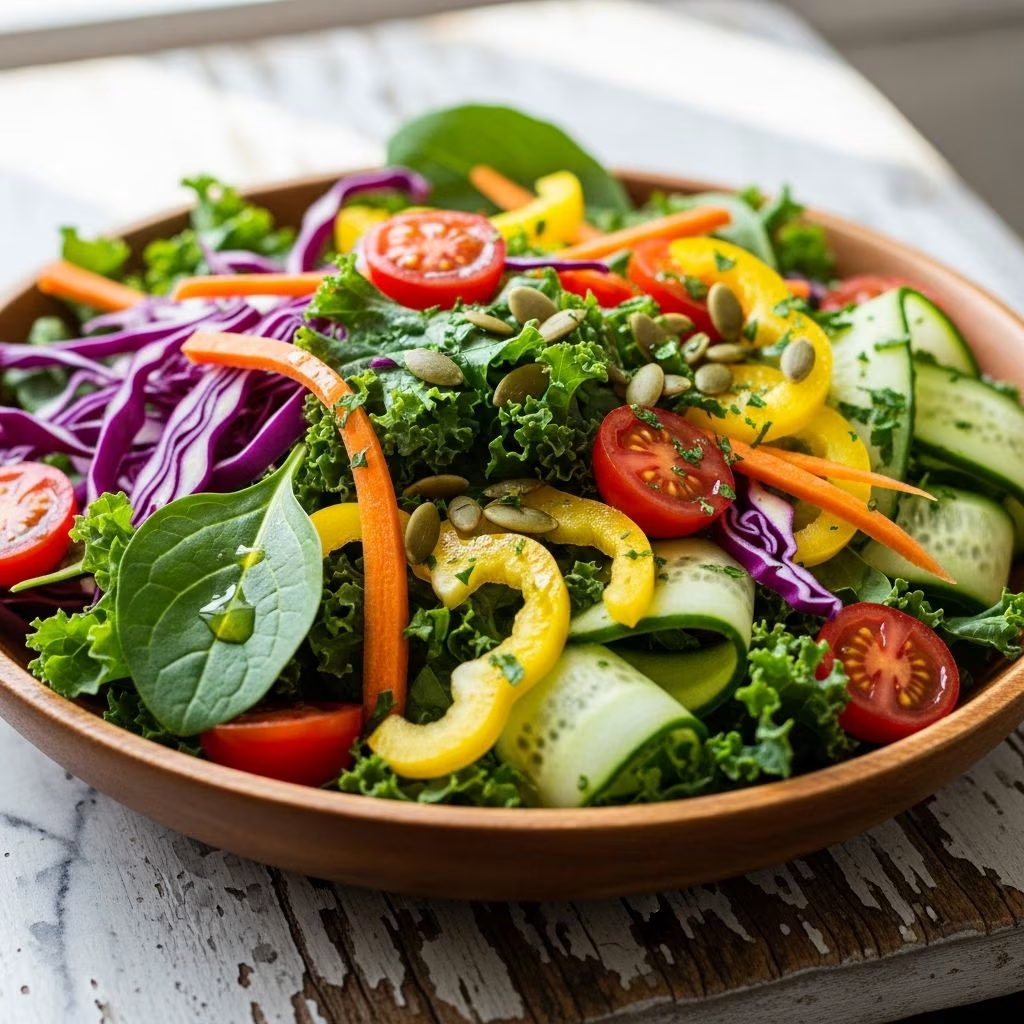
Raw vegetable salads offer a refreshing way to enjoy the natural flavors and textures of fresh produce without any cooking. These vibrant bowls combine crisp elements like cabbage, carrots, and cucumbers with tangy dressings, making them ideal for light lunches, sides, or potlucks. Packed with vitamins, fiber, and hydration, they support healthy eating effortlessly.
Why Choose Raw Veggie Salads?
Opting for uncooked vegetables preserves essential nutrients that heat can diminish, such as vitamin C and enzymes. A typical raw salad features high-water-content items for juiciness alongside crunchy bites for satisfaction. These dishes assemble in under 15 minutes, requiring only chopping and mixing.
Health authorities emphasize that raw produce boosts dietary fiber intake, aiding digestion and satiety. For instance, greens like arugula provide antioxidants, while seeds add healthy fats. Unlike cooked sides, raw versions retain maximum crispness and color vibrancy.
Essential Ingredients for Balance
Building a standout raw veggie salad starts with diverse components. Aim for a mix that covers bases: leafy bases, watery veggies, firm crunchers, and accents.
- Leafy Greens: Mixed lettuce, arugula, or spinach for volume and mild bitterness.
- Watery Crunch: Cucumbers or tomatoes to hydrate each bite.
- Firm Vegetables: Carrots, cabbage, bell peppers, or radishes for texture contrast.
- Add-Ins: Nuts, seeds, fruits like pomegranate or grapes for pops of flavor and nutrition.
Portion roughly 2 cups greens, 1 cup each veggie type, and 2 tablespoons add-ins per serving. This creates a rainbow effect visually and nutritionally.
Customizable Dressing Recipes
A great dressing elevates basic veggies. Keep it simple with oil, acid, and seasoning, or experiment for variety.
Classic Lemon-Olive Oil Blend
Whisk 2 tablespoons olive oil, juice of 1 lemon, salt, pepper, and a touch of maple syrup. Shake in a jar for even emulsion. This pairs perfectly with earthy veggies.
Vinegar-Based Oil-Free Option
For lighter fare, combine 2 tablespoons red wine vinegar, 1 tablespoon apple cider vinegar, lemon juice, Dijon mustard, maple syrup, minced garlic, salt, and pepper. Ideal for vegan, nut-free needs.
Store dressings separately until serving to avoid sogginess. Drizzle just enough to coat lightly.
Step-by-Step Preparation Guide
Assembling takes minimal effort. Follow these steps for a pro-level bowl.
- Wash all produce thoroughly. Pat dry to prevent dilution.
- Chop greens into bite-sized pieces. Shred or slice veggies uniformly for even eating—matchstick carrots or thin cabbage ribbons work well.
- Layer in a wide bowl: base of greens, arranged veggies, topped with seeds and fruits.
- Prepare dressing fresh. Toss gently right before eating.
Prep time: 10 minutes. Serves 2 as a main, 4 as a side. Refrigerate undressed up to 24 hours.
Seasonal Variations and Twists
Adapt to what’s fresh or in season for peak taste and value.
| Season | Featured Veggies | Suggested Add-Ins | Dressing Pairing |
|---|---|---|---|
| Summer | Cucumbers, tomatoes, bell peppers, zucchini | Grapes, fresh dill | Vinegar-lemon |
| Fall | Cabbage, carrots, radishes, broccoli | Pomegranate, sunflower seeds | Maple-olive oil |
| Winter | Root veggies like beets, kale, cauliflower | Almonds, citrus segments | Lemon-herb |
| Spring | Asparagus tips, snap peas, green onions | Hemp seeds, parsley | Mustard-vinegar |
Non-vegan options include crumbled cheese or bacon for heartier profiles. Swap for dietary needs: gluten-free always, nut-free by using seeds only.
Health Benefits Backed by Science
Raw veggie salads contribute to balanced nutrition. The U.S. Department of Agriculture recommends 2-3 cups vegetables daily; a large salad hits this easily. High fiber from broccoli and carrots supports gut health, per CDC guidelines.
Antioxidants in colorful peppers and tomatoes combat inflammation, as noted in NIH studies on plant compounds. Hydrating cucumbers aid skin health. Seeds provide omega-3s for heart support.
Low-calorie density promotes weight management—around 200 calories per serving with satisfying volume.
Storage and Make-Ahead Strategies
For busy schedules, prep components ahead. Chop veggies and store in airtight containers up to 3 days. Dress only at serving time.
Marinated versions improve overnight: toss with vinaigrette and refrigerate. Flavors meld, textures soften slightly but stay crisp. Freezing isn’t ideal for raw salads; focus on fresh use.
Pairing Ideas for Meals
Enhance mains with these salads.
- Protein boost: Alongside grilled chicken or tofu.
- Grain bowl topper: Over quinoa or farro.
- Picnic star: With sandwiches or wraps.
- Light dinner: Bulk with legumes for vegan fullness.
Potlucks love them for no-wilt reliability.
Frequently Asked Questions
Can I make raw veggie salads ahead?
Yes, chop and store undressed up to 24-48 hours. Dress just before serving.
Are they suitable for all diets?
Mostly vegan/gluten-free. Adapt by omitting nuts or adding dairy.
How to keep them crunchy?
Use firm veggies, dry well post-wash, and avoid over-dressing.
What if I don’t like bitter greens?
Stick to milder lettuce or romaine; add fruit to balance.
Can I add protein for a full meal?
Yes, chickpeas, eggs, or fish make it complete.
Nutrition Snapshot
A standard 2-cup serving: ~220 calories, 15g carbs, 5g fiber, 6g protein, rich in vitamins A/C/K. Varies by ingredients.
References
- Raw Vegetable Salad – vegan rainbow | My Weekend Kitchen — My Weekend Kitchen. 2023-05-15. https://www.myweekendkitchen.in/raw-vegetable-salad-recipe/
- Raw Veggie Chopped Salad — Veggie Inspired. 2022-06-10. https://www.veggieinspired.com/raw-veggie-chopped-salad/
- Marinated Vegetable Salad – Fresh and Healthy — Iowa Girl Eats. 2024-01-20. https://iowagirleats.com/marinated-vegetable-salad/
- Vegetable Salad Recipe — Indian Healthy Recipes. 2023-11-05. https://www.indianhealthyrecipes.com/vegetable-salad/