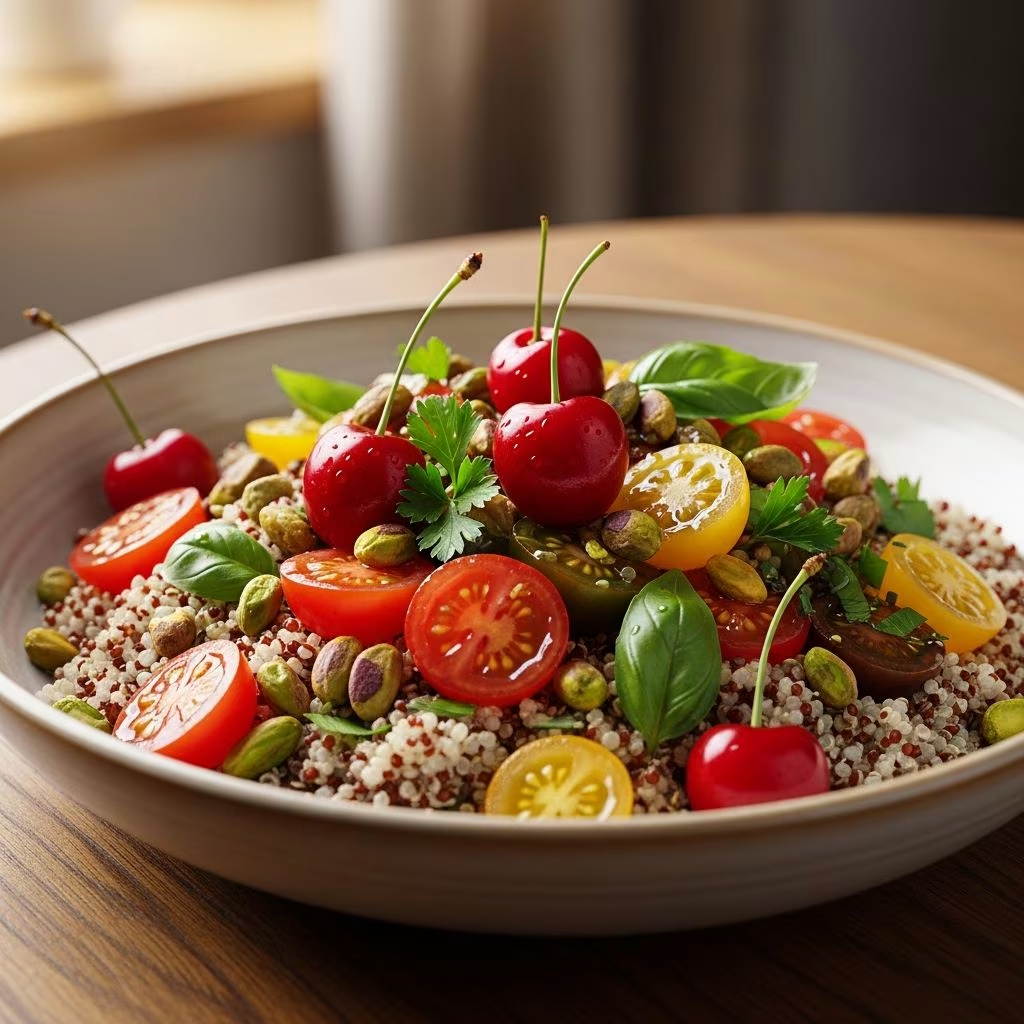
Grain-based bowls have become a staple in modern healthy eating, offering versatile platforms for combining proteins, vegetables, healthy fats, and flavorful dressings. Among the most appealing variations is the combination of nutrient-rich quinoa with the bright flavors of tomatoes and cherries, anchored by the earthy crunch of pistachios. This particular composition creates a dish that transcends typical salad conventions, delivering visual appeal alongside substantial nutritional value. The interplay between sweet stone fruit, acidic tomatoes, and nutty nuts creates a balanced flavor profile that works equally well as a standalone meal or as an accompaniment to grilled proteins.
Understanding Quinoa as Your Foundation
Quinoa serves as an exceptional base for modern bowl preparations, distinguishing itself through its complete amino acid profile and distinctive texture. Unlike many grains, quinoa contains all nine essential amino acids, making it particularly valuable for plant-based diets and those seeking diverse protein sources. The grain’s mild, slightly nutty flavor allows it to absorb accompanying ingredients and dressings without overpowering more delicate components.
Preparing quinoa properly sets the foundation for successful bowl assembly. The grain requires thorough rinsing under cold running water to remove saponins, naturally occurring compounds that can impart a bitter taste if not adequately removed. Once rinsed, quinoa cooks quickly—typically within fifteen minutes—transforming from a hard seed into a fluffy grain with visible white germ rings around each kernel.
After cooking, allowing quinoa to cool before mixing with other ingredients prevents the vegetables from becoming overcooked or releasing excess moisture. Many preparation experts recommend spreading the cooked grain on a sheet pan, which accelerates cooling while preventing the grains from clumping together. This cooling period can extend up to thirty minutes but provides the ideal texture for salad assembly.
The Role of Fresh Tomatoes in Grain Bowls
Cherry tomatoes bring brightness, acidity, and natural sweetness to quinoa-based preparations. Their small size makes them ideal for bowl dishes, as they integrate seamlessly without requiring additional cutting or preparation beyond halving. The concentrated flavor found in quality cherry tomatoes provides more intensity than larger varieties, delivering substantial impact even in smaller quantities.
The natural juices released by tomatoes during mixing create a light sauce that coats the quinoa grains, distributing flavor throughout the bowl. This moisture also helps carry the flavors of any vinaigrette dressing used, ensuring even seasoning distribution. When sourcing tomatoes for this dish, selecting specimens at peak ripeness—indicated by deep color and slight give when gently squeezed—ensures optimal flavor and texture.
Incorporating Stone Fruit for Unexpected Complexity
The addition of cherries introduces a sweet, slightly tart dimension that distinguishes this bowl from conventional quinoa salads. Fresh cherries require pitting before inclusion, a task that takes additional time but contributes significant flavor value. The fruit’s natural sugars complement the mineral-forward taste of pistachios while providing textural contrast through their firm flesh.
Cherries work particularly well when paired with acidic dressing elements, as the tartness of vinegar-based vinaigrettes plays against the fruit’s inherent sweetness. This flavor combination creates complexity that keeps each spoonful interesting, preventing the bowl from becoming monotonous despite its simplicity.
Pistachios: Adding Nutritional Depth and Textural Contrast
Pistachios function as more than a garnish in this composition—they provide essential textural contrast and nutritional contribution. These nuts deliver healthy monounsaturated fats, fiber, and plant-based protein, enhancing the overall nutritional profile of the dish. Their characteristic pale green color and subtle, slightly sweet flavor integrate beautifully with other bowl components.
Lightly toasting pistachios before adding them to the bowl intensifies their flavor and creates a satisfying crunch. The toasting process should remain brief—just two to three minutes over medium heat, stirring frequently—to prevent scorching while activating the nuts’ natural oils. After cooling slightly, roughly chopping the pistachios creates varied piece sizes, providing textural interest throughout the bowl.
Dressing Foundations for Cohesive Flavor
A well-constructed vinaigrette provides the crucial element that binds disparate ingredients into a unified dish. Traditional lemon-based vinaigrettes complement the sweet and acidic elements of tomatoes and cherries while allowing the nutty qualities of quinoa and pistachios to shine. The basic ratio of three parts oil to one part acid creates an emulsion that coats grains and vegetables effectively.
Alternative dressing approaches expand the flavor possibilities significantly. Curried yogurt-based dressings introduce aromatic spice notes and creamy texture without heavy calories. Honey-sweetened mustard vinaigrettes add subtle depth and help round out flavors. The choice of dressing should consider the overall flavor trajectory desired—from bright and acidic to creamy and complex.
Key Dressing Elements
- Fresh lemon or lime juice provides acidity and brightness
- Quality olive oil contributes richness and helps emulsify other components
- Mustard adds depth while acting as an emulsifying agent
- Honey or maple syrup balances acidity with subtle sweetness
- Salt and pepper intensify flavors and enhance ingredient perception
Assembly and Flavor Development Timeline
The sequence of ingredient combination influences the final texture and flavor intensity of the completed bowl. Cooled quinoa should be combined with tomatoes, cherries, and other ingredients before dressing application, allowing the grains to integrate without becoming compacted. Once ingredients are combined, dressing should be drizzled over the mixture and gently tossed to ensure even coating.
Allowing the assembled bowl to rest for approximately ten minutes permits the quinoa grains to absorb excess dressing while vegetables release additional moisture. This resting period creates a more cohesive final product where flavors have begun to meld while maintaining distinct textural elements. Tasting before service enables final seasoning adjustments, as the resting period may require additional salt or acid to achieve optimal flavor balance.
Flavor Combinations and Suggested Variations
While tomato, cherry, and pistachio form a complete flavor composition, this base welcomes thoughtful additions and variations. Fresh herbs—particularly mint, basil, or cilantro—provide aromatic complexity and visual interest. Crispy shallots or red onion contribute allium bite and additional texture layers. Leafy greens like arugula or spinach can be mixed into the bowl or served as an underlying bed.
Spice considerations extend the flavor possibilities considerably. A touch of cumin introduces warmth, while red pepper flakes add subtle heat. Fresh ginger grated directly into the dressing creates brightness and aids digestion. These variations allow the basic formula to adapt to different occasions, cuisines, or personal preferences without departing from the core concept.
Nutritional Considerations and Dietary Applications
This bowl composition naturally accommodates various dietary approaches. The grain-based foundation, vegetable components, and nut inclusion create a plant-forward meal suitable for vegan and vegetarian diets. The complete protein profile of quinoa ensures adequate amino acid consumption without animal products.
The fiber content from whole grains, vegetables, and nuts promotes digestive health and sustained energy levels. Antioxidants present in tomatoes—particularly lycopene—and polyphenols in cherries contribute to overall wellness. Healthy fats from pistachios and olive oil support nutrient absorption and satiety, making this bowl a satisfying option regardless of meal timing.
Practical Preparation and Storage Guidance
This dish’s component-based construction makes it ideal for meal preparation workflows. Quinoa can be cooked several days in advance and stored in refrigerated containers. Dressing components can be measured and stored separately, combined just before serving to prevent premature wilting of vegetables. This flexibility allows busy individuals to assemble complete, nutritious meals with minimal last-minute effort.
When storing assembled bowls, place dressing in separate containers and combine just before consumption to maintain textural integrity. Properly sealed containers preserve the bowl in satisfactory condition for four to six days, making this an excellent option for weekly meal preparation. Individual component storage extends flexibility—grains, vegetables, and dressing can be combined in various proportions depending on appetite and available ingredients on specific days.
Serving Suggestions and Occasion Suitability
The versatility of this quinoa bowl extends beyond individual meal service. As a side dish for gatherings, it provides a colorful, nutrient-dense contribution that accommodates diverse dietary preferences. The dish maintains integrity during transport, making it suitable for potlucks or picnic occasions. Scaling the recipe up easily accommodates larger groups without technical complications.
Temperature flexibility enhances occasion suitability. The bowl works equally well served at room temperature during warm months or slightly chilled during peak summer heat. For cooler seasons, serving at room temperature provides comfort while maintaining the vegetables’ appealing texture.
Ingredient Quality and Sourcing Considerations
The simplicity of this dish means ingredient quality directly impacts the final result. Seeking peak-season tomatoes and cherries ensures superior flavor compared to off-season imports. Farmers’ markets often provide optimal produce, allowing direct conversation with growers about harvest timing and growing methods.
Quinoa sourcing merits attention as well, with fair-trade, responsibly sourced varieties supporting ethical agricultural practices. Nut quality directly influences both flavor and nutritional content, making purchase from reputable suppliers advisable. Extra-virgin olive oil, preferably from a single harvest or estate, provides superior flavor compared to refined alternatives.
Common Questions About This Bowl Composition
Can I prepare this bowl in advance?
Yes, individual components can be prepared separately and stored for several days. Combine with dressing just before serving to maintain optimal texture.
Are there protein supplements for plant-based variations?
Beyond quinoa’s complete amino acid profile, adding chickpeas, white beans, or tofu increases protein content substantially if desired.
What alternative grains work with this flavor combination?
Millet, farro, and barley provide similar texture profiles while introducing subtle flavor variations. These options require longer cooking times but follow similar preparation principles.
How can I modify the dressing for dietary restrictions?
Oil-based vinaigrettes accommodate nut allergies naturally. For reduced-fat versions, reduce oil by half and increase acid components. Dairy-free preparations benefit from plant-based yogurts.
Is this bowl suitable for meal preparation?
Absolutely—all components store separately for three to six days, allowing flexible assembly timing to suit individual schedules and preferences.
References
- Nutritional Data for Quinoa: Complete Protein Content — United States Department of Agriculture (USDA) FoodData Central. 2023. https://fdc.nal.usda.gov
- Cherry Tomato Nutrients and Antioxidant Properties — Journal of Agricultural and Food Chemistry. 2022. Published by American Chemical Society. https://pubs.acs.org/journal/jafcau
- Pistachio Health Benefits and Nutritional Profile — International Tree Nut Council Nutrition Research and Education Foundation. 2023. https://www.itnc.org
- Cherry Fruit Phytochemical Composition and Health Properties — Nutrients Journal. 2024. Published by MDPI. https://www.mdpi.com/journal/nutrients
- Olive Oil: Composition, Health Effects, and Culinary Applications — Journal of the American Oil Chemists’ Society (JAOCS). 2023. https://www.springer.com/journal/11746