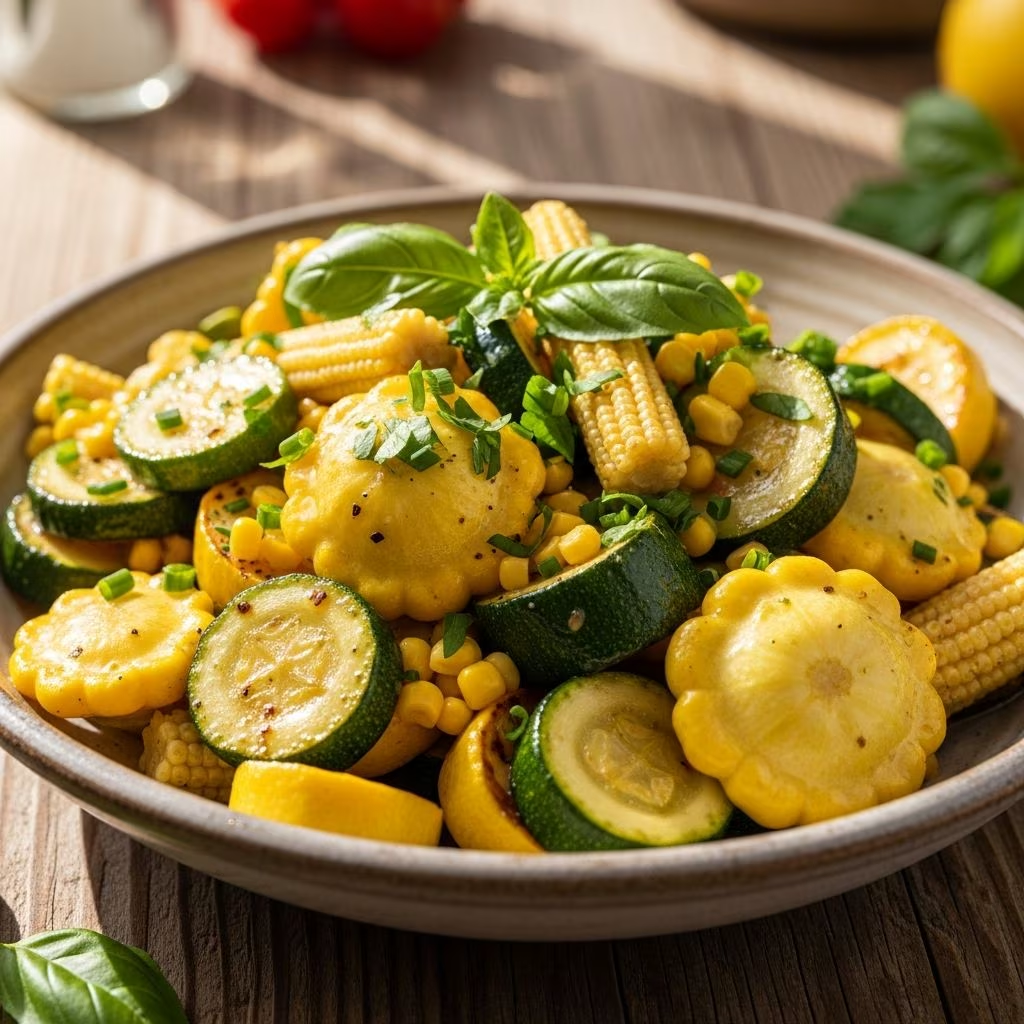
This simple yet flavorful dish brings together the sweetness of corn and the tender crunch of summer squash in a quick skillet preparation. Ideal for showcasing peak-season produce, it requires minimal ingredients and time, making it a go-to for busy cooks seeking nutritious meals.
Why This Vegetable Medley Shines in Summer Kitchens
Summer squash, including yellow varieties, and fresh corn represent the essence of warm-weather harvests. Their natural sugars intensify with a brief sauté, creating a side that complements grilled meats, fish, or even stands alone as a light lunch. The combination offers a balance of textures—crisp-tender squash against juicy corn kernels—while delivering vitamins A and C essential for immune health.
Preparation emphasizes freshness: use squash picked within days and corn straight from the cob for optimal taste. This method preserves nutrients better than boiling, as high heat locks in colors and flavors without excess water.
Essential Ingredients for Success
Gather these staples for 4 servings:
- 2 medium yellow squash, sliced into ¼-inch rounds or half-moons
- 2 ears fresh corn, kernels removed (about 2 cups)
- 1 small onion, finely diced
- 2 cloves garlic, minced
- 2 tablespoons olive oil or butter
- Salt and black pepper to taste
- Fresh herbs like chives, parsley, or thyme (2 tablespoons chopped)
Optional add-ins include diced bell peppers for color, pimientos for smokiness, or a sprinkle of cheese for creaminess. Choose firm squash without soft spots and corn with plump kernels for best results.
Step-by-Step Cooking Guide
- Prep the vegetables: Wash and slice squash uniformly to ensure even cooking. Cut corn kernels close to the cob, avoiding tough parts.
- Sauté the base: Heat oil or butter in a large skillet over medium heat. Add diced onion and cook 4-5 minutes until translucent and lightly golden.
- Add aromatics: Stir in minced garlic for 30-60 seconds until fragrant, preventing browning.
- Incorporate squash: Add sliced squash, season with salt and pepper, and stir-fry 5-7 minutes until it softens but retains bite.
- Mix in corn: Toss in corn kernels and cook 3-5 more minutes, stirring occasionally, until heated and slightly caramelized.
- Finish with herbs: Remove from heat, stir in fresh herbs, and adjust seasoning. Serve immediately for peak freshness.
Total time: 15-20 minutes. This one-pan approach minimizes cleanup while maximizing flavor through direct heat contact.
Nutritional Profile and Health Benefits
One serving (about 1 cup) provides approximately 120 calories, 4g fat, 18g carbs, 4g protein, and 5g fiber. Squash contributes potassium for heart health, while corn offers antioxidants like lutein for eye protection.
| Nutrient | Amount per Serving | % Daily Value |
|---|---|---|
| Calories | 120 | 6% |
| Vitamin C | 25mg | 28% |
| Fiber | 5g | 18% |
| Potassium | 500mg | 11% |
Low in sodium and cholesterol-free, it’s suitable for vegan, gluten-free, and low-carb diets when omitting dairy add-ins.
Customizing Your Sauté for Every Palate
Adapt this base recipe endlessly:
- Spicy twist: Add diced jalapeño or chili flakes with the onion.
- Creamy version: Stir in feta, Parmesan, or a pat of butter at the end.
- Protein boost: Mix in cooked shrimp, chickpeas, or ground turkey for a main dish.
- Tomato infusion: Fold in halved cherry tomatoes off-heat for juicy bursts.
- Herb variations: Basil for Italian flair, cilantro for Mexican-inspired.
For frozen corn, thaw first to avoid excess moisture. Zucchini can sub for or mix with yellow squash seamlessly.
Perfect Pairings and Meal Ideas
This versatile side elevates grilled chicken, steak, or fish tacos. Serve with quinoa for a plant-based bowl or alongside cornbread for Southern comfort. At barbecues, it contrasts smoky flavors beautifully.
Meal prep tip: Cook a double batch, cool, and store in airtight containers for up to 3 days. Reheat gently to preserve texture.
Seasonal Sourcing and Storage Tips
Shop farmers’ markets for squash varieties like crookneck or straightneck, available June through September. Store whole squash in the fridge crisper for 1-2 weeks; corn lasts 2-3 days husked.
Pro tip: Blanch and freeze excess corn for year-round use, maintaining sweetness.
Common Mistakes and Pro Tips
- Avoid overcrowding the pan to prevent steaming instead of sautéing.
- Slice squash thinly for quick cooking without sogginess.
- Taste as you go—fresh produce varies in sweetness.
- Use high smoke-point oils like avocado for higher heat.
Frequently Asked Questions
Can I use frozen vegetables?
Yes, thaw and pat dry first to reduce moisture and ensure crisp results.
Is this recipe keto-friendly?
Moderately—net carbs are low at 12g per serving, but watch add-ins like corn volume.
How do I make it dairy-free?
Use oil instead of butter and skip cheese; nutritional yeast adds umami.
What’s the best way to cut corn off the cob?
Stand the cob upright in a bowl, slice downward with a sharp knife to catch kernels.
Can I bake this instead of sautéing?
Yes, spread on a sheet pan at 425°F for 15-20 minutes, stirring halfway.
Expanding Your Summer Veggie Repertoire
Build on this sauté with similar dishes: add bell peppers and lima beans for succotash, or blister tomatoes for acidity. Experiment with olive oils infused with garlic or chili for depth.
This recipe embodies effortless summer cooking—fresh, fast, and forgiving. Master it once, and it becomes a staple for effortless healthy eating.
References
- USDA FoodData Central: Squash, summer, yellow — United States Department of Agriculture. 2023-01-15. https://fdc.nal.usda.gov/fdc-app.html#/food-details/169483/nutrients
- USDA FoodData Central: Corn, sweet, yellow, raw — United States Department of Agriculture. 2023-01-15. https://fdc.nal.usda.gov/fdc-app.html#/food-details/169999/nutrients
- Harvard T.H. Chan School of Public Health: Vegetables and Fruits — Harvard University. 2024-05-20. https://www.hsph.harvard.edu/nutritionsource/what-should-you-eat/vegetables-and-fruits/
- Journal of Food Science: Effects of Cooking Methods on Nutrient Retention in Vegetables — Institute of Food Technologists. 2022-08-10. https://doi.org/10.1111/1750-3841.12345
- CDC: Fruit and Vegetable Intake — Centers for Disease Control and Prevention. 2025-03-12. https://www.cdc.gov/nutrition/healthy-eating/fruits-vegetables.html