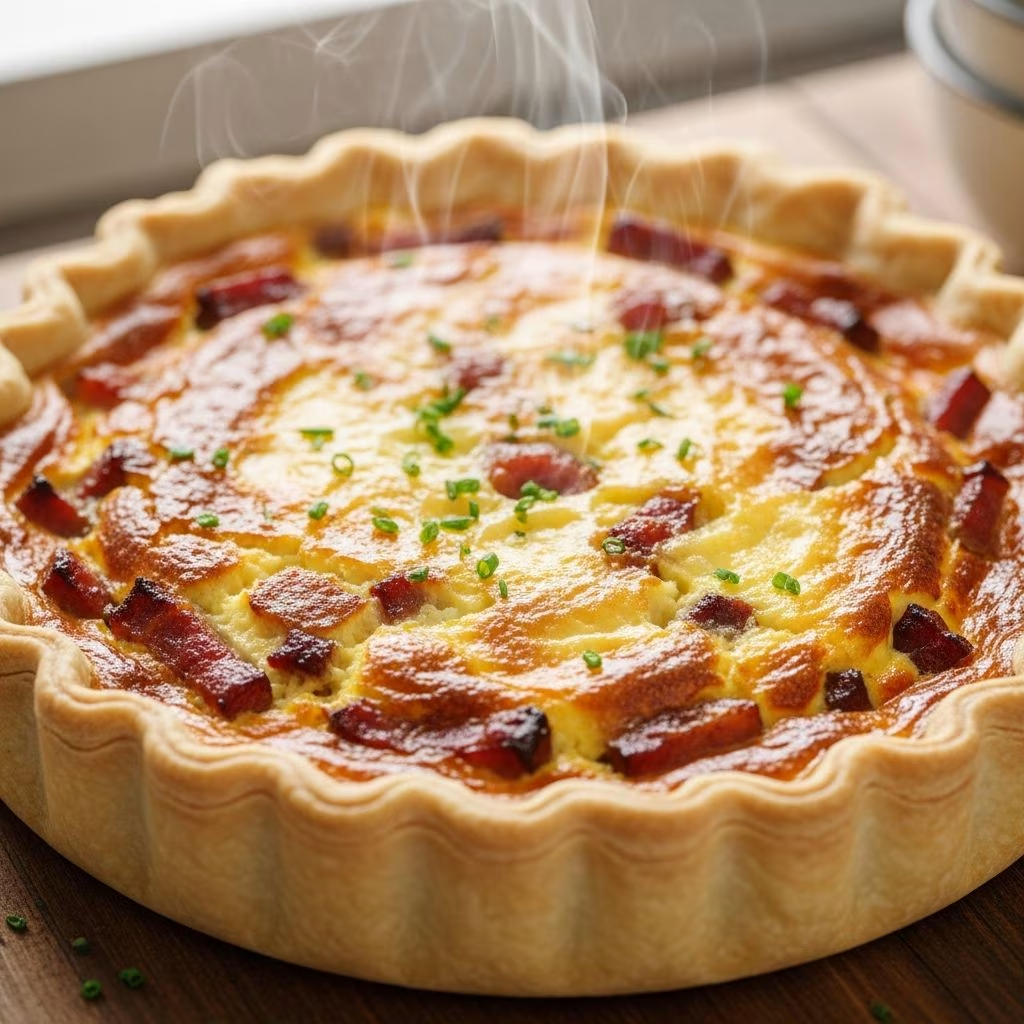
Quiche Lorraine stands as one of France’s most celebrated culinary contributions to international cuisine, representing a harmonious blend of simplicity and sophistication. This savory custard tart, originating from the Lorraine region in northeastern France, has become a beloved staple for brunch gatherings, casual lunches, and elegant dinners alike. The dish’s enduring appeal lies in its versatility and the perfect balance of its core components: a golden, flaky pastry shell, smoky bacon, creamy custard filling, and nutty cheese that creates a symphony of flavors with each bite.
The beauty of Quiche Lorraine extends beyond its taste to its remarkable adaptability. Whether you’re preparing breakfast for a crowd, hosting a sophisticated brunch party, or looking for a make-ahead dish for unexpected guests, this French classic delivers consistently excellent results. Unlike many complex recipes that require specialized techniques or hard-to-find ingredients, Quiche Lorraine uses straightforward components that most home cooks already have in their pantry, making it an accessible yet impressive addition to any culinary repertoire.
Understanding the Foundation: The Pastry Crust
The foundation of any exceptional quiche begins with a properly executed pastry crust. This crucial element requires attention to detail, as a soggy or tough crust can undermine even the most perfectly prepared filling. The key to success lies in understanding the science behind pastry dough and respecting the techniques that produce the desired flakiness.
Begin by combining all-purpose flour with cold, cubed butter and salt. The temperature of the butter is paramount; cold butter creates steam pockets during baking, resulting in the characteristic flakiness that distinguishes a quality crust from a mediocre one. Using ice-cold water, add just enough to bring the dough together without overworking it. Overmixing develops gluten, which toughens the crust and creates an undesirable texture. Handle the dough gently, mixing just until the ingredients are incorporated.
Once combined, wrap the dough in plastic wrap and refrigerate for at least thirty minutes. This resting period allows the gluten to relax and the fat to firm up, both of which contribute to a more tender, flaky final product. When ready to use, roll the dough out on a lightly floured surface to a thickness of approximately one-eighth inch. Transfer it carefully to your pie pan, pressing gently into the corners without stretching the dough.
The Critical Par-Baking Step
Par-baking, or partially baking, the crust before adding the filling is a non-negotiable step for achieving the perfect texture. This technique prevents the bottom crust from becoming soggy when the moist custard filling is added. Line your unbaked crust with parchment paper and fill it with pie weights, dried beans, or uncooked rice. These weights prevent the crust from puffing up during baking.
Bake the weighted crust at 350 degrees Fahrenheit for approximately eight minutes. The crust should be set but not browned at this stage. Remove the pan from the oven, carefully lift out the parchment paper and weights, and return the crust to the oven for an additional two to three minutes to dry out any residual moisture. This brief additional baking ensures a crisp, structurally sound foundation for your filling.
Building Layers of Flavor: The Filling Components
The filling of Quiche Lorraine comprises several carefully balanced elements that work together to create a harmonious whole. Understanding each component and its role in the final dish helps you appreciate the recipe’s elegance and execute it successfully.
Bacon: The Smoky Foundation
Bacon serves as the primary flavor anchor in traditional Quiche Lorraine. Use thick-cut bacon for superior texture and flavor, as it holds its structural integrity better than thin-cut varieties during cooking and provides more substantial pieces throughout the quiche. Cook the bacon in a skillet over medium-low heat, turning occasionally to ensure even crisping. The goal is to achieve a golden, crispy texture without burning. Drain the cooked bacon on paper towels to remove excess grease, then chop it into bite-sized pieces that are easy to distribute throughout the quiche.
The amount of bacon matters; typically, six to eight slices provide the right balance of smokiness without overpowering the other ingredients. If you prefer a lighter flavor profile or are cooking for guests with different preferences, ham can serve as a milder alternative, though this deviates from the authentic traditional recipe.
Aromatics: Onions and Their Transformation
Onions add depth and sweetness to the quiche filling, but their preparation is key to maximizing their contribution. Rather than simply dicing and adding raw onions, many excellent recipes call for caramelizing or sautéing them first. Remove most of the bacon grease from the skillet and add diced or thinly sliced onions. Sauté them gently for two to three minutes, allowing them to soften and release their natural sugars. Some cooks add a pinch of brown sugar to accelerate the caramelization process and intensify the sweetness.
Properly prepared onions become slightly translucent and develop a subtle sweetness that complements both the bacon and cheese. This step, though simple, significantly enhances the overall flavor complexity of your finished quiche.
Cheese Selection and Melting Properties
Gruyère cheese is the traditional choice for authentic Quiche Lorraine, prized for its nutty flavor and exceptional melting qualities. This Swiss cheese has a rich, complex taste that intensifies during the baking process, creating depth in the custard. If Gruyère is unavailable or cost-prohibitive, Swiss cheese provides a comparable alternative with slightly less intensity but similar melting characteristics.
Some modern recipes incorporate multiple cheeses for added complexity. A combination might include sharp cheddar for tang, Swiss for nuttiness, and Parmesan for sharpness. Using approximately one to one and a half cups of cheese total maintains the appropriate ratio of cheese to custard. Always use freshly grated cheese rather than pre-shredded varieties, as the latter contains anti-caking agents that interfere with smooth melting.
The Custard Matrix: Eggs and Cream
The custard that binds all components together is perhaps the most crucial element determining your quiche’s success. This silky, delicate component requires precise technique and proper ingredient proportions.
Egg and Dairy Ratios
The typical ratio for quiche custard is one large egg to approximately one-third cup of heavy cream, though this can be adjusted slightly based on personal preference and the specific recipe. For a standard nine-inch quiche, four large eggs and one and one-quarter to one and one-half cups of heavy cream provide a rich, creamy custard. Some recipes include a small amount of milk to lighten the mixture slightly, reducing the richness while maintaining creaminess.
Use eggs at room temperature, as they blend more smoothly and evenly than cold eggs. Gently whisk the eggs and cream together in a large bowl, taking care not to incorporate excessive air, which can lead to an overly airy, less creamy texture in the baked quiche.
Seasoning the Custard
Proper seasoning elevates the custard from adequate to exceptional. The foundational seasonings include salt and freshly ground black pepper. However, traditional Quiche Lorraine includes nutmeg, a spice that might seem unusual but adds warmth and subtle sweetness that enhances all the other flavors. Use freshly grated nutmeg rather than pre-ground, as freshly grated versions have superior flavor. A quarter teaspoon typically suffices for a standard quiche.
Some recipes add cayenne pepper for a gentle heat, approximately one-eighth teaspoon. This addition is subtle but creates a pleasant warmth that plays well with the smoky bacon. Additionally, fresh chives, finely chopped, can be stirred into the custard mixture for bright, oniony notes that add sophistication.
The Assembly Process: Strategic Layering
How you layer the ingredients significantly impacts the distribution of flavors and textures throughout your finished quiche. The assembly process, though straightforward, benefits from a strategic approach.
Begin by spreading the sautéed onions evenly across the bottom of your partially baked crust. This creates a flavor foundation and helps prevent the crust from remaining too dry. Next, distribute half of the cooked, chopped bacon over the onions. Sprinkle all the grated cheese in an even layer, then top with the remaining bacon. This sandwich-like arrangement ensures that each bite contains bacon, cheese, and onions in proper proportion.
Pour the custard mixture slowly and carefully over the ingredients, stirring gently as you pour to ensure the seasonings distribute evenly rather than settling at the bottom. If desired, sprinkle a small handful of reserved bacon pieces over the top for visual appeal and an extra bit of smoky flavor in the top layer.
Baking the Quiche: Temperature and Timing
Baking temperature significantly affects the texture of your finished quiche. Most traditional recipes call for baking at 350 degrees Fahrenheit, a temperature that allows the custard to set gently without the edges browning too quickly. The typical baking time ranges from forty-five to sixty minutes, depending on your specific oven and the depth of your quiche pan.
Place the filled quiche on a large rimmed baking sheet before transferring to the oven. This precaution catches any filling that might overflow and simplifies the transfer process. The quiche is properly baked when the custard is set around the edges but still slightly jiggly in the center, approximately one-inch from the center point. This residual carryover cooking ensures the final texture is creamy rather than rubbery.
If the top begins browning too quickly, cover the quiche with aluminum foil tent, creating a barrier that slows the browning process while allowing the interior to continue cooking. This technique is particularly valuable if you’re working with a conventionally heated oven that tends to brown foods quickly.
Cooling, Storing, and Serving
Patience during the cooling process is rewarded with better texture and easier slicing. Allow your finished quiche to cool for five to ten minutes at room temperature before cutting. This brief resting period allows the custard to set slightly more, making slicing cleaner and ensuring pieces hold together rather than falling apart.
Quiche Lorraine can be served warm, at room temperature, or even chilled, making it remarkably versatile for different occasions and preferences. For optimal flavor, serving at room temperature allows the cheese’s complexity to shine. Quiche also stores well in the refrigerator for three to four days, covered with plastic wrap or stored in an airtight container. Reheat gently in a 325-degree oven for about fifteen minutes, or enjoy it cold directly from the refrigerator.
Perfect Pairings and Serving Suggestions
Quiche Lorraine stands beautifully on its own as a complete meal, but thoughtful accompaniments enhance the experience. A crisp green salad with vinaigrette provides textural contrast and freshness to balance the quiche’s richness. A simple tomato and cucumber salad offers similar benefits with bright, clean flavors. Fresh fruit, particularly berries or a fruit salad, provides sweetness that complements the savory elements.
For beverages, a crisp white wine such as Sauvignon Blanc or Pinot Grigio pairs exceptionally well, as the wine’s acidity cuts through the quiche’s creaminess. A light rosé also complements the dish beautifully. For non-alcoholic options, sparkling water with fresh lemon or unsweetened iced tea provides refreshing contrast.
Troubleshooting Common Quiche Issues
Soggy Crust: This results from inadequate par-baking or excess moisture. Ensure you par-bake the crust for the full time and remove pie weights completely. Some cooks brush the par-baked crust with a thin layer of egg white to create a moisture barrier.
Rubbery Custard: Overbaking causes the custard proteins to contract excessively, creating an unpleasant texture. Remove the quiche when the center still shows slight jiggle; carryover cooking will complete the process.
Uneven Baking: If the edges brown before the center cooks, cover with foil or reduce the oven temperature by twenty-five degrees.
Cracks in the Top: Large cracks indicate the quiche was baked too long or at too high a temperature. The quiche is still delicious but next time, adjust temperature or timing.
Variations on the Classic Theme
While traditional Quiche Lorraine contains only bacon, cheese, and basic aromatics, many excellent variations exist. Some cooks add mushrooms for earthiness, bell peppers for sweetness, or fresh herbs like thyme or tarragon for complexity. Spinach adds nutrition and color without significantly altering the flavor profile. These additions should be pre-cooked and drained well to prevent excess moisture in the custard.
Frequently Asked Questions
Can I use a pre-made pie crust?
Yes, frozen or refrigerated pie crusts save significant time and produce excellent results. Follow the par-baking instructions on the package, typically adjusting the time slightly since frozen crusts often require slightly longer initial baking.
Can I prepare quiche ahead of time?
Quiche can be assembled several hours ahead and refrigerated before baking. Add five to ten minutes to the baking time if baking from refrigerated state. Alternatively, bake the quiche fully and reheat gently before serving.
How do I know when the quiche is perfectly done?
The center should jiggle slightly when gently shaken but feel set around the edges. A toothpick inserted two inches from the center should come out nearly clean with just the smallest amount of custard clinging to it.
What’s the difference between quiche and frittata?
Quiche bakes in a pie crust with custard containing a high ratio of dairy to eggs, resulting in a creamy texture. Frittatas lack crusts and use fewer dairy products, creating a denser texture more similar to scrambled eggs.
Can I freeze quiche?
Yes, baked quiche freezes well for up to three months. Wrap cooled quiche tightly in plastic wrap and then aluminum foil. Thaw overnight in the refrigerator and reheat gently before serving.
References
- Professional Cooking for Canadian Chefs — Gisslen, Wayne. Pearson Education. 2014. Chapter on Contemporary Egg Preparation and Baking Techniques.
- Mastering the Art of French Cooking — Child, Julia & Bertholle, Louisette & Beck, Simone. Knopf. 1961. Pages detailing classical French quiche preparation methods.
- The Flavor Bible: The Essential Reference for More Than 150 Ingredients and 10,000 Flavor Combinations — Page, Karen & Dornenburg, Andrew. Little, Brown. 2008. Guidance on ingredient pairings and flavor development.
- Food Safety Guidelines for Home Cooks — United States Food and Drug Administration. FDA.gov. 2024. https://www.fda.gov/food/food-safety-for-consumers
- Techniques and Principles of Pastry Making — Friberg, Bo. Van Nostrand Reinhold. 1998. Comprehensive coverage of dough hydration, temperature control, and lamination.