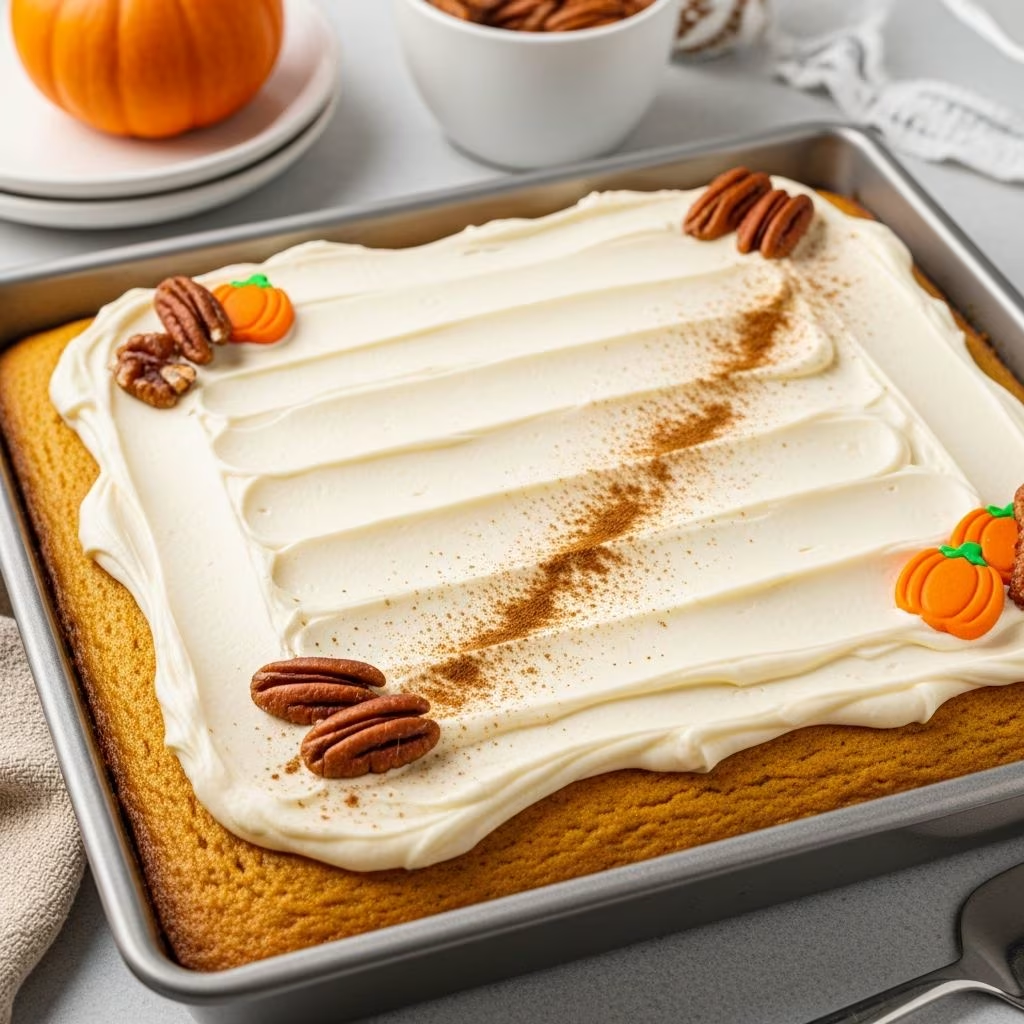
Pumpkin sheet cake stands as a beloved autumn dessert that combines the warmth of seasonal spices with the convenience of large-format baking. This versatile cake serves as an ideal option for gatherings, potlucks, and family celebrations. The appeal of sheet cakes lies in their simplicity—a single large pan replaces individual portions, making preparation and decoration straightforward. When infused with pumpkin puree and complemented by cream cheese frosting, the result delivers impressive flavor and texture that appeals to both casual bakers and experienced pastry enthusiasts.
Understanding Pumpkin Sheet Cake Fundamentals
Pumpkin sheet cakes differ from traditional layer cakes in both preparation and presentation. Rather than stacking multiple thin layers, these cakes bake directly in a large rectangular pan, typically measuring either 9×13 inches or 11×17 inches depending on desired thickness and yield. The larger surface area allows for even heat distribution and consistent baking throughout the cake. The incorporation of pumpkin puree provides natural moisture that keeps the cake tender while reducing the need for excessive oil or butter. This characteristic makes pumpkin sheet cakes particularly forgiving for beginning bakers, as the pumpkin acts as a moisture buffer preventing dryness even if baking time extends slightly beyond recommendations.
Essential Ingredients Breakdown
Success in pumpkin sheet cake baking begins with understanding each ingredient’s role in the final product. The foundation consists of conventional dry ingredients—all-purpose flour provides structure, while baking powder and baking soda work together to create lift and rise. The soda reacts with acidic components, while the powder offers additional leavening for a tender crumb.
The Pumpkin Base
Pure pumpkin puree forms the flavor and moisture foundation of the cake. It is crucial to distinguish between pure pumpkin puree and pumpkin pie filling, as pie filling contains added sugars and spices that would alter the final flavor profile and texture. Most recipes call for one 15-ounce can of pumpkin puree, which provides the distinctive autumn flavor and ensures a consistently moist interior. Some advanced bakers prefer using fresh roasted pumpkin, which delivers more intense flavor, though canned puree remains the standard for reliability and consistency.
Spice Combination
The aromatic profile of pumpkin sheet cake relies on a carefully balanced blend of warm spices. Ground cinnamon typically serves as the primary spice, with amounts ranging from one to two teaspoons per standard recipe. Nutmeg adds earthiness and complexity, usually in quantities around one-half teaspoon. Some recipes incorporate additional spices like allspice or ginger to create deeper flavor dimensions. These spices should always be freshly ground when possible, as ground spices lose potency over time when stored beyond six months.
Fat Component
Pumpkin cakes traditionally employ oil rather than butter for the fat component. Vegetable oil or canola oil keeps the cake exceptionally moist and provides a tender crumb structure. Oil distributes more evenly throughout the batter compared to butter, resulting in uniform texture throughout the cake. Quantities typically range from three-quarters cup to one cup oil per recipe.
Cream Cheese Frosting Essentials
The frosting transforms the simple pumpkin cake into a sophisticated dessert. Traditional cream cheese frosting combines room-temperature cream cheese, softened butter, vanilla extract, and powdered sugar. The ratio typically follows eight ounces cream cheese to four ounces butter to three to four cups powdered sugar. Some bakers add a touch of milk or heavy cream to achieve spreadable consistency, while others incorporate cinnamon to complement the cake’s spice profile.
Achieving the proper frosting texture requires careful attention to mixing technique. Beating cream cheese and butter separately until smooth prevents lumps and creates a uniform base. Adding powdered sugar gradually while mixing on low speed prevents the formation of an overly stiff frosting. The final texture should spread easily across the cooled cake without tearing the delicate crumb.
Step-by-Step Preparation Process
Pre-Baking Preparation
Successful baking begins with proper pan preparation. Grease the sheet pan thoroughly, then line the bottom with parchment paper cut to fit. This two-step approach ensures easy cake removal while preventing sticking. Preheat the oven to 350 degrees Fahrenheit, allowing sufficient time for the oven to reach the target temperature before batter enters. Temperature accuracy significantly impacts baking time and the final crumb structure.
Mixing the Batter
Most pumpkin sheet cake recipes employ the two-bowl method. In the first bowl, whisk together dry ingredients—flour, baking powder, baking soda, salt, cinnamon, and nutmeg. Proper whisking incorporates air and distributes leavening agents evenly. In the second bowl, combine sugar, oil, and vanilla, whisking until thoroughly combined. Add eggs one at a time, whisking well after each addition to create a stable mixture. This method, called creaming, develops proper emulsification that contributes to cake texture. Next, fold in pumpkin puree until just combined, then add the dry ingredients to the wet mixture, stirring until no streaks of flour remain. Overmixing at this stage develops gluten, resulting in a tough, dense cake.
Baking and Cooling
Transfer the batter to the prepared pan, using a spatula to spread it evenly into the corners. Bake for 15 to 25 minutes, depending on oven characteristics and pan dimensions. A toothpick inserted into the center should emerge with only a few moist crumbs, not wet batter. Remove the cake from the oven and allow it to cool completely in the pan before frosting—usually 30 to 45 minutes. Complete cooling prevents frosting from melting and allows the cake structure to set properly.
Ingredient Variations and Substitutions
| Component | Standard Ingredient | Suitable Alternatives | Impact on Final Cake |
|---|---|---|---|
| Fat | Vegetable Oil | Melted butter, coconut oil | Slightly different mouthfeel; butter creates richer flavor |
| Sweetener | Granulated Sugar | Brown sugar (partial), coconut sugar | Brown sugar adds molasses depth; slight texture change |
| Spices | Cinnamon, nutmeg | Allspice, ginger, cloves | Altered flavor profile; may intensify or soften spice notes |
| Binder | Pumpkin Puree | Sweet potato puree, butternut squash | Slightly different flavor; similar moisture properties |
Troubleshooting Common Issues
Dense or Heavy Cake
A dense cake typically results from overmixing the batter or excessive flour measurement. When flour is scooped directly from the bag, air gets displaced and density increases. The solution involves spooning flour into the measuring cup and leveling with a knife. Additionally, ensure baking soda and powder are within their expiration dates and properly distributed throughout dry ingredients.
Dry Cake Structure
If the cake emerges dry despite proper technique, the likely culprit involves excessive baking time. Check oven temperature accuracy using an independent thermometer, as many home ovens run hotter or cooler than indicated. Some cakes benefit from decreased oven temperature by 25 degrees with extended baking time, resulting in more gentle cooking.
Frosting Consistency Problems
Frosting that spreads too thin requires additional powdered sugar, added gradually while mixing. Frosting that remains too stiff needs a small amount of milk or cream stirred in until spreadable. Room temperature ingredients ensure proper emulsification—cold cream cheese and butter resist combining smoothly.
Serving and Storage Guidance
Pumpkin sheet cakes reach optimal flavor after cooling completely and allowing the frosting to set for 15 to 20 minutes. Cut with a sharp knife dipped in hot water and wiped between cuts for clean edges. Store covered at room temperature for up to two days, though refrigeration extends shelf life to four days. The cake freezes exceptionally well—either frost before freezing or freeze the unfrosted cake and add frosting after thawing for optimal texture.
Scaling Recipes for Different Occasions
The standard pumpkin sheet cake recipe yields approximately 24 servings in a 9×13 pan or 32 servings in a larger 11×17 pan. For smaller gatherings, reduce all ingredients by half and use a 8×8 square pan with adjusted baking time. For larger events, double the recipe and prepare two separate pans rather than overfilling a single pan. When scaling up frosting recipes, maintain the same ratios but allow additional mixing time for complete incorporation.
Advanced Baking Tips
Consider using room-temperature ingredients for better emulsification and more even baking. Toast spices briefly in a dry pan before measuring to intensify their flavor profiles. For extra moist cakes, brush the warm cake with simple syrup before frosting. Layer additional spiced cream cheese frosting between two thin cakes if preparing a more elaborate version. Some bakers add Greek yogurt or sour cream to increase moisture while adding subtle tang that complements autumn spices.
Frequently Asked Questions
Can I use pumpkin pie filling instead of pure pumpkin puree?
Pumpkin pie filling contains added sugars and spices, which would disrupt recipe balance and result in overly sweet cake with unpredictable spice levels. Pure pumpkin puree remains the correct choice for proper flavor control.
How far in advance can I prepare this cake?
The unfrosted cake keeps for two days at room temperature or up to one week frozen. Frosted cakes maintain quality for two days at room temperature or four days refrigerated. Frosting can be prepared two days ahead and stored separately.
What equipment do I need to make this recipe?
Essential equipment includes measuring cups and spoons for accuracy, mixing bowls, a whisk or mixer for combining ingredients, a spatula for spreading batter, a cake pan, parchment paper, and a toothpick for testing doneness.
Can this cake be made in a round springform pan?
Yes, though baking time may vary depending on pan dimensions. Check for doneness starting at the lower end of the recommended time range, as batter depth affects cooking duration.
References
- Pumpkin Sheet Cake — The Baker Mama. Retrieved from https://thebakermama.com/recipes/pumpkin-sheet-cake/
- Easy Pumpkin Sheet Cake — Sugar & Sparrow. Retrieved from https://sugarandsparrow.com/pumpkin-sheet-cake/
- Pumpkin Sheet Cake Recipe — Belle of the Kitchen. Retrieved from https://belleofthekitchen.com/pumpkin-sheet-cake/
- Pumpkin Sheet Cake with Cream Cheese Frosting — The Pioneer Woman. Retrieved from https://www.thepioneerwoman.com/food-cooking/recipes/a11885/pumpkin-sheet-cake/
- Pumpkin Sheet Cake — How Sweet Eats. Retrieved from https://www.howsweeteats.com/2019/10/pumpkin-sheet-cake/