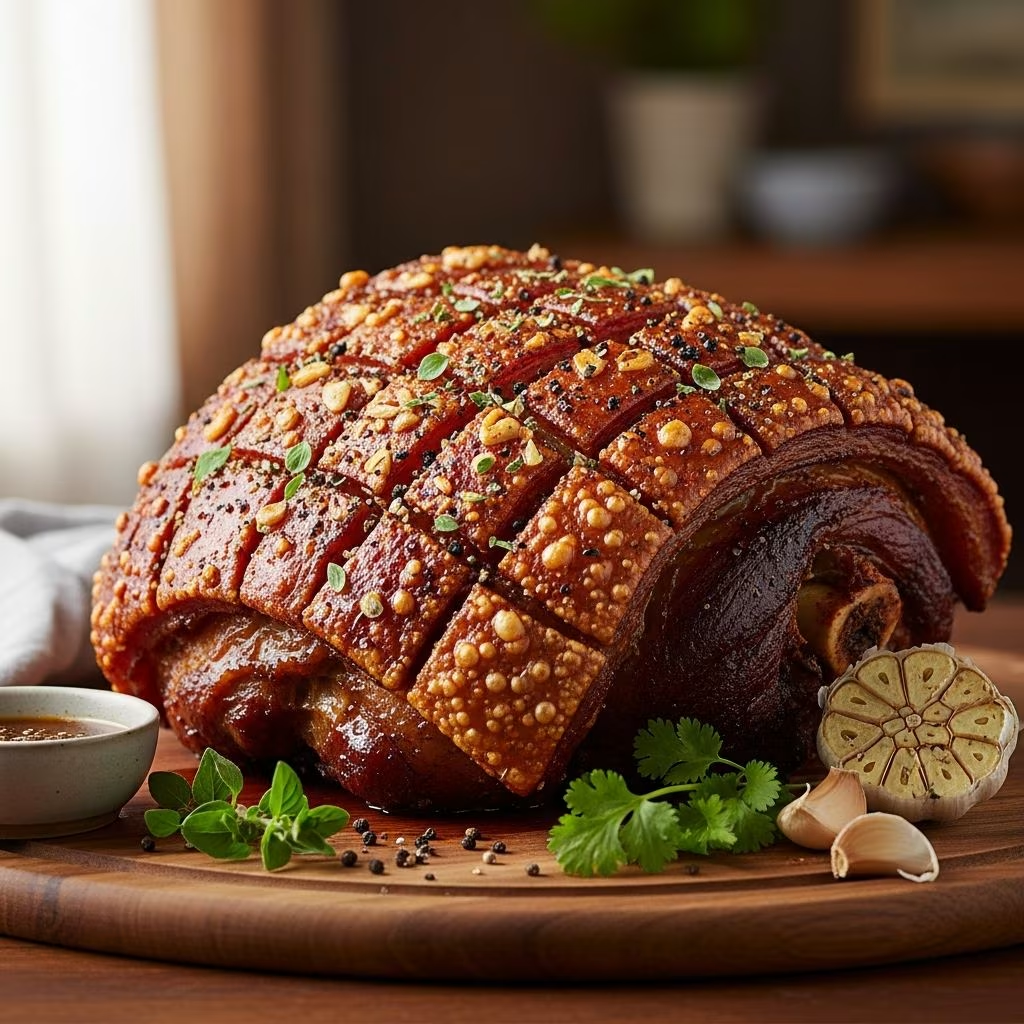
Experience the irresistible allure of pernil, a cherished Puerto Rican delicacy featuring slow-roasted pork shoulder that delivers fork-tender meat enveloped in a shatteringly crisp skin known as chicharrón. This dish stands as a holiday centerpiece and gathering staple, blending simple ingredients with patient cooking for profound flavor.
Understanding Pernil’s Cultural Roots
Pernil originates from Puerto Rican culinary traditions, where pork shoulder is elevated through meticulous seasoning and extended roasting. Families prepare it for Nochebuena and special occasions, symbolizing abundance and shared joy. The process transforms a humble cut into a symphony of textures: succulent interior contrasting with crunchy exterior.
Central to pernil is the marinade, often called mojo, which infuses garlic, herbs, and spices deeply into the meat. This technique ensures every bite bursts with savory depth, while the skin crisps to perfection under high heat.
Selecting the Ideal Pork Shoulder
Choose a bone-in, skin-on pork shoulder weighing 8-10 pounds for optimal results. The picnic cut or Boston butt works best, as the bone adds flavor and the thick skin yields superior chicharrón. Look for even fat marbling and fresh, firm flesh at your butcher or market.
- Bone-in preference: Enhances moisture retention and taste during long cooks.
- Skin-on essential: Critical for that signature crackling.
- Size guide: Larger cuts serve crowds; scale down for smaller groups.
Essential Ingredients for Authentic Flavor
Gather these pantry staples and fresh elements to build your pernil’s robust profile. Proportions scale with pork size, but the focus remains on garlic’s pungency balanced by aromatic spices.
| Ingredient | Quantity (for 8-10 lb pork) | Purpose |
|---|---|---|
| Garlic cloves, peeled | 1-2 heads (16 cloves) | Base for paste; intense aroma |
| Olive oil or neutral oil | 1/4 cup | Binds seasonings |
| Adobo seasoning | 2-3 tbsp | All-purpose flavor enhancer |
| Sazón packets | 2 packets | Color and spice boost |
| Dried oregano | 1-2 tbsp | Earthy herbal note |
| Black pepper, ground | 2 tsp | Sharp heat |
| Sofrito (optional) | 2 tbsp | Vegetable depth |
| White vinegar | 1/4 cup | Cleansing and tenderizing |
These components create a paste that penetrates via incisions, maximizing infusion.
Step-by-Step Marination Process
Marinating overnight—or up to 48 hours—is non-negotiable for flavor penetration and tenderness. Begin by rinsing the pork in cold water, then pat thoroughly dry.
- Prepare the paste: Mash garlic with oil, oregano, pepper, adobo, sazón, and sofrito in a food processor until smooth.
- Score the meat: Use a sharp knife to make 1-inch deep slits across all surfaces, including under the skin if separable.
- Stuff generously: Press 1 tsp paste into each slit; rub remaining over entire surface.
- Vinegar rinse: Pour vinegar over skin and meat, rubbing to clean and tenderize.
- Season exterior: Sprinkle additional adobo and salt on skin.
- Rest: Place in a deep roasting pan, cover tightly with foil, and refrigerate.
This method ensures even distribution, with acids breaking down tough fibers.
Mastering the Roasting Technique
Low-and-slow roasting yields the best texture. Bring pork to room temperature (30-60 minutes) before oven entry for uniform cooking.
- Preheat to 325-350°F: Position rack in lower third.
- Covered phase: Foil-sealed pan; roast 25-45 minutes per pound (4-6 hours for 8-10 lb), until internal temp hits 180-200°F and meat shreds easily.
- Basting ritual: Every 30-40 minutes, spoon pan juices over meat (avoid skin).
- Uncovered crisp: Remove foil, raise to 375-425°F for 20-60 minutes. Rotate pan quarterly; tap skin for hardness.
- Resting: 30 minutes tented to redistribute juices.
Target clear juices and probe-tender meat. Skin blisters signal doneness.
Roasting Time Chart by Weight
| Pork Weight | Total Covered Time | Uncovered Crisp Time | Internal Temp |
|---|---|---|---|
| 5 lb | 2.5-3 hours | 20-30 min | 180°F |
| 7 lb | 3.5-4 hours | 30-45 min | 180-190°F |
| 8-10 lb | 4-6 hours | 30-60 min | 180-200°F |
Adjust for oven variations; use thermometer always.
Tips for Crispiest Chicharrón
Achieving crackling skin elevates pernil. Dryness is paramount.
- Pat skin ultra-dry pre- and post-marinate with paper towels.
- Avoid basting skin; reserve juices for meat.
- High final heat with door cracks for steam escape.
- Puncture skin lightly pre-roast for fat rendering.
- Broil briefly if needed, monitoring closely.
Creative Variations and Serving Ideas
Adapt pernil beyond tradition. Smoke at 250°F for 15 hours sans skin for pulled pork tacos.
- Cuban twist: Add sour orange juice to mojo.
- Spicy kick: Incorporate cumin, onion powder.
- Sides pairing: Rice with gandules, tostones, ensalada rusa.
- Leftovers: Carnitas, sandwiches, stews.
Squeeze citrus over shredded meat pre-serve for brightness.
Nutrition Snapshot
Per 4-oz serving (approximate, skinless): 216 calories, high protein (25g+), moderate fat from rendering. Skin adds crunch but calories; enjoy mindfully.
Frequently Asked Questions
Can I use boneless pork?
Bone-in preferred for flavor, but boneless works; reduce time 20-30%.
What if skin doesn’t crisp?
Dry more aggressively; broil 5-10 minutes watching intently.
Make-ahead possible?
Marinate 1-2 days ahead; roast day-of. Refrigerate leftovers 4 days.
Smoker alternative?
Yes, 250°F low-and-slow; chop skin separately for crisp.
Allergy swaps?
Omit sazón for MSG-free; use fresh herbs.
Troubleshooting Common Issues
| Problem | Cause | Solution |
|---|---|---|
| Dry meat | Overcook or no rest | Lower temp, rest 30+ min |
| Soggy skin | Moisture retention | Dry thoroughly, high heat finish |
| Uneven crisp | Steam buildup | Rotate pan, vent foil |
| Bland flavor | Short marinate | 24+ hours, stuff slits deep |
Practice refines mastery.
References
- Puerto Rican Pernil (Roast Pork) — Kitchen Gidget. 2015-12-13. https://www.kitchengidget.com/2015/12/13/pernil-puerto-rican-pork/
- Pernil (Puerto Rican Roast Pork Shoulder with Crackling) — Sense & Edibility. N/A. https://senseandedibility.com/pernil-roast-pork-shoulder/
- Pernil — Toni’s Recipes. N/A. https://tonisrecipes.com/pernil/
- Pernil Recipe | Puerto Rican Pork Shoulder — The Mom 100. N/A. https://themom100.com/recipe/pernil/
- Pernil Spanish Style Roast Pork – How To Make Chicharron — YouTube (Cooking With Tammy). N/A. https://www.youtube.com/watch?v=uNl5mvpFtrI