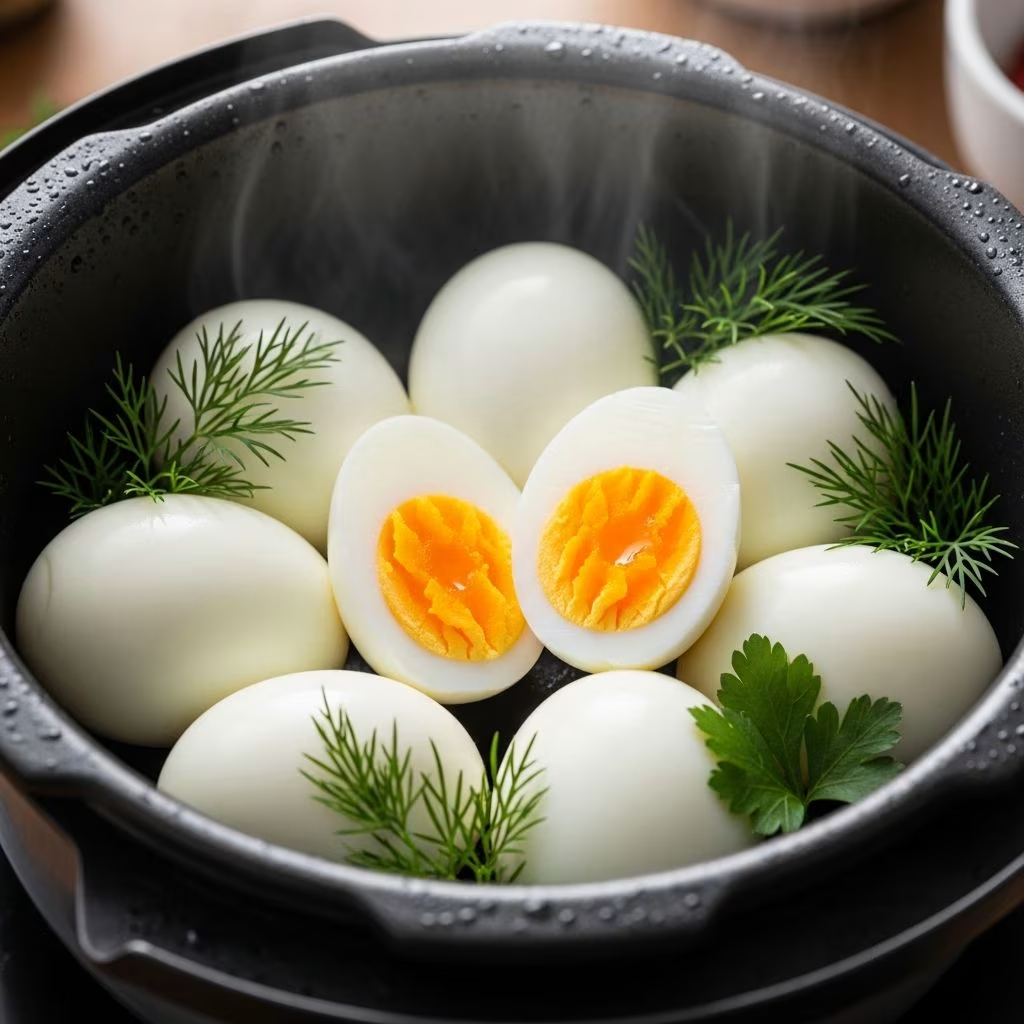
Pressure cookers transform the often frustrating task of boiling eggs into a reliable, efficient process. Unlike traditional stovetop methods that risk overcooking or undercooking, this appliance delivers consistent outcomes with shells that slip off effortlessly. Home cooks praise the technique for its simplicity and superior results, making it ideal for weekly meal prep or impromptu snacks.
Why Switch to Pressure Cooking for Eggs
Conventional boiling demands constant monitoring to prevent issues like rubbery whites or greenish yolks from sulfur reactions. Pressure cooking circumvents these problems by using steam under high pressure, cooking eggs evenly in a fraction of the active time. The method minimizes air pocket formation, which causes peeling difficulties, and preserves yolk color and texture.
- Consistency: Every batch yields uniform doneness regardless of egg quantity.
- Speed: Total hands-on time is under 30 minutes, including prep and cooling.
- Yield: Up to two dozen eggs fit in standard models without adjusting parameters.
- Versatility: Adjust timings for soft, medium, or fully hard yolks.
Users report fewer cracked shells and no need for vinegar or salt additives common in old-school recipes.
Essential Equipment and Ingredients
You need minimal items: a pressure cooker (6-quart models work best for family batches), a trivet or steam rack, fresh eggs, water, and an ice bath setup. Room-temperature eggs reduce thermal shock risks, preventing cracks during pressurization.
| Item | Purpose | Notes |
|---|---|---|
| Pressure Cooker | Main cooking vessel | Instant Pot or similar; 6-8 quart capacity |
| Trivet/Steam Rack | Elevates eggs above water | Included with most models; stackable egg racks optional |
| Eggs | Primary ingredient | 2-24 large eggs; room temp preferred |
| Water | Steam generator | Exactly 1 cup (8 oz) |
| Ice Bath | Shocks and cools | Bowl with ice and cold water |
Mastering the 5-5-5 Technique
The renowned 5-5-5 method—5 minutes high pressure, 5 minutes natural release, 5 minutes ice bath—produces classic hard-boiled eggs with firm yolks and tender whites. This approach stops cooking precisely, avoiding overdone results.
- Add 1 cup water to the pot insert.
- Install the trivet and arrange eggs in a single layer or stacked.
- Secure the lid, set valve to sealing.
- Select high pressure for 5 minutes.
- Allow 5-minute natural release (no intervention).
- Quick release remaining pressure, transfer eggs to ice bath for 5+ minutes.
Peel under cool running water for best results. Eggs are ready to eat, store, or use in dishes.
Customizing Doneness Levels
Tailor yolk firmness to your needs by tweaking cook time. Natural release remains 5 minutes across variations.
- Soft yolks (1-2 min): Ideal for ramen or salads; creamy texture.
- Medium yolks (3 min): Slightly fudgy, great for deviled eggs.
- Medium-hard (4 min): Balanced for slicing.
- Hard yolks (5 min): Classic for salads or eating plain.
Experiment initially, as egg size and model altitude may influence outcomes. Softer preferences often use 4-5-5.
Troubleshooting Common Issues
Even simple methods encounter hiccups. Here’s how to fix them:
- Cracked shells: Use room-temp eggs; avoid overcrowding.
- Hard-to-peel: Ensure full ice bath; older eggs peel easier naturally.
- Green ring: Symptom of overcooking—shorten pressure time or release promptly.
- Undercooked: Extend to 6 minutes if at high altitude.
- Stuck-on valve: Clean after each use; use tongs for egg removal.
A separate timer for natural release prevents accidental overcooking.
Storage and Shelf Life
Cooked eggs last 1 week unpeeled in the fridge (airtight container) or 3-5 days peeled. Submerge in water, changing daily, to maintain freshness. Freeze peeled whites and yolks separately for up to 3 months, though texture softens upon thawing.
Creative Ways to Use Pressure Cooker Eggs
Beyond plain eating, these eggs elevate countless recipes:
- Deviled eggs: Mash yolks with mayo, mustard, relish; pipe back in.
- Egg salad: Chop with celery, onion, herbs for sandwiches.
- Pickled eggs: Soak in vinegar brine with beets for color.
- Salads: Cobb, potato, or pasta—slice neatly without crumbling.
- Snacks: Sprinkle with salt, paprika, or everything bagel seasoning.
Meal prep tip: Cook a dozen Sunday for grab-and-go protein all week.
Comparing Pressure Cooker vs. Stovetop
| Method | Time | Peel Ease | Consistency | Effort |
|---|---|---|---|---|
| Pressure Cooker | ~25 min total | Excellent | High | Low |
| Stovetop Boil | ~20-30 min | Variable | Medium | High (monitoring) |
Pressure cooking wins for reliability, especially in batches.
Frequently Asked Questions
Can I cook fewer or more than 12 eggs?
Yes, 2-24 eggs use the same 1 cup water and timing.
Does egg size matter?
Large eggs are standard; extra-large may need +1 minute.
What if I lack a trivet?
Use a steamer basket or foil sling for egg removal.
Are air fryer or sous vide alternatives?
They work but lack pressure cooking’s peel perfection.
Vegetarian/vegan substitutes?
This method is egg-specific; try tofu for similar texture.
Nutrition at a Glance
One large hard-boiled egg: 70 calories, 6g protein, 5g fat, <1g carbs. Rich in vitamin D, B12, selenium.
References
- Perfect Peel Pressure Cooker Hard Boiled Eggs — Oh So Delicioso. 2023. https://ohsodelicioso.com/instant-pot-hard-boiled-egg/
- The Perfect Hard Boiled Eggs — Instant Pot. 2023. https://instantpot.com/blogs/recipes/the-perfect-hard-boiled-eggs
- How To Hard Boil Eggs In Your Instant Pot — Donuts2Crumpets. 2023-04. https://donuts2crumpets.com/2023/04/how-to-hard-boil-eggs-in-your-instant-pot.html
- How to Make Instant Pot Hard Boiled Eggs (Easy Peel Every Time) — Grits and Gouda. 2023. https://gritsandgouda.com/how-to-make-instant-pot-hard-boiled-eggs-easy-peel-every-time/
- Instant Pot Hard Boiled Eggs — Against All Grain. 2018-03-19. https://againstallgrain.com/2018/03/19/instant-pot-hard-boiled-eggs/