Ribs have long been a centerpiece of casual dining and special occasions, yet traditional smoking and slow-roasting methods demand hours of patience and careful temperature management. The introduction of pressure cooking technology has revolutionized home cooking by delivering restaurant-quality tenderness in a fraction of the traditional time. When combined with bold Asian flavors—particularly the dynamic trio of fresh ginger, zesty lime, and savory umami elements—pressure-cooked ribs transform into an elegant dish that feels both comforting and sophisticated.
This cooking approach eliminates the need for heavy barbecue sauces and complex marinades, instead relying on fresh aromatics and nourishing fats to create a glaze that enhances rather than masks the meat’s natural qualities. The result is a lower-sugar alternative to conventional sticky ribs, making this recipe suitable for various dietary preferences while maintaining exceptional flavor depth.
Why Pressure Cooking Transforms Rib Preparation
The pressure cooking method works by trapping steam inside a sealed vessel, raising the internal temperature and pressure significantly above atmospheric levels. This intense environment breaks down collagen in connective tissue far more efficiently than conventional cooking methods, resulting in meat that separates easily from the bone while maintaining moisture and succulence.
Traditional rib preparation typically requires 4-6 hours of smoking or slow roasting at low temperatures. Pressure cooking achieves comparable or superior tenderness in approximately 25-30 minutes of active cooking time, plus preparation and finishing steps. This acceleration does not compromise quality; rather, it allows home cooks to prepare impressive dishes on weeknight schedules without sacrificing flavor complexity.
The high-pressure environment also forces seasonings and aromatics deeper into the meat, distributing flavors more uniformly throughout rather than concentrating them on the surface. This penetration creates a more cohesive tasting experience where each bite delivers consistent seasoning and subtle ginger-lime notes.
Selecting and Preparing Your Ribs
Baby back ribs, which typically weigh between 2 and 2.5 pounds per rack, are the ideal choice for this cooking method. Their size accommodates the pressure cooker’s capacity constraints while providing sufficient meat for 4 servings. Spare ribs, which are larger and fattier, can also work but may require extended cooking time and adjustments to liquid ratios.
Before applying seasoning, proper preparation ensures optimal texture and flavor absorption. Begin by patting the ribs completely dry with paper towels—excess surface moisture interferes with seasoning adhesion and can prevent proper browning during finishing stages. Next, remove the thin, papery membrane that runs along the bone side of the rack. This membrane remains chewy even after pressure cooking and creates an unpleasant textural contrast. A small sharp knife inserted at a slight angle makes this membrane easy to grasp and peel away in one continuous strip.
Cutting the full rack into 4 sections before cooking serves multiple purposes: it facilitates even cooking by reducing thickness variation, allows the pieces to fit more comfortably in the pressure cooker pot, and makes portion control straightforward. Use a sharp knife or kitchen shears to divide the ribs between the bones into equal sections.
Building the Dry Rub Foundation
The dry rub represents the flavor foundation for these ribs, delivering heat, depth, and aromatic complexity before any liquid elements are introduced. This approach contrasts with wet marinades, which can dilute during pressure cooking and produce muddy flavor profiles.
Core rub components include:
- Chili powder (2 tablespoons)—provides moderate heat and subtle fruity undertones
- Fresh minced ginger (2 tablespoons)—delivers peppery warmth and aromatic brightness
- Minced garlic (3 cloves)—contributes umami depth and pungent notes that mellow during cooking
- Himalayan pink salt (1.5 teaspoons)—enhances all flavors and preserves meat moisture
- Black pepper (1 teaspoon)—adds sharp bite and complexity
Combining these ingredients in a small bowl ensures even distribution before application. The ginger and garlic should be freshly minced rather than pre-packaged versions, which lose potency and contain added preservatives. Rub this mixture evenly across all surfaces of the meat, applying gentle but firm pressure to encourage adhesion and allow flavors to begin penetrating the surface.
Pressure Cooking Process and Technique
The pressure cooking phase requires attention to specific steps to achieve optimal results. Begin by placing a trivet with handles inside the Instant Pot or pressure cooker. This rack serves as an elevated platform that keeps ribs from sitting directly in liquid, which would cause them to stew rather than steam-roast.
Pour 3/4 cup chicken broth into the pot, then add 1 tablespoon of fresh lime juice. This liquid mixture creates the steam that permeates the pressure cooker while adding subtle flavor to the cooking environment. The lime juice begins the acidic element that balances the richer umami compounds that develop during cooking.
Arrange the seasoned rib sections on the trivet in a compact configuration—they may overlap slightly without compromising cook quality. Secure the pressure cooker’s lid and ensure the pressure-release valve is closed. Set the cooker to HIGH pressure and establish a 25-minute timer.
At cooking completion, allow natural pressure release rather than using the quick-release function. This gradual depressurization prevents moisture from suddenly escaping, which can dry out the outer meat layer. Natural release typically requires 10-15 minutes, during which internal pressure slowly normalizes.
Creating the Umami-Rich Glaze
While ribs cook, prepare the glaze that transforms their surface during finishing. This sauce draws inspiration from Asian flavor profiles, combining salty, sweet, nutty, and acidic elements into a harmonious whole.
Glaze ingredients and their functions:
- Coconut aminos or tamari (60ml)—provides deep umami, salty notes without wheat-based soy sauce
- Butter (60 grams)—adds richness and helps glaze adhere to meat surface
- Toasted sesame oil (2 teaspoons)—contributes nutty aroma and complexity
- Lime zest (1 teaspoon)—intensifies citrus brightness and adds textural dimension
- Fresh lime juice (2 tablespoons)—delivers acidity that balances umami and cuts through richness
Combine these ingredients in a small saucepan and warm over medium-low heat just until the butter melts, approximately 2 minutes. This gentle heating prevents flavors from cooking off while ensuring even integration. Reserve this mixture, as you will apply it in stages during the finishing process.
Finishing Ribs for Color and Caramelization
Once ribs complete their pressure cooking cycle and pressure releases naturally, the surface remains pale and lacks the caramelized exterior that characterizes restaurant-quality preparations. The finishing phase addresses this through intense, direct heat that creates browning and slight charring while the glaze caramelizes and adheres to the meat.
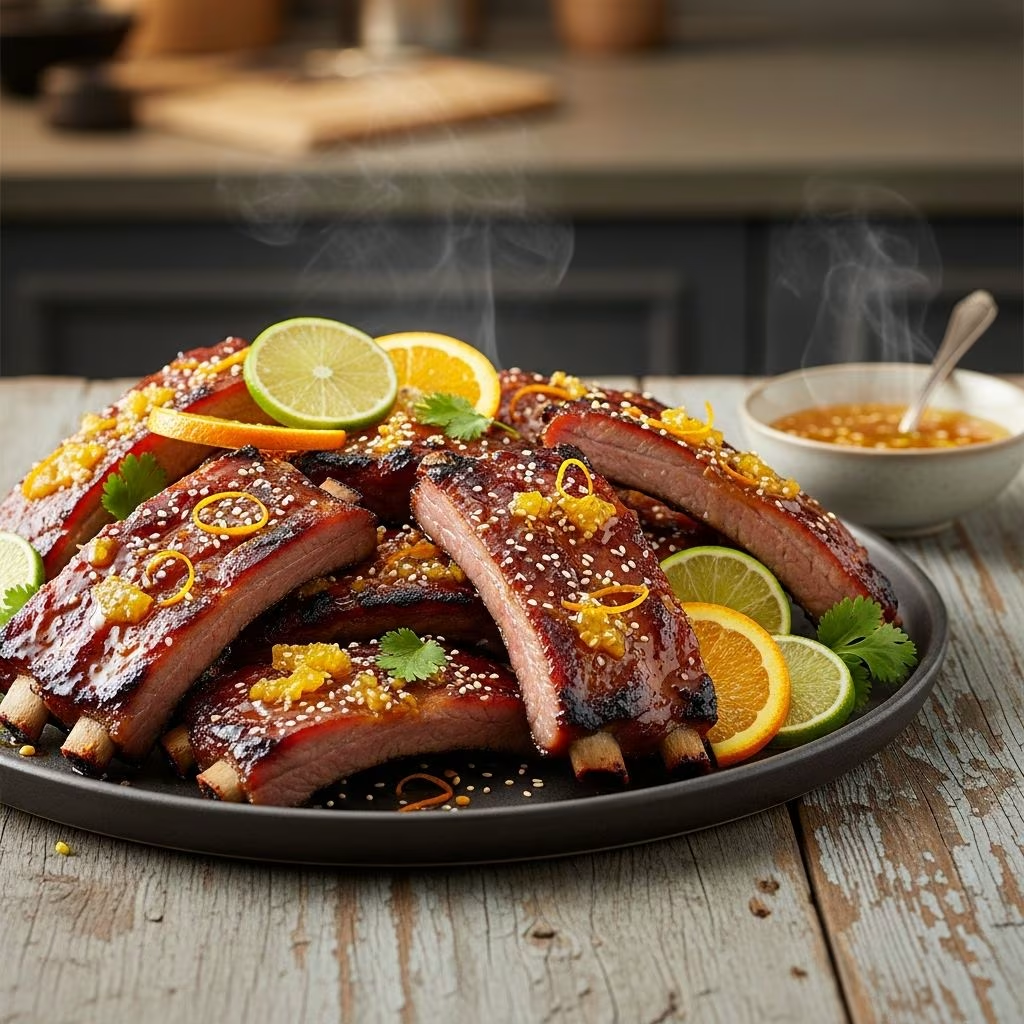
Preheat your broiler or grill, positioning the rack approximately 6 inches from the heat source. Line a large baking sheet with aluminum foil for easy cleanup. Remove ribs from the pressure cooker and transfer them to the prepared baking sheet, meaty side down. Discard the cooking liquid from the pot.
Brush the ribs generously with the prepared glaze, coating all surfaces. Place under the broiler or on the grill for 3-4 minutes until the glaze begins to brown and caramelize. Watch carefully to prevent charring that obscures flavor. Remove and flip the ribs to expose the meaty side, then brush with remaining glaze and return to heat for an additional 3-4 minutes until both surfaces achieve deep caramelization and slight charring appears.
This finishing phase serves multiple purposes: it creates textural contrast between tender interior and slightly crispy exterior, allows the glaze to undergo Maillard browning reactions that develop complex flavors, and visually transforms pale ribs into restaurant-quality presentations.
Complementary Accompaniments and Serving Suggestions
Asian-inspired ribs pair exceptionally well with fresh, crisp side dishes that provide textural contrast and palate cleansing between bites. A simple slaw featuring shredded green or red cabbage, sliced spring onion, sesame seeds, and a light lime-mayonnaise dressing complements the ribs’ richness while adding brightness and crunch.
To prepare the slaw, combine 230 grams shredded cabbage with 35 grams sliced spring onion and 2 teaspoons sesame seeds. In a separate small bowl, whisk together 1-2 tablespoons avocado oil mayonnaise with the juice of half a lime and a pinch of salt. Toss the cabbage mixture with the dressing just before serving to maintain crispness.
Additional serving options include steamed jasmine rice, which absorbs the residual glaze from the meat; roasted bok choy or other Asian greens; or a refreshing cucumber and ginger salad. These accompaniments allow the ribs to remain the focal point while adding nutritional balance and flavor variety to the meal.
Nutritional Considerations and Dietary Flexibility
This recipe delivers significant protein content from the ribs while avoiding heavy sugar loads present in commercial barbecue sauces. The use of coconut aminos instead of standard soy sauce reduces sodium levels, and the fresh ginger-lime combination provides natural flavor without artificial additives.
For those following ketogenic or lower-carbohydrate diets, this preparation aligns well with macronutrient targets. The glaze contains minimal sugar, relying instead on umami and acidic elements for flavor complexity. Tamari, a gluten-free soy alternative, accommodates those with wheat sensitivities.
The sesame oil and butter contribute healthy fats that support satiety and nutrient absorption, while the fresh ginger provides ginger compounds associated with digestive and anti-inflammatory properties in culinary research contexts.
Common Questions and Troubleshooting
What if my ribs remain too tough after pressure cooking?
Insufficient tenderness typically indicates either inadequate cooking time or insufficient liquid in the pressure cooker. Ensure you are cooking at HIGH pressure for the full 25 minutes and that at least 3/4 cup liquid remains in the pot. Extended cooking for an additional 5-10 minutes resolves this issue in subsequent attempts.
Can I use spare ribs instead of baby backs?
Yes, though adjustments are necessary. Spare ribs are larger and fattier, requiring 30-35 minutes of high pressure instead of 25. They yield more meat per rack but may not fit comfortably in standard Instant Pots without modification.
How should I store leftovers?
Cooked ribs keep refrigerated in an airtight container for 3-4 days. Reheat gently in a 300°F oven wrapped in foil to prevent drying. Freeze for up to 3 months; thaw in the refrigerator overnight before reheating.
Can I prepare this without a pressure cooker?
Traditional oven braising works but requires significantly longer cooking time. Wrap seasoned ribs in foil with the liquid mixture and braise at 300°F for 2.5-3 hours until tender. Finish under the broiler as directed.
What lime varieties work best?
Persian limes, the most common supermarket variety, provide adequate juice and balanced acidity. Key limes offer more intense flavor but yield less juice, so substitute smaller quantities. Avoid bottled lime juice, which lacks the brightness and aromatic qualities of fresh fruit.
Making This Recipe Your Own
While this formula delivers exceptional results, it accommodates personal preferences and ingredient variations. Increase chili powder to 2.5 tablespoons for those who prefer more heat, or reduce to 1.5 tablespoons for milder palates. Substitute regular soy sauce for coconut aminos if preferred, though the gluten-free version provides a slightly cleaner flavor profile.
The aromatic foundation remains flexible—some cooks add minced lemongrass for herbal complexity, others incorporate minced jalapeño for fresh heat, and still others include a teaspoon of ground cumin or coriander for earthy warmth. These modifications build on the basic framework without compromising the dish’s essential character.
Ginger quantity can be adjusted from 1.5 to 3 tablespoons depending on personal preference and tolerance. Fresh ginger becomes mellower during pressure cooking, so those who love intense ginger flavor may benefit from increased quantities. Lime juice similarly accommodates variations—some prefer the more assertive citrus of 3 tablespoons total, while others find 2 tablespoons optimal.
Conclusion: Elevated Home Cooking Made Practical
Pressure-cooked ribs with ginger-lime glaze represent the intersection of convenience and culinary sophistication. By leveraging modern cooking technology and Asian-inspired flavor profiles, home cooks can produce restaurant-quality dishes that feel special without requiring specialized techniques or excessive time investment. The method’s reliability, combined with the adaptability of seasonings and accompaniments, makes this recipe a valuable addition to regular rotation menus while remaining impressive enough for entertaining guests.
References
- Baby Back Ribs Pressure Cooking Guide — Patient.info. 2024. https://patient.info/recipes/diabetes-friendly-recipes/instant-pot-ginger-lime-baby-back-ribs
- Instant Pot Pressure Cooking Methods and Timing — Yarden. 2024. https://www.yarden.com/blog/ginger-lime-baby-back-ribs-recipe/
- High-Pressure Cooking Techniques for Meat Tenderization — The Modern Proper. 2024. https://themodernproper.com/instant-pot-ribs
- Asian-Inspired Pressure Cooker Recipes — Edible Nashville. 2024. https://ediblenashville.ediblecommunities.com/recipe/ginger-lime-baby-back-ribs/