When hosting gatherings, offering guests an impressive spread of appetizers elevates the entire dining experience. Among the most beloved finger foods, small glazed meatballs have remained a staple for decades, appearing at holiday celebrations, casual get-togethers, and formal entertaining occasions. The challenge, however, has traditionally involved extensive preparation time and careful monitoring throughout the cooking process. Modern pressure cooking technology has transformed this classic dish, enabling home cooks to produce professional-quality results in a fraction of the traditional time. This comprehensive guide explores how to master the art of creating succulent, flavor-packed cocktail meatballs using your pressure cooker.
Understanding Pressure Cooking for Appetizer Success
Pressure cookers function by trapping steam within a sealed vessel, raising the internal temperature and dramatically accelerating cooking times. For meatball preparation, this technology offers distinct advantages over conventional methods. The moist heat environment prevents meatballs from drying out during cooking, a common problem when using traditional oven or stovetop approaches. Additionally, the enclosed cooking vessel allows flavors from glazing sauces to penetrate the meat thoroughly, resulting in deeply seasoned, succulent appetizers.
The efficiency of pressure cooking cannot be overstated for entertaining purposes. What might require forty-five minutes to an hour using conventional slow cooking methods can be accomplished in approximately twenty to thirty minutes total, including preparation and cooking time. This accelerated timeline proves invaluable when last-minute guests arrive or when coordinating multiple dishes for a meal.
Crafting the Perfect Meatball Base
The foundation of exceptional cocktail meatballs begins with thoughtfully selecting and combining ingredients for the meatball mixture. Ground beef remains the most traditional choice, though ground poultry, pork, or blended combinations offer equally delicious alternatives. The ratio of fat to lean meat influences both texture and flavor; slightly fattier ground meat yields more tender, juicy results compared to very lean varieties.
Binding agents play a crucial role in maintaining meatball structure during the high-pressure cooking process. Breadcrumbs moistened with broth or milk absorb excess moisture from the meat while providing structure. Eggs act as additional binding agents, helping ingredients cohere into cohesive spheres that maintain their shape during cooking.
Essential Seasoning Components
Layering multiple seasoning elements creates complex, memorable flavor profiles. Consider incorporating:
- Garlic — either fresh minced or powdered for convenience, contributing pungent savory notes
- Herbs — thyme, oregano, or parsley adding aromatic depth
- Spices — ground cinnamon or cumin introducing subtle warmth and complexity
- Salt and pepper — foundational seasonings that amplify other flavors
- Optional additions — finely minced pickled jalapeños, caramelized onions, or grated cheese for distinctive character
The Art of Meatball Formation
Consistency in meatball size ensures even cooking throughout the batch. Unlike larger meatballs intended as main course components, cocktail versions should remain relatively small—typically the size of walnuts or slightly larger. A cookie dough scoop or small ice cream scoop simplifies this process, ensuring uniformity without requiring hand-rolling of each individual ball.
When combining ingredients for the meatball mixture, handling the meat gently proves essential. Overmixing develops gluten in the breadcrumbs and can result in dense, rubbery meatballs. Mix just until ingredients distribute evenly, then transfer the mixture to your formation tool. If the mixture feels sticky, slightly dampening your hands with water facilitates rolling without adhering excessively to your skin.
Building Flavor Through Browning
Before introducing pressure-cooking, browning the meatballs using the pressure cooker’s sauté function creates a flavorful crust through the Maillard reaction—a chemical process that develops complex savory flavors. This browning step represents one of the most important flavor-building techniques in pressure cooking.
Heat oil or butter in the pressure cooker using the sauté function until shimmering. Carefully add meatballs, resisting the urge to stir immediately. Allow them to develop color on their resting surface for two to three minutes before gently agitating the pot to brown additional sides. Complete browning typically requires four to five minutes total. A helpful technique involves lifting the inner pot and shaking it gently, eliminating the need to manually turn each meatball individually.
Sauce Selection and Flavor Combinations
The sauce transforms basic meatballs into memorable appetizers. Multiple flavor profiles work beautifully with pressure-cooked meatballs, each offering distinct entertaining possibilities.
Savory-Sweet Glazes
Combining sweet elements with savory components creates balanced, crowd-pleasing sauces. Barbecue sauce mixed with grape jelly produces a classic combination, while substituting strawberry preserves offers a subtly different flavor profile. Honey combined with soy sauce and ginger creates an Asian-inspired variation. These sweet-savory combinations appeal to diverse palates, making them ideal for entertaining situations where guest preferences vary.
Zesty and Tangy Options
For guests preferring less sweet applications, tangy sauces prove equally compelling. Chili sauce combined with vinegar and mustard creates complex, sophisticated flavors. BBQ sauce with a touch of hot sauce provides layered heat and smokiness. These bolder preparations work particularly well for casual gatherings or sports-viewing occasions.
Creating Custom Sauce Combinations
| Base Sauce | Sweet Component | Seasoning Addition | Serving Suggestion |
|---|---|---|---|
| BBQ Sauce (1 cup) | Grape Jelly (1.5 cups) | None required | Classic appetizer |
| Chili Sauce (1 cup) | Honey (2 tablespoons) | Apple Cider Vinegar (2 tsp) | Potlucks, casual gatherings |
| Ketchup (1/2 cup) | Brown Sugar (2 tbsp) | Worcestershire Sauce (1 tsp) | Family-friendly events |
| Soy Sauce (3/4 cup) | Honey (3 tbsp) | Ginger, Garlic | Asian-themed entertaining |
Step-by-Step Pressure Cooking Instructions
After browning your meatballs and preparing your chosen sauce, the actual pressure cooking phase becomes straightforward.
- Combine sauce ingredients in a separate bowl, stirring until well combined
- Pour the prepared sauce over the browned meatballs, ensuring even coverage
- If fond (browned bits) stick to the pot bottom, use the sauce liquid to deglaze the surface, scraping gently
- Close the pressure cooker lid securely and position the steam release valve to “sealing”
- Set the pressure cooker to high pressure for approximately four to seven minutes, depending on your specific model and meatball size
- Allow the pressure to release naturally for five minutes, then perform a manual quick release by carefully moving the steam valve to “venting”
- Once the pin drops and the lid opens safely, stir the meatballs gently to ensure even sauce coating
Achieving Optimal Sauce Consistency
Pressure-cooked meatballs sometimes finish with sauce that appears thinner than desired. To achieve a glossy, clinging glaze, activate the sauté function after cooking completes. Allow the sauce to reduce for three to five minutes, stirring occasionally until it reaches your preferred consistency. This additional step concentrates flavors while creating a more elegant presentation.
For those preferring thin, soup-like sauces for serving over rice or mashed potatoes, skip the reduction step entirely. The versatility of this approach accommodates different serving preferences and entertaining contexts.
Serving and Presentation Strategies
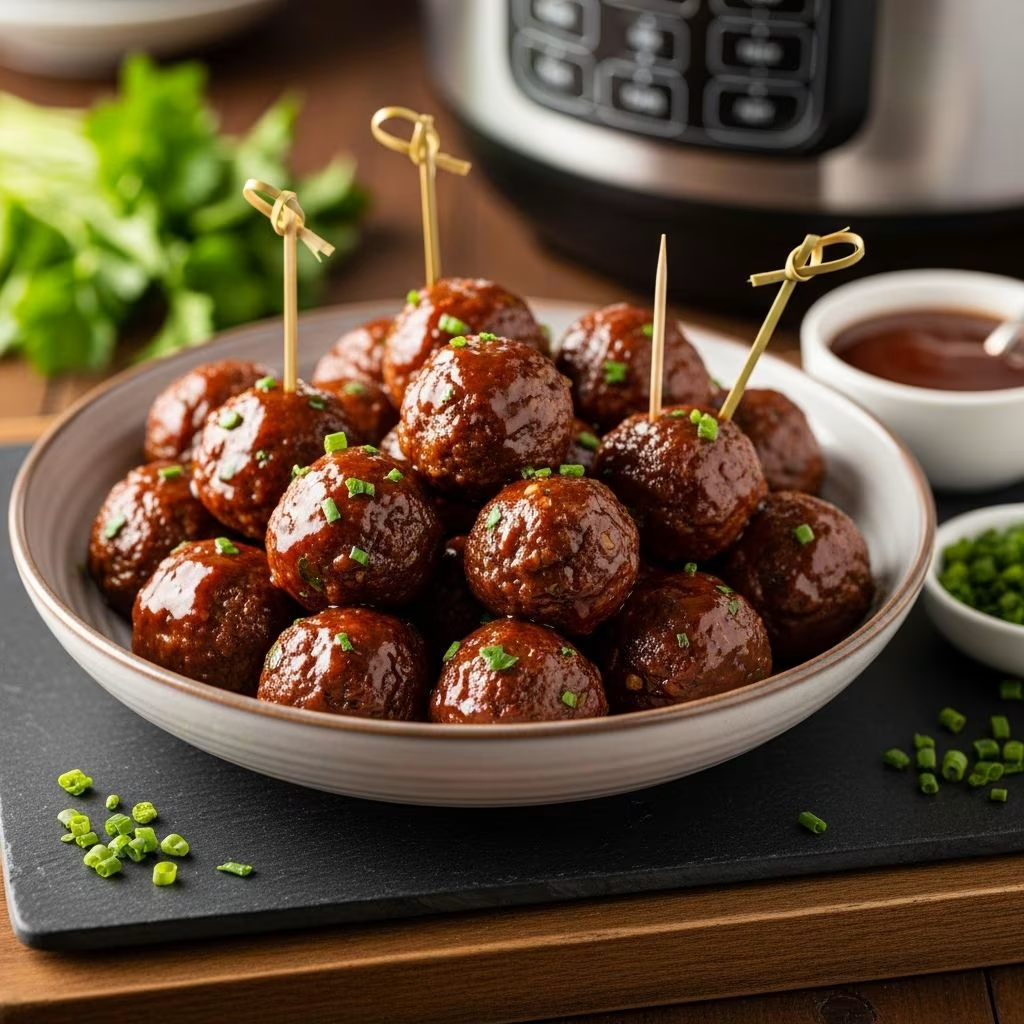
Professional presentation elevates even simple appetizers. Transfer finished meatballs to an attractive serving vessel, ensuring adequate sauce coating each piece. Fresh garnishes such as chopped chives, parsley, or sliced green onions add visual appeal and brightness. Toothpicks placed in a nearby holder facilitate easy guest consumption.
For buffet-style entertaining, maintain meatballs at serving temperature using the pressure cooker’s “keep warm” function, eliminating the need for separate warming equipment. This approach proves particularly valuable during extended gatherings where meatballs serve guests throughout the event.
Batch Cooking and Advance Preparation
Pressure cookers accommodate substantial quantities efficiently. A six-quart model typically holds fifty to sixty frozen meatballs or up to forty freshly prepared ones. For larger entertaining occasions, preparing multiple batches sequentially ensures adequate supply without requiring multiple cooking vessels.
Additionally, completed meatballs refrigerate well for up to four days, allowing advance preparation up to several days before entertaining. Gently reheat in a pressure cooker using the sauté function on low heat, or transfer to a slow cooker set on warm for gradual temperature restoration without drying the meatballs.
Frequently Asked Questions
Can I use frozen meatballs instead of making fresh ones?
Absolutely. Frozen meatballs significantly reduce preparation time, eliminating the mixing and browning steps. Simply place frozen meatballs directly into your pressure cooker with sauce and cook on high pressure for five to seven minutes, depending on quantity. This approach works beautifully for busy entertaining schedules.
How do I prevent meatballs from drying out during cooking?
Avoid extending cooking time beyond recommended intervals, as excessive pressure cooking can dry meatballs. Additionally, ensure adequate sauce volume to maintain moisture during cooking. Never skip the browning step, as it creates a protective exterior that seals in juices. Using slightly fattier ground meat also contributes to juiciness.
Can I prepare the sauce in advance?
Yes. Prepare sauce components the morning of your gathering, combining them in a covered bowl in your refrigerator. This advance preparation simplifies the cooking process significantly, allowing you to focus on other entertaining preparations when guests arrive.
What alternative meats work well for this recipe?
Ground chicken, ground turkey, and ground pork each produce excellent results. Blended combinations, such as beef with pork or chicken with beef, create interesting flavor variations. Adjust cooking time slightly for poultry-based meatballs, reducing by one minute since they require less cooking than beef.
How should I store leftover meatballs?
Transfer cooled meatballs to airtight containers and refrigerate for up to four days. They also freeze beautifully for up to three months. Reheat gently in a slow cooker on low heat or in your pressure cooker using the sauté function, adding a small amount of broth if the sauce appears too thick.
Conclusion
Pressure-cooked cocktail meatballs represent the modern entertaining solution, combining impressive results with minimal time investment. By understanding the fundamental techniques—from crafting flavorful meatball bases to selecting complementary sauces and mastering pressure-cooking timing—you’ll confidently produce restaurant-quality appetizers for any gathering. Whether you’re hosting formal dinner parties, casual weekend entertaining, or game-day celebrations, these versatile finger foods deliver consistent success with straightforward execution. Your pressure cooker transforms what might traditionally require substantial advance preparation into a achievable undertaking that frees you to enjoy your guests rather than spending hours in the kitchen.
References
- Instant Pot Cocktail Meatballs Recipe — Appetizer Addiction. Accessed April 2026. https://www.appetizeraddiction.com/instant-pot-cocktail-meatballs/
- Instant Pot Homemade Meatballs with Grape Jelly and Chili Sauce — Whisk It Real Gud. Accessed April 2026. https://whiskitrealgud.com/instant-pot-meatballs-with-jelly-and-chili-sauce/
- Instant Pot Grape Jelly Meatballs — Meatloaf and Melodrama. Accessed April 2026. https://www.meatloafandmelodrama.com/instant-pot-grape-jelly-meatballs/
- Quick Party Meatball Appetizer — Instant Pot Official. Accessed April 2026. https://instantpot.com/blogs/recipes/quick-party-meatball-appetizer
- Easy Instant Pot Cocktail Meatballs — Aileen Cooks. Accessed April 2026. https://aileencooks.com/instant-pot-cocktail-meatballs/