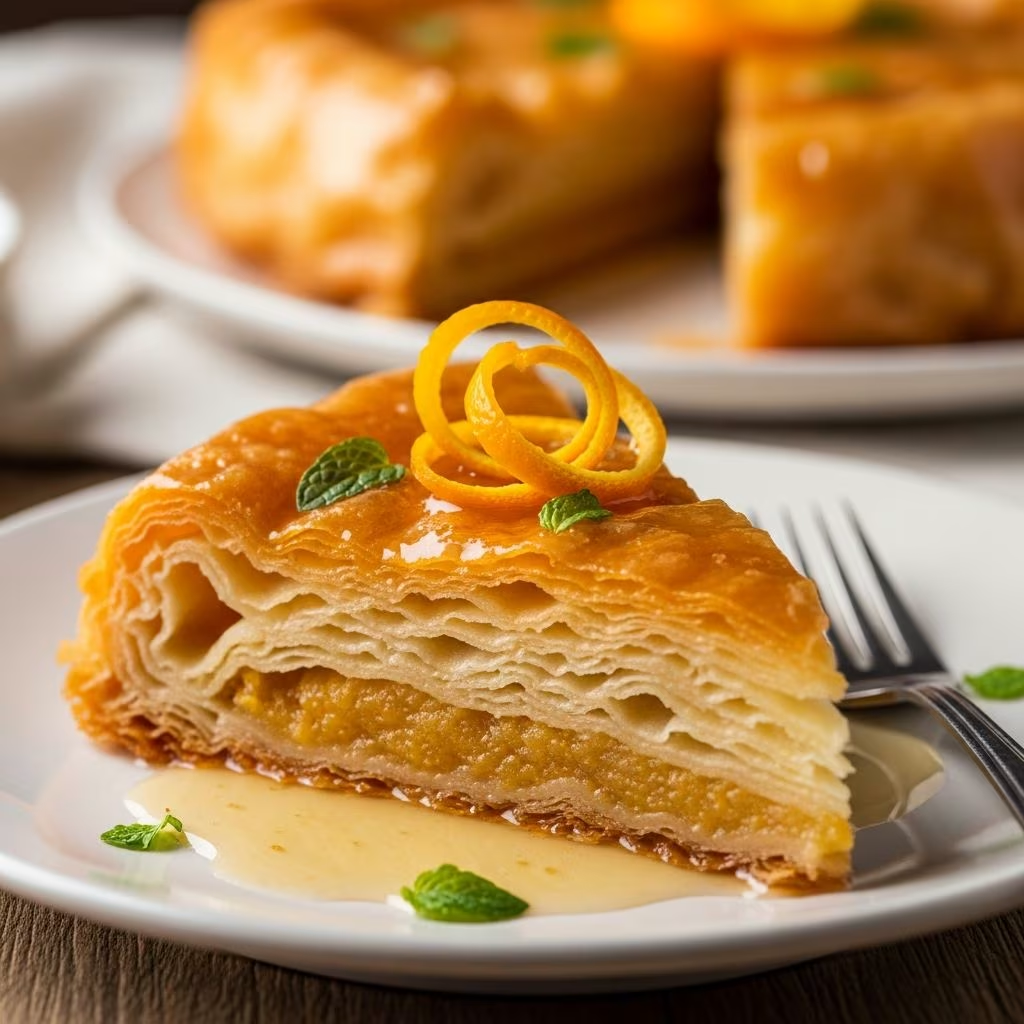
Portokalopita stands out as a captivating dessert from Greek culinary heritage, where delicate phyllo pastry meets the bright essence of fresh oranges in a syrup-drenched masterpiece. Unlike conventional cakes relying on flour, this treat incorporates shredded phyllo for a unique texture that’s both crispy on the edges and luxuriously moist within. Its name, translating to “orange pie,” hints at the starring role of citrus, amplified by a flavorful syrup that elevates every bite.
The Allure of Portokalopita in Greek Cuisine
Greek desserts often celebrate simplicity and bold flavors, and Portokalopita exemplifies this tradition. Originating from modern Greek baking, it draws inspiration from syrup cakes like baklava but innovates with phyllo integrated directly into the batter. The result is a dessert that’s syrupy yet light, perfect for coffee gatherings or festive meals. Home bakers appreciate its forgiving nature—phyllo’s absorbency ensures even syrup distribution, preventing sogginess while locking in moisture.
What makes Portokalopita irresistible? The contrast of textures: crisp phyllo edges give way to a tender, orange-infused center. Aromas of zest and cinnamon waft through the kitchen during baking, building anticipation. Nutritionally, it balances indulgence with wholesome elements like yogurt for creaminess and olive oil for richness, aligning with the Mediterranean diet’s emphasis on healthy fats and fruits.
Essential Ingredients for Authentic Flavor
Gathering the right components is key to Portokalopita’s success. Focus on fresh, high-quality items to capture the dessert’s vibrant profile.
- Phyllo Dough: 1 pound (about 450-500g), thawed if frozen. Choose thin sheets for optimal crispiness.
- Fresh Oranges: 2-3 for zest, juice, and sometimes boiled whole fruit. Organic varieties enhance purity.
- Greek Yogurt: 3/4 to 1 cup full-fat for tang and moisture.
- Olive or Vegetable Oil: 1 cup, providing subtle fruitiness without overpowering.
- Eggs: 4-5 large, beaten to incorporate air for lift.
- Sugar: Granulated for batter (3/4-1 cup) and syrup (1-1.5 cups).
- Syrup Add-Ins: Cinnamon stick, orange marmalade, or honey for depth.
- Leaveners: 1 tsp each baking powder and soda for rise.
Variations might include vanilla extract or a touch of salt to balance sweetness. Always pat phyllo dry post-thawing to avoid excess moisture.
Step-by-Step Guide to Baking Portokalopita
Preparation takes about 30 minutes, with 45-60 minutes baking time. Preheat oven to 350°F (175-180°C). Use a 9×13-inch or similar rectangular pan, greased and lined for easy release.
Prepare the Phyllo
Thaw phyllo overnight in the fridge, then at room temperature. Tear or slice into thin strips (1/2-inch wide). Spread on baking sheets in a single layer and bake 8-10 minutes until crisp and lightly golden, tossing midway. Cool completely—this step removes moisture, preventing a gummy texture.
Mix the Batter
In a large bowl, whisk eggs and sugar until pale and fluffy (3-4 minutes). Add orange zest, yogurt, vanilla, baking powder, and soda; mix until smooth. Gradually pour in oil and orange juice, whisking to emulsify. Gently fold in cooled phyllo strips in handfuls, ensuring even distribution without clumping. The batter will be thick and phyllo-flecked.
Bake to Golden Perfection
Transfer to prepared pan, smoothing the top. Bake 45-60 minutes until golden, risen, and a tester emerges clean. Edges may pull from sides, signaling doneness.
Make and Pour the Syrup
While baking, simmer 1.5 cups orange juice, 1.5 cups sugar, cinnamon stick, marmalade, and water for 5-10 minutes until thickened. Strain if desired. Immediately after baking, poke holes in the hot cake and ladle warm syrup evenly over it. Let absorb 30-60 minutes at room temperature, or overnight for deeper flavor.
Pro Tips for Flawless Portokalopita
- Phyllo Handling: Work quickly to prevent drying; cover unused sheets with a damp towel during initial prep.
- Syrup Temperature: Hot cake + warm syrup ensures optimal absorption without sogginess.
- Pan Size: Deeper pans yield thicker slices; adjust bake time accordingly.
- Flavor Boost: Boil whole oranges (seeded) and blend into batter for intense citrus notes.
- Storage: Refrigerate up to 5 days; bring to room temp before serving. Freezes well wrapped tightly.
A common pitfall is over-wet phyllo—always dry thoroughly. For gluten-free, seek phyllo alternatives, though texture changes.
Creative Variations to Elevate Your Cake
Portokalopita’s versatility invites experimentation while honoring its roots.
| Variation | Key Changes | Flavor Profile |
|---|---|---|
| Chocolate-Infused | Fold in 1/2 cup chopped dark chocolate or chips to batter. | Rich, bittersweet contrast to citrus. |
| Valentine’s Twist | Use blood oranges; add rose water to syrup. | Floral, romantic notes. |
| Less Sweet | Reduce syrup sugar by 1/4 cup; use honey. | Balanced tartness. |
| Lemon Hybrid | Swap half orange juice/zest for lemon. | Zesty, refreshing lift. |
| Mini Cakes | Bake in muffin tins; 20-25 min bake time. | Portion-controlled bites. |
These adaptations maintain the cake’s essence, ideal for seasonal fruits like mandarins in winter.
Pairing and Serving Suggestions
Serve at room temperature or chilled for best texture. Complement with:
- Vanilla ice cream or Greek yogurt dollop for creaminess.
- Chopped pistachios or powdered sugar for garnish.
- Strong Greek coffee or herbal tea to cut sweetness.
It’s a crowd-pleaser for holidays, potlucks, or brunches. Slice into diamonds or squares for an elegant presentation.
Frequently Asked Questions (FAQs)
Can I make Portokalopita ahead?
Yes, bake and syrup up to 2 days in advance; flavors deepen. Store covered in fridge.
What if my phyllo tears?
Tears are fine since it’s shredded anyway. Patch with extra pieces if needed.
Is olive oil mandatory?
No, neutral oils work, but olive oil adds authentic Mediterranean depth.
How do I know the syrup is ready?
It should coat a spoon lightly and reduce by 20-30%; test on a plate for thickness.
Vegetarian/vegan options?
Use egg replacers and plant-based yogurt/oil; results may vary slightly in rise.
Nutritional Insights and Dietary Notes
A slice (1/12th) offers roughly 350-400 calories, with carbs from sugar/phyllo, healthy fats from oil, and vitamin C from oranges. It’s naturally vegetarian; adapt for vegan as noted. Portion mindfully due to syrup sweetness.
Portokalopita embodies Greece’s dessert philosophy: few ingredients, profound impact. Whether novice or seasoned baker, this cake promises joy with every syrupy slice.
References
- Greek Orange Phyllo Cake (Portokalopita) — Olive & Mango. 2023-05-15. https://www.oliveandmango.com/greek-orange-phyllo-cake-portokalopita/
- Portokalopita (Greek Orange Cake) — The Mediterranean Dish. 2022-08-10. https://www.themediterraneandish.com/portokalopita-greek-orange-cake/
- Portokalopita (Greek Orange & Phyllo Cake) — Mostly Greek. 2019-06-20. https://mostly-greek.com/2019/06/20/portokalopita-greek-orange-phyllo-dough-cake/
- Portokalopita (Greek Orange Phyllo Cake) — FoodByMaria. 2023-02-14. https://www.foodbymaria.com/portokalopita/
- Portokalopita, Greek orange phyllo cake — Mia Kouppa. 2021-11-05. https://miakouppa.com/portokalopita/
- Portokalopita: Greek Orange Phyllo Cake — Dimitras Dishes. 2020-03-12. https://www.dimitrasdishes.com/portokalopita-greek-style-orange-phyllo-pudding-cake/
- Issue #210: Greek Orange Phyllo Cake — Kitchen Sense (Substack). 2024-01-22. https://kitchensense.substack.com/p/issue-210-greek-orange-phyllo-cake