Pork marbella represents a modern interpretation of a beloved classic, transforming the traditional approach into a streamlined weeknight meal without sacrificing sophistication. This Mediterranean-inspired dish showcases how contrasting flavors—the sweetness of honeyed prunes, the briny punch of Spanish olives, and the subtle tang of capers—can unite to create a dining experience worthy of your most special occasions. Yet despite its restaurant-quality presentation, the dish requires minimal hands-on time and straightforward technique, making it accessible to cooks of all skill levels.
The Evolution of a Classic Dish
The foundation of pork marbella traces back to chicken marbella, a celebrated recipe that emerged from culinary tradition and became a staple in contemporary cooking. The original preparation involved overnight marination of poultry with wine, vinegar, sugar, and an array of Mediterranean ingredients, followed by slow braising in the same flavorful liquid. The brilliance of this method lies in its dual purpose: the marinade both seasons the meat and transforms into an elegant pan sauce during cooking.
The transition from chicken to pork tenderloin represents a practical evolution rather than a departure from tradition. Pork tenderloin cooks significantly faster than chicken pieces, reducing overall preparation time while maintaining the essential character of the dish. This adaptation makes the recipe particularly suitable for busy home cooks who desire restaurant-quality results without extensive time commitments. The lean cut of pork also aligns with contemporary preferences for lighter proteins while delivering the tenderness required for this particular preparation method.
Understanding the Flavor Architecture
The brilliance of pork marbella emanates from its carefully balanced flavor profile, which operates on multiple sensory levels simultaneously. Each component contributes distinct characteristics that work in concert rather than competition.
Sweet Elements: Dried prunes and brown sugar provide natural sweetness that caramelizes during cooking, creating depth and complexity. The prunes soften as they absorb the pan juices, becoming tender morsels that complement the meat’s savory character. Brown sugar adds richness while contributing to sauce development and glaze formation.
Savory and Umami Notes: Spanish green olives introduce briny salinity and subtle herbal undertones. Capers contribute piquant acidity and concentrated umami flavor, while garlic and oregano establish an aromatic foundation reminiscent of Mediterranean kitchens. The combination creates a savory backbone that prevents the dish from becoming one-dimensional.
Acidic Components: Red wine vinegar and dry white wine provide acidity that brightens the overall flavor profile and balances the sweetness. The acidity also helps tenderize the meat and creates an emulsified sauce as the cooking liquids reduce.
Essential Ingredients and Their Roles
| Ingredient | Quantity (per 2 lb pork) | Primary Function |
|---|---|---|
| Pork tenderloin | 2 pieces (1 lb each) | Main protein; cooks quickly and remains tender |
| Dry white wine | 1 cup | Marinade base; becomes pan sauce |
| Prunes (pitted) | 1 cup, halved | Sweet component; adds texture and depth |
| Spanish green olives | 1 cup, pitted | Briny flavor; provides textural contrast |
| Brown sugar (packed) | ½ cup | Sweetness and sauce body |
| Red wine vinegar | ¼ cup | Acidity; balance for sweetness |
| Capers with brine | ¼ cup plus 1 tbsp | Piquant flavor; umami enhancement |
| Garlic cloves | 4 cloves, smashed | Aromatic foundation |
| Dried oregano | 1 tablespoon | Mediterranean character |
| Extra-virgin olive oil | ¼ cup plus 1 tbsp | Cooking medium; flavor enhancement |
| Unsalted butter | 1 tablespoon | Sauce richness and emulsification |
| Fresh parsley | ¼ cup, chopped | Garnish; fresh herbal brightness |
Preparation Strategy and Timing
Successful pork marbella relies on understanding how timing affects both the cooking process and final flavor development. The marinade can be assembled and combined with the pork up to twelve hours in advance, allowing flavors to meld and the meat to absorb the liquid’s essence. This flexibility makes the recipe ideal for advance planning, though immediate cooking produces excellent results as well.
The initial seasoning step deserves particular attention. Applying kosher salt to the pork tenderloin and allowing it to rest for fifteen minutes initiates a process called salting, which enhances moisture retention during cooking by drawing salt into the meat’s cellular structure. This prevents the protein from becoming dry, a common concern with lean cuts.
Searing the pork tenderloin over medium-high heat before roasting accomplishes multiple objectives simultaneously. The high heat creates a golden-brown crust through the Maillard reaction, which generates complex flavors through protein-sugar interactions. This crust also acts as a moisture barrier, helping the interior remain juicy throughout roasting. The searing typically requires six to eight minutes, with the meat turned occasionally to develop color on all surfaces.
The Roasting Process and Temperature Management
Once seared, the pork transfers to a preheated 325-degree Fahrenheit oven, though some variations recommend 400 degrees for faster cooking. The temperature choice affects both cooking duration and sauce consistency. Lower temperatures extend cooking time, allowing more sauce reduction, while higher temperatures accelerate the process.
The pork roasts for approximately twenty-five to thirty-five minutes, depending on thickness and oven characteristics. An instant-read thermometer inserted into the thickest portion should register 140 to 145 degrees Fahrenheit for optimal doneness—this range ensures the meat reaches food safety standards while maintaining a pale pink interior that maximizes tenderness. Overcooking pork tenderloin results in a dry, unpleasant texture, making precise temperature monitoring essential.
Midway through roasting, basting the pork with accumulated pan juices promotes even cooking and flavor absorption. This simple action—using a spoon to repeatedly pour sauce over the meat—distributes heat more evenly and creates a glossy exterior as the sauce caramelizes slightly.
Sauce Development and Finishing Touches
The pan juices undergo transformation during roasting, as wine reduces, prunes soften and release their sugars, and all components meld into a cohesive sauce. Upon removing the pork from the oven, the internal carryover cooking continues for ten minutes while the meat rests on a cutting board—a critical step that allows juices to redistribute throughout the meat, ensuring maximum tenderness and moisture.
Meanwhile, the pan returns to medium-high heat on the stovetop. Adding a tablespoon of unsalted butter and stirring occasionally for five to eight minutes further reduces and enriches the sauce through emulsification. The butter adds luxurious mouthfeel while helping the sauce coat the pork more effectively. This finishing technique elevates the dish from simple roasted meat to an elegant preparation worthy of special occasions.
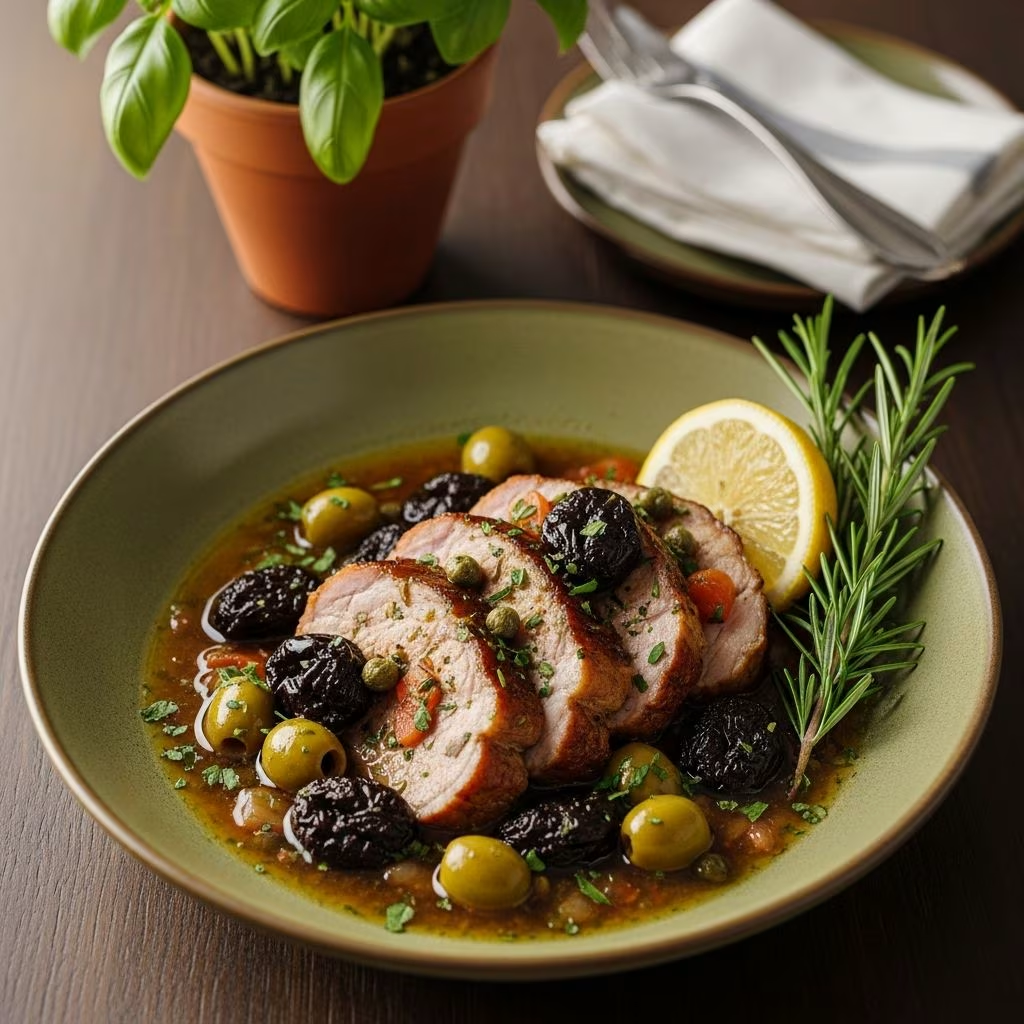
Optional fresh parsley scattered across the finished dish adds visual appeal and a bright herbal note that cuts through the rich, sweet-savory sauce. The vibrant green provides color contrast and a subtle freshness that prevents the overall flavor profile from becoming heavy.
Plating and Presentation Suggestions
Slicing the pork into half-inch-thick medallions allows diners to appreciate the meat’s beautiful pale interior and creates an elegant presentation. Arranging slices slightly overlapped on a warm plate, then spooning the abundant pan sauce with its embedded prunes, olives, and capers over and around the meat, transforms a simple preparation into restaurant-quality plating. The sauce’s complexity and visual appeal suggest greater effort than the recipe actually requires.
Complementary side dishes enhance rather than compete with pork marbella’s distinctive flavor profile. Fluffy couscous absorbs the abundant sauce beautifully, while crusty sourdough bread serves the same purpose for those preferring a more rustic presentation. Steamed or roasted vegetables provide textural and color contrast; consider options like green beans, roasted asparagus, or sautéed spinach that won’t introduce competing flavors.
Nutritional Considerations and Dietary Adaptations
Pork marbella represents a relatively balanced main course when considering modern nutritional guidelines. Pork tenderloin is a lean protein source, containing significantly less fat than many red meat alternatives while delivering essential nutrients including B vitamins and minerals like zinc and selenium. The inclusion of olives and olive oil provides beneficial monounsaturated fats, while the dried prunes contribute fiber and various phytonutrients.
The recipe accommodates various dietary preferences with minimal modification. Those avoiding dairy can easily prepare it as written, substituting the butter with additional olive oil if desired. The dish is naturally gluten-free, making it suitable for those with celiac disease or gluten sensitivity. For those seeking to reduce sugar content, the brown sugar quantity can be decreased, though this will alter the final flavor balance—testing in small increments is recommended.
Alternative dried fruits can substitute for prunes if preferred; dried figs or raisins provide similar sweetness while introducing different flavor notes. Some variations incorporate fresh fennel bulb alongside the standard ingredients, adding aromatic complexity and subtle licorice undertones.
Troubleshooting Common Challenges
Dry or Tough Pork: This typically results from overcooking. Ensure accurate oven temperature with a reliable thermometer and monitor the pork’s internal temperature closely, removing it at 140 degrees Fahrenheit. Don’t skip the resting period, which allows carryover cooking to complete while juices redistribute.
Sauce Too Thin: If the pan sauce lacks body and glossy appearance, extend the stovetop reduction time beyond the standard five to eight minutes. Some cooks prefer adding a slurry of cornstarch and water (one tablespoon each) to thicken the sauce, though this is entirely optional.
Flavor Too Sweet: Balance excessive sweetness by increasing the red wine vinegar quantity slightly or ensuring adequate reduction during the finishing phase. The acid will brighten the overall profile and counteract excess sugar.
Burnt Sauce: Monitor heat carefully during the stovetop reduction phase. If the bottom of the pan begins scorching, lower the heat and stir more frequently. Transfer the sauce to a fresh pan if significant scorching occurs.
Wine and Beverage Pairing Recommendations
The sweet-savory-acidic nature of pork marbella pairs beautifully with wines that echo its complexity. A crisp white wine with good acidity—such as Sauvignon Blanc or Pinot Grigio—complements the dish while cleansing the palate between bites. Light to medium-bodied red wines like Pinot Noir offer an alternative for those preferring red wine, providing sufficient body without overpowering the delicate pork.
Rosé wines represent an excellent compromise, offering refreshment and subtle fruit characteristics that align with the prunes and olives. Mediterranean wines particularly suit this dish, as they often share the same cultural origins and flavor sensibilities as the recipe itself.
Make-Ahead and Storage Guidelines
Pork marbella’s flexibility extends to storage and reheating. The dish actually improves after one day as flavors continue melding, making it excellent for advance preparation. Store cooled pork and sauce together in an airtight container in the refrigerator for up to four days. Reheat gently over medium-low heat in a covered skillet, adding a splash of wine or broth if the sauce has reduced significantly during storage. Avoid high heat, which may toughen the pork.
The prepared but uncooked marinade can be combined with the pork and refrigerated for up to twenty-four hours before cooking, allowing convenient meal planning. Simply remove from refrigeration thirty minutes before cooking to bring components closer to room temperature, which promotes more even cooking.
Entertaining with Confidence
Pork marbella’s sophisticated appearance and complex flavors belie its straightforward preparation, making it ideal for dinner parties and special occasions. The recipe can be scaled easily for larger gatherings, with cooking time increasing only slightly for additional pork tenderloin packages. The majority of preparation occurs ahead of serving time, allowing the cook to focus on guests rather than last-minute kitchen demands.
Preparing the marinade and initiating cooking an hour or so before dinner service ensures pork arrives at the table at peak temperature and flavor. The visual drama of a magnificent pan sauce and tender meat slices creates an impressive presentation that suggests considerably more culinary effort than required.
Final Thoughts
Pork marbella exemplifies how understanding fundamental cooking principles and respecting ingredient quality can transform simple components into an elegant, memorable dish. The recipe rewards both precision and creativity, accommodating personal preferences while maintaining its essential character. Whether preparing a weeknight family dinner or a special occasion meal, pork marbella delivers consistent excellence and the pleasure of sophisticated dining made accessible.
Frequently Asked Questions
Can I prepare pork marbella ahead of time?
Yes, the uncooked marinade can be combined with pork up to twelve hours in advance. Alternatively, cook the dish completely and refrigerate for up to four days, reheating gently before serving.
What internal temperature is best for pork tenderloin?
Aim for 140-145 degrees Fahrenheit for optimal tenderness and food safety. Don’t exceed 145 degrees, as pork becomes dry at higher temperatures.
Can I substitute the prunes with another dried fruit?
Yes, dried figs or raisins work well as alternatives, though each will impart slightly different flavor characteristics to the final dish.
What side dishes pair best with pork marbella?
Couscous, crusty bread, steamed green beans, or roasted asparagus all complement the dish well, helping to absorb the flavorful pan sauce.
Is pork marbella gluten-free?
Yes, the recipe is naturally gluten-free as written. Always verify that all purchased ingredients like capers and vinegar are certified gluten-free if preparing for those with celiac disease.
References
- Easy Pork Marbella Recipe with Prunes and Olives — Patient.info. Accessed April 2026. https://patient.info/recipes/high-protein-recipes/pork-marbella
- Pork Marbella – Savory with Green Olives And Prunes — Giangi’s Kitchen. Accessed April 2026. https://www.giangiskitchen.com/pork-marbella/
- Pork Marbella – Lauren Lane — Lauren Lane. Accessed April 2026. https://lauren-lane.com/pork-marbella-easy/
- Molly and Adam Make Pork Marbella | From the Test Kitchen — Bon Appétit. Accessed April 2026. https://www.bonappetit.com/recipe/pork-marbella
- Pork Marbella — What to Cook by Caroline Chambers. Accessed April 2026. https://whattocook.substack.com/p/pork-marbella