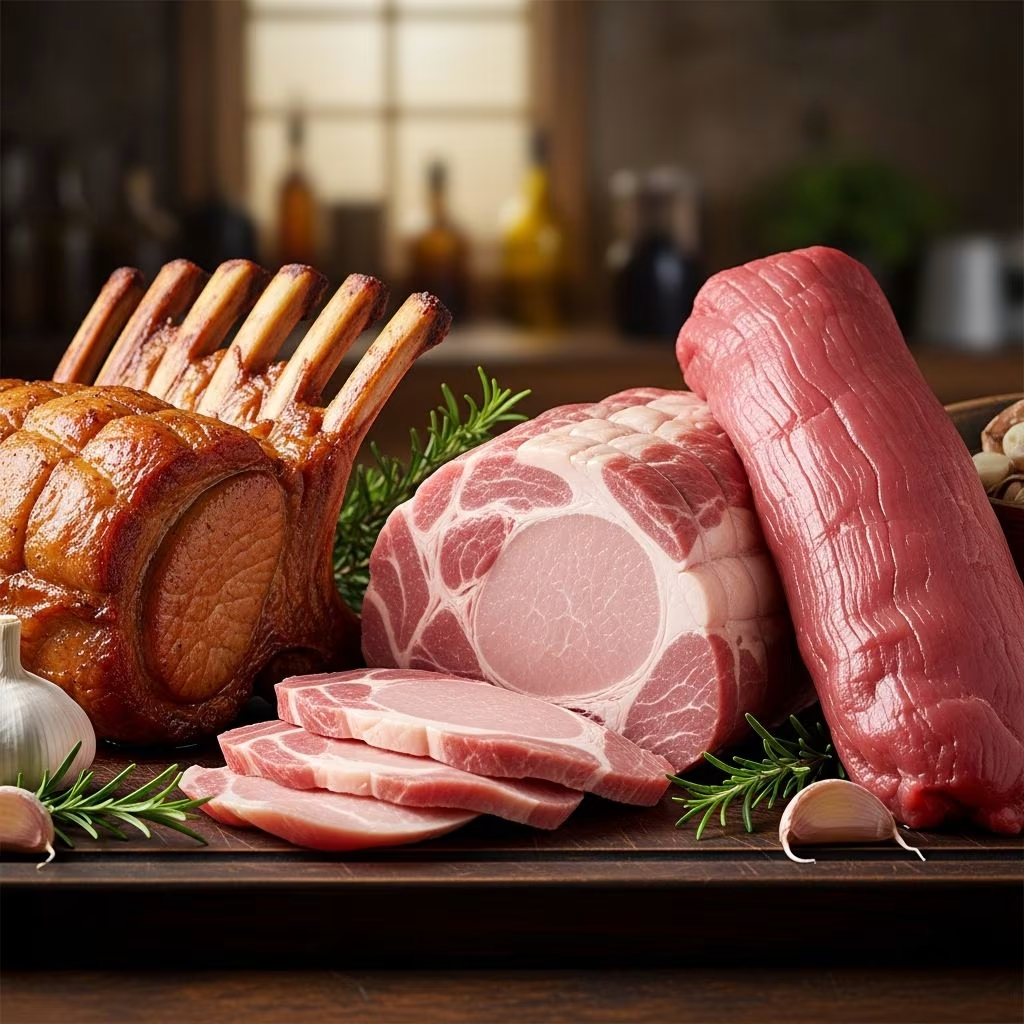
Pork loin, rib roasts, and tenderloin represent some of the most versatile and prized cuts from the pig, each offering unique textures and flavors when prepared correctly. These cuts come from the upper back region, providing lean meat ideal for roasting, grilling, or smoking. Understanding their distinctions ensures better results in the kitchen, from everyday dinners to holiday feasts.
Understanding the Anatomy of Pork Cuts
The pork loin runs along the spine, yielding several sub-cuts with varying fat content and tenderness. Pork loin is a larger, rectangular primal cut, often sold boneless or bone-in, featuring a fat cap that enhances moisture during cooking. In contrast, the pork tenderloin is a long, slender muscle beneath the loin, prized for its extreme tenderness but leanness, requiring quick cooking to avoid dryness. The rib roast, typically bone-in from the loin’s rib section, combines meaty portions with bones for added flavor and juiciness.
These cuts differ in size and structure: a full loin can weigh 14-17 pounds, while tenderloins are slim at 1-2 pounds each. Bone-in rib roasts, like prime rib equivalents, retain moisture better due to the bones acting as a natural insulator.
Key Differences Between Pork Loin, Rib Roast, and Tenderloin
| Cut | Size & Shape | Fat Content | Best Cooking Time | Ideal Methods |
|---|---|---|---|---|
| Pork Loin | Large, wide, round (4-5 lbs boneless) | Moderate, with fat cap | Longer (20-25 min/lb) | Roasting, braising, smoking |
| Rib Roast (Bone-in) | 7-8 lbs section, ribs attached | Higher near bones | Low & slow to 140-150°F | Smoking, roasting |
| Tenderloin | Slender, 1-2 lbs | Very lean | Quick (15-30 min) | Grilling, searing, roasting |
This table highlights how loin suits slow cooks, rib roasts excel in smoking for flavor infusion, and tenderloin demands high-heat speed.
Selecting the Best Pork Cuts at the Market
Look for fresh pork with pinkish-red flesh, firm fat, and no off odors. For loin, choose center-cut roasts with even marbling; boneless versions are versatile for slicing into chops. Rib roasts should have the chine bone cracked by the butcher for easier carving, and ribs frenched for presentation. Tenderloin must be uniform in thickness to cook evenly—avoid any with silver skin intact, as it toughens.
- Opt for bone-in rib roasts for superior flavor from rendered fat.
- Check packaging: cryovac-sealed loins need minimal trimming.
- Whole loins can be portioned; buy rib sections for prime quality.
Preparation Techniques for Optimal Flavor
Start with trimming excess fat from loins but retain a thin cap for basting. For rib roasts, rinse and pat dry, then season generously. Tenderloins benefit from silver skin removal using a sharp knife—slice under and pull away. Marinate overnight for deeper flavor: use citrus, herbs, mustard, or garlic pastes.
Common seasonings include sea salt, cracked pepper, Dijon mustard rubs for roasts, and herb blends for tenderloins. Tie roasts with twine for uniform shape, especially bone-in pieces.
Cooking Pork Loin: Slow and Steady Wins
Pork loin thrives with low-and-slow methods to break down its denser texture. Roast at 350°F for 20-25 minutes per pound, aiming for 135°F internal before resting to hit 145°F safely. Braise in broth or wine after searing for fork-tender results, ideal for larger cuts.
Smoking at 275-300°F with hickory until 140°F yields smoky depth, perfect for boneless loins. Rest 15-20 minutes post-cook to redistribute juices.
Perfecting Bone-In Pork Rib Roasts
The rib roast, akin to a pork prime rib, shines when smoked bone-side down. Prepare a smoker to 275-300°F, add wood chunks, and cook to 140-145°F internal. Reverse sear in a 500°F oven for a crisp crust.
Marinades like garlic-herb pastes enhance the natural richness from bones. After resting, slice between ribs into chops. If underdone near bones, finish in the oven.
Quick and Juicy Pork Tenderloin Recipes
Tenderloin cooks fast: grill over medium-high to 145°F, pan-sear in cast iron, or roast at 400°F. Marinate first, sear all sides, then oven-finish if needed. Pair with pan sauces from drippings, like mustard-herb reductions.
- Grilled Tenderloin: Marinate, grill turning occasionally, rest before slicing.
- Roasted: Season with garlic and herbs, 400°F to 145°F.
- Pan-Seared: High heat sear, optional oven finish.
Temperature Guidelines and Safety
USDA recommends 145°F internal for all pork cuts, followed by a 3-minute rest. Pull roasts at 135°F for carryover to 145°F; tenderloins at 142°F. Use probe thermometers for accuracy, especially in smokers.
Recipe: Smoked Pork Prime Rib
- Season bone-in loin with salt, pepper, and mustard rub.
- Smoke at 275-300°F with hickory to 140°F.
- Rest 15 minutes, slice.
Recipe: Herb-Roasted Rib Roast
Mix herbs, salt, pepper; rub 5-lb roast. Roast at 350°F to 135°F. Rest and serve.
Recipe: Seared Tenderloin with Pan Sauce
Sear tenderloin, deglaze with stock, add herbs. Slice and drizzle.
Common Mistakes and How to Avoid Them
- Overcooking tenderloin: Use timers and thermometers.
- Dry loin: Baste or brine beforehand.
- Poor rib roast slicing: Crack chine bone first.
- Ignoring rest time: Always wait 15-20 minutes.
Pairing Suggestions and Serving Ideas
Pair roasts with applesauce, roasted veggies, or mashed potatoes. Tenderloins shine with chimichurri or fruit glazes. Slice loins into chops for grilling leftovers.
FAQs
What’s the difference between pork loin and tenderloin?
Pork loin is larger with more fat; tenderloin is smaller and leaner, cooking faster.
How long to cook a pork rib roast?
Smoke or roast low-and-slow to 140-150°F internal.
Can I smoke pork tenderloin?
Yes, but briefly at high heat to keep it juicy.
Is bone-in pork loin better?
Yes, bones add flavor and moisture.
Safe internal temperature for pork?
145°F with 3-minute rest.
Storage and Leftovers
Refrigerate cooked pork up to 4 days; freeze slices. Reheat gently to avoid drying. Grill leftover chops with rubs.
References
- Pork Prime Rib Recipe — HowToBBQRight. 2016-12-05. https://howtobbqright.com/2016/12/05/pork-prime-rib/
- Pork Loin vs Pork Tenderloin – Here’s the Difference — Living the Gourmet. 2024-04-01. https://livingthegourmet.com/2024/04/pork-loin-vs-pork-tenderloin.html
- Do you love yummy Pork Loin and Tenderloin — Circle Branch Pork. N/A. https://circlebranchpork.com/blogs/news/do-you-love-yummy-pork-loin-and-tenderloin-it-is-so-delicious
- Pork Loin – Rib Roast — Virtual Weber Bullet. N/A. https://www.virtualweberbullet.com/pork-loin-rib-roast/
- Perfect Pork Rib Roast — Cook the Story. N/A. https://cookthestory.com/perfect-pork-rib-roast/
- How to Perfectly Roast a Pork Tenderloin — Chef Jean-Pierre (YouTube). N/A. https://www.youtube.com/watch?v=hzMp_wM3Bzc