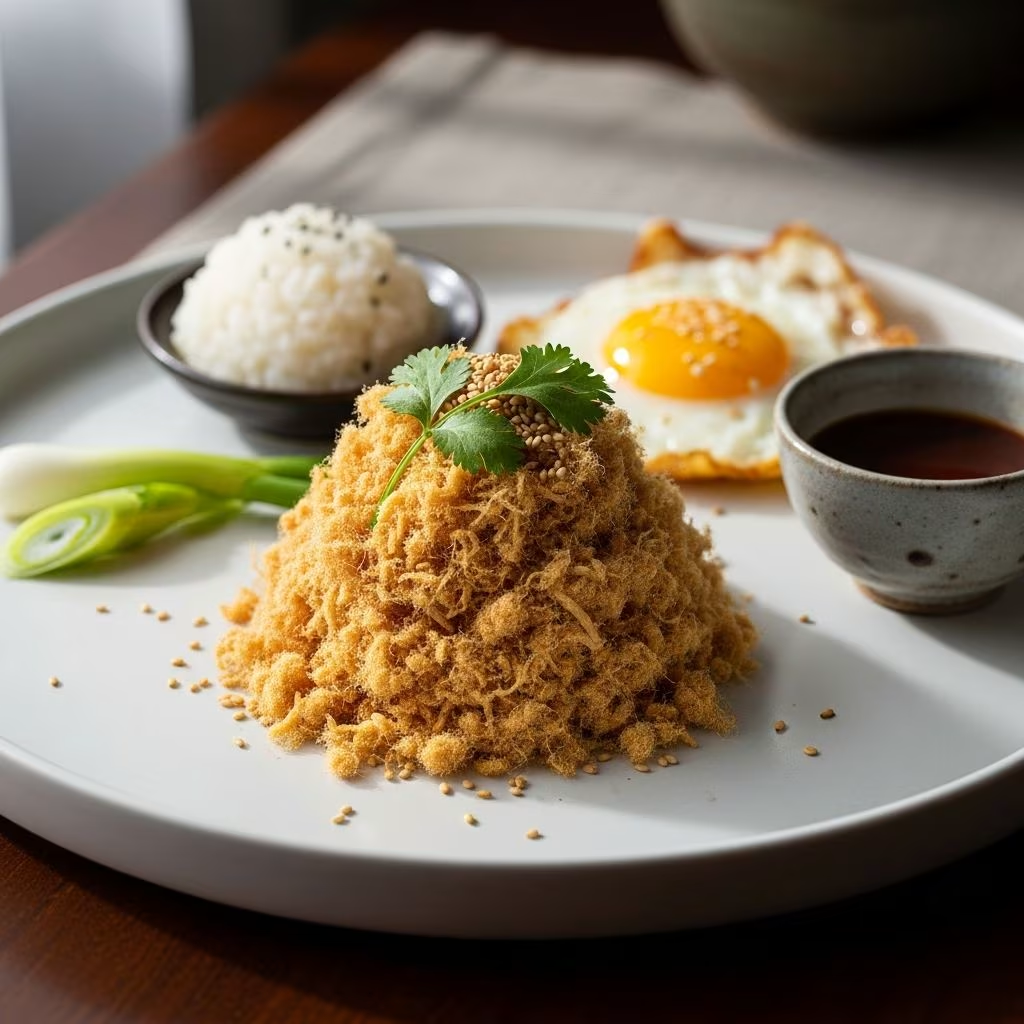
Pork floss, known as rousong in Chinese, is a dried, shredded pork product with a light, airy texture resembling cotton candy made from meat. This versatile ingredient delivers intense savory flavors and a satisfying crunch, making it a beloved staple across East and Southeast Asia.
Historical Roots: From Nomadic Warriors to Modern Tables
The story of pork floss traces back nearly a millennium to the Mongol Empire. Nomadic warriors, including those under Genghis Khan, needed portable, long-lasting protein sources for their conquests across Eurasia. Dehydrated meats like rousong provided lightweight nutrition that didn’t spoil during long journeys.
Historical accounts, including those from Marco Polo, describe Mongolian soldiers carrying dried meat and milk powders. This preservation technique spread through conquests, influencing cuisines from China to Vietnam and Japan. In China, it evolved into rousong, literally meaning “fluffy meat,” distinct from denser dried meats like jerky due to its fibrous, cotton-like form.
Over centuries, regional variations emerged. Taiwanese methods refined industrial production, while home cooks in China adapted it for everyday use. Today, pork floss symbolizes culinary ingenuity, bridging ancient survival food with contemporary gourmet applications.
How Pork Floss is Crafted: Step-by-Step Breakdown
Creating pork floss involves tenderizing lean pork, shredding it into fibers, and drying it with seasonings for that signature fluffiness. The process converts tough collagen into gelatin, allowing muscle fibers to separate easily.
Key Production Stages:
- Meat Selection: Lean cuts like pork tenderloin or sirloin are ideal to minimize fat, which could make the final product greasy. Chicken, beef, or even fish can substitute.
- Initial Cooking: Chop meat into chunks and simmer in water with aromatics like ginger, green onions, and Shaoxing wine. Skim foam and fat for purity. Cook 15-80 minutes until tender—pressure cookers speed this to 20 minutes.
- Shredding: Cool the meat, then hand-pull or press into fine fibers. This step is crucial for length and uniformity.
- Seasoning and Drying: Stir-fry shreds in a wok with minimal oil, adding soy sauces (light for umami, dark for color), sugar, salt, five-spice powder, and spices. Fry low and slow, rubbing to evaporate moisture until fluffy and crisp.
Industrial versions use mechanical scrapers and precise sucrose ratios for consistency. Home methods yield about 100-150g from 300g raw pork, storable for weeks in airtight containers.
| Stage | Time Estimate | Key Tips |
|---|---|---|
| Boiling/Simmering | 15-80 min | Add ginger/onions to remove gaminess; skim fat |
| Shredding | 10-15 min | Hand-pull for even fibers |
| Frying/Drying | 5-10 min | Stir continuously; cool midway for lightness |
Flavor Profiles and Regional Twists
Sweet-savory notes define pork floss, balancing soy’s umami, sugar’s caramelization, and spices like five-spice (star anise, cloves, cinnamon, Sichuan pepper, fennel). Variations include neutral, spicy, or honey-infused types.
In Taiwan, it’s drier and sweeter; Vietnamese versions pair with pate in baguettes. Japanese fuwa-fuwa styles are extra fluffy. Sweet iterations mix with condensed milk for desserts.
Culinary Superpowers: Where to Sprinkle Pork Floss
Pork floss elevates dishes with crunch and protein punch. It’s not just a topping—it’s a textural game-changer.
- Breakfast Boost: Layer on congee (rice porridge), omelets, or toast with butter and eggs for a savory start.
- Noodle Magic: Crown ramen, pho, or stir-fried noodles; mixes well with sesame oil.
- Bread and Buns: Stuff into baozi (steamed buns) or sprinkle on sandwiches for umami depth.
- Snacking: Eat straight, or blend into trail mix; pairs with rice crackers.
- Desserts: Dust on pancakes, ice cream, or yam cakes for sweet-salty contrast.
Its dryness prevents sogginess, making it ideal for humid climates. Experiment with fusion: try on avocado toast or pizza edges.
Homemade Pork Floss: Your Kitchen Guide
Making rousong at home is straightforward with basic tools. Yields fluffy results fresher than store-bought.
Simple Recipe (Serves 4-6 as topping):
- 300g lean pork tenderloin
- 2 green onions, chopped
- 5 ginger slices
- 1 tbsp Shaoxing wine
- 1 tbsp light soy sauce
- 1 tsp dark soy sauce
- 1 tsp sugar
- 1/2 tsp five-spice powder
- Pinch of salt
- 1 tsp oil
- Boil pork with aromatics and wine 20-40 min until shreddable. Cool and shred finely.
- Heat oil in wok, add shreds, fry 3 min. Stir in sauces, sugar, spices. Cook until dry.
- Cool 2 min, rub to fluff, refry 2 min. Store cool.
Tips: Use low heat to avoid burning; taste-test seasonings. Variations: Add chili for heat or honey for sweetness.
Nutrition and Storage Essentials
Pork floss packs protein (20-30g per 100g), but watch sodium from soy. Low-fat if skimmed properly; calories around 400/100g from drying concentration.
Store in cool, dry places up to 1 month; refrigerate for 3. Revive crispness by microwaving briefly. Allergen note: Contains soy, gluten from sauces.
Global Rise and Buying Tips
Online availability has globalized pork floss, from Amazon to Asian markets. Seek brands with minimal additives; check for pure pork listings. Price: $5-15 per 100g.
Its rise mirrors umami trends—chefs like David Chang praise its versatility. Fusion spots use it in tacos or salads.
Frequently Asked Questions (FAQs)
What is pork floss made of?
Primarily lean pork, seasoned with soy, sugar, and spices, dried into fluffy strands.
Is pork floss vegetarian?
No, but plant-based versions use soy or mushrooms exist experimentally.
How long does homemade pork floss last?
Up to 1 month at room temp, longer refrigerated. Keep airtight.
Can I use other meats for floss?
Yes—chicken, beef, fish work similarly with adjusted cooking times.
What’s the difference between pork floss and jerky?
Floss is shredded and pan-dried fluffy; jerky is sliced, air-dried tough.
Pork floss transforms mundane meals into flavorful adventures. Its fluffy allure and bold taste ensure a lasting place in diverse kitchens worldwide.
References
- Pork Floss: The Meaty Chinese Ingredient That Looks Like Cotton Candy — Tasting Table. 2023-10-12. https://www.tastingtable.com/1057024/pork-floss-the-meaty-chinese-ingredient-that-looks-like-cotton-candy/
- Meat floss — Wikipedia. 2024-01-15. https://en.wikipedia.org/wiki/Meat_floss
- Pork Floss – Meat Floss — China Sichuan Food. 2023-05-20. https://www.chinasichuanfood.com/homemade-meat-floss/
- The Savory Sprinkle That Delighted Genghis Khan Was Pork Floss — Mashed. 2023-11-08. https://www.mashed.com/1205674/the-savory-sprinkle-that-delighted-genghis-khan-was-pork-floss/