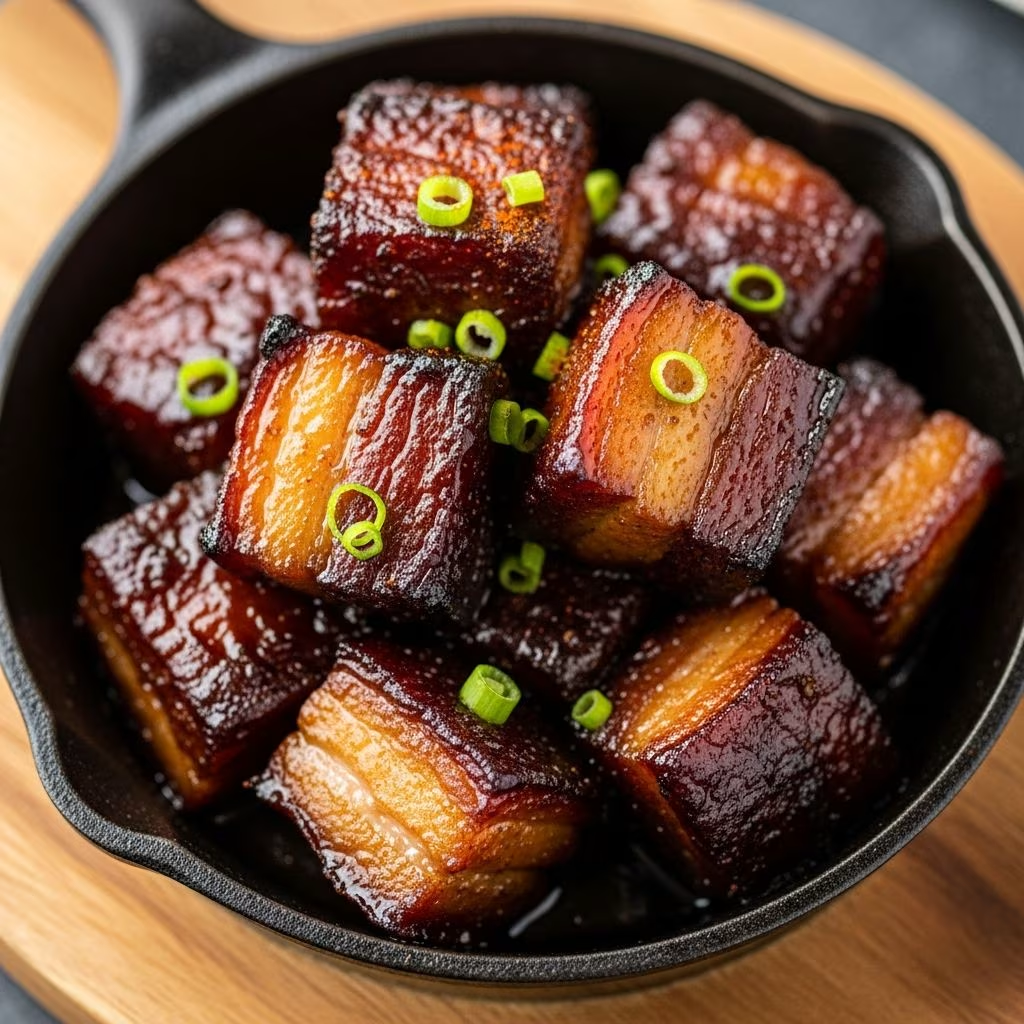
Transform humble pork belly into **mouthwatering burnt ends** that boast crispy exteriors, juicy interiors, and a sticky sweet glaze. This barbecue staple, inspired by time-honored traditions, delivers bold smoke flavors with a candy-like finish. Ideal for backyard cooks aiming to impress, these bites pack intense taste in every 1-inch cube.
The Allure of Pork Belly Burnt Ends
Pork belly burnt ends riff on classic beef brisket versions, swapping lean meat for fatty, collagen-rich belly that renders into tender gold. The process involves low-and-slow smoking to build bark, a braising phase for melt-in-mouth texture, and a final sauce glaze for shine and stickiness. Expect 6-7 hours total, yielding servings for 6 hungry guests from 6 pounds of belly.
Why choose pork belly? Its high fat content self-bastes during cooking, ensuring succulence even after hours of heat. When cubed and treated right, it achieves the holy trinity: chew, smoke, and caramelization.
Essential Ingredients for Success
Gather these for authentic results. Substitutes work if specialty items are scarce, but stick close for best flavor profiles.
- 6 pounds pork belly, skin-on or skinless, trimmed of excess silver skin, cut into uniform 1-inch cubes for even cooking.
- ½ cup dry rub (e.g., smoky blend with paprika, garlic powder, onion powder, black pepper, brown sugar, salt).
- 1 stick (½ cup) unsalted butter, cut into pats for rich braising liquid.
- 1 cup packed dark brown sugar for deep caramel notes.
- 1 cup honey to balance tang and add gloss.
- 20 ounces barbecue sauce, preferably tangy-sweet with molasses base.
- ½ cup apple juice for acidity and steam in braise.
- ½ cup fruit jam (apple or fig) for subtle fruitiness.
Pro tip: Source skin-off belly for easier cubing; frozen belly slices neatly after partial thaw.
Equipment You’ll Need
Smoker is king—pellet, offset, or electric all shine here. Alternatives include oven with liquid smoke. Key tools:
| Item | Purpose |
|---|---|
| Wire mesh rack or smoker basket | Airflow for even smoke exposure |
| Disposable aluminum foil pans (2) | Braising and glazing without cleanup hassle |
| Heavy-duty foil | Sealing braise for steam tenderness |
| Heat-resistant gloves | Safe handling of hot cubes |
| Instant-read thermometer | Check internal temp (aim 195-205°F final) |
Step-by-Step Cooking Guide
Follow this timeline for foolproof results. Maintain smoker between 235-250°F using fruitwoods like apple, cherry, or hickory for complementary smoke.
Prep the cubes (10 mins): Pat dry pork belly cubes. Toss with half the rub in a bowl until every piece is coated. Let sit 15-30 mins for flavor adhesion.
Initial smoke (3.5 hours): Spread cubes on wire rack, spaced apart. Smoke at 235-250°F. Add wood for steady thin blue smoke. Bark forms; fat begins rendering. Internal temp hits ~165°F.
Braise setup (5 mins): Transfer hot cubes to foil pan in single layer. Scatter butter pats, brown sugar, honey, jam, apple juice, remaining rub, and ½ cup BBQ sauce. Mix gently.
Braise covered (2 hours): Seal pan tightly with foil. Return to smoker at 250°F. Collagen breaks down; cubes swim in glossy braise. Probe for fork-tender (195°F+).
Strain and sauce (5 mins): Remove foil carefully (steam alert). Drain cubes to fresh foil pan, discarding braise. Toss with remaining BBQ sauce.
Final glaze (15-20 mins): Uncover pan; smoke until sauce tackifies and edges crisp. Watch closely to preserve texture.
Rest and serve (10 mins): Rest 10 mins off heat. Serve straight or skewered.
Customization Ideas
Tailor to taste:
- Spicy kick: Add cayenne or hot sauce to rub/sauce.
- Asian twist: Gochujang rub, hoisin glaze, sesame finish.
- Oven method: Same steps at 250°F with catch pan; add liquid smoke.
- Small batch: Halve recipe for 3 lbs; times similar.
Troubleshooting Common Pitfalls
| Issue | Solution |
|---|---|
| Soggy texture | Space cubes; limit glaze time; ensure full render |
| Bitter smoke | Use clean, dry wood; thin blue smoke only |
| Dry cubes | Don’t over-smoke initial phase; braise fully |
| Sauce burns | Uncovered glaze short; lower temp to 225°F |
Nutrition and Pairings
Per serving (~1 cup): ~800 calories, high protein/fat. Balance with slaw, pickles, cornbread. Beers: malty amber ale. Cocktails: bourbon old fashioned.
History and Cultural Roots
Burnt ends originated in Kansas City pits, where brisket tips got extra love. Pork belly version amplifies indulgence. Shoutout to pitmasters preserving recipes from generations past, blending smoke mastery with bold sauces.
FAQ
Can I make these in advance? Smoke and braise day ahead; glaze before serving. Reheat at 250°F covered.
Skin-on or off? Off for ease; on adds crackle if scored and rendered long.
No smoker? Oven works; mimic smoke with chips on stovetop foil packet.
Best wood? Fruitwoods for sweet smoke; avoid mesquite (overpowers).
Storage? Fridge 4 days; freeze 2 months. Re-glaze to refresh.
Vegetarian alt? Mushrooms or jackfruit mimic texture with same process.
Pro Tips for Next-Level Results
- Uniform cubes = even cook; trim fat cap to ¼-inch.
- Spritz initial smoke with apple cider vinegar hourly.
- Test doneness by probe: should slide like butter.
- Scale up for parties; feeds 10-12 as apps.
- Experiment rubs: coffee, maple for variety.
Master these, and you’ll own the grill. Share your tweaks!
References
- Old Arthur’s Pork Belly Burnt Ends — Schnitzel & Stories. Accessed 2026. https://www.schnitzelandstories.com/recipe-old-arthurs-pork-belly-burnt-ends
- Old Arthur’s Pork Belly Burnt Ends — Barbecue Bible. Accessed 2026. https://barbecuebible.com/recipe/old-arthurss-pork-belly-burnt-ends/
- Big Weather’s Big Recipe: Pork Belly Burnt Ends — ABC11. 2022-10-01. https://abc11.com/post/big-weathers-recipe-pork-belly-burnt-ends-homemade-best-dishes/13207577/