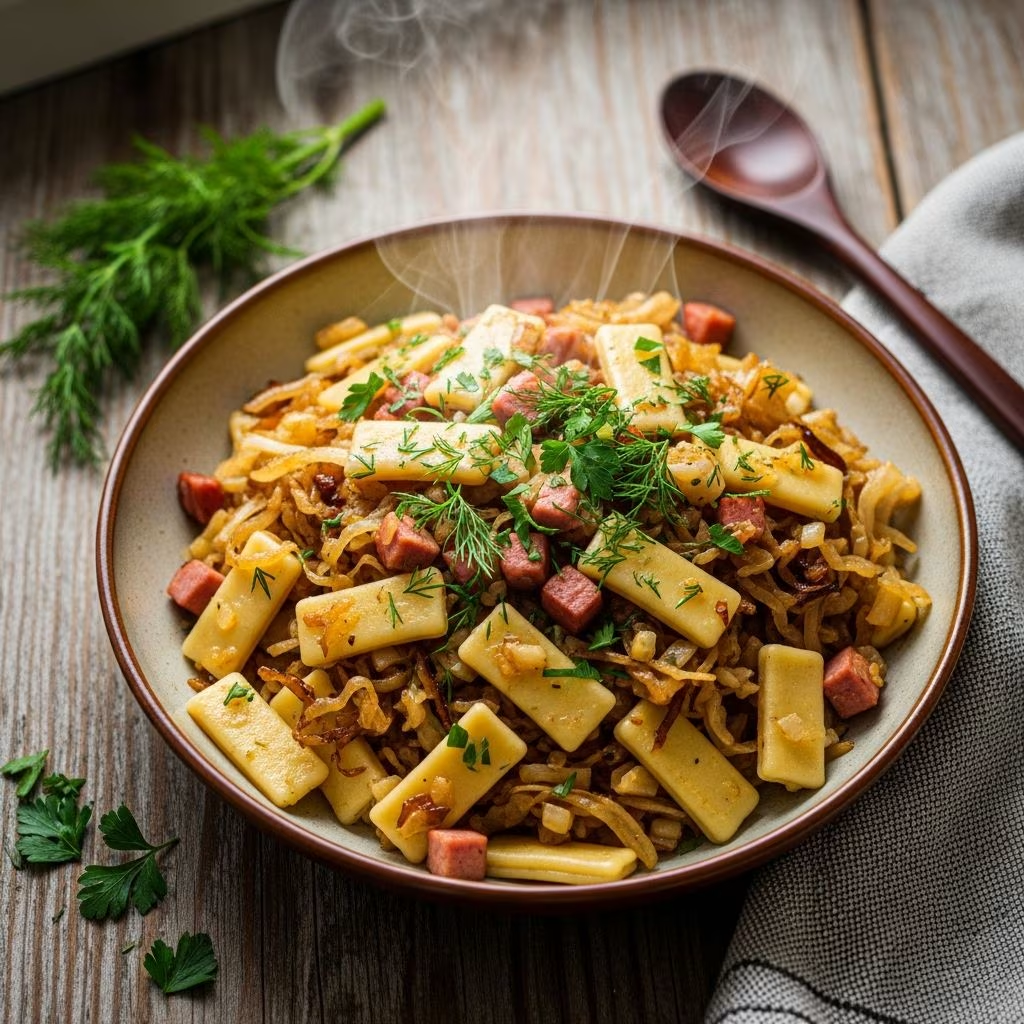
Polish lazanki stands as a testament to the comforting power of simple, wholesome ingredients. This dish combines square egg noodles with tender cabbage, tangy sauerkraut, savory smoked sausage, and earthy mushrooms, creating a symphony of flavors that has warmed Polish tables for centuries. Often enjoyed during the chilly months, lazanki offers a satisfying blend of textures—from the chewy pasta to the crisp edges of sautéed vegetables—and a depth of taste enhanced by smoked meats and aromatic spices.
The Origins and Cultural Significance of Lazanki
Lazanki traces its roots to a fascinating culinary crossover in 16th-century Poland. Legend holds that it emerged when Italian influences entered Polish kitchens through royal marriages, particularly when King Sigismund III Vasa wed Italian noblewomen, introducing pasta-making techniques to Eastern European staples like cabbage and fermented vegetables. This Polish-Italian fusion resulted in a unique pasta dish that adapted local winter provisions such as sauerkraut, dried mushrooms, and cured meats, making it ideal for harsh climates where fresh produce was scarce.
In Polish culture, lazanki symbolizes homey resilience. It’s a staple in rural households and city apartments alike, often prepared for family gatherings or as a budget-friendly meal. Variations reflect regional availability: some favor fresh cabbage for a milder taste, while others insist on sauerkraut for its probiotic punch and tang. The dish’s versatility allows it to span meat-heavy feasts to lighter vegetarian versions, embodying Poland’s practical approach to cooking.
Essential Ingredients for Authentic Lazanki
At its core, lazanki relies on a handful of accessible components that harmonize beautifully. Here’s a breakdown of the key players:
- Lazanki Noodles or Substitutes: Traditional square egg noodles, about 1-2 inches wide, provide the perfect chew. Small pasta shapes like bowties, shells, or fettuccine work as alternatives.
- Cabbage Duo: Fresh white cabbage, chopped into bite-sized pieces and sautéed, pairs with sauerkraut for layered texture and acidity.
- Smoked Meats: Kielbasa (Polish sausage), bacon, or smoked pork ribs add smoky richness. About 8-12 ounces serves four generously.
- Mushrooms: Button, cremini, or wild varieties like porcini or honey mushrooms bring umami. Fresh or rehydrated dried work equally well.
- Aromatics and Spices: Onions, garlic, bay leaves, allspice, caraway, marjoram, oregano, and paprika form the flavor backbone.
These elements create a balanced profile: sweet from caramelized onions, sour from kraut, savory from meats, and earthy from fungi. Sour cream or fresh dill as a garnish elevates it further.
Step-by-Step Guide to Making Polish Lazanki
Preparing lazanki is straightforward, taking about 45 minutes for four servings. Focus on browning each component separately to build flavor layers before combining.
- Prep the Cabbage: Shred 10 ounces fresh cabbage. Boil in salted water for 10-15 minutes until tender but firm. Drain well. Rinse and squeeze 1/2 pound sauerkraut to remove excess brine, then simmer with bay leaves, allspice, and caraway for 20 minutes to mellow.
- Cook the Pasta: Boil 7-8 ounces lazanki noodles in salted water until al dente, about 8-10 minutes. Reserve 1/2 cup pasta water, then drain.
- Brown the Meats: In a large skillet, heat 1 tablespoon oil over medium. Slice 8 ounces kielbasa into half-moons and fry until golden, 4-5 minutes. Remove.
- Sauté Mushrooms and Onions: Add sliced 7 ounces mushrooms to the pan; cook until browned, 3-4 minutes. Set aside. In the same pan, sauté diced onion (1 large) in 2 tablespoons oil until soft and golden, 5-10 minutes. Stir in minced garlic (2-3 cloves), marjoram (1/2 tsp), oregano (1/2 tsp), and paprika (1/4 tsp) for 30 seconds.
- Combine Everything: Return cabbage, sauerkraut, meats, mushrooms, onions, and pasta to the skillet. Toss over low heat, adding pasta water if needed for moisture. Season generously with black pepper and salt to taste. Garnish with chopped parsley or dill.
Serve hot in deep bowls, optionally with a dollop of sour cream. This yields a steaming, aromatic dish ready to devour.
Regional Variations and Customizations
Lazanki’s adaptability shines in its many forms. In some Polish homes, it’s meatless, relying on mushrooms and kraut for substance—ideal for Lent or vegetarians. Others incorporate bacon lardons for extra crispiness or swap kielbasa for smoked ribs.
| Variation | Key Twist | Best For |
|---|---|---|
| Classic Kielbasa Lazanki | Sauerkraut-heavy with Polish sausage | Traditionalists |
| Fresh Cabbage Version | More white cabbage, less kraut | Milder palates |
| Wild Mushroom Lazanki | Foraged fungi like porcini or hen-of-the-woods | Foragers and gourmet cooks |
| Vegetarian Delight | No meat, extra mushrooms and sour cream | Plant-based eaters |
| With Smoked Bacon | Bacon instead of sausage for crunch | Quick weeknight meals |
Experiment with pasta shapes or add carrots for sweetness. In Ukraine and Belarus, similar dishes use buckwheat noodles.
Nutritional Profile and Health Benefits
A 1.5-cup serving of lazanki (with kielbasa) clocks in at around 450-550 calories, offering 20g protein from pasta and meat, complex carbs for energy, and fiber from cabbage (about 5g per serving). Sauerkraut provides probiotics for gut health, while mushrooms contribute B-vitamins and antioxidants.
Opt for leaner turkey kielbasa or double up on veggies to lighten it. It’s naturally gluten-free adaptable with rice noodles, though traditionalists stick to egg pasta.
Pairing Suggestions and Serving Ideas
Lazanki pairs beautifully with Polish beer like Żywiec or a crisp Riesling to cut the richness. Serve alongside beet salad (barszcz czerwony) or pickled cucumbers for contrast. For dessert, a slice of makowiec (poppy seed roll) complements the savory notes.
Leftovers reheat well; store in an airtight container for up to 3 days. Freeze portions for up to a month, thawing before gently rewarming to preserve noodle texture.
Frequently Asked Questions (FAQs)
What is lazanki?
Lazanki is a traditional Polish pasta dish made with square noodles, cabbage, sauerkraut, mushrooms, and often kielbasa or bacon.
Can I make lazanki vegetarian?
Yes, omit meat and use extra mushrooms or smoked tofu for a hearty plant-based version.
What pasta is best for lazanki?
Square lazanki noodles are ideal, but small shells, bowties, or egg noodles substitute well.
How do I store leftovers?
Refrigerate in an airtight container for 3 days or freeze for 1 month. Reheat with a splash of water.
Is sauerkraut necessary?
It’s traditional for tang, but you can use all fresh cabbage for a sweeter dish.
Tips for Perfect Lazanki Every Time
- Brown ingredients separately to maximize flavor.
- Don’t overcook pasta; al dente holds up better.
- Taste for seasoning—pepper is key.
- Use high-quality smoked sausage for authentic taste.
- Experiment with wild mushrooms for elevated umami.
References
- Lazanki: Polish Pasta with Cabbage and Mushrooms — Forager Chef. 2023. https://foragerchef.com/lazanki/
- Łazanki – Polish noodles with cabbage, kiełbasa, and mushrooms — Everyday Delicious. 2022-10-15. https://www.everyday-delicious.com/lazanki-polish-noodles/
- Łazanki — Polana Polish Food Online. 2023. https://www.polana.com/blogs/recipes/lazanki
- Łazanki: Polish Pasta with Cabbage and Mushrooms – YouTube — Forager Chef (YouTube). 2023. https://www.youtube.com/watch?v=XfaGSJRybUg