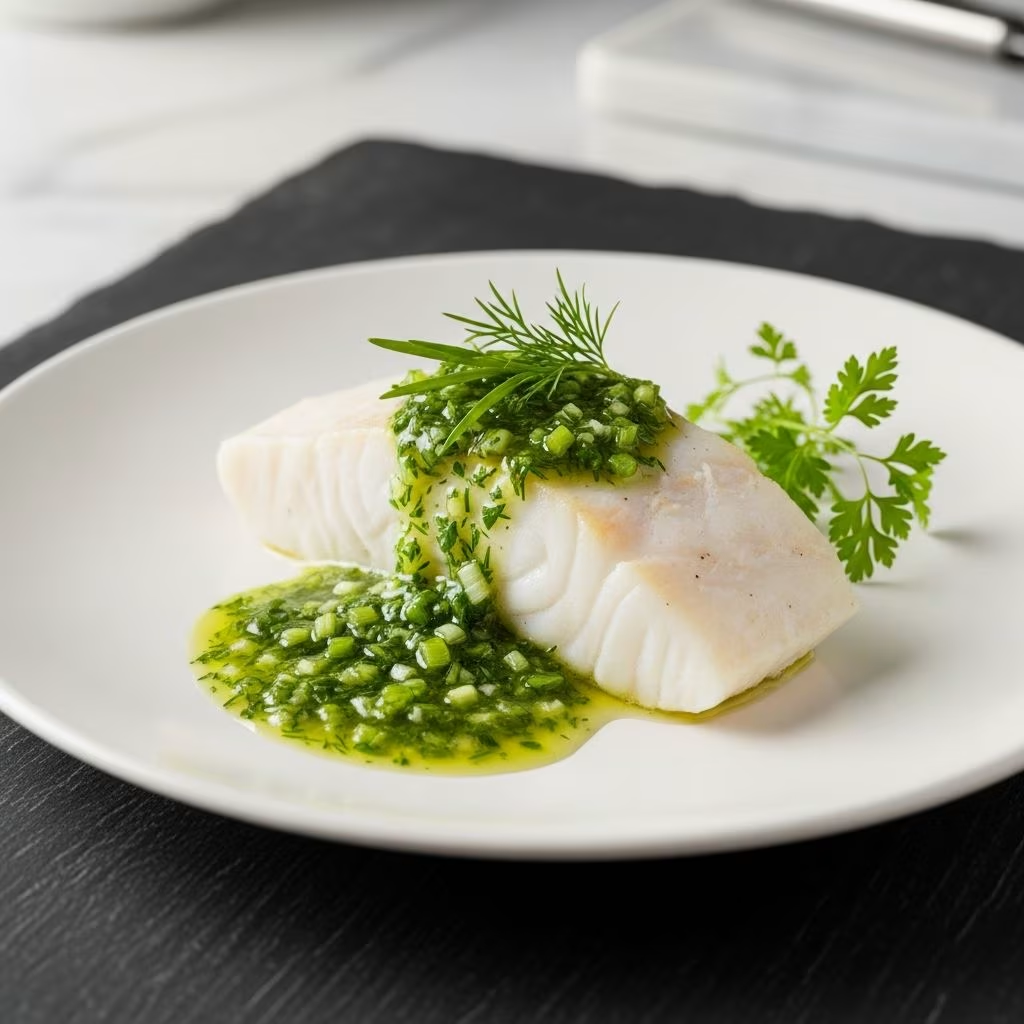
Poaching halibut offers one of the most tender and flavorful ways to prepare this premium white fish. By gently cooking it in a subtle broth, the flesh remains moist and glossy, absorbing just enough seasoning to shine. Pairing it with a warm herb vinaigrette adds a burst of freshness—chopped fines herbes like chives, parsley, tarragon, and chervil emulsified with vinegar and oil create a sauce that’s tangy, aromatic, and perfectly balanced. This dish transforms simple ingredients into an elegant meal suitable for weeknights or dinner parties.
Why Poaching Excels for Halibut
Halibut’s firm yet delicate texture makes it ideal for poaching, a low-temperature method that prevents dryness common in grilling or pan-searing. Unlike high-heat techniques, poaching at around 180°F allows even cooking without breaking down the proteins excessively. The result is fish that’s silky in the center, with a natural sheen that highlights its mild, sweet flavor.
Traditional poaching liquids, like the velouté-inspired base here—made by thickening water with flour, then enriching with vermouth, citrus juices, and salt—infuse subtle complexity. This isn’t boiling; it’s a nurturing simmer that cradles the fillets, protecting them from overcooking.
Essential Ingredients for Success
Gather these pantry staples and fresh elements for four servings:
- Halibut fillets: 4 pieces, 6 ounces each, skin-off for even poaching.
- Poaching base: 1 quart water, 6 tablespoons flour, ½ cup dry white vermouth, ¼ cup fresh lemon juice, ¼ cup fresh orange juice, sea salt.
- Herb vinaigrette: ¼ cup sherry vinegar (or white wine vinegar), 1 teaspoon Dijon mustard, 6 tablespoons extra-virgin olive oil, 3-5 tablespoons neutral oil like canola, ¼ cup finely chopped fines herbes (equal parts chives, parsley, tarragon, chervil).
- Seasonings: Fine sea salt, freshly ground white pepper.
Fines herbes provide the signature brightness; if chervil is unavailable, substitute more tarragon or dill for anise-like notes. Opt for sustainably sourced halibut from Pacific fisheries for ethical and quality assurance.
Step-by-Step Poaching Guide
Master this technique with precision timing.
- Prepare the poaching liquid: In a wide, shallow pot, bring 1 quart water to a boil over high heat. Whisk 6 tablespoons flour into ¼ cup cold water until lump-free, then stir into the boiling water. Add vermouth, lemon juice, orange juice, and a generous pinch of salt. Simmer until thickened into a light velouté, about 5 minutes. Reduce heat to low, aiming for 180°F—hot but not bubbling.
- Make the vinaigrette base: In a bowl, whisk sherry vinegar and Dijon mustard with salt and white pepper. Gradually emulsify in extra-virgin olive oil, followed by canola oil to mellow acidity. Set aside; do not add herbs yet to preserve vibrancy.
- Season and poach fish: Pat halibut dry, season generously with salt and white pepper. Submerge fillets in the poaching liquid. Cook until a metal skewer inserted into the center feels just warm after 5-10 seconds, typically 8-12 minutes depending on thickness. Thinner fillets may take less time.
- Finish the sauce: While fish poaches, finely chop herbs and fold into vinaigrette. Gently warm the mixture in a saucepan over low heat until barely tepid—avoid boiling to keep herbs fresh.
- Plate elegantly: Lift fillets with a slotted spatula onto a towel-lined tray to drain. Transfer to warm plates, spoon warm vinaigrette over and around. Serve immediately for peak texture.
Total time: 30-40 minutes. This method yields restaurant-level results with home-kitchen ease.
Customizing Your Herb Vinaigrette
The vinaigrette is versatile—adjust for seasons or preferences. Core elements: acid (vinegar), emulsifier (mustard), fats (oils), and herbs.
| Variation | Key Swap | Flavor Profile |
|---|---|---|
| Summer Twist | Basil + cilantro for chives/tarragon | Bright, peppery, tropical |
| Spicy Kick | Add minced shallot + dash hot sauce | Zesty, warming |
| Asian Fusion | Rice vinegar + ginger-infused grapeseed oil | Subtle umami, clean |
| Winter Earthy | Thyme + rosemary instead of chervil | Woodsy, robust |
Always emulsify oils slowly while whisking for stability. Warm gently to meld flavors without wilting herbs.
Perfect Pairings and Side Dishes
Complement the dish’s lightness:
- Vegetables: Steamed asparagus, fennel bulb salad, or roasted baby carrots to echo citrus notes.
- Starches: Saffron risotto, herb-roasted fingerling potatoes, or crusty baguette for sauce sopping.
- Wines: Crisp Chardonnay or Sauvignon Blanc; acidity cuts richness.
- Garnishes: Microgreens, lemon zest, or edible flowers for visual pop.
For a full meal, serve with a green salad dressed in the same vinaigrette for cohesion.
Nutrition and Health Benefits
Halibut is a lean protein powerhouse: one 6-oz fillet delivers 30g protein, omega-3s for heart health, and selenium for immunity. Poaching preserves nutrients better than frying. The vinaigrette adds healthy fats from olive oil and antioxidants from herbs. Per serving: ~400 calories, low-carb, keto-friendly.
Pregnant individuals should verify mercury levels but Pacific halibut is generally low-risk.
Troubleshooting Common Issues
- Fish too dry? Poaching liquid was too hot—use a thermometer next time.
- Sauce separates? Whisk vigorously or add a pinch of mustard powder as stabilizer.
- Over-salted broth? Dilute with a splash of water before adding fish.
- Herbs wilted? Chop and add at the last minute; warm sauce minimally.
Advanced Techniques and Scaling
For larger crowds, use a fish poacher or hotel pan in a low oven (175°F water bath). Test doneness with a cake tester for pro accuracy. Scale vinaigrette by maintaining 1:1 oil-to-acid ratio.
Store leftovers (unlikely!) in airtight containers up to 2 days; reheat gently in poaching liquid.
FAQs
Can I use frozen halibut?
Yes, thaw fully in fridge, pat dry thoroughly to avoid watery poaching.
What if I can’t find chervil?
Substitute parsley or a pinch of fennel fronds for similar delicacy.
Is this recipe gluten-free?
No, due to flour; swap with arrowroot powder for thickening.
How do I know when poaching liquid is ready?
It should coat a spoon lightly and hold 180°F without simmering bubbles.
Vegetarian alternative?
Poach firm tofu or king oyster mushrooms in the same broth.
This poached halibut elevates everyday cooking into something special, balancing technique with bold flavors.
References
- Poached Halibut with Fines Herb Vinaigrette — Avec Eric. Accessed 2026. https://www.aveceric.com/all-recipes/poached-halibut-with-fines-herb-vinaigrette
- Oven-Poached Halibut with Herb Vinaigrette — Avtech Pulse. Accessed 2026. https://www.avtechpulse.com/mjc/recipes/halibutvinaigrette.html
- Poached Halibut in Warm Herb Vinaigrette — Astray Recipes. Accessed 2026. https://www.astray.com/recipes/?show=Poached+halibut+in+warm+herb+vinaigrette
- Poached Halibut Recipe – Made with Grapeseed Oil — Grapeseed Oil. Accessed 2026. https://grapeseedoil.com/healthy-dinner-poached-halibut-recipe/