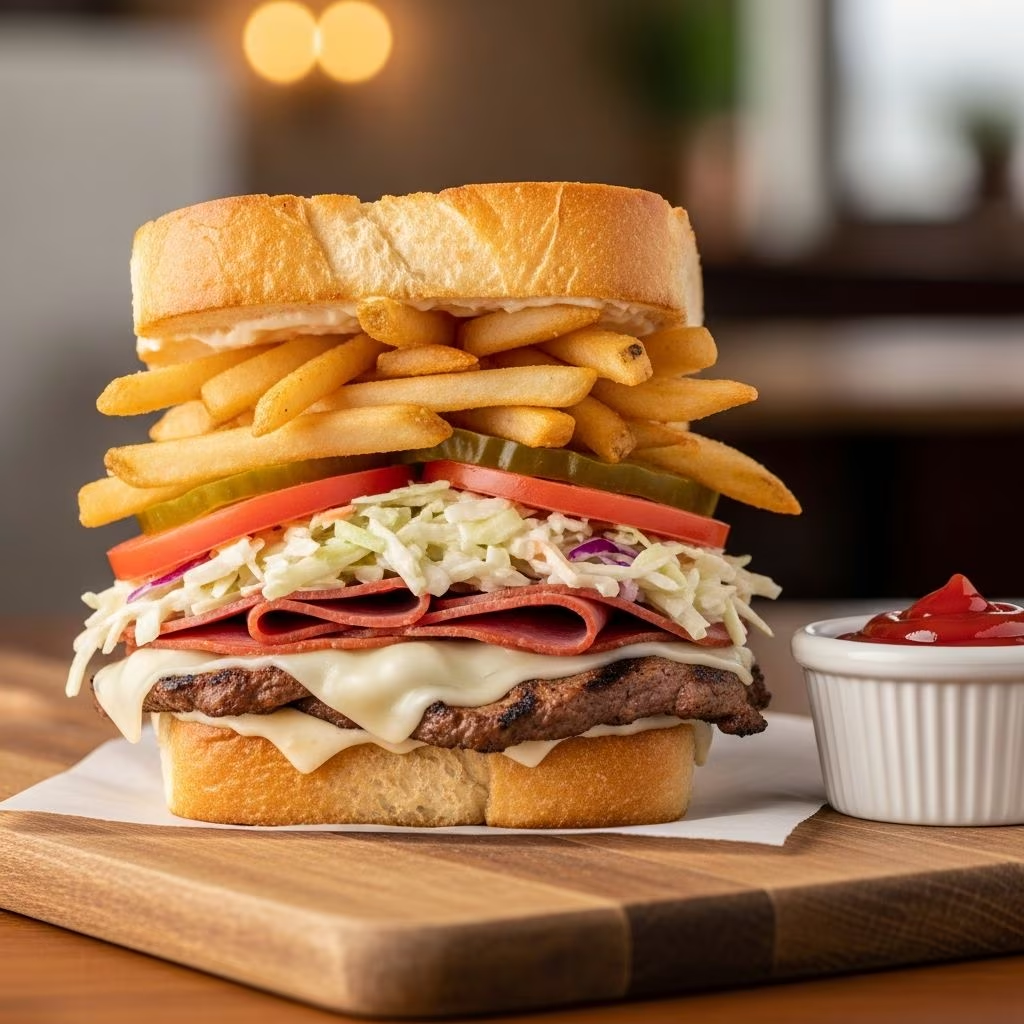
The Pittsburgh sandwich represents one of America’s most distinctive regional culinary creations, originating from the steel city and gaining legendary status through establishments like Primanti Bros. What sets this sandwich apart from conventional deli offerings is its audacious combination of crispy fried potatoes, tangy coleslaw, and fresh tomatoes layered directly onto the bread alongside traditional deli meats and cheese. This unconventional stacking method creates a textural and flavor profile that has captured the imagination of food enthusiasts far beyond Pennsylvania’s borders.
Understanding the Pittsburgh Sandwich Heritage
The sandwich’s origins trace back to Pittsburgh’s working-class neighborhoods, where the resourceful design allowed laborers to carry multiple food components in a single, convenient package. Rather than serving sides separately, the innovative approach of placing everything between two slices of bread created a self-contained meal that gained popularity throughout the region. The sandwich’s reputation grew exponentially through Primanti Bros., which has been perfecting the recipe for decades and remains the gold standard for authentic preparation.
What distinguishes this sandwich from standard deli creations is not merely the ingredient list but the deliberate engineering of each layer. The placement of french fries and coleslaw is not accidental—these components serve specific purposes in the overall eating experience, providing contrasting temperatures, textures, and flavors that elevate each bite.
Essential Ingredients for Authentic Preparation
Creating an authentic Pittsburgh sandwich requires attention to ingredient quality and selection. While variations exist, certain foundational components remain consistent across authentic recipes.
The Foundation: Bread Selection
The bread serves as the structural foundation for this substantial sandwich, requiring particular characteristics to withstand the moisture and weight of the fillings. Thick-cut Italian bread or butter bread provides the necessary structural integrity, with slices typically measuring at least half an inch thick. Some contemporary preparations utilize specialized potato rolls designed to support the sandwich’s heft while remaining soft enough for comfortable eating.
The bread choice significantly impacts the eating experience—thinner slices would quickly become soggy from the coleslaw dressing and meat juices, while overly dense bread becomes difficult to bite through when loaded with all the components.
Meat Selection and Preparation
Traditional recipes prominently feature pastrami as the primary meat, though alternatives like roast beef or Philly beef sandwich slices provide equally valid options. The typical portion ranges from approximately one-quarter pound for standard servings to four or five substantial slices per sandwich.
When using pre-sliced deli meat, arrange the slices slightly overlapping on the bread base. Some recipes call for warming the meat on a griddle before assembly, though this step remains optional depending on personal preference and available equipment.
Cheese Component
Provolone cheese emerges as the preferred choice in most authentic recipes, with two slices providing adequate coverage without overpowering other flavors. The cheese should be placed directly atop the meat, allowing residual heat from warm meat to begin the melting process. Some preparations involve warming the cheese on the griddle before assembly for enhanced flavor development.
The Signature Fries Layer
French fries represent the most distinctive element of the Pittsburgh sandwich, differentiating it from conventional deli offerings. A generous handful of crispy fries—whether hand-cut or commercially prepared—provides the textural contrast that defines the sandwich’s appeal. The fries must be freshly cooked to maintain their crispness, as cold or soggy potatoes significantly diminish the overall quality.
The placement of fries occurs after the cheese layer, creating a protective barrier that delays moisture absorption while the sandwich is consumed.
Vinegar-Based Coleslaw
The coleslaw provides acidic brightness and cooling contrast to the rich meat and cheese components. Traditional recipes utilize a simple vinegar-based dressing rather than creamy mayonnaise-based alternatives. A standard dressing combines apple cider vinegar, sugar, canola oil, salt, and pepper, creating a balanced flavor profile that complements rather than masks the other ingredients.
Preparation of the coleslaw typically involves whisking dressing ingredients together and coating shredded cabbage, then refrigerating for at least thirty minutes—though overnight refrigeration develops more complex flavors. The coleslaw should be drained of excess liquid before layering to prevent the sandwich from becoming oversaturated.
Fresh Tomato Slices
Quality tomato slices add juiciness and subtle acidity without overwhelming the palate. Typically, two slices of fresh tomato complete the vegetable components, placed just before the final bread layer.
Step-by-Step Assembly Methodology
Proper assembly technique ensures each component contributes optimally to the final eating experience. The layering sequence matters considerably, as strategic placement creates structural stability and flavor progression.
Step One: Begin with a substantial slice of thick-cut Italian bread or butter bread positioned as your foundation. This base layer will support all subsequent components.
Step Two: Arrange your selected meat across the bread surface, creating an even layer without gaps that might cause structural weakness. If using cold meat, consider warming it briefly to enhance flavor development.
Step Three: Place cheese slices directly atop the meat layer. The residual warmth from meat will initiate melting, creating cohesion between layers.
Step Four: Add a generous handful of crispy french fries in a relatively even distribution across the cheese. This layer provides crucial textural contrast and serves as a moisture barrier.
Step Five: Top the fries with approximately one-quarter cup of well-drained coleslaw, distributing it evenly to ensure every bite contains the acidic, cooling element.
Step Six: Layer fresh tomato slices across the coleslaw. Two slices generally provides adequate coverage without excessive moisture introduction.
Step Seven: Crown the construction with the second bread slice, completing the sandwich.
Step Eight: Cut the sandwich in half diagonally, which serves both practical and aesthetic purposes—the diagonal cut allows for easier handling while creating an appealing presentation.
Ingredient Quantities Reference
| Component | Quantity per Sandwich | Notes |
|---|---|---|
| Italian Bread Slices | 2 slices, thick-cut | ½ inch thickness minimum |
| Deli Meat (Pastrami/Roast Beef) | ¼ pound or 4-5 slices | Can vary based on preference |
| Provolone Cheese | 2 slices | Optional: warm before assembly |
| French Fries | 1 generous handful | Must be freshly cooked |
| Coleslaw | ¼ cup | Drained of excess liquid |
| Fresh Tomato | 2 slices | Quality matters significantly |
Coleslaw Preparation Guide
The coleslaw dressing requires minimal ingredients but delivers substantial flavor impact. For a batch serving multiple sandwiches:
- Combine one 16-ounce bag of shredded coleslaw mix in a large mixing bowl
- Whisk together one-quarter cup apple cider vinegar, two tablespoons sugar, two tablespoons canola oil, one teaspoon salt, and pepper to taste
- Pour the dressing over the coleslaw, tossing thoroughly to distribute evenly
- Cover and refrigerate for minimum thirty minutes, with overnight refrigeration providing superior flavor development
- Before sandwich assembly, drain any accumulated liquid from the coleslaw to prevent excessive moisture in the final product
French Fries: Selection and Preparation
The fries component demands careful attention, as quality directly impacts the sandwich’s success. Commercially prepared frozen fries provide convenience and consistency, requiring only oven-baking per package instructions. Alternatively, hand-cut fries from russet potatoes offer superior flavor when deep-fried in clean oil to golden crispness.
Timing proves critical—fries must be served immediately after cooking while maintaining maximum crispness. Allowing fries to sit even briefly permits moisture absorption, compromising the textural contrast that defines the sandwich’s appeal.
Regional Variations and Modern Adaptations
While traditional recipes maintain consistency around core components, contemporary variations accommodate personal preferences and dietary considerations. Some preparations substitute alternative meats like roast beef or Italian cold cuts for pastrami. Cheese selections may vary to include cheddar, American, or other melting varieties beyond traditional provolone.
Vegetarian interpretations exist, though these require creative substitution of the meat component to maintain nutritional substance and textural interest. Some modern renditions incorporate additional vegetables or alternative bread styles, though purists argue these departures diminish authenticity.
Equipment Considerations
Most home kitchens contain adequate equipment for sandwich assembly. However, certain tools enhance the process:
- A sharp serrated knife facilitates thick bread slicing without crushing the loaf
- A cutting board with adequate surface area accommodates assembly of substantial sandwiches
- For warm meat preparation, a griddle or flat-top cooking surface heats meat evenly, though a standard skillet suffices
- Mixing bowls for coleslaw preparation should have adequate capacity for batches serving multiple sandwiches
- A colander or fine-mesh strainer facilitates coleslaw draining without losing shredded vegetables
Frequently Asked Questions
Can the sandwich be prepared in advance?
Ideally, Pittsburgh sandwiches should be assembled immediately before consumption to maintain bread texture and french fry crispness. However, all components can be prepared ahead—meats warmed, cheese sliced, coleslaw refrigerated, and fries cooked—then assembled in minutes when ready to serve.
What are suitable substitutes for pastrami?
Roast beef, corned beef, Italian cold cuts, or even grilled chicken provide alternative protein options. The key consideration remains selecting meats that complement rather than overpower the coleslaw and vinegar-based flavors.
How is the coleslaw dressing different from creamy versions?
The vinegar-based dressing relies on acid for flavor and preservation rather than mayonnaise, creating a brighter taste profile and preventing the coleslaw from becoming heavy or rich alongside the cheese and meat components.
Why are fries placed inside rather than served separately?
The original Pittsburgh sandwich design reflected practical considerations for working-class laborers who needed a complete, portable meal. Incorporating fries directly into the sandwich created efficiency while the placement above coleslaw provided textural variety and moisture protection.
Can frozen French fries be used successfully?
Yes, quality frozen fries prepared per package instructions work effectively. The critical factor remains ensuring fries are hot and crispy at assembly time, as cold or soggy fries significantly diminish the sandwich’s quality.
What beverage pairings complement the sandwich?
The sandwich’s richness and acidic coleslaw pair well with cold beverages—iced tea, lemonade, or carbonated drinks provide refreshing contrast. Traditional accompaniments include fries or onion rings served on the side.
Serving and Enjoyment Recommendations
Serve the sandwich immediately after assembly while all components maintain their intended temperatures and textures. The diagonal cut facilitates easier handling while creating an appealing presentation. Napkins prove essential due to the sandwich’s substantial construction and juiciness from tomatoes and meat.
For optimal enjoyment, consume the sandwich while french fries retain their crispness and before bread begins absorbing excess moisture. The first few bites establish the intended flavor and texture progression as designed.
References
- The Pittsburgh Recipe — Tyson Foodservice. https://www.tysonfoodservice.com/recipes/by-cuisine/the-pittsburgh-recipe
- Pittsburgh Style Sandwich — Life Tastes Good. 2015. https://www.ourlifetastesgood.com/2015/01/pittsburgh-style-sandwich.html
- Pittsburgh-Style Sandwich — Martin’s Famous Potato Rolls and Bread. https://potatorolls.com/recipes/pittsburgh-style-sandwich/
- Homemade Primanti Bros. Sandwich — Brown Eyed Baker. https://www.browneyedbaker.com/homemade-primanti-bros-sandwich/
- Making the #1 Sandwich from the Best — Sam The Cooking Guy (YouTube). https://www.youtube.com/watch?v=2Na6JyF-GW8