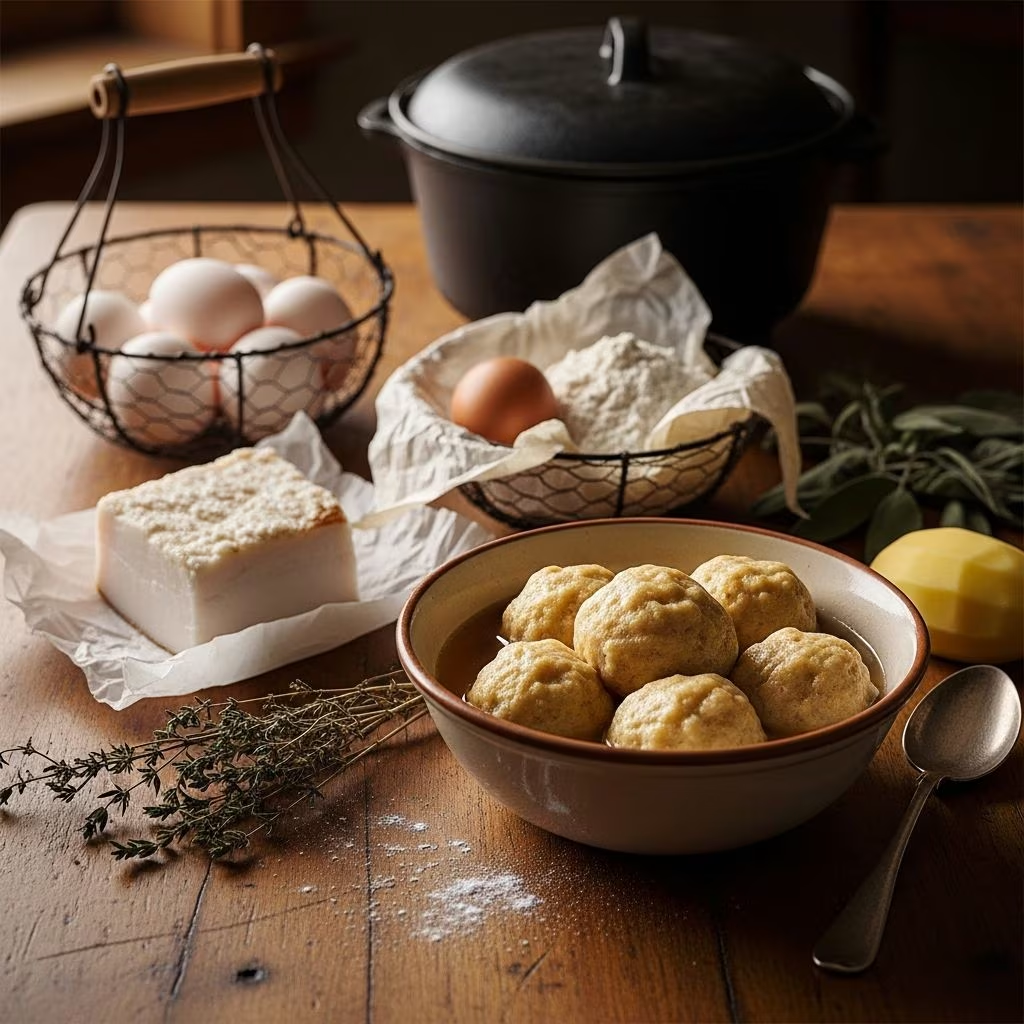
During the 19th century, American pioneers traversed vast landscapes with limited resources, relying on ingenuity to create nourishing meals. Cut dumplings, a staple in their diet, represented resourcefulness—transforming basic pantry items into satisfying dishes that bridged the gap between noodles and traditional dumplings. These recipes, often handed down orally through families, highlight the era’s simplicity and resilience.
The Roots of Pioneer Cooking
Pioneer life demanded versatility. Settlers carried sacks of flour, a few eggs from their hens, and milk from cows if fortunate. Salt preserved what little they had. This combination birthed cut dumplings, which could simmer in broth from hunted game or sparse vegetables. Unlike modern recipes laden with spices, these were plain yet flavorful when paired with stews.
Historical accounts reveal that such dishes fueled long wagon treks and harsh winters. Families gathered around campfires, cutting dough directly into pots, creating tender bites that absorbed savory liquids. This method preserved precious fuel and time, essential for survival.
Essential Ingredients for Authentic Dumplings
The beauty of 1800s cut dumplings lies in their minimalism. Core components include:
- Flour: Unsifted all-purpose flour forms the base, providing structure without refinement.
- Eggs: One large egg binds the mixture, adding richness.
- Milk: About one cup creates a workable dough; whole or 2% works best.
- Salt: 1.5 teaspoons enhances taste, a luxury in frontier times.
These four items yield enough for a family meal, scalable as needed. No leaveners or fats were typical, emphasizing purity.
Mastering the Dough Preparation
Begin by combining dry ingredients in a large bowl: 3 cups flour and salt. Make a well in the center. In a separate container, whisk the egg with milk until smooth. Pour this wet mixture into the well, stirring gradually with a fork or hands until a shaggy dough forms.
Knead lightly on a floured surface for 1-2 minutes—overworking toughens the texture. The dough should be soft and slightly sticky, resting briefly under a cloth to relax gluten. This step, though simple, ensures dumplings hold shape during cooking.
| Ingredient | Quantity | Role |
|---|---|---|
| All-purpose flour | 3 cups | Structure and bulk |
| Salt | 1.5 tsp | Flavor enhancer |
| Egg | 1 large | Binder and richness |
| Milk | 1 cup | Moisture and tenderness |
Techniques for Cutting and Cooking
Traditional cutting sets these dumplings apart. Flatten dough to 1/4-inch thickness on a floured board. Use a knife or pastry cutter to slice into 1-inch strips, then cross-cut into small squares or diamonds. For noodle-like versions, cut longer strips.
In a boiling pot of broth or soup—chicken, beef, or vegetable—drop pieces one by one, stirring gently to prevent clumping. Maintain a steady simmer; rapid boiling disintegrates them. Cook 10-15 minutes until floating and firm. This direct-drop method mimics pioneer haste, no shaping required.
Pairing Dumplings with Hearty Broths
Dumplings shine in simple stews. Boil a whole chicken, shred meat, and use bones for rich broth. Add carrots, potatoes, or onions if available. Season minimally with salt and pepper. For vegetarians, mushroom or root vegetable stock substitutes well.
One variation scales for smaller pots: halve ingredients for 3-4 servings. Introduce subtle herbs like parsley post-cooking to honor the era while adding nuance.
Variations Across Pioneer Regions
Recipes evolved by locale. Midwest settlers favored egg-heavy doughs for tenderness; Southern versions incorporated cornmeal for grit. Some fried dough first, a technique yielding translucent paste before boiling, enhancing chew.
- Small Batch: 1.5 cups flour, 0.75 tsp salt, 1/2 egg (beaten), 0.5 cup milk.
- Butter-Enriched: Melt 1/4 cup butter into milk for luxury.
- Sweet Twist: 1 Tbsp sugar for dessert-like dumplings in fruit compotes.
Step-by-Step Recipe: Classic Pioneer Cut Dumplings
- Mix flour and salt in a bowl.
- Whisk egg and milk; combine with dry ingredients to form dough.
- Knead briefly, rest 5 minutes.
- Roll to 1/4-inch thick; cut into 1-inch pieces.
- Drop into simmering broth; cook 12-15 minutes uncovered.
- Serve hot in bowls with stewed meat and veggies.
Yields 6-8 servings. Prep: 15 min. Cook: 20 min.
Modern Twists on Timeless Traditions
Today’s kitchens offer enhancements without betraying origins. Use almond milk for dairy-free; gluten-free flour blends approximate texture. Add garlic powder or herbs sparingly. Air-fry cut pieces for crispy edges before soup addition.
Freezing works: par-cook, flash-freeze, then boil from frozen. This extends the recipe’s life, echoing pioneer preservation.
Nutritional Profile and Storage Tips
A serving (about 1 cup cooked) provides roughly 250 calories, 8g protein, 45g carbs, 3g fat. High in iron from enriched flour, it’s sustaining fare.
Store uncooked dough refrigerated up to 2 days; cooked dumplings 3-4 days in airtight containers. Reheat in broth to revive tenderness.
| Nutrient | Per Serving | % Daily Value |
|---|---|---|
| Calories | 250 | 13% |
| Protein | 8g | 16% |
| Carbs | 45g | 16% |
Common Mistakes and How to Avoid Them
Dough too dry? Add milk teaspoon by teaspoon. Boiling too vigorously? Lower heat to simmer. Undercooked centers? Test one piece first. Flour your knife between cuts to prevent sticking.
Preserving Culinary Heritage
These dumplings connect us to ancestors’ grit. Teach children the process; document family tweaks. In a world of convenience foods, reviving such recipes fosters appreciation for simple abundance.
Frequently Asked Questions
Can I make these without eggs?
Yes, substitute with extra milk or water, though texture firms up.
How do I know when dumplings are done?
They float, double in size, and yield tender centers when bitten.
Are these gluten-free adaptable?
Use a 1:1 gluten-free blend; add xanthan gum for binding.
What’s the difference from dropped dumplings?
Cut versions are sliced from dough sheets, denser than spoon-dropped batter.
Can I freeze the dough?
Roll, cut, and freeze flat; boil directly from frozen.
References
- Pioneer Cut Dumplings from the 1800s — KitchenPC. N/A. https://www.kitchenpc.com/Recipes/Pioneer_Cut_Dumplings_from_the_1800s/
- An Honest-to-Goodness Pioneer Recipe — Kristin Holt. N/A. https://www.kristinholt.com/archives/398
- Pioneer Cut Dumplings from the 1800s Discussion — Groups.io. 2024-10-01. https://groups.io/g/a-little-bit-of-everything/topic/pioneer_cut_dumplings_from/108972383