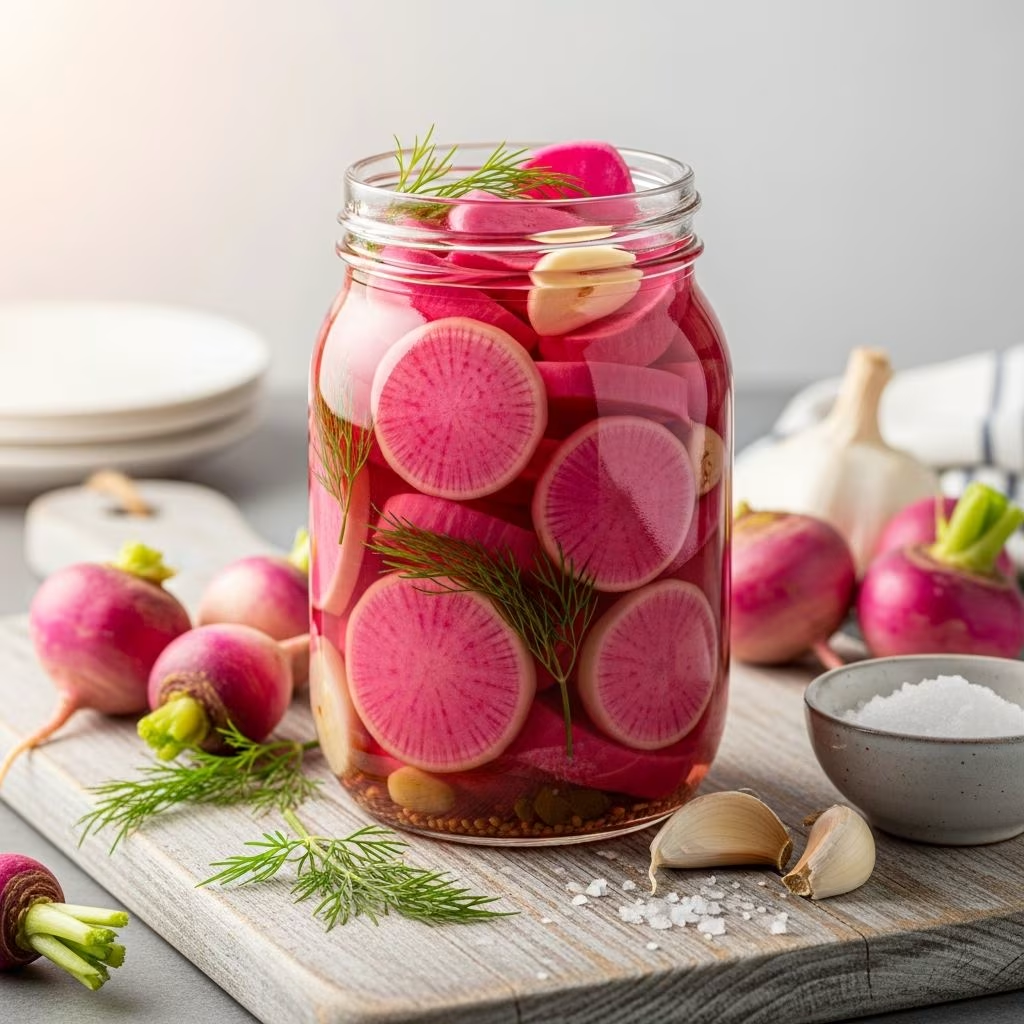
Imagine opening your fridge to find jars of brilliantly pink pickles that add a tangy crunch to any dish. These pink pickled turnips, inspired by Middle Eastern traditions, are simple to make at home with everyday ingredients. Their eye-catching color comes from beets, while the brine infuses them with garlicky, salty flavors. Perfect for beginners, this refrigerator method requires no canning equipment and yields results in under a week.
Why Pink Pickled Turnips Deserve a Spot in Your Kitchen
These pickles aren’t just pretty—they pack a punch of flavor and nutrition. Turnips provide a crisp texture and mild earthiness that transforms in the brine, becoming addictive. The beet not only dyes them pink but adds subtle sweetness. Commonly enjoyed in Lebanese, Assyrian, and other regional cuisines, they brighten falafel wraps, hummus platters, or grain bowls. Low in calories yet high in vitamin C and fiber, they’re a healthy snack or side that stores for weeks.
Unlike fermented pickles that take months, these quick versions use vinegar for instant tang and safety. They’re vegan, gluten-free, and customizable, making them ideal for meal prep or gifting.
Understanding the Magic of Pickling Vegetables
Pickling preserves vegetables through acidity, salt, and sometimes sugar, creating an environment hostile to bacteria. In this recipe, vinegar provides the acid, salt draws out moisture, and sugar balances sharpness. The hot water brine ensures even dissolution, while refrigeration slows fermentation for controlled flavor development.
Root vegetables like turnips excel here because their density holds shape during pickling. Beets release betanin, the pigment responsible for the pink hue, which infuses evenly over days. This method, rooted in centuries-old traditions, keeps produce fresh longer without heat processing.
Essential Ingredients for Perfect Pink Pickles
Gathering the right components is key to success. Here’s what you’ll need for one quart jar (serves 8-10 as a side):
- 1 pound turnips: Small, firm ones yield the best crunch. Peel and cut into 1/2-inch by 2-inch sticks.
- 1 small beet: Provides the iconic pink color and mild sweetness. Peel and slice thinly.
- 1 cup distilled white vinegar: Ensures clarity and sharp tang without darkening the brine.
- 1 cup hot water: Helps dissolve salt and sugar quickly.
- 1 tablespoon kosher or sea salt: Non-iodized for best results; avoids cloudiness.
- 2 teaspoons sugar: Balances acidity; white sugar keeps color bright.
- 1-2 garlic cloves: Peeled, crushed or sliced for aromatic depth.
- 1 teaspoon black peppercorns: Adds subtle spice; optional but recommended.
- Optional add-ins: Bay leaf, coriander seeds, or chili slices for variety.
Scale up for multiple jars. Use pint jars for smaller batches.
Step-by-Step Guide to Making Your Own
Prep time: 15 minutes. Pickling time: 4-5 days. No cooking required beyond warming the brine.
Prepare the brine: In a heat-safe measuring cup, combine hot water, vinegar, salt, and sugar. Stir vigorously until fully dissolved. The warmth speeds this up—about 1-2 minutes. Let cool slightly while prepping veggies.
Prep vegetables: Wash turnips and beet thoroughly. Trim tops, peel, and cut turnips into even sticks (like French fries). Slice beet into thin rounds or sticks. Thinly slice or crush garlic.
Pack the jar: Use a clean, sterilized quart mason jar. Add garlic and peppercorns to the bottom. Layer turnip sticks and beet pieces tightly, leaving 1/2-inch headspace. Pack firmly to minimize air pockets.
Add brine: Pour cooled brine over vegetables, ensuring everything is submerged. Use a chopstick to release bubbles. Top off with extra brine if needed (equal parts vinegar and water). Seal with a lid.
Pickle and store: Let jar cool to room temperature (1-2 hours), then refrigerate. Wait 4-5 days for full flavor and color. The brine turns vibrant pink as betanin leaches out.
Taste after 3 days; they improve with time. Store up to 1 month in the fridge.
Ingredient Substitutions and Customizations
Adapt to what’s on hand or dietary needs:
| Original | Substitution | Notes |
|---|---|---|
| Turnips | Daikon radish, kohlrabi, or Hakurei turnips | Maintains crunch; adjust pickling time for denser veggies. |
| Beet | Red cabbage or food coloring | Beet adds flavor; alternatives are less nutritious. |
| White vinegar | Apple cider vinegar | Slightly sweeter; may darken color. |
| Sugar | Honey or maple syrup | Use 1.5 tsp; dissolve well. |
| Peppercorns | Cumin seeds or mustard seeds | Boosts regional flair. |
For spicier versions, add sliced jalapeños. Experiment with herbs like dill for a twist.
Flavor Evolution: What to Expect Over Time
- Day 1-2: Mild tang, crisp texture, pale pink hints.
- Day 3-4: Brine deepens to hot pink; garlic infuses fully.
- Day 5+: Peak crunch and balanced acidity. Beets soften slightly but mimic turnip flavor.
The surprise? Pickled beets taste just like the turnips—briny and garlicky—making every piece delicious.
Creative Ways to Enjoy Pink Pickled Turnips
These versatile pickles shine in many dishes:
- Mezze platters: Pair with hummus, baba ganoush, pita, and olives for an authentic spread.
- Sandwiches and wraps: Elevate falafel, shawarma, or veggie burgers with crunch and tang.
- Salads and bowls: Chop finely into grain salads, tabbouleh, or Buddha bowls.
- Charcuterie boards: Vibrant color pops against cheeses and meats.
- Straight from the jar: Low-cal snack with probiotics from natural fermentation hints.
They cut richness in fatty dishes like lamb kebabs or creamy dips.
Storage, Safety, and Troubleshooting
Storage: Keep refrigerated; good for 3-4 weeks. Cloudy brine or off smells mean discard.
Safety tips: Use clean jars and fresh produce. Acidity (below pH 4.6) prevents botulism in fridge pickles—no boiling needed.
Common issues:
- Not pink enough? Add more beet or longer pickling time.
- Too soft? Use fresher turnips; avoid overpacking.
- Too salty? Dilute brine next time or rinse before eating.
For longer storage, process in a water bath canner (10 minutes for pints).
Health Benefits and Nutritional Snapshot
Per serving (about 1/4 cup): ~15 calories, 3g carbs, 1g fiber, high in vitamin C (20% DV). Probiotic potential from lacto-fermentation traces supports gut health. Beets add folate and antioxidants. A smart swap for high-sodium chips.
Frequently Asked Questions (FAQs)
Can I pickle without a beet for color?
Yes, but they’ll be pale. Try red cabbage or skip for natural turnip color.
How long do they last?
Up to 4 weeks refrigerated. Best within 2 weeks for peak crunch.
Are these shelf-stable?
No, refrigerate only. For pantry storage, use a canning process.
Can I reuse the brine?
Yes, for another batch of similar veggies, but boil first and use within days.
Vegan and gluten-free?
Fully vegan and naturally gluten-free.
Scaling Up for Parties or Preservation
Double or triple for crowds—use multiple pint jars. For gifting, attach labels with dates and instructions. In season (fall/winter), pickle in bulk for year-round enjoyment. Experiment with Hakurei turnips for tender, salad-like results.
These pink pickled turnips bridge tradition and convenience, turning humble roots into a kitchen staple. Whip up a batch today and transform your meals with color and crunch.
References
- Lebanese Pickles (Pickled Turnips) — Urban Farm and Kitchen. 2023-05-15. https://urbanfarmandkitchen.com/lebanese-pickles/
- Quick Pickled Turnips (Middle Eastern Style) — Cadry’s Kitchen. 2022-08-10. https://cadryskitchen.com/quick-pickled-turnips/
- 5 Ingredient Pink Pickled Turnips — Salima’s Kitchen (YouTube). 2023-01-20. https://www.youtube.com/watch?v=r6oI1Ehupjk