Pineapple crisp represents one of the most versatile and accessible warm-weather desserts available to home bakers. This tropical-inspired treat combines tender fruit with a buttery, crumbly topping that becomes irresistibly golden and crunchy when baked. Whether you’re planning a casual family gathering or seeking an elegant finish to a summer meal, pineapple crisp delivers consistent, crowd-pleasing results with minimal effort and readily available ingredients.
Understanding the Fundamentals of Pineapple Crisp
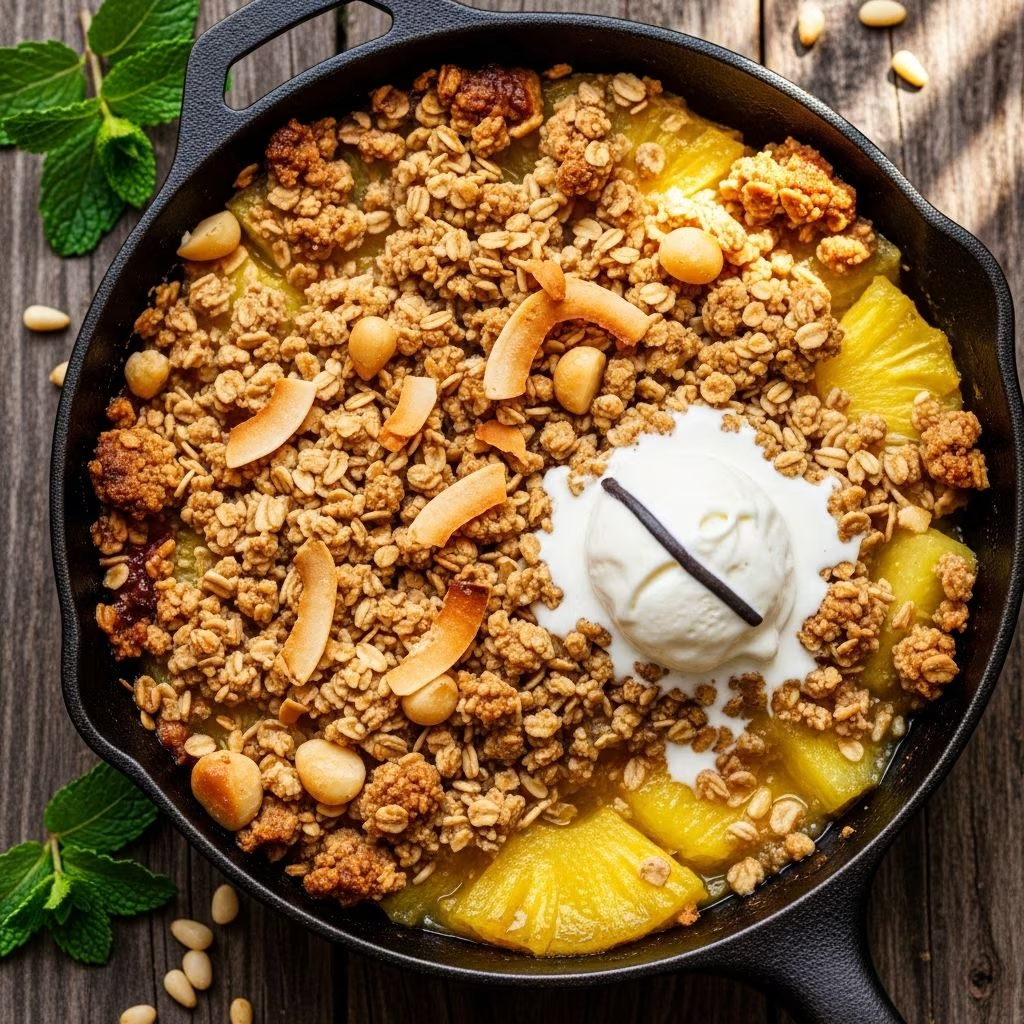
At its core, a pineapple crisp consists of two essential components: the fruit base and the streusel topping. The fruit layer provides natural sweetness and moisture, while the topping creates textural contrast through a combination of oats, flour, brown sugar, and butter. The magic occurs when these layers bake together, allowing the fruit to release its juices while the topping becomes crispy at the edges and slightly chewy beneath.
What distinguishes a crisp from other fruit desserts is its simplicity and the emphasis on the topping texture. Unlike cobblers with biscuit toppings or crisps featuring pastry, the pineapple crisp relies on a rustic streusel that requires no rolling, cutting, or special shaping techniques. This straightforward approach makes it ideal for beginning bakers while still satisfying experienced cooks seeking reliable comfort food.
Selecting Your Pineapple: Fresh Versus Canned Options
One of the first decisions you’ll face when preparing pineapple crisp involves choosing between fresh and canned fruit. Each option presents distinct advantages and considerations that affect both preparation time and the final flavor profile.
Fresh Pineapple Advantages
- Provides superior texture with firmer fruit pieces that maintain structure during baking
- Delivers more vibrant, complex tropical flavor with natural tartness
- Allows complete control over sweetness levels through portion adjustment
- Creates a more visually appealing presentation with distinct fruit pieces
- Offers flexibility to use pineapple at varying ripeness stages
Canned Pineapple Benefits
- Eliminates preparation time required for peeling, coring, and cutting
- Provides consistent moisture content and predictable cooking times
- Offers year-round availability regardless of season
- Requires no special equipment or culinary skills to prepare
- Often costs significantly less than purchasing fresh fruit
When selecting canned pineapple, choose varieties packed in their own juice rather than heavy syrup to control overall sweetness. If using fresh pineapple, select fruits that yield slightly to pressure and emit a sweet aroma at the stem end, indicating proper ripeness and optimal juice content.
Essential Ingredients and Their Roles
| Ingredient | Typical Quantity | Function in Recipe |
|---|---|---|
| Pineapple (fresh or canned) | 4 cups chopped or 40 oz drained | Provides fruit base, natural sweetness, and moisture |
| Brown sugar | ¾ to 1 cup total | Sweetens both fruit and topping layers |
| All-purpose flour | ½ to 1 cup | Creates structure in streusel topping |
| Rolled oats | ¾ to 1 cup | Provides texture and fiber to topping |
| Cold butter | ½ cup | Creates crumbly texture and rich flavor |
| Spices (cinnamon, vanilla) | ½ to 1 teaspoon each | Enhances tropical flavor profile |
The quality of butter significantly impacts the final texture of your streusel topping. Using cold, unsalted butter cut into small cubes ensures proper distribution throughout the dry ingredients, creating that desirable crumbly consistency rather than a dense, greasy topping.
Step-by-Step Preparation Process
Preparing Your Ingredients
Begin by preheating your oven to 350 degrees Fahrenheit. This temperature provides gentle, even heat that allows the fruit to soften and release its juices while the topping achieves golden-brown color without burning. Select an 8×8-inch baking dish or similar-sized vessel with a capacity of approximately two quarts.
If using fresh pineapple, cut the fruit into bite-sized cubes measuring roughly ½ to ¾ inches. Larger pieces may remain too firm in the center, while smaller fragments can become mushy. If using canned fruit, thoroughly drain the pineapple and reserve the syrup for other culinary purposes.
Creating the Fruit Layer
Combine your prepared pineapple with two to three tablespoons of brown sugar, one tablespoon of cornstarch or flour, and your chosen spices including cinnamon and vanilla extract. Toss these ingredients gently until the fruit is evenly coated. This preliminary coating accomplishes two goals: it ensures uniform sweetness distribution and allows the starch to absorb excess moisture during baking, preventing a watery final product.
Transfer the seasoned pineapple into your prepared baking dish, spreading it into an even layer. At this point, the mixture may appear quite moist, but this is exactly what you want as the fruit will release additional juices during baking.
Crafting the Streusel Topping
In a separate mixing bowl, combine your dry ingredients: all-purpose flour, rolled oats, and the remaining brown sugar. Whisk these together to ensure even distribution of sweetener throughout the dry components. Cut your cold butter into small, uniform cubes and distribute them throughout the mixture.
Using your fingertips, gently rub the butter into the flour mixture, working methodically until the entire mixture resembles coarse breadcrumbs. This tactile process requires patience but yields superior results compared to mechanical mixing. Some larger, pea-sized butter pieces remaining in the mixture will create delightfully crispy topping sections after baking.
Assembly and Baking
Distribute the streusel topping evenly across the pineapple layer, using your hands to gently press it into place without compacting it too firmly. The topping should create a partially covered surface with visible fruit showing through in places, allowing some steam to escape during baking.
Place the baking dish into your preheated oven and bake for 25 to 30 minutes, until the topping achieves a light golden-brown color and you observe gentle bubbling around the dish’s edges. This bubbling indicates that the fruit juices are actively releasing and combining with the topping’s moisture.
Troubleshooting Common Issues
Mushy or Soupy Results
If your finished crisp appears excessively wet, you likely selected fruit with high natural moisture content or used canned pineapple packed in syrup. Addressing this issue involves incorporating cornstarch into the fruit layer to absorb excess moisture. Additionally, ensure you drain canned fruit thoroughly and consider reducing the sugar quantity slightly.
Dry or Tough Topping
Overbaking represents the primary cause of excessively dry streusel. Remember that baking continues through carryover heating after removal from the oven. Aim to remove your crisp when the topping just reaches golden color rather than waiting for deep browning. Using cold butter and avoiding overworking the topping mixture also prevents dense, tough results.
Uneven Cooking
If portions of your crisp bake much faster than others, your oven likely has hot spots. Rotating the dish halfway through baking helps ensure even browning. Additionally, position your oven rack in the center position for optimal heat distribution rather than placing it near the top or bottom.
Creative Variations and Adaptations
Flavor Enhancement Options
- Add nutmeg or ginger to the topping for warm spice complexity
- Include coconut flakes in the streusel for tropical authenticity
- Mix fresh lemon juice into the fruit layer for brightness and tartness balance
- Substitute vanilla bean paste for extract to create more pronounced vanilla flavor
- Incorporate macadamia nuts into the topping for textural variation
Dietary Accommodations
For gluten-free preparation, substitute all-purpose flour with certified gluten-free all-purpose flour or ground gluten-free oats in both the fruit layer and the topping. The results remain virtually identical to traditional versions.
To reduce added sugar, use less brown sugar in both layers and rely more heavily on the fruit’s natural sweetness. This approach works particularly well with perfectly ripe, fresh pineapple.
Serving Suggestions and Presentation
Pineapple crisp achieves its full potential when served warm, approximately 10 to 15 minutes after removal from the oven. At this temperature, the streusel remains crispy while the fruit retains optimal texture. Serving it cold is equally delicious, offering a different textural experience as the topping becomes denser and crunchier.
Complement your crisp with vanilla ice cream, whipped cream, Greek yogurt, or crème fraîche. These accompaniments provide cooling contrast to the warm fruit and topping while adding richness. A light drizzle of caramel sauce or honey over the finished dish elevates the presentation for more formal occasions.
Storage and Make-Ahead Strategies
Pineapple crisp keeps well when properly stored in an airtight container at room temperature for up to two days. Refrigeration extends shelf life to four days, though the topping gradually absorbs moisture and loses some crispness. Freezing is not recommended, as the thawing process results in textural degradation.
You can prepare the streusel topping up to 24 hours in advance and store it in the refrigerator in an airtight container. When ready to bake, assemble the dish as usual and extend baking time by approximately five minutes to account for the cold topping.
Frequently Asked Questions
Can I make pineapple crisp in individual portions?
Yes, divide the pineapple and topping among small baking dishes or ramekins. Reduce baking time to 18 to 22 minutes, checking for doneness slightly earlier than you would with a full-sized dish.
What size baking dish works best?
An 8×8-inch square dish accommodates standard recipe quantities. Alternatively, a 9-inch round dish or rectangular 9×7-inch pan works acceptably, though baking time may vary slightly.
Can I substitute oats with other ingredients?
Chopped nuts like pecans or almonds can replace half the oats. Granola also works as a topping alternative, though reduce the sugar quantity since granola typically contains added sweetener.
Is fresh pineapple always superior to canned?
While fresh pineapple provides superior flavor and texture, quality canned pineapple produces excellent results and offers practical advantages for busy cooks or those seeking year-round options.
How do I know when the crisp is done baking?
Look for a light golden-brown topping and gentle bubbling around the dish’s edges. A toothpick inserted into the pineapple should meet minimal resistance.
Conclusion: Mastering This Timeless Dessert
Pineapple crisp represents accessible, reliable baking that consistently delivers satisfying results. By understanding ingredient functions, mastering basic techniques, and developing troubleshooting skills, you’ll create restaurant-quality desserts that impress family and guests. Whether you choose fresh or canned fruit, experiment with creative variations, or prepare it for weeknight family meals, this tropical treasure deserves a permanent place in your baking repertoire.
References
- Classic Pineapple Crisp Recipe — Sizzling Eats. Accessed April 2026. https://www.sizzlingeats.com/classic-pineapple-crisp-recipe/
- Fresh Pineapple Crisp — Kate the Baker. Accessed April 2026. https://katethebaker.com/fresh-pineapple-crisp/
- Fresh Pineapple Crisp — It’s Not Complicated Recipes. Accessed April 2026. https://itsnotcomplicatedrecipes.com/fresh-pineapple-crisp/
- Easy Pineapple Crisp — The Big Sweet Tooth. Accessed April 2026. https://www.thebigsweettooth.com/easy-pineapple-crisp/
- Pineapple Crisp — The Recipe Rebel. Accessed April 2026. https://www.thereciperebel.com/pineapple-crisp/
- How to Make Pineapple Crisp | Easy Dessert Recipes — Allrecipes.com. Accessed April 2026. https://www.youtube.com/watch?v=NTVecaYxuW4