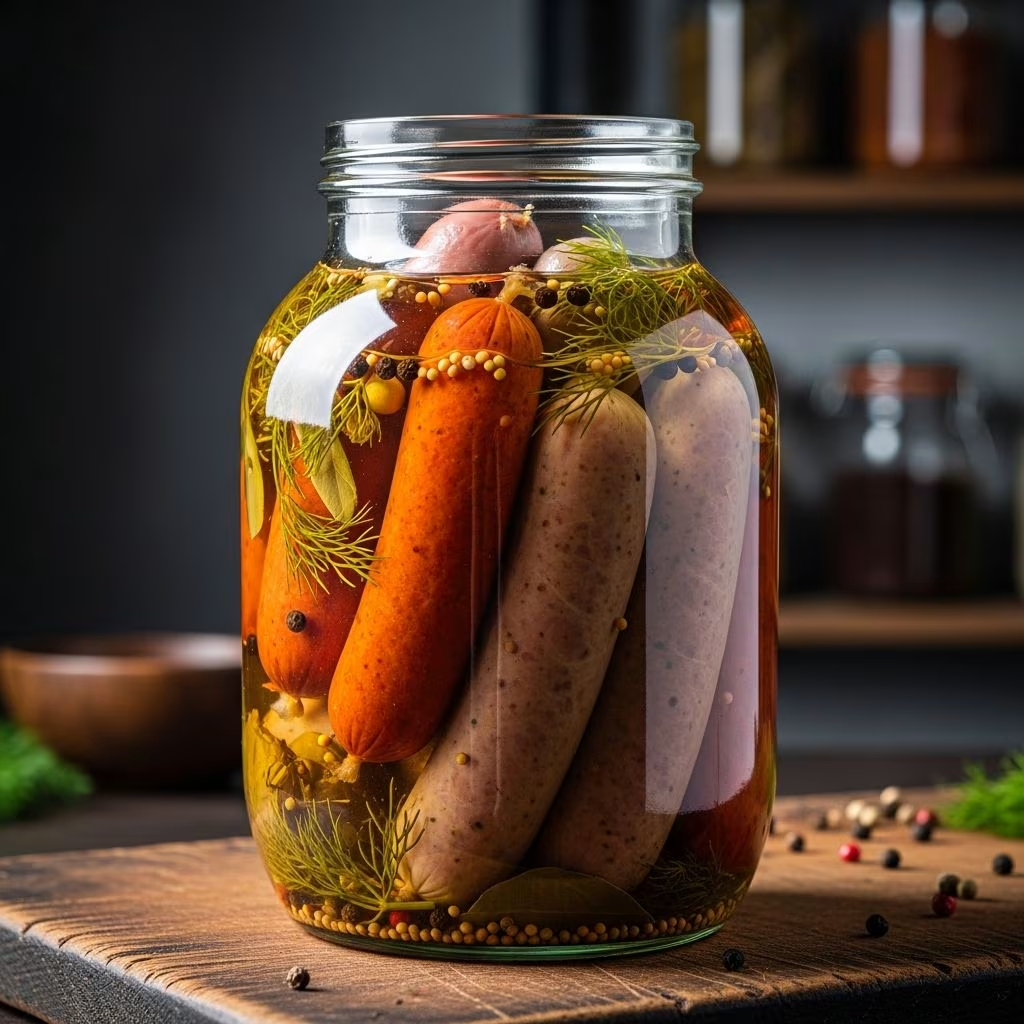
Pickled sausage stands as a timeless delicacy, blending the hearty richness of sausage with the sharp tang of vinegar brine. This preserved treat has roots in various culinary traditions, offering a convenient, flavorful snack that’s easy to prepare at home. Whether you’re a seasoned preserver or a curious beginner, crafting your own pickled sausages allows for customization and quality control. In this in-depth exploration, we’ll delve into the history, science, recipes, techniques, and innovative ways to enjoy this zesty favorite.
The Allure and Heritage of Pickled Sausage
Preserving meats in vinegar dates back centuries, with pickled sausage emerging as a staple in European and American pantries. It gained popularity among hunters, travelers, and bar owners for its long shelf life and bold taste. Today, it’s a hit at parties, tailgates, and as a bar snack. The process infuses sausage with vinegar’s acidity, garlic’s pungency, and spices’ warmth, creating a symphony of flavors that evolves over time.
Understanding the basics is key. Sausages like smoked kielbasa, Italian, or andouille work best due to their firm texture and pre-cooked nature, which withstands pickling without falling apart. The brine—typically white vinegar, water, salt, and seasonings—acts as both preservative and flavor enhancer, balancing the sausage’s fattiness.
Essential Ingredients for Success
Selecting high-quality components ensures outstanding results. Here’s a breakdown:
- Sausages: Opt for fully cooked varieties, 1-2 inches thick. Smoked or Italian links provide robust flavor.
- Vinegar: White or apple cider vinegar (5-6% acidity) for clarity and tang. Avoid flavored types initially.
- Water: Filtered to prevent off-tastes.
- Salt: Pickling or kosher salt, non-iodized.
- Spices: Bay leaves, mustard seeds, black peppercorns, garlic cloves, red pepper flakes for heat.
- Sweeteners: Sugar or honey to mellow acidity.
- Optional Add-Ins: Sliced onions, jalapeños, or herbs like dill.
Proportions matter: a standard brine uses 3 cups vinegar, 3 cups water, 3 tablespoons salt, and 2 tablespoons sugar per 2 pounds of sausage. Adjust for taste after testing small batches.
Step-by-Step Guide to Pickling Sausages
Pickling is straightforward but requires precision for safety and flavor. Follow these steps for foolproof results.
- Prepare Sausages: Slice into 1-2 inch pieces if desired, or leave whole for a rustic look. Pat dry.
- Make Brine: Combine vinegar, water, salt, sugar, and spices in a pot. Bring to a boil, stirring until dissolved, then simmer 5 minutes.
- Cool Brine: Let it reach room temperature to avoid cooking the sausages.
- Pack Jars: Sterilize quart jars. Add sausages, packing tightly without crushing. Tuck in garlic, onions, or peppers.
- Pour Brine: Cover sausages completely, leaving 1/2-inch headspace. Remove air bubbles.
- Seal and Store: Lid jars fingertip-tight. Refrigerate for 3-7 days before eating. Flavors peak at 2 weeks.
For longer storage, process in a water bath canner: boil jars 10 minutes (adjust for altitude). This yields shelf-stable pickles for up to a year unopened.
Safety First: Pickling Best Practices
Proper technique prevents spoilage. According to USDA guidelines, maintain 5% acidity and sterilize equipment. Use tested recipes to inhibit bacteria like botulism. Always refrigerate after opening and discard if contents smell off, bubble excessively, or show mold. High-acid environments (pH below 4.6) are safe for fridge storage up to 2 months.
| Storage Method | Shelf Life | Best For |
|---|---|---|
| Refrigerator | 1-2 months | Quick batches |
| Water Bath Canning | 12 months | Long-term pantry |
| Freezer (post-pickling) | 6 months | Overflow storage |
Flavor Variations to Elevate Your Pickles
Experiment beyond basics for exciting twists:
- Spicy Southwest: Add jalapeños, cumin, and lime zest.
- Garlic-Herb: Extra garlic, fresh rosemary, and thyme.
- Sweet & Tangy: Increase sugar, add pineapple juice.
- Beer-Pickled: Substitute half the water with dark beer for malty depth.
- Asian Fusion: Soy sauce, ginger, star anise, and chili oil.
Start with small test jars to refine your signature blend. Aging enhances complexity—wait longer for deeper infusion.
Perfect Pairings and Serving Suggestions
Pickled sausage shines in many settings. Serve chilled as appetizers with toothpicks, alongside cheeses and crackers on a charcuterie board. Pair with beer, whiskey, or mustard for bar-style snacking. Chop into salads, potato dishes, or sandwiches for a briny kick. Grill briefly for warm contrast, or mix into deviled eggs.
Nutritionally, a 2-oz serving offers protein (12g), fats (10g), and minimal carbs, making it keto-friendly. The pickling process adds probiotics if fermented briefly.
Common Mistakes and Pro Tips
Avoid these pitfalls:
- Overpacking Jars: Allows brine flow and even coverage.
- Hot Brine on Sausage: Causes shrinkage; always cool first.
- Skipping Sterilization: Boil jars 10 minutes.
- Rushing the Wait: Patience yields better taste.
Pro Tip: Layer thin onion slices for natural sweetness. Use wide-mouth jars for easy packing.
Scaling Up: Bulk Pickling for Gifting
Pickled sausage makes thoughtful, homemade gifts. Triple the recipe for gallon jars. Customize labels with dates and ingredients. For holidays, create variety packs. Ensure recipients store properly. Commercial sales require health department approval and labeling compliance.
Frequently Asked Questions
Can I use raw sausage for pickling?
No. Raw meat requires full cooking first to eliminate pathogens. Pre-cooked links are safest and simplest.
How long does pickled sausage last?
Refrigerated: 1-2 months. Canned: 1 year. Always check for spoilage signs.
Is pickling sausage safe at home?
Yes, with proper acidity and hygiene. Follow USDA-tested recipes for assurance.
What if my brine is cloudy?
Normal from spices. If very cloudy or foul-smelling, discard.
Can I reuse the brine?
Once, if fully boiled and no solids remain. Fresh is best for quality.
Advanced Techniques for Pros
For enthusiasts, try hot-smoking sausages pre-pickling for extra smokiness. Ferment brine with whey for probiotic benefits (monitor closely). Vacuum-seal post-pickling for intensified flavors. Experiment with sausage blends like venison or chorizo for unique profiles.
In summary, pickled sausage mastery transforms simple ingredients into a versatile delicacy. With practice, you’ll create batches that rival store-bought, tailored to your palate. Dive in, preserve boldly, and savor the rewards.
References
- Complete Guide to Home Canning — United States Department of Agriculture. 2023-09-01. https://nchfp.uga.edu/publications/publications_usda.html
- Guide to Pickled Products — National Center for Home Food Preservation. 2024-02-15. https://nchfp.uga.edu/how/pickle.html
- Food Safety for Pickled Meats — FoodSafety.gov. 2025-01-10. https://www.foodsafety.gov/food-safety-charts/safe-minimum-internal-temperatures
- Acidified Foods Guidelines — FDA Center for Food Safety and Applied Nutrition. 2024-11-20. https://www.fda.gov/food/food-safety-during-emergencies/acidified-low-acid-canned-foods