Imagine a dressing that dances on your palate with sharp tanginess, subtle heat, and an herbal whisper—all from humble pantry staples transformed through clever pickling. Pickled peppercorn vinaigrette stands as a game-changer in modern kitchens, bridging classic French techniques with contemporary fusion flair. This isn’t just a salad topper; it’s a versatile elixir that revives lackluster proteins, marinates vegetables, and even jazzes up grain bowls. In this comprehensive guide, we’ll explore its origins, breakdown the essential components, guide you through foolproof preparation, and unleash a trove of applications to make it your signature creation.
The Allure of Pickled Peppercorns in Dressings
Peppercorns, those unassuming spheres of spice, undergo a metamorphosis when pickled. Traditionally sourced from green or black varieties, they absorb vinegar’s acidity, mellowing their bite while amplifying aromatic notes of pine, citrus, and earth. This process, rooted in ancient preservation methods from Mediterranean and Asian cuisines, infuses dressings with complexity unattainable from fresh-ground pepper alone.
Why pickling? It creates a stable, shelf-friendly ingredient that delivers consistent punch. Unlike powdered pepper, which fades quickly, pickled versions retain vibrancy for weeks. Nutrition-wise, they pack antioxidants from the berries and probiotics from fermentation-like pickling, aligning with health-conscious eating trends. Studies from the Journal of Food Science highlight how acidic brines enhance flavor compound bioavailability, making each drop more impactful.
- Flavor Profile: Bright vinegar tang balanced by peppercorn’s warm spice.
- Texture Boost: Tiny pops of chewiness elevate silky emulsions.
- Versatility: Neutral base pairs with sweet, savory, or umami elements.
Core Ingredients for Authentic Flavor
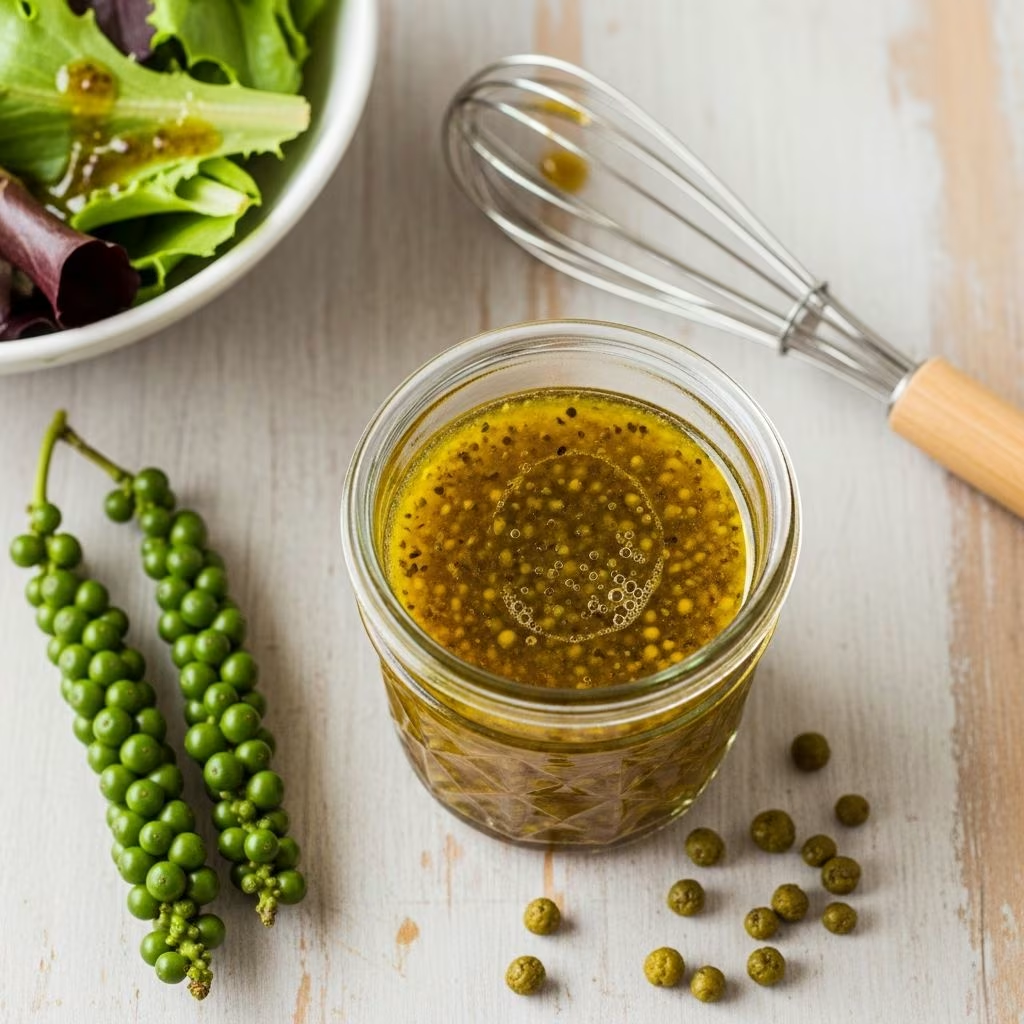
Building the perfect vinaigrette starts with quality selections. At its heart: pickled peppercorns, either store-bought or homemade. Opt for brined green peppercorns in jars for convenience—they’re plump and ready to use.
| Ingredient | Quantity (for 1 cup) | Role | Substitution Tips |
|---|---|---|---|
| Pickled green peppercorns (drained) | 2 tablespoons | Star spice and texture | Black or pink for milder heat |
| Champagne vinegar or white wine vinegar | ¼ cup | Acidic backbone | Apple cider for fruity notes |
| Extra-virgin olive oil | ½ cup | Smooth richness | Avocado oil for neutral taste |
| Dijon mustard | 1 teaspoon | Emulsifier and tang | Whole grain for texture |
| Shallot, finely minced | 1 small | Aromatic depth | Red onion for color |
| Honey or maple syrup | 1 teaspoon | Balances sharpness | Agave for vegan option |
| Kosher salt and fresh black pepper | To taste | Seasoning foundation | Sea salt flakes for crunch |
These elements create a 1:2 oil-to-acid ratio, the gold standard for stable vinaigrettes. Pro tip: Use a high-quality vinegar to avoid overpowering harshness—champagne vinegar’s subtlety shines here.
Step-by-Step Creation Guide
Assembling this vinaigrette demands minimal tools: a jar with a tight lid or immersion blender. Total time: under 10 minutes, plus optional resting for flavor melding.
- Prep the Peppercorns: Drain 2 tablespoons and lightly crush half with a mortar for burst release. Reserve brine for extra zing.
- Mince Aromatics: Finely chop one shallot (about 2 tablespoons) to integrate seamlessly.
- Combine Acids: In a jar, mix ¼ cup vinegar, 1 teaspoon Dijon, 1 teaspoon honey, shallots, crushed peppercorns, and a pinch of salt.
- Emulsify: Pour in ½ cup oil. Seal and shake vigorously for 30 seconds until opaque and thickened. Or blend for creamier results.
- Taste and Adjust: Dip a greens leaf—add brine, salt, or oil as needed. Refrigerate 30 minutes for best fusion.
For quick-pickled peppercorns from scratch: Simmer ½ cup dry green peppercorns in 1 cup vinegar, ½ cup water, 1 tablespoon sugar, and salt for 5 minutes. Cool and store up to a month.
Storage and Shelf Life Secrets
This vinaigrette thrives in the fridge. In a glass jar, it lasts 2 weeks, with flavors intensifying daily. The emulsion may separate—simply re-shake. Freezing in ice cube trays extends life to 3 months; thaw and whisk.
Signs of spoilage: off odors, mold, or sliminess. Always use clean utensils to prevent contamination. For longer storage, increase vinegar to oil ratio slightly for acidity preservation.
Pairing Perfection: What to Dress Up
Beyond salads, this vinaigrette’s bold profile shines multifaceted.
- Greens Galore: Toss with arugula, frisée, or watercress for peppery synergy.
- Protein Power: Marinate steak, chicken, or tofu—grill for caramelized crust.
- Veggie Boost: Drizzle over roasted beets, asparagus, or charred broccoli.
- Grain Innovations: Mix into farro, quinoa, or couscous salads.
- Cheese Companion: Pair with goat cheese crostini or burrata.
Experiment with seafood: shrimp skewers or seared scallops absorb the brine beautifully. For fusion twists, add miso for umami or citrus zest for brightness.
Creative Recipe Variations
Customize to seasons and moods with these riffs:
Herbed Summer Twist
Incorporate 1 tablespoon each minced tarragon and chives. Ideal for tomato-mozzarella salads.
Spicy Winter Warmer
Add ½ teaspoon Aleppo pepper and smoked paprika. Perfect for root vegetable roasts.
Citrus Burst Refresh
Swap half vinegar for blood orange juice; grate in zest. Complements grilled fish.
Creamy Avocado Upgrade
Blend in ¼ ripe avocado for dairy-free richness. Spoon over tacos.
Each variation maintains the peppercorn core while adapting to pantry whims.
Health Benefits and Nutritional Edge
Low-calorie (about 120 per tablespoon), this dressing delivers big on micronutrients. Peppercorns provide piperine, aiding digestion per research from the Journal of Agricultural and Food Chemistry. Vinegar supports blood sugar control, as noted in NIH studies. Olive oil’s monounsaturated fats promote heart health.
Make it lighter: Use half oil, more brine. Track macros: 1 tbsp = 2g carbs, 14g fat, 0g protein.
Common Mistakes and Pro Fixes
- Over-Oiling: Measure precisely; too much mutes flavors.
- Poor Emulsion: Mustard is key—never skip.
- Dull Blades: Freshly crush peppercorns; stale ones lack pop.
- Ignoring Rest Time: Flavors marry post-30 minutes.
Frequently Asked Questions (FAQs)
What if I can’t find pickled peppercorns?
Make your own or use capers as a tangy stand-in, though less spicy.
Is this vinaigrette gluten-free?
Yes, all ingredients are naturally gluten-free. Check labels for vinegars.
Can I use it as a marinade?
Absolutely—its acidity tenderizes meats beautifully. Marinate 30 minutes to overnight.
How do I make it vegan?
It already is! Honey swap to agave keeps it plant-based.
Does it work for meal prep?
Store separately from greens to avoid sogginess; lasts 2 weeks refrigerated.
Mastering pickled peppercorn vinaigrette opens doors to endless culinary creativity. From everyday lunches to dinner party showstoppers, its tangy-spicy charm never disappoints. Whip up a batch today and taste the difference quality ingredients and technique make.
References
- Piperine and Soluble Pepper Fraction Enterally Stimulate Inhibitory Motor Neurons through 5HT4 and α2-Adrenoceptors in the Guinea-Pig Small Intestine — Izzo AA, et al. Journal of Pharmacology and Experimental Therapeutics. 2001-06-01. https://jpet.aspetjournals.org/content/297/3/983
- Vinegar (acetic acid) intake on glucose metabolism: A narrative review — Johnston CS, et al. National Institutes of Health (PubMed). 2018-05-15. https://pubmed.ncbi.nlm.nih.gov/29760425/
- Monounsaturated Fatty Acids and Risk of Cardiovascular Disease — Rees K, et al. American Heart Association. 2020-11-10. https://www.ahajournals.org/doi/10.1161/JAHA.120.017285