Deviled eggs have remained a staple appetizer at gatherings and celebrations for generations. When you combine this classic preparation with the vibrant flavors of dill pickles, you create a dish that stands out on any appetizer table. This pickle-infused variation transforms the traditional egg into a tangy, flavorful bite that appeals to those who enjoy bold, briny tastes. Whether you’re preparing food for a brunch, potluck, or holiday party, these savory treats offer an elegant yet simple option that guests consistently enjoy.
Understanding the Foundation: Perfect Hard-Boiled Eggs
The success of any deviled egg recipe begins with properly cooked hard-boiled eggs. Achieving the ideal texture requires attention to cooking method and timing. The yolk should have a bright yellow center with a pale gray-green ring, indicating proper doneness without overcooking. Several cooking techniques can deliver these results, each with distinct advantages for different kitchen preferences and equipment availability.
Traditional Stovetop Method
The stovetop approach remains the most common technique for home cooks. Begin by arranging your eggs in a single layer at the bottom of a pot. Cover the eggs completely with cold water, ensuring they’re submerged by approximately one inch. Place the pot over high heat and allow the water to reach a rolling boil. Once boiling begins, cover the pot and reduce the heat to low. Maintain a gentle simmer for ten minutes, which provides sufficient time for the egg white and yolk to cook through without overdoing the yolk. After the cooking period concludes, immediately transfer the eggs to an ice bath, where they should remain for at least fifteen minutes. This cold water submersion halts the cooking process and prevents the gray-green discoloration around the yolk.
Pressure Cooker Alternative
For those with an Instant Pot or similar pressure cooker, this method offers speed and consistency. Pour one cup of water into the pressure cooker and place the trivet or rack inside. Arrange eggs on the rack and close the lid. Cook on low pressure for six minutes. Once the cooking cycle completes, allow the eggs to sit undisturbed for an additional six minutes before releasing pressure. Transfer the cooked eggs to an ice bath for fifteen minutes. This technique significantly reduces overall cooking time while producing reliably cooked eggs.
The Peeling Process: Achieving Smooth Surfaces
Removing the shell properly determines whether your egg whites maintain an attractive appearance. Begin by gently cracking the shell all over by rolling the egg on a hard surface. Peel under cool running water, starting from the wider end where an air pocket exists. The water helps separate the membrane from the egg white, making the shell slip away more easily. Pat the peeled eggs dry with a paper towel before proceeding to the next step. This careful handling prevents rough, pitted surfaces on your finished appetizers.
Constructing the Filling: Ingredient Selection and Proportions
The filling distinguishes this pickle variation from standard deviled eggs. The creamy base combines mayonnaise with mashed egg yolks, while the pickle elements introduce the signature tangy flavor profile. Getting the proportions right ensures a balanced taste that celebrates the pickle without overwhelming other flavors.
Core Ingredients for the Creamy Base
- Mayonnaise: Provides richness and creaminess; typically three to five tablespoons for six eggs
- Egg yolks: The foundation offering a buttery texture when properly mashed
- Mustard: Adds complexity and tang; either Dijon or yellow varieties work well
- Salt and pepper: Essential seasonings that enhance all flavors
Pickle-Forward Additions
- Dill pickle juice: Introduces briny flavor; one to two tablespoons typically suffices
- Minced dill pickles: Provides texture and concentrated pickle taste; three to four tablespoons finely chopped
- Fresh dill: Brings herbaceous notes that complement pickle flavor; two teaspoons minced or one fresh sprig for garnish
Optional Flavor Enhancers
- Grated garlic clove for added depth
- Lemon juice for brightness
- Cayenne pepper for subtle heat
- Garlic powder as a convenient alternative
Preparation Technique: Creating the Smooth Mixture
After halving the cooled eggs lengthwise, gently remove the yolks and transfer them to a medium bowl. Using a fork or small pastry blender, mash the yolks thoroughly until they reach a crumbly consistency. Add the mayonnaise, mustard, and pickle juice to this base and continue mashing until the mixture becomes smooth and creamy. This intermediate stage is crucial—the combination should have a spreadable consistency similar to soft butter. At this point, fold in the finely chopped dill pickles and fresh dill. Mixing too vigorously can damage the pickle pieces, so use gentle folding motions. Taste and adjust seasonings with salt and pepper as needed. Some cooks prefer using a mini food processor for two to three seconds to achieve an ultra-smooth consistency, though care should be taken not to over-process.
Filling Methods: Presentation Options
Several techniques allow you to transfer the filling into the egg white halves, each producing different visual presentations.
Piping Bag Technique
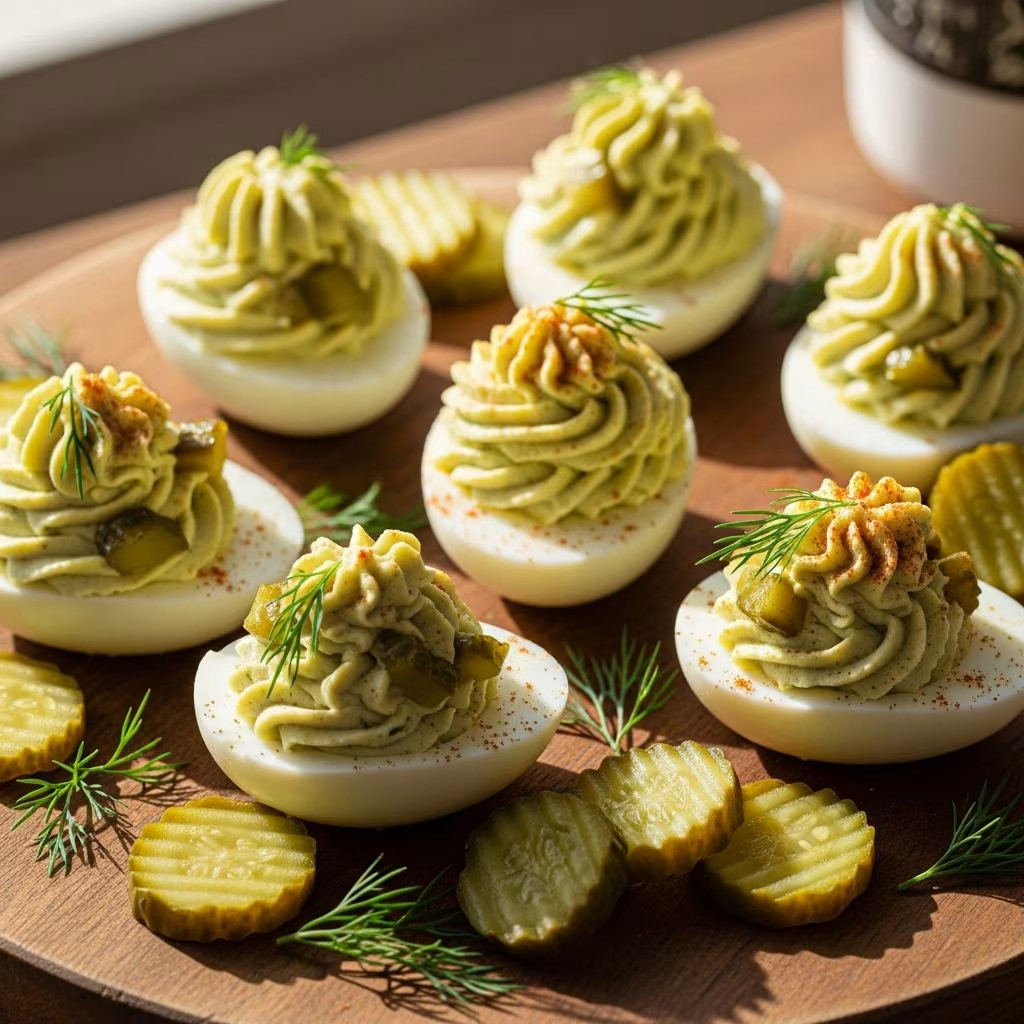
For a decorative, professional appearance, transfer the filling into a piping bag fitted with a star or round tip. Apply steady pressure while piping to create elegant swirls or peaks. This method works best when the filling remains slightly thicker than spooning consistency. If you lack a traditional piping bag, place the filling in a disposable plastic sandwich bag or freezer bag, cut a small corner from one end, and use it as an improvised piping tool.
Spoon Method
The simplest approach involves using a small spoon to divide the filling evenly among the egg white halves. Mound the filling gently into each half, creating a rustic but charming presentation. This technique requires less skill and works well for casual gatherings.
Garnishing for Visual Appeal and Flavor
Final touches transform these appetizers into attractive additions to any spread. Sprinkle a light dusting of paprika over each filled egg, which adds both color and a subtle smoky note. Place a fresh dill sprig on top of each egg, positioning it at an angle for visual interest. For those who love pickle flavor intensely, add a thin slice of dill pickle arranged across the filling. These garnishes aren’t merely decorative—they signal the pickle flavor within and provide an initial aroma that invites guests to try the dish.
Serving Strategies and Timing Considerations
These appetizers taste best served at room temperature or chilled, depending on preference. For immediate service, prepare them shortly before guests arrive so the eggs remain fresh and the flavors haven’t mellowed. If preparing ahead, cover them loosely with plastic wrap and refrigerate for up to twelve hours. Remove from refrigeration thirty minutes before serving to allow flavors to fully express themselves. Arrange them on a serving platter with colorful garnishes and fresh dill sprigs scattered around for an appealing presentation.
Ingredient Variations and Customization Options
While the basic recipe produces delicious results, creative variations allow personalization based on preferences and dietary considerations.
| Variation | Key Changes | Best For |
|---|---|---|
| Spicy Version | Add cayenne pepper, jalapeño slices, or hot sauce to filling | Those who enjoy heat and complex flavors |
| Keto-Friendly | Use sugar-free pickle juice and ensure mayonnaise contains no additives | Low-carb diet followers |
| Garlic-Forward | Include grated fresh garlic or increase garlic powder significantly | Garlic enthusiasts seeking bold flavor |
| Herbal Variation | Replace fresh dill with fresh tarragon, chives, or parsley | Those exploring different herb profiles |
| Lighter Option | Substitute Greek yogurt for half the mayonnaise | Health-conscious diners |
Storage and Make-Ahead Guidance
Planning ahead makes entertaining less stressful. Hard-boil eggs up to three days in advance and store them in their shells in the refrigerator. Prepare the filling mixture one day ahead, covering it tightly to prevent odor absorption. Assemble the final appetizers no more than twelve hours before serving for optimal flavor and texture. If you must prepare them further in advance, store filled eggs in an airtight container and add fresh garnishes just before serving.
Troubleshooting Common Preparation Challenges
Filling Too Thin or Runny
If the mixture lacks adequate body for piping or holding its shape, add a tablespoon of mayonnaise at a time until reaching proper consistency. Ensure you’ve adequately mashed the yolks into a smooth paste before incorporating other ingredients.
Flavor Too Mild
Increase pickle juice gradually, one teaspoon at a time, while tasting. Consider adding minced fresh dill or a touch of garlic. Sometimes allowing the filling to rest for thirty minutes allows flavors to meld and intensify.
Eggs Difficult to Peel
Ensure adequate ice bath time—a full fifteen minutes halts cooking and helps loosen the membrane. Peel under running water for easier shell removal, and begin from the wider end where the air pocket facilitates separation.
Nutritional Considerations
These appetizers provide protein from eggs and beneficial fats from mayonnaise. A single filled egg half contains approximately sixty to eighty calories depending on filling proportions. For those monitoring sodium intake, be aware that pickle juice and pickles contribute substantial sodium. The dish naturally contains no carbohydrates unless sugar-sweetened pickles are used, making it suitable for various dietary approaches.
Frequently Asked Questions
Can I use sweet pickle relish instead of dill pickles?
Yes, though this creates a different flavor profile. Sweet pickles will produce a tangy-sweet taste rather than the traditional briny flavor. Reduce or eliminate added salt, as sweet pickles often contain sugar rather than additional sodium.
How far in advance can these be made?
Assemble filled eggs up to twelve hours before serving for best results. You may prepare hard-boiled eggs up to three days ahead and make the filling mixture one day in advance. Store each component separately until final assembly.
What’s the best way to transport these to a gathering?
Place filled eggs in a single layer within an airtight container with parchment between layers if stacking. Transport in a cooler with an ice pack if traveling more than thirty minutes. Add fresh garnishes upon arrival at your destination.
Can these be frozen?
Freezing is not recommended, as the texture of the filling becomes grainy and separated when thawed. Fresh preparation or refrigeration up to twelve hours produces superior results.
Are there vegetarian or vegan options?
The eggs themselves contain no animal byproducts beyond the eggs. For vegan adaptations, replace eggs with hollowed avocado halves filled with a chickpea-based mixture flavored with the same pickle and dill components, though this creates an entirely different dish.
References
- Egg Cooking Guidelines — University of Minnesota Extension. 2024. https://extension.umn.edu/preserve-food/canning-eggs
- Food Storage and Safety Information — United States Department of Agriculture Food Safety and Inspection Service. 2024. https://www.fsis.usda.gov/food-safety
- Nutrition Database for Common Foods — U.S. Department of Agriculture Agricultural Research Service. 2024. https://fdc.nal.usda.gov/
- Pressure Cooker Cooking Times Reference — National Center for Home Food Preservation. 2024. https://nchfp.uga.edu/