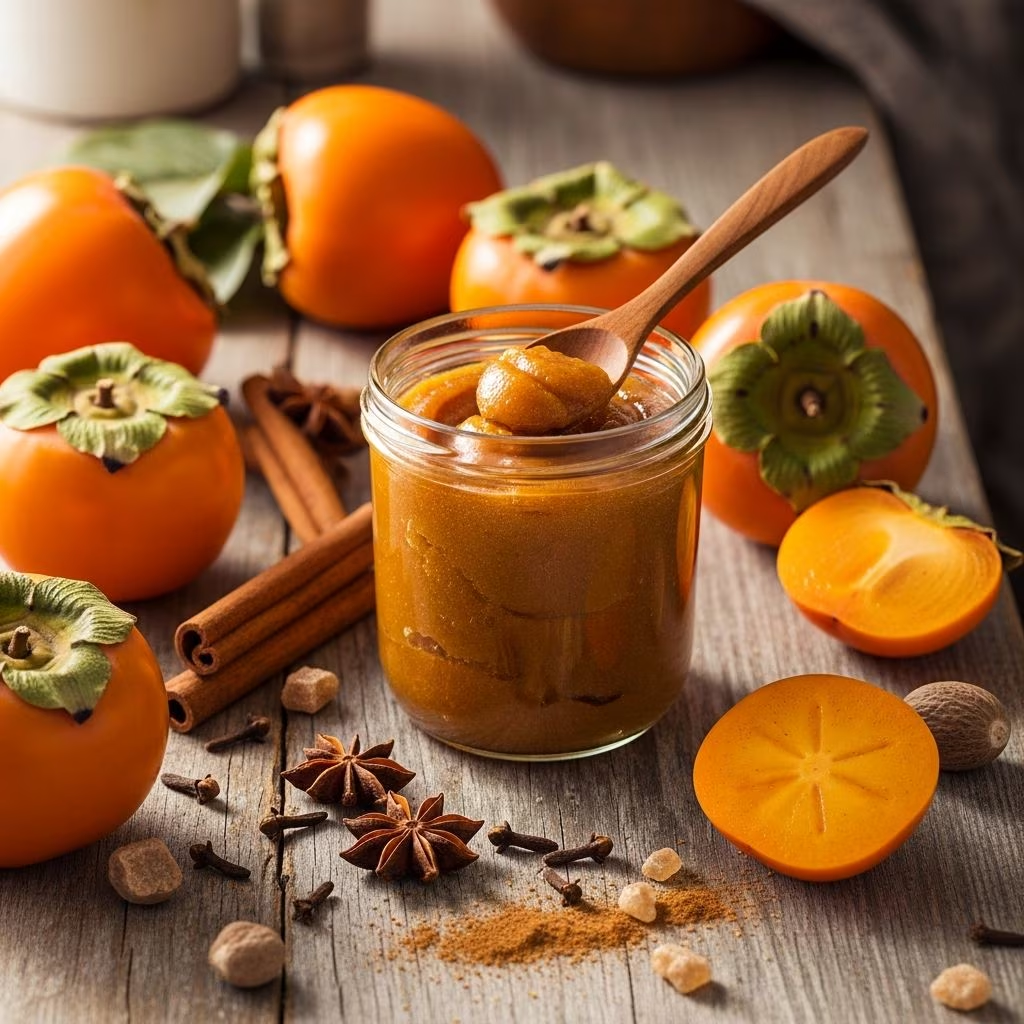
Persimmon butter represents one of the most delightful seasonal spreads you can prepare in your own kitchen. This smooth, luxurious condiment combines the natural sweetness of ripe persimmons with warm spices that evoke comfort and autumn warmth. Unlike commercial alternatives, homemade versions allow you to control sweetness levels, adjust spice intensity, and create a product tailored to your preferences. Whether you’re seeking a sophisticated toast topping, a gourmet gift, or an ingredient for baking and dessert applications, understanding the fundamentals of persimmon butter creation opens doors to culinary creativity.
Understanding Your Persimmon Options
The journey toward exceptional persimmon butter begins with selecting the right fruit variety. Two primary persimmon types dominate culinary applications, each offering distinct characteristics that influence your final product.
Fuyu persimmons feature a firmer texture and crisp consistency even when fully mature. These round, squat fruits contain fewer tannins, allowing them to be eaten fresh while still firm. For butter preparation, fully ripe Fuyu persimmons become increasingly soft and develop concentrated sweetness. Their natural fiber content contributes to a smooth texture when processed.
Hachiya persimmons showcase an elongated shape and develop a gelatinous, custard-like interior when completely ripe. These astringent varieties contain higher tannin levels in their unripe state, making them unpleasant to consume raw until fully matured. Once softened, Hachiya persimmons transform into an ideal butter base, as their naturally creamy consistency requires minimal additional processing to achieve silky smoothness.
For most butter recipes, ensure your chosen persimmons yield slightly to pressure but aren’t overly mushy. The fruit should feel heavy for its size, indicating full juice content and sweetness development.
Essential Ingredients and Their Functions
Creating exceptional persimmon butter requires understanding how each ingredient contributes to flavor development and texture achievement.
| Ingredient | Function | Typical Amount |
|---|---|---|
| Ripe Persimmons | Primary base providing natural sweetness and body | 6-20 fruits |
| Sugar or Honey | Enhances sweetness and aids preservation | 1/4 to 3/4 cup |
| Lemon Juice | Provides acidity and helps develop pectin | 1-2 tablespoons or 1/2 cup |
| Cinnamon | Adds warmth and aromatic spice character | 1/2 to 2 teaspoons |
| Additional Spices | Contribute complexity and depth | 1/4 to 1/2 teaspoon each |
Sugar serves multiple purposes beyond sweetness enhancement. It acts as a natural preservative, drawing moisture from fruit and creating an environment inhospitable to microbial growth. Honey offers similar benefits while introducing subtle floral notes that complement persimmon’s natural flavor profile. Some cooks prefer maple sugar for its subtle caramel undertones.
Lemon juice performs critical functions in butter production. Its acidity brightens persimmon’s sweetness, prevents oxidation that could darken the final product, and helps pectin development—the natural substance responsible for proper consistency. Without adequate acid, persimmon butter may remain overly thin or separate during storage.
Spice selection transforms basic persimmon puree into a sophisticated condiment. Ground cinnamon provides warmth and familiarity, while nutmeg adds earthy complexity. Cloves contribute spicy sharpness and aromatic depth, though their potent flavor demands careful measurement to avoid overwhelming other elements. Ground cardamom offers subtle floral notes appreciated by adventurous cooks. Ginger introduces gentle heat and brightens the overall flavor profile.
Preparation Techniques and Methods
Several approaches exist for transforming fresh persimmons into velvety butter, each offering distinct advantages depending on available equipment and time constraints.
Extended Stovetop Reduction Method
This traditional approach involves cooking persimmons in sugared water until softened, then straining and processing the fruit before slowly reducing the mixture. Begin by combining sugar and water in a medium saucepan, bringing the mixture to a rolling boil for approximately one minute. Add prepared persimmons and lemon juice, ensuring the fruit remains mostly submerged. Maintain a gentle simmer, cooking forty-five minutes to ninety minutes while stirring occasionally and adding water as needed to prevent drying.
After cooking, carefully transfer fruit and cooking liquid through a fine-mesh strainer, allowing drainage for twenty to thirty minutes. Transfer softened persimmons to a food processor, pulsing until no large pieces remain. Return cooking liquid to the saucepan and increase heat to medium-high, stirring frequently as it reduces to syrup consistency and begins caramelizing.
Pour this reduced syrup through the food processor feed spout while the machine runs, processing for fifteen to twenty seconds. Add spices, remaining lemon juice, and salt, puréeing until completely smooth. Transfer the mixture to a saucepan and maintain medium-low to medium heat, stirring frequently until thickened appropriately—typically ten to twenty minutes. The mixture has reached proper consistency when a test dollop on a frozen plate shows no liquid seeping around its edges.
Slow Cooker Overnight Method
This hands-off approach suits busy cooks preferring minimal active participation. Simply place chopped persimmons in a slow cooker with lemon juice, covering to retain moisture. Cook on high for approximately two hours until the fruit softens completely. Mash fruit directly in the cooker using a potato masher, then add spices and sweetener.
Reduce heat to low and continue cooking uncovered for eight to nine hours, stirring occasionally. This extended cooking time allows natural water evaporation and flavor concentration. Once adequately thickened, employ an immersion blender for smooth puréeing, or carefully work in small batches using a countertop blender, filling no more than halfway and beginning at low speed to prevent splattering.
Rapid Stovetop Approach
For quick preparation, this streamlined method delivers results in approximately thirty minutes. Peel and dice ripe Fuyu persimmons, then process into smooth puree using a food processor. Combine puree with sugar, lemon juice, and zest in a small saucepan, bringing to a gentle boil before reducing heat to low. Maintain a simmer for fifteen to twenty minutes, stirring occasionally to prevent scorching. The spread should thicken noticeably during this time, achieving creamy consistency without excessive reduction.
Achieving Perfect Texture and Consistency
Proper thickness represents a critical element in successful persimmon butter production. The desired consistency resembles thick, spoonable preserves rather than soupy sauce or dry paste.
Testing for appropriate thickness involves using the frozen-plate method. Place a small white plate in the freezer while your mixture cooks. When you believe the butter has reached proper consistency, place a small dollop on the frozen plate and allow it to cool for one minute. Push the cooled sample with your finger—it should wrinkle slightly and move sluggishly rather than spreading immediately. The edges shouldn’t display liquid surrounding the sample.
If your mixture remains too thin after cooking, continue heating and stirring, checking every five minutes. Conversely, if the butter becomes too thick, stir in small amounts of water or lemon juice to adjust consistency before transferring to storage containers.
Storage and Preservation Guidance
Proper storage extends your persimmon butter’s usable lifespan significantly. Transfer cooled butter into sterilized glass jars while still warm, allowing natural sealing as the mixture cools. Refrigerated butter maintains quality for approximately three weeks, making this option ideal for immediate consumption.
For extended storage, consider freezing persimmon butter in appropriate containers. Frozen butter remains viable for several months, preserving flavor and nutritional qualities effectively. Thaw overnight in the refrigerator before use.
Those interested in longer shelf stability might explore water-bath canning techniques, though this requires specific equipment and familiarity with safe preservation procedures. Always follow established canning guidelines and sterilization protocols when attempting this method.
Versatile Applications Beyond Toast
While persimmon butter excels as a straightforward toast spread, culinary applications extend considerably further. Swirl into oatmeal or yogurt for breakfast enhancement. Layer into vanilla cheesecake before baking for sophisticated flavor complexity. Brush onto pork chops during the final cooking minutes for glossy, spiced exterior. Combine with cream cheese for elegant appetizer topping on crackers or bread slices.
Bakers appreciate persimmon butter as a filling ingredient for thumbprint cookies, pastry layers, or cake-frosting components. Blend into smoothies for natural sweetness and spice warmth. Use as a glaze component for roasted root vegetables or autumn squash preparations.
Frequently Asked Questions
- What happens if my persimmons aren’t very ripe?
- Persimmons must be fully soft for optimal results. Underripe fruit contains excessive tannins creating unpleasant astringent flavors. Allow unripe persimmons to sit at room temperature until yielding significantly to gentle pressure before beginning preparation.
- Can I use a combination of persimmon varieties?
- Yes, blending Fuyu and Hachiya persimmons creates interesting flavor and texture combinations. However, match ripeness levels carefully to ensure consistent results.
- Is pectin addition necessary for proper thickening?
- Most recipes achieve adequate consistency through natural pectin in persimmons combined with lemon juice’s acid content and extended cooking. Commercial pectin addition remains optional unless achieving jam-like thickness is desired.
- How can I adjust spice intensity to match preferences?
- Begin with recipe-recommended spice amounts, then taste the mixture before final cooking completion. Additional ground spices can be stirred in gradually while the butter remains warm, allowing integration and flavor assessment.
- What causes separation or weeping in stored butter?
- Excessive liquid separation typically indicates insufficient cooking or inadequate sugar content. Ensure the mixture reduces properly and achieves appropriate thickness before storage. Stir gently before serving if minor separation occurs.
References
- Fuyu Persimmon Cultivation and Ripeness Indicators — University of California Cooperative Extension. 2023. https://ucanr.edu
- Food Safety in Home Preservation: Water Bath Canning — U.S. Department of Agriculture National Center for Home Food Preservation. 2024. https://nchfp.uga.edu
- Pectin Development in Fruit Preserves — Penn State College of Agricultural Sciences. 2023. https://extension.psu.edu