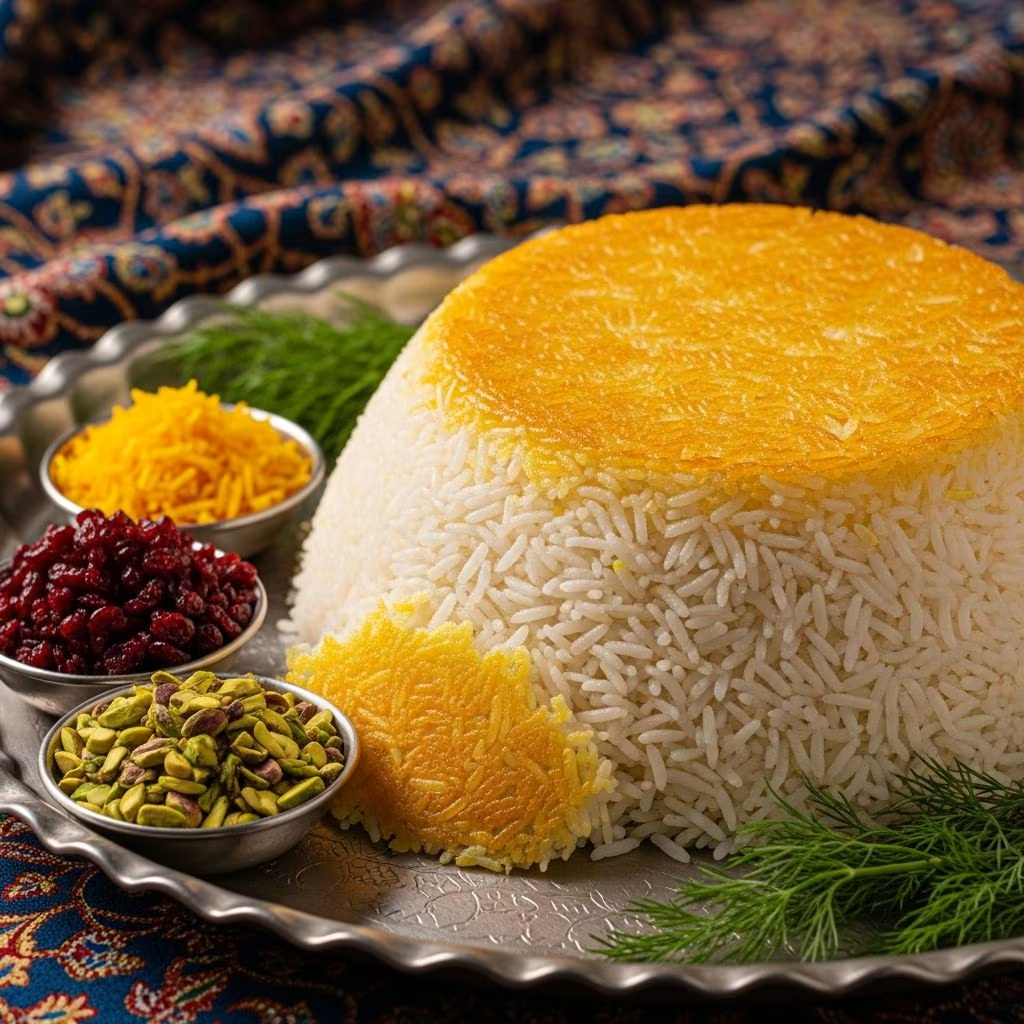
Persian rice stands as a cornerstone of Iranian cuisine, renowned for its light, fluffy texture and the irresistible crispy layer known as tahdig. This dish transforms simple basmati grains into a fragrant masterpiece, often infused with saffron for a golden hue and subtle floral notes. Whether served alongside stews or kebabs, it captivates with its balance of tenderness and crunch.
The Essence of Persian Rice: What Makes It Special
At its core, Persian rice relies on a unique parboiling and steaming method that ensures each grain remains separate and elongated. Basmati rice, prized for its length and aroma, is the traditional choice because it absorbs flavors without becoming sticky. The process begins with soaking to remove excess starch, followed by a brief boil to partially cook the grains, and finishes with gentle steaming to achieve fluffiness.
The star feature, tahdig—meaning “bottom of the pot”—forms a golden, crunchy crust at the base. This layer develops from oil, heat, and sometimes additions like yogurt, potato slices, or bread, creating a textural contrast that Persians prize. Saffron, the world’s most expensive spice, adds luxury with its earthy aroma and vibrant color, often dissolved in hot water before mixing.
Essential Ingredients for Authentic Flavor
Selecting high-quality components is key to replicating restaurant-worthy Persian rice. Start with aged basmati rice, which has lower moisture content for superior separation.
- Basmati rice: 2-3 cups, long-grain and aged for best results.
- Saffron threads: A generous pinch (about 1/4 teaspoon), crushed and steeped in 2-3 tablespoons hot water.
- Salt: 2-3 tablespoons for parboiling, rinsed off later to control seasoning.
- Oil or butter: 2-4 tablespoons neutral oil like grapeseed or olive, or butter for richness.
- Tahdig enhancers: Plain yogurt (2 tablespoons), thin potato slices, or lavash bread (optional).
Variations incorporate spices like cardamom, cinnamon, or rosewater for jeweled rice profiles, alongside nuts and dried fruits for festive dishes.
Step-by-Step Guide to Fluffy Persian Rice
Follow this foolproof method for 4-6 servings, scalable as needed.
- Prepare the rice: Rinse 3 cups basmati rice under cold water until clear, about 5 minutes. Soak in salted water (1/4 cup salt per 8 cups water) for 30-60 minutes to soften and remove starch.
- Parboil: Drain and boil in 8-10 cups fresh water with 2 teaspoons salt for 5-7 minutes until grains are al dente—firm in the center but soft at ends. Drain immediately and rinse with cool water.
- Infuse saffron: Crush saffron threads, steep in 3 tablespoons hot water for 10 minutes. Mix 2 tablespoons into a small portion of parboiled rice for golden streaks.
- Assemble for steaming: In a heavy pot, heat 3 tablespoons oil over medium. Layer tahdig base: mix plain rice with 2 tablespoons yogurt and saffron water, or arrange potato slices. Pile remaining rice pyramid-style, drizzle with remaining saffron water and 1 tablespoon oil. Poke 3-4 holes with a spoon handle for steam.
- Steam: Cover tightly with a lid wrapped in a clean kitchen towel to absorb moisture. Cook on low heat for 45-60 minutes until fluffy and tahdig is golden.
- Rest and serve: Let sit off heat for 10 minutes. Gently loosen edges with a spatula, place a platter over the pot, and invert to reveal the crust on top. Fluff and serve hot.
Total time: About 2 hours, mostly hands-off. Patience yields perfection.
Perfecting Tahdig: Techniques for the Crispiest Crust
Tahdig success hinges on heat management and moisture control. Use a non-stick or well-seasoned pot over medium-high initially to crisp the base, then low for steaming. Common types include:
| Tahdig Type | Description | Best For |
|---|---|---|
| Rice Tahdig | Plain rice mixed with yogurt and saffron | Classic, buttery crunch |
| Potato Tahdig | Thin russet potato slices | Extra crispiness, mild flavor |
| Bread Tahdig | Lavash or tortilla | Quick, golden shatter |
| Jeweled Tahdig | Rice with barberries, pistachios | Festive meals |
Avoid peeking during steaming to prevent sogginess. If the crust sticks, a splash of water and higher heat for 5 minutes can salvage it.
Common Mistakes and Pro Tips
Even seasoned cooks falter—here’s how to avoid pitfalls:
- Over-boiling: Test a grain; it should not be fully soft pre-steam.
- Insufficient rinsing: Cloudy water means sticky rice—rinse thoroughly.
- Wrong pot: Opt for 10-12 inch wide, heavy-bottomed for even heat.
- No towel trick: Absorbs condensation for dry grains.
Pro tips: Use Indian or Pakistani basmati for authenticity. For vegan versions, swap butter for oil and skip yogurt. Scale up for crowds but maintain ratios.
Flavor Variations to Elevate Your Rice
Customize beyond basics:
- Sabzi Polo: Add dill and fava beans during parboil for herby green rice.
- Jeweled Rice: Stir in barberries, pistachios, almonds, orange zest, and rosewater post-parboil.
- Spiced Rice: Cardamom, cloves, cinnamon sticks for warm aroma.
- Baghali Polo: Frozen lima beans and dried dill for spring vibes.
Pair with ghormeh sabzi stew, fesenjan, or grilled meats.
Nutritional Profile and Dietary Adaptations
A 1-cup serving offers about 200 calories, mostly from carbs, with minimal fat if oil-light. Basmati’s lower glycemic index aids blood sugar control. Gluten-free naturally; make vegan by omitting yogurt. High in manganese from saffron.
Frequently Asked Questions
What rice is best for Persian style?
Aged long-grain basmati ensures fluffiness and separation.
Can I make tahdig without saffron?
Yes, turmeric mimics color, but saffron imparts unmatched flavor.
How do I store leftovers?
Refrigerate up to 3 days; reheat in microwave with damp towel or steamer. Tahdig softens but revives with oven crisping.
Why is my rice mushy?
Usually over-parboiling or insufficient draining—follow timings precisely.
Is a rice cooker suitable?
Not ideal for tahdig; stovetop allows crust formation.
Pairing Suggestions for Complete Meals
Serve with yogurt-cucumber salad (mast-o-khiar), khoresh bademjan eggplant stew, or jujeh kebabs. Wine: Light whites like Sauvignon Blanc complement saffron.
References
- Persian Rice Recipe (Jeweled Rice Pilaf) — Cinnamon Snail. 2023-05-15. https://cinnamonsnail.com/persian-rice-recipe/
- Persian Basmati Rice Recipe with Saffron — Family Spice. 2022-11-10. https://familyspice.com/how-to-make-persian-basmati-rice-with-saffron-for-sundaysupper/
- Persian Steamed Rice — Persian Mama. 2021-08-20. https://persianmama.com/persian-steamed-rice/
- Tahdig Recipe (Crispy Persian Rice) — The Mediterranean Dish. 2023-02-14. https://www.themediterraneandish.com/tahdig-recipe-crispy-persian-rice/
- Persian Rice with Crispy Tahdig — Cooking With Ayeh. 2024-01-05. https://cookingwithayeh.com/persian-rice-with-crispy-tahdig/
- Samin’s Persian-ish Rice — Diaspora Co. 2023-09-12. https://www.diasporaco.com/blogs/recipes/samin-nosrats-persian-ish-rice-with-saffron