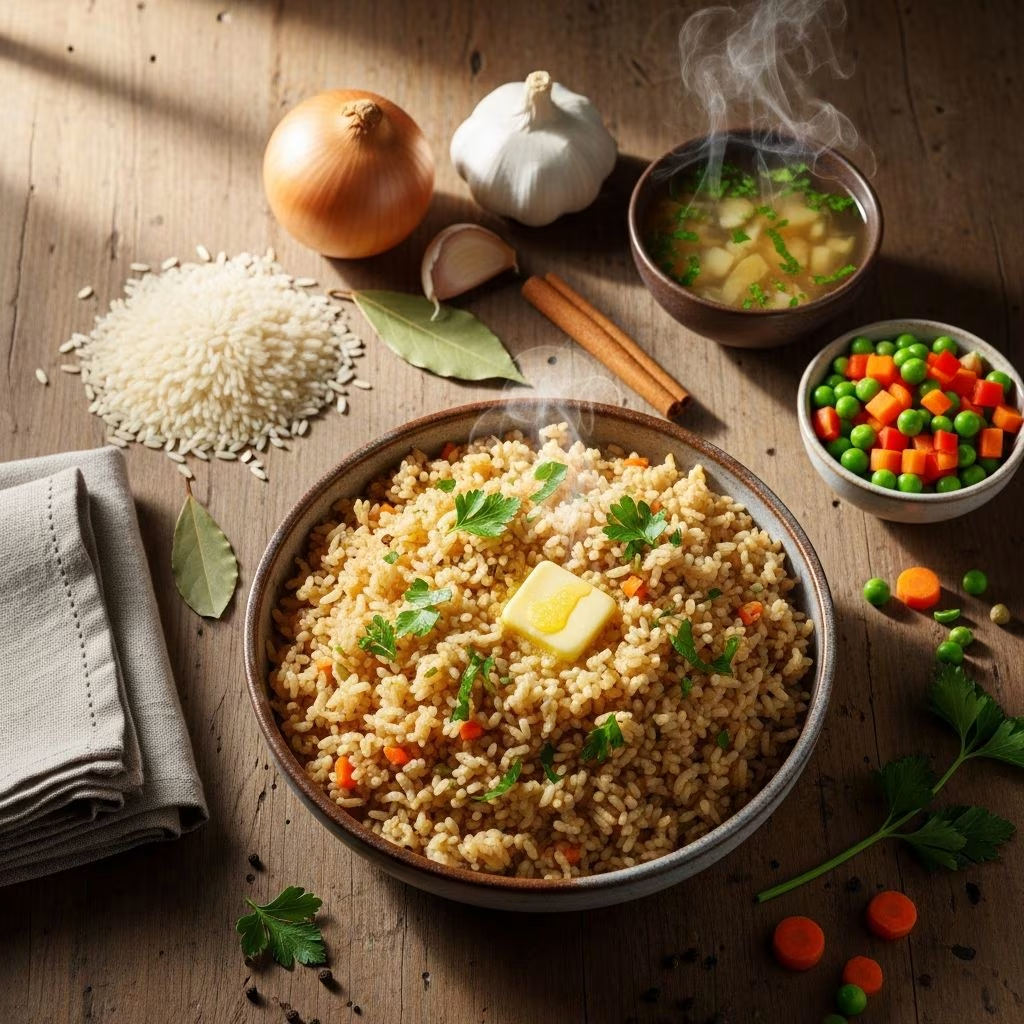
Rice pilaf stands as a timeless side dish that brings depth and texture to everyday meals and special occasions alike. This technique transforms simple rice into a fragrant, fluffy accompaniment by toasting grains in fat before simmering them in seasoned broth. Far from plain boiled rice, pilaf incorporates aromatics, pasta elements like orzo or vermicelli, and subtle spices for layers of flavor. Whether you’re pairing it with roasted chicken, grilled fish, or hearty stews, mastering rice pilaf opens doors to countless culinary possibilities.
Understanding the Essence of Rice Pilaf
At its core, rice pilaf involves sautéing rice and often small pasta shapes in butter or oil to develop a nutty base. Onions, garlic, and sometimes celery or mushrooms build aromatic foundations. Liquid—typically broth—then simmers the mixture covered, absorbing fully to yield separate, tender grains. This method, rooted in Middle Eastern and European traditions, ensures even cooking and prevents mushiness common in basic rice preparations.
Key to success lies in ratios: usually 1 part rice to 2 parts liquid, adjusted for broth strength. Long-grain varieties like basmati or jasmine excel due to their ability to stay distinct. The toasting step, lasting 2-4 minutes, coats grains in fat, promoting fluffiness and flavor infusion.
Essential Ingredients for Authentic Flavor
Building a stellar pilaf starts with quality components. Here’s a breakdown of staples and their roles:
- Long-grain white rice: Forms the body; 1-2 cups yields 4-6 servings. Avoid short-grain or instant types for best texture.
- Butter or olive oil: 2-3 tablespoons for sautéing; butter adds richness, oil keeps it lighter.
- Onion and garlic: ½ cup diced onion and 1-2 cloves minced garlic provide savory backbone.
- Orzo or vermicelli: ½ cup adds crunch and toasts to golden bits, mimicking boxed mixes but fresher.
- Broth: 3-4 cups chicken, vegetable, or beef; low-sodium prevents over-salting.
- Seasonings: Salt, pepper, parsley; optional cayenne or paprika for warmth.
Vegetable additions like celery, mushrooms, or carrots (¼-½ cup each) enhance earthiness without overpowering. Fresh herbs stirred at the end brighten the dish.
Step-by-Step: Cooking Perfect Rice Pilaf
Follow this foolproof process for restaurant-worthy results every time.
- Prepare broth base: In a saucepan, warm 3 cups broth with 1-2 tbsp butter, ½ tsp salt, garlic powder, pepper, and a pinch of paprika over medium heat until simmering. Reduce to low.
- Sauté aromatics: Heat 1 tbsp oil or butter in a large skillet over medium-low. Add diced onion (and celery if using); cook 5-7 minutes until soft. Stir in minced garlic for 1 minute.
- Toast pasta and rice: Add ½ cup orzo/vermicelli; stir until golden (2-3 minutes, watch closely). Mix in 1 cup rice; toast lightly 1-2 more minutes.
- Combine and simmer: Pour warm broth into skillet, scraping bits. Bring to simmer, cover, reduce heat to low. Cook 18-25 minutes undisturbed until liquid absorbs.
- Rest and finish: Remove from heat; let stand covered 5 minutes. Fluff with fork, stir in 2 tbsp chopped parsley, adjust seasoning.
Total time: about 30-40 minutes. Yields fluffy grains with toasted nuggets throughout.
Pro Tips for Flawless Texture and Taste
- Rinse rice: Briefly rinse to remove excess starch, but pat dry to aid toasting.
- Low and slow: Medium-low heat prevents burning during toast; low simmer avoids scorching.
- Don’t peek: Lifting lid releases steam, leading to gummy rice. Trust the timer.
- Broth temperature: Hot liquid ensures even absorption without shocking cold rice.
- Fluff gently: Use fork tines to separate grains post-rest.
For extra nuttiness, toast rice separately first. If doubling, use wider pan for even cooking.
Customizing Your Pilaf: Variations to Try
Adapt pilaf to moods or menus with these tweaks.
| Variation | Add-Ins | Best Paired With |
|---|---|---|
| Mushroom Medley | ½ cup sliced cremini mushrooms, thyme | Steak, pork chops |
| Spicy Kick | ⅛ tsp cayenne, diced jalapeño | Grilled chicken, fish |
| Vegetable Burst | ¼ cup each carrots, peas, celery | Roast beef, turkey |
| Herbed Lemon | Zest/juice of 1 lemon, dill | Seafood, lamb |
| Nutty Wild Rice | ¼ cup wild rice blend, slivered almonds | Game meats, duck |
Swap broth for vegetable to go vegan. Basmati infuses subtle floral notes.
Perfect Pairings: What Goes with Rice Pilaf
Pilaf’s versatility shines in complements:
- Proteins: Roast chicken, pan-seared salmon, braised short ribs—the buttery rice soaks up juices.
- Vegetarian: Lentil stews, stuffed peppers, eggplant parmesan.
- Holiday tables: Turkey, ham, prime rib.
- Quick meals: Sheet-pan sausage and veggies, stir-fried shrimp.
Its mild savoriness balances bold flavors, making it a dinner staple.
Common Mistakes and How to Avoid Them
Steer clear of pitfalls for pro-level pilaf:
- Too much stirring: Releases starch; stir only initially.
- Wrong rice type: Stick to long-grain; brown rice needs 45+ minutes and more liquid.
- Insufficient toast: Pale pasta means bland results—aim for deep gold.
- Overcooking: Test at 20 minutes; residual heat finishes it.
- Soggy grains: Ensure full absorption; drain excess if needed, but proper ratios prevent this.
Storage, Reheating, and Make-Ahead Strategies
Cooked pilaf keeps 4-5 days in airtight container in fridge. Freeze portions up to 3 months. Reheat in skillet with splash of broth over low heat, stirring to revive fluffiness. Microwave works in covered dish with damp paper towel.
Prep ahead: Toast components day before, store separately, simmer fresh. Broth mixture can simmer hours ahead.
Nutritional Insights and Health Twists
A 1-cup serving offers ~200 calories, 4g protein, carbs from rice. Boost nutrition with whole-grain blends or added veggies. Use olive oil and veg broth for lighter version.
Frequently Asked Questions
Can I use brown rice for pilaf?
Yes, but increase liquid to 2.5 parts and simmer 40-45 minutes. Toast longer for flavor.
What’s the difference between pilaf and fried rice?
Pilaf simmers in broth post-toast; fried rice stir-fries cooked rice with ingredients.
Is vermicelli necessary?
No, but it adds texture mimicking classics. Substitute broken spaghetti or skip for plain rice pilaf.
How do I make it gluten-free?
Omit orzo; use certified GF broth and tamari if needed.
Can pilaf be meal-prepped?
Absolutely; portion into containers for grab-and-go lunches.
Advanced Techniques for Chef-Level Pilaf
Elevate further: Infuse broth with bay leaves or saffron. Sauté pine nuts or currants for Middle Eastern flair. Pressure cooker shaves time to 5 minutes high pressure post-sauté. For restaurant sear, use clarified butter.
Experiment with stocks: Mushroom for umami, seafood for paella vibes. Layer flavors by sweating mirepoix (onion, carrot, celery) first.
References
- Classic Rice Pilaf Recipe (Light, Fluffy, and Easy) — Oh Sweet Basil. 2023. https://ohsweetbasil.com/rice-pilaf-recipe/
- Classic Rice Pilaf — Cooking with Curls. 2017-08-09. https://cookingwithcurls.com/2017/08/09/classic-rice-pilaf/
- Classic Rice Pilaf — The Chunky Chef. 2022. https://www.thechunkychef.com/classic-rice-pilaf/
- Traditional Rice Pilaf Recipe — Chef Billy Parisi. 2023. https://www.billyparisi.com/traditional-rice-pilaf-recipe/
- Easy Homemade Rice Pilaf — Completely Delicious. 2021. https://www.completelydelicious.com/classic-rice-pilaf/
- Perfect Rice Pilaf — Life Made Simple Bakes. 2022. https://lifemadesimplebakes.com/perfect-rice-pilaf-5/
- Rice Pilaf Recipe — The Mediterranean Dish. 2023. https://www.themediterraneandish.com/easy-rice-pilaf/