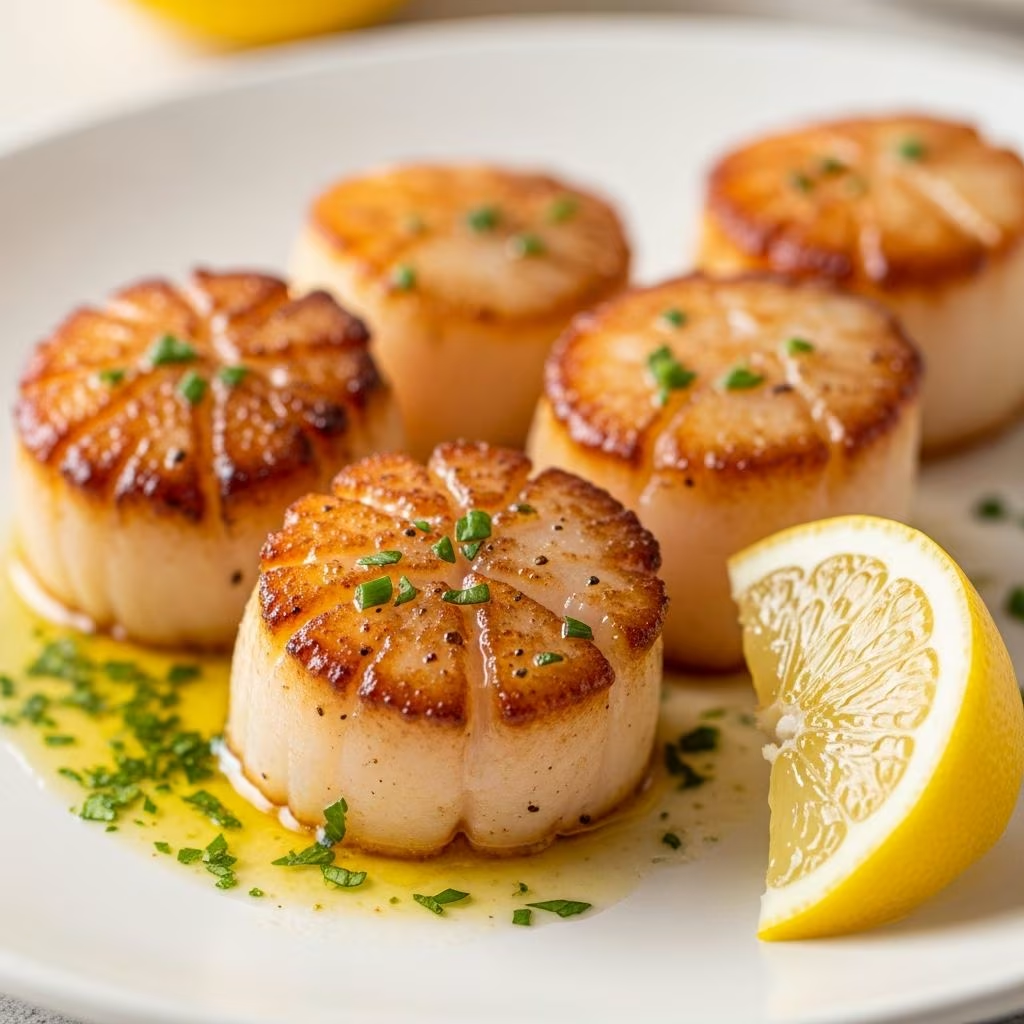
Pan-seared scallops offer a luxurious dining experience that’s surprisingly simple to recreate in your own kitchen. These delicate seafood gems develop a caramelized crust when cooked properly, paired with a buttery, tender interior that melts in your mouth. This guide draws from proven techniques to help you achieve professional results with minimal ingredients and effort.
Understanding Scallops: Types and Selection
Scallops are bivalve mollusks prized for their sweet, mild flavor and firm texture. Sea scallops, the larger variety typically used for searing, measure about 1-2 inches in diameter and weigh around 1-2 ounces each. Bay scallops are smaller and more tender but less ideal for high-heat searing due to their size.
When shopping, opt for “dry” or “day boat” scallops, which haven’t been treated with preservatives that cause water retention. Wet scallops release excess moisture during cooking, preventing a proper sear. Look for uniform, translucent flesh that’s slightly shiny and free from strong odors. Fresh scallops should smell like the ocean, not fishy.
- Sea scallops: Best for searing; larger size allows for crust formation.
- Bay scallops: Smaller, sweeter; better for quick sautés or appetizers.
- Diver scallops: Hand-harvested; premium quality with superior flavor.
Frozen scallops can work if thawed properly in the refrigerator overnight, but pat them extra dry to remove any ice crystals.
Essential Ingredients for Success
The beauty of seared scallops lies in their simplicity. A short list of high-quality staples highlights their natural taste.
| Ingredient | Quantity (for 1 lb scallops) | Purpose |
|---|---|---|
| Dry sea scallops | 1 lb (16-20 pieces) | Main protein; pat dry for searing. |
| Unsalted butter | 2-4 tbsp | Builds rich flavor; aids browning. |
| Neutral oil (e.g., avocado, grapeseed) | 1-2 tbsp | High smoke point for initial sear. |
| Kosher salt & black pepper | To taste | Seasoning; enhances natural sweetness. |
| Garlic (optional) | 2-4 cloves, minced | Aromatic boost for sauce. |
| Lemon juice | From ½ lemon | Bright acidity to balance richness. |
Choose unsalted butter to control saltiness, and use fresh garlic for the best aroma. Avoid overcrowding with too many add-ins on the first try.
Preparation Steps: Getting Ready to Sear
Proper prep is crucial—moisture is the enemy of a good sear. Start by removing the small, rectangular side muscle (abductor muscle) from each scallop if present; it’s tough and chewy when cooked.
- Rinse scallops under cold water to remove any grit.
- Pat extremely dry with paper towels on both sides. They should feel tacky to the touch.
- Season lightly with salt and pepper just before cooking—salt draws out moisture if added too early.
- Let them sit at room temperature for 10-15 minutes for even cooking.
This drying process ensures the Maillard reaction (browning) occurs, creating that irresistible crust.
Step-by-Step Cooking Method
Achieving the perfect sear requires high heat, patience, and precision. Total cook time is under 5 minutes for 1 lb.
Heating the Pan
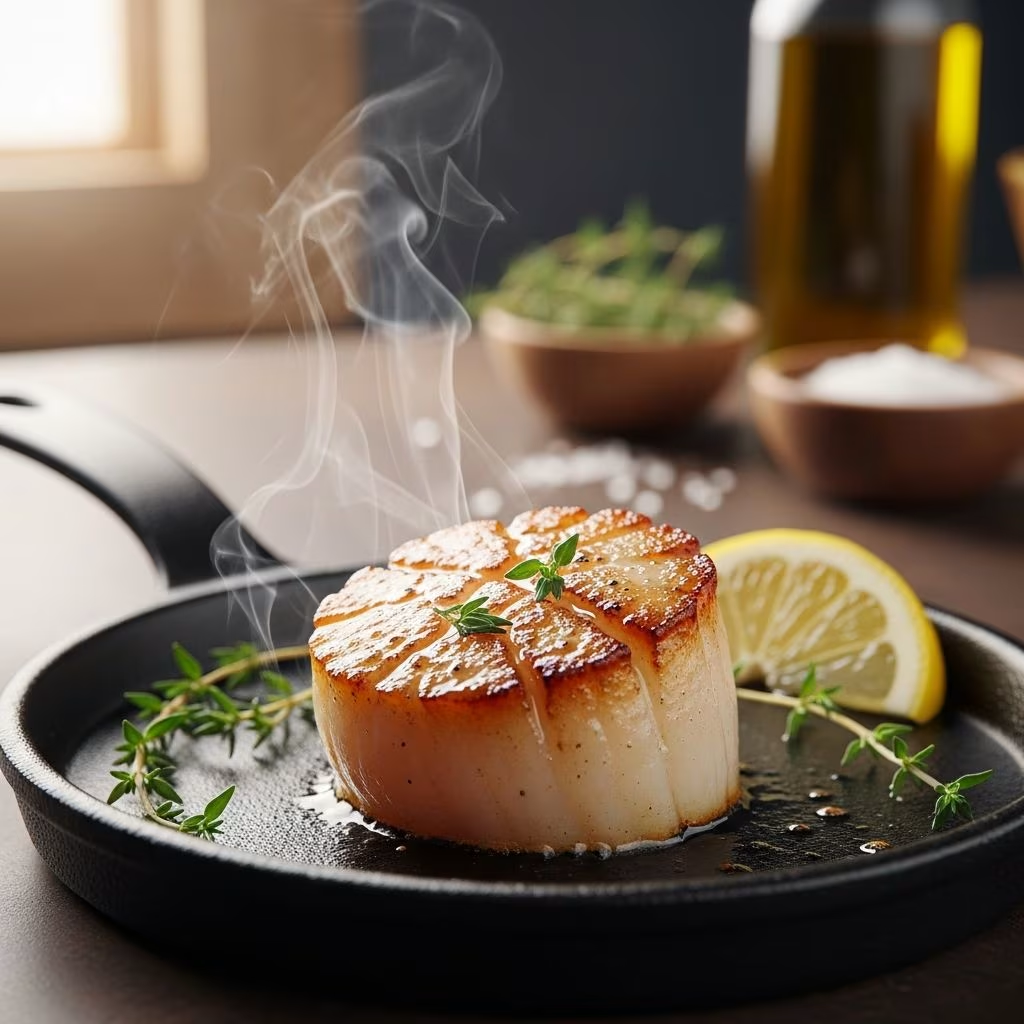
Use a 12-14 inch cast iron or stainless steel skillet for even heat distribution. Preheat over medium-high to high heat until shimmering hot—about 2 minutes. Add oil first (high smoke point prevents burning), then 1 tbsp butter for flavor. The fat should ripple and lightly smoke.
Searing the Scallops
- Place scallops in the pan, one by one, seasoned side down. Give each 1-2 inches of space to avoid steaming.
- Do not touch or move them for 1.5-2 minutes. Look for a deep golden edge forming around the bottom.
- Reduce heat to medium-high, add more butter around the edges, and flip using tongs.
- Cook the second side for 1-1.5 minutes until golden and the center is opaque but still translucent (internal temp 115-120°F for medium-rare).
- Remove to a plate; they will carryover cook slightly.
Test doneness by touch: firm with slight bounce, like a well-done steak. Overcooking makes them rubbery.
Garlic Butter Finishing Sauce
With scallops resting, make a quick pan sauce. Deglaze with ¼ cup dry white wine, broth, or lemon juice, scraping browned bits (fond). Add minced garlic and 2 tbsp butter; swirl for 1-2 minutes until emulsified. Spoon over scallops.
Troubleshooting Common Mistakes
Even seasoned cooks encounter issues. Here’s how to avoid them:
- No crust forms: Pan not hot enough or scallops too wet. Dry thoroughly and crank the heat.
- Sticking to pan: Wait for full release; forcing them tears the surface.
- Overcooked/tough: Cook less time; err underdone as residual heat finishes them.
- Bitterness from burnt butter: Use oil first; butter later for basting.
- Uneven cooking: Don’t overcrowd—cook in batches.
For bay scallops, dredge lightly in flour and cook 1 minute per side over medium heat.
Flavor Variations and Enhancements
Elevate basic seared scallops with these twists:
- Herb-infused: Add thyme, parsley, or chives to the butter sauce.
- Citrus zest: Lemon, lime, or orange for brightness.
- Spicy kick: Cayenne or paprika in seasoning.
- Asian fusion: Soy sauce, ginger, and sesame oil in sauce.
- Bacon-wrapped: Partial sear, finish in oven.
Pair with pasta, risotto, or grilled asparagus for a full meal.
Nutritional Profile and Health Benefits
Scallops are low-calorie (about 100 kcal per 3 oz serving) and packed with protein (20g), omega-3s for heart health, and minerals like selenium and magnesium. They’re naturally low in fat and carbs, making them keto- and paleo-friendly.
Serving Suggestions and Pairings
Serve immediately on a preheated plate to maintain crispness. Ideal with:
- Simple greens salad.
- Cauliflower mash or polenta.
- White wine like Sauvignon Blanc or Chardonnay.
For appetizers, slice horizontally and fan out.
Storage and Reheating Tips
Best eaten fresh, but leftovers store in an airtight container in the fridge for 1-2 days. Reheat gently in a hot pan with butter to revive crust—avoid microwave.
Frequently Asked Questions
Can I use frozen scallops?
Yes, thaw in fridge overnight and pat very dry. Avoid boiling water thaw.
What’s the best oil for searing?
Avocado or grapeseed oil for high smoke point (over 400°F).
How do I know when scallops are done?
Golden crust on both sides, opaque center, internal temp 115°F. Touch test: firm with bounce.
Are bay scallops good for searing?
They’re smaller, so quick sear over medium heat works best.
Why do my scallops release water?
They’re “wet-packed” or not dried enough. Choose dry scallops next time.
Advanced Techniques for Pros
Baste with spooned butter and aromatics during second side for extra flavor. For sous-vide precision, cook at 125°F for 30 minutes, then quick sear. Reverse-sear in a 500°F oven first for even doneness in larger scallops.
References
- Best Seared Scallops Recipe — Tastes Better From Scratch. 2023. https://tastesbetterfromscratch.com/seared-scallops/
- Seared Scallops Recipe (Easy and Perfect Every Time) — Will Cook For Smiles. 2022. https://www.willcookforsmiles.com/seared-scallops/
- Perfect Pan Seared Scallops — Coley Cooks. 2021. https://coleycooks.com/pan-seared-scallops/
- Easy Seared Scallops – Alton Brown’s Recipe — Platter Talk. 2020. https://www.plattertalk.com/alton-browns-seared-sea-scallops/
- Seared Scallops with Garlic Butter Sauce — Hungry Man Kitchen (YouTube). 2023. https://www.youtube.com/watch?v=yuS3fmkFLAw
- How to Perfectly Sear Scallops with Alton Brown — Good Eats (YouTube). 2007 (updated 2023). https://www.youtube.com/watch?v=eChbcRHRuCQ
- Pan Seared Scallops on the Stove — Leite’s Culinaria. 2022. https://leitesculinaria.com/95605/recipes-seared-scallops.html