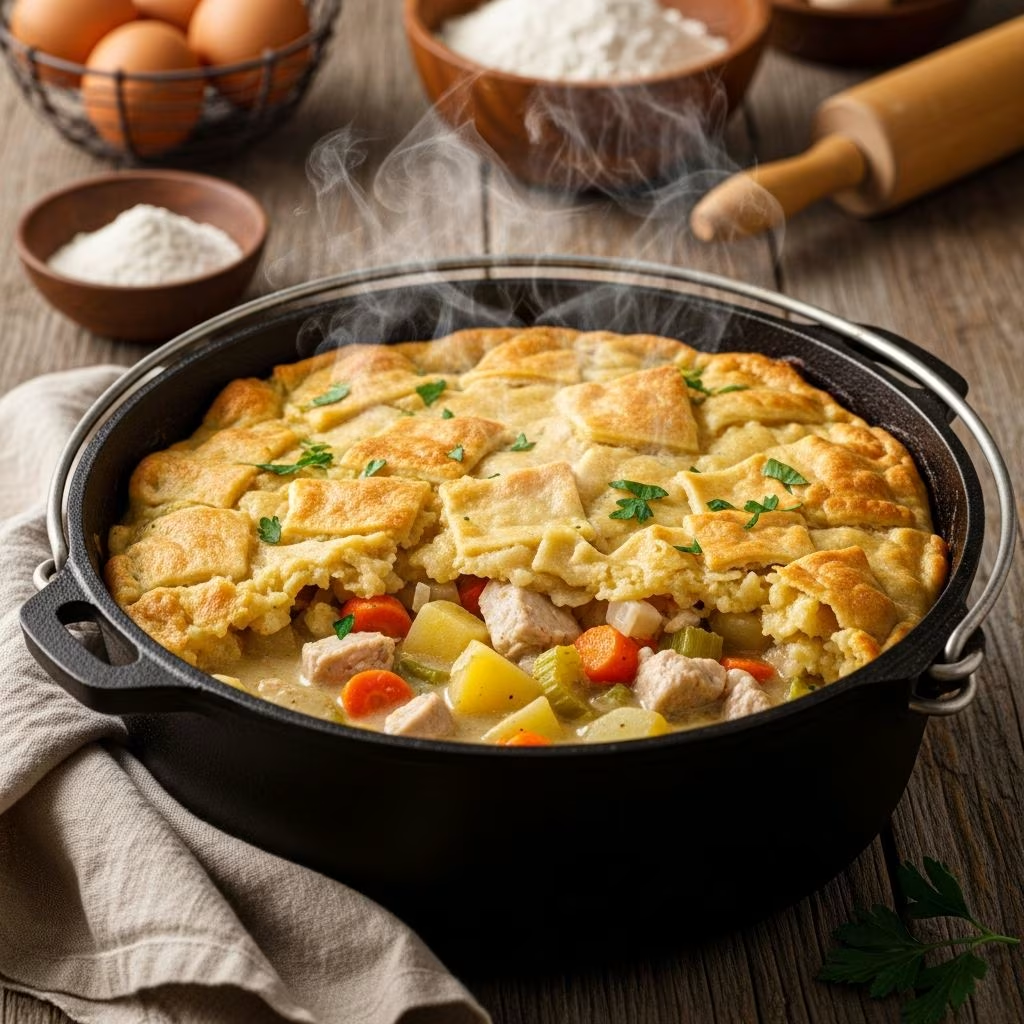
Unlike the creamy, pie-crust-topped versions common elsewhere, Pennsylvania Dutch chicken pot pie is a nourishing stew defined by its clear, savory broth, chunks of tender chicken, crisp vegetables, and distinctive square homemade noodles. Rooted in Amish and German settler traditions, this dish embodies simple, wholesome cooking that warms the soul on chilly evenings.
The Origins and Cultural Significance
Pennsylvania Dutch chicken pot pie traces its lineage to the Pennsylvania German communities, including Amish and Mennonite groups, who settled in eastern Pennsylvania during the 18th century. These immigrants brought hearty, practical recipes from the Palatinate region of Germany and Switzerland, adapting them to local ingredients like abundant chickens and root vegetables. The term \”Dutch\” here derives from \”Deutsch,\” meaning German, highlighting the ethnic heritage rather than any connection to the Netherlands.
In Amish culture, this pot pie serves as a staple at church gatherings, barn raisings, and family suppers. Its brothy consistency distinguishes it from baked pot pies, allowing it to feed large groups economically. The handmade noodles, known as \”pot pie squares\” or \”rivvels,\” add a chewy texture that soaks up the rich chicken stock, creating a satisfying one-pot meal.
Essential Ingredients Breakdown
Authenticity hinges on fresh, high-quality components. Start with a whole chicken or bone-in pieces for superior broth flavor. Vegetables provide natural sweetness and earthiness, while the noodle dough relies on basic pantry staples.
- Chicken: 4-5 lbs whole chicken or 4 leg quarters for deep flavor.
- Vegetables: Carrots, celery, onions, potatoes (Yukon gold or russet for creaminess).
- Aromatics: Bay leaf, fresh parsley, thyme, garlic for subtle depth.
- Noodle Dough: Flour, eggs, milk, salt—simple and egg-rich for chewiness.
- Seasonings: Salt, pepper, optional turmeric or saffron for golden hue.
Homemade stock is non-negotiable; canned broth lacks the gelatinous body from bones and connective tissue.
Mastering the Homemade Noodle Dough
The hallmark of this dish is the pot pie noodles—thick, square, and hearty, not delicate pasta. They expand in the boiling broth, forming plump bites that hold their shape.
- Combine 2-3 cups all-purpose flour with 1 tsp salt in a bowl or food processor.
- Beat 1-2 eggs with ½-¾ cup milk (whole for richness), then incorporate into flour until a shaggy dough forms.
- Knead briefly on a floured surface; avoid overworking to prevent toughness.
- Roll to ⅛-inch thickness, cut into 1.5-2 inch squares using a pizza cutter or knife.
- Dust generously with flour and let rest covered to prevent sticking.
Tip: For rivvels (smaller button-like noodles), pinch off tiny dough pieces directly into the broth for a rustic variation.
Step-by-Step Cooking Process
Preparation spans 2-3 hours but yields unmatched results. Patience ensures tender meat and infused flavors.
Step 1: Simmer the Chicken Stock
Place chicken in a large stockpot, cover with 10-12 cups cold water. Add quartered onion, carrot chunks, celery stalks, bay leaf, thyme sprigs, and peppercorns. Bring to a boil, skim foam, then simmer 1-1.5 hours until meat falls off bones. Strain stock, reserving 8-10 cups; shred 4 cups chicken.
Step 2: Prepare Vegetables
Peel and dice 4 carrots, 3 celery stalks, 1 onion, and 4 potatoes into 1-inch pieces. These cook quickly in the broth without disintegrating.
Step 3: Assemble the Stew
Return strained stock to the pot, add vegetables, and simmer 15-20 minutes until tender. Bring to a rolling boil, drop noodles one by one (to avoid clumping), stirring gently. Reduce to low boil, cook 8-10 minutes until noodles float and firm up. Stir in shredded chicken, peas if desired, and simmer 5 more minutes. Season with salt, pepper, and chopped parsley.
Step 4: Thicken if Needed
For a slightly thicker broth, whisk 2 tbsp flour with cold water to make a slurry; stir in gradually while boiling.
Total time: 3 hours. Serves 6-8 generously.
Recipe Variations and Modern Twists
While traditionalists stick to basics, adaptations abound.
| Variation | Key Changes | Best For |
|---|---|---|
| Vegetarian | Substitute vegetable stock and tofu or mushrooms for chicken. | Meat-free meals. |
| Turkey Pot Pie | Use Thanksgiving leftovers; add sage. | Holiday repurposing. |
| Spicy Kick | Incorporate Pennsylvania pepper or cayenne. | Bold flavors. |
| Quick Version | Store-bought stock and frozen noodles. | Weeknights. |
| With Dumplings | Larger noodle pieces for dumpling effect. | Extra heartiness. |
Freezing tip: Assemble without noodles, freeze stock and chicken separately; add fresh dough upon reheating.
Perfect Pairings and Serving Suggestions
Serve steaming in deep bowls with crusty bread to sop up broth. Common sides include apple butter, pickled beets, or chow-chow relish—hallmarks of Pennsylvania Dutch tables. For drinks, pair with homemade root beer, iced tea, or shoofly pie for dessert.
Leftovers thicken overnight; reheat gently with a splash of stock.
Common Mistakes and Pro Tips
- Avoid clumpy noodles: Add singly to vigorous boil; stir constantly first 2 minutes.
- Don’t overcook veggies: Add post-noodle for crisp-tender bite.
- Flavor boost: Roast chicken bones first or add ham hock for smokiness.
- Scaling up: Double recipe for crowds; use two pots if needed.
- Storage: Refrigerate 3-4 days; freezes 3 months.
Nutrition and Dietary Notes
Per serving (1/6 recipe): ~450 calories, 40g protein, 15g fat, 50g carbs. High in B vitamins from chicken, fiber from veggies. Gluten-free alternative: Use GF flour blend for noodles. Low-carb: Omit potatoes, use konjac noodles.
FAQs
What makes PA Dutch pot pie different from regular chicken pot pie?
It’s a soupy stew with flat square noodles, not a baked pie with crust or creamy sauce.
Can I use rotisserie chicken?
Yes, but make stock separately for best flavor; avoid if possible for authenticity.
How do I prevent sticky noodles?
Flour heavily, boil broth rapidly, add one at a time.
Is saffron necessary?
No, but a pinch mimics traditional golden color.
Can this be made in a slow cooker?
Poach chicken on high 4 hours, then proceed on stovetop for noodle cooking.
Exploring Pennsylvania Dutch Cuisine Further
This pot pie exemplifies the thrift and flavor of PA Dutch cooking. Related dishes: pork and sauerkraut, chicken corn soup, scrapple. Visit Lancaster County for farm-fresh ingredients and cooking classes.
Mastering this recipe connects you to generations of home cooks who valued sustenance over show. Experiment confidently—its forgiving nature rewards enthusiasm.
References
- Pennsylvania Dutch Chicken Pot Pie — Gather for Bread. 2023-05-15. https://gatherforbread.com/chicken-pot-pie-pennsylvania-dutch-style/
- Pennsylvania Dutch Chicken Pot Pie — Bell & Evans. 2024-02-10. https://www.bellandevans.com/recipe/pennsylvania-dutch-chicken-pot-pie/
- PA Dutch Chicken Pot Pie — Spices Inc. 2023-11-20. https://spicesinc.com/recipes/pa-dutch-chicken-pot-pie
- Pennsylvania Dutch Chicken Pot Pie — The Cozy Plum. 2024-01-05. https://thecozyplum.com/dutch-chicken-pot-pie/
- Pennsylvania Dutch Chicken Pot Pie Recipe — Amish Heritage. 2023-08-12. https://amish-heritage.org/pennsylvania-dutch-chicken-pot-pie/