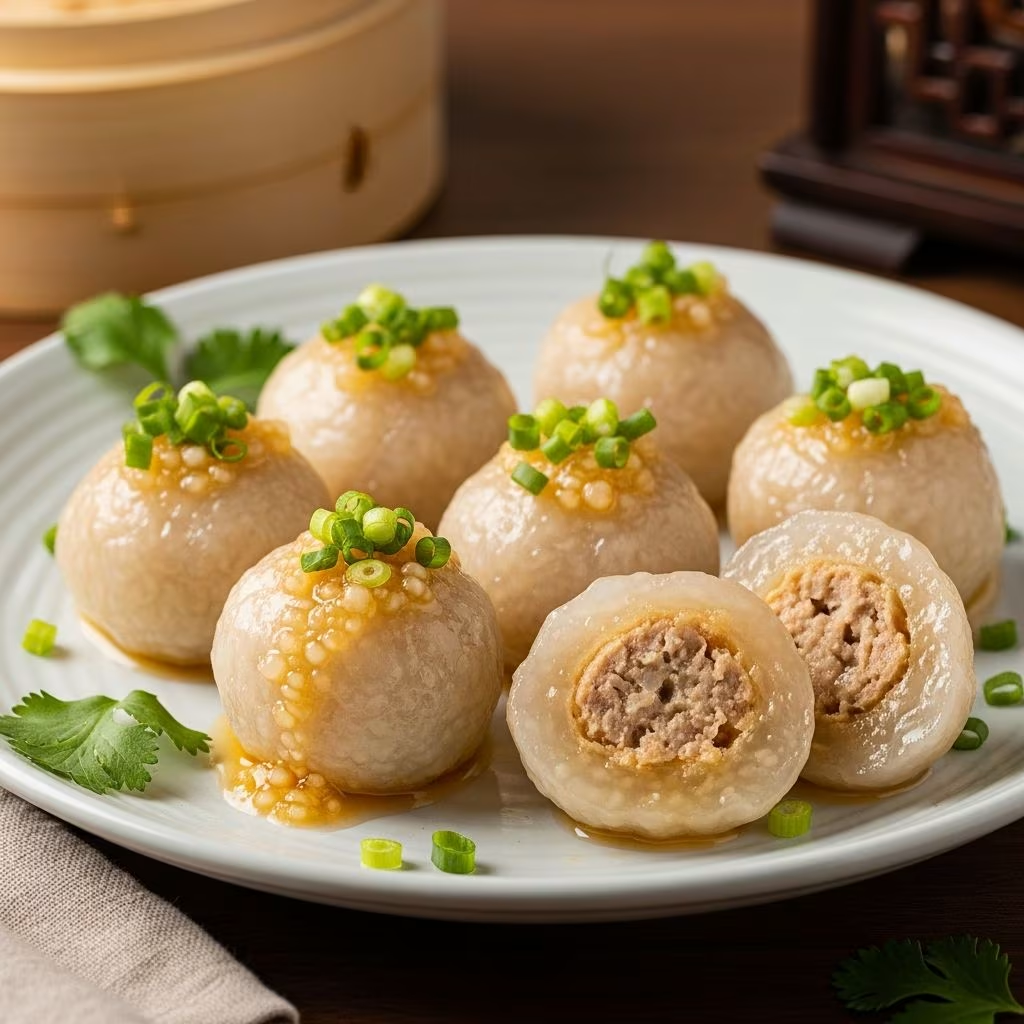
Pearl meatballs represent a cherished intersection of tradition and technique, bringing together the comfort of home cooking with the sophistication of carefully executed culinary methods. These delicate spheres, known in Chinese as Zhen Zhu Wan Zi (珍珠丸子), showcase the ingenuity of Asian home cooks who transformed simple ingredients into something truly remarkable. The distinctive appearance—where glutinous rice grains cling to the exterior like luminous pearls—belies the complexity and care required to prepare this beloved dish correctly.
The beauty of pearl meatballs lies not merely in their visual appeal but in how each component works in harmony during the steaming process. The tender pork and vegetable filling becomes infused with umami flavors, while the glutinous rice exterior transforms from individual grains into a cohesive, translucent coating that soaks up the savory juices released during cooking. This culinary technique has been passed down through generations, with many families maintaining their own variations and cherished methods.
Understanding the Foundation: Rice Preparation
The rice serves as far more than a decorative element in this dish—it functions as a critical component that requires specific preparation to achieve the desired results. Sweet glutinous rice, also called sticky rice or mochigome, possesses unique starching properties that develop during soaking. When placed in water overnight, the grains absorb moisture that makes them more porous and capable of absorbing the meatball juices during steaming.
This overnight soaking process is not negotiable for achieving authentic results. Placing one cup of sweet glutinous rice in a medium mixing bowl and adding water to cover by approximately one inch creates the perfect hydration environment. Refrigeration during this period helps maintain optimal conditions for the rice’s transformation. By morning, the grains will have absorbed sufficient moisture to become tender enough to cook through completely in the eighteen to twenty minutes required for the meatballs to steam properly.
Many home cooks mistakenly attempt to bypass this soaking step or reduce the soaking time, resulting in rice grains that remain hard or fail to cook adequately. The overnight preparation is what distinguishes authentic pearl meatballs from inferior versions that lack the characteristic tender, translucent coating.
Crafting the Flavorful Filling: Balance and Technique
The filling represents the heart of the pearl meatball, where careful ingredient selection and mixing technique create a mixture that is simultaneously light yet deeply flavorful. The foundation begins with one pound of ground pork—preferably freshly ground pork shoulder rather than pre-ground varieties that may contain excess fat or inferior cuts. This quantity provides enough filling for approximately twelve to fourteen meatballs depending on the desired size.
Napa cabbage serves as the primary vegetable component, lending subtle sweetness and moisture to the filling. Half a medium head, finely minced, contributes approximately one pound of vegetable matter. The initial preparation involves combining this cabbage with a fraction of the total salt—typically half a teaspoon—and allowing it to sit undisturbed for ten minutes. During this resting period, the salt draws out excess moisture from the cabbage cells through osmosis, a process called sweating. This step is essential because unconditioned cabbage would introduce too much liquid into the filling, resulting in meatballs that fall apart during steaming or remain loose and uncooked inside.
After the sweating process, the cabbage must be thoroughly drained. Transferring it to a clean dishtowel and wrapping the edges tightly allows gravity and manual pressure to remove excess water. Many recipes describe this as requiring “brute strength,” as squeezing out as much moisture as possible directly impacts the final texture and stability of the meatballs.
The remaining filling ingredients combine traditional aromatics with flavor enhancers that create depth and complexity. One tablespoon of minced garlic (approximately three medium cloves), one teaspoon of minced fresh ginger, and three chopped scallions form the aromatic base. Two teaspoons of light brown sugar introduce a subtle sweetness that balances the savory pork, while two teaspoons of toasted sesame oil contribute nutty undertones and increased umami character. One tablespoon of chicken broth provides additional liquid and flavor enhancement. The remaining two teaspoons of salt round out the seasoning profile.
Combining these filling ingredients requires proper mixing technique. Rather than haphazardly stirring, the mixture should be combined using a circular motion with your fingers, working continuously for approximately three minutes until the filling becomes visibly homogenous and feels distinctly sticky. This extended mixing develops the proteins in the pork, creating better binding capacity that helps the meatballs maintain their shape during steaming.
The Assembly Process: Shaping and Coating
Transforming the prepared filling into properly coated meatballs requires careful attention to moisture management and consistency. Before beginning the shaping process, the soaked rice must be drained thoroughly and spread across a plate or shallow bowl. Having oiled hands is crucial—coating your hands lightly with neutral vegetable oil prevents the sticky filling from adhering to your skin, making the shaping process far more manageable.
Portioning the filling appropriately ensures consistent meatballs that cook evenly. A size approximately equivalent to a ping-pong ball or roughly two tablespoons of filling per meatball has proven reliable across multiple culinary traditions. Rolling the meat between your palms creates a compact sphere that provides the proper surface area for rice coating.
The rice coating process requires gentle but deliberate motion. Rolling each meatball in the plate of soaked rice grains ensures comprehensive coverage. Some recipes suggest gently pressing the rice with your hand to ensure better adhesion, while others rely on the stickiness of the soaked grains to naturally cling to the meatball surface. Both approaches work effectively, though pressing does provide additional assurance that the rice will remain in place during steaming and serving.
Steaming Methodology and Equipment Considerations
The steaming environment proves critical to achieving pearl meatballs that are cooked through yet remain moist and tender. A bamboo steamer represents the traditional equipment choice, though metal steamers function equally well for this purpose. The key consideration involves preventing the meatballs from sticking to the steaming surface while allowing steam circulation around each meatball.
Lining the steamer with perforated steamer liners, parchment paper with holes cut into it, or even extra napa cabbage leaves creates a barrier that prevents direct contact with the steaming surface. The meatballs should be arranged with sufficient spacing between them—approximately one inch apart—to allow proper steam circulation. As the meatballs cook, they expand slightly, so inadequate spacing can result in meatballs sticking together.
The water level in the pot beneath the steamer should reach approximately one inch depth. Bringing this water to a rolling boil before placing the steamer ensures immediate, consistent steam production. The cooking time of eighteen minutes represents the standard duration for fully cooked meatballs with softened rice coating and fully cooked pork interior. The rice should appear translucent or slightly glossy, and the overall appearance should convey the luminous quality that inspired the “pearl” designation.
Throughout the steaming process, the lid should remain covered to maintain consistent temperature and steam accumulation. Lifting the lid prematurely or repeatedly extends the cooking time and can result in uneven cooking.
Serving and Presentation Considerations
Pearl meatballs transition from steamer to serving dish at peak quality when served immediately after cooking. The traditional presentation involves transferring the meatballs to a serving plate or shallow bowl, with additional chopped scallions sprinkled generously across the top. This garnish provides visual contrast with the white or translucent rice coating while adding fresh onion flavor that complements the pork and sesame oil flavors of the filling.
The meatballs can be served as an appetizer, as part of a dim sum collection, or as a component of a larger meal. They pair particularly well with steamed rice and vegetables, though they are equally satisfying as a standalone dish. Soy sauce or other dipping sauces are not traditional but may appeal to certain palates.
Understanding Regional Variations
While Taiwanese-American recipes form one important tradition, pearl meatballs also appear in Chinese regional cuisines, particularly from Hunan and Hubei provinces where they are reserved for holiday celebrations and special occasions. Some regional variations include additional ingredients such as water chestnuts for added texture, or substitute ground chicken for pork to create lighter versions. Vegetarian adaptations use legumes like white beans as the primary filling component, with spinach replacing napa cabbage to create an entirely plant-based version.
Despite these variations, the fundamental technique remains consistent: carefully soaked glutinous rice coating a flavorful filling, steamed until the rice becomes tender and translucent. The core principle of allowing time for proper preparation and avoiding shortcuts distinguishes successful pearl meatballs from inferior versions.
Frequently Asked Questions
Can I prepare the filling in advance?
Yes, the filling can be prepared up to one day before you plan to make the meatballs. Store it in an airtight container in the refrigerator. Allow it to come to room temperature for approximately fifteen minutes before shaping to improve handling.
What type of glutinous rice should I use?
Sweet glutinous rice (also called sticky rice, mochigome, or glutinous short-grain rice) is essential. Regular white rice or jasmine rice will not produce the correct texture and will remain hard after steaming. Asian markets and most well-stocked grocery stores carry this ingredient.
How long do cooked pearl meatballs keep?
Refrigerated in an airtight container, they remain edible for three to four days. They can also be frozen for up to three months. Reheat gently by steaming for five to seven minutes, or microwave covered with a damp paper towel for one to two minutes.
Can I use ground chicken instead of pork?
Yes, ground chicken creates a lighter version, though you may need to add slightly more liquid to the filling to compensate for chicken’s lower fat content. Reduce the cooking time by approximately two minutes.
Why did my rice not stick to the meatballs?
Inadequately soaked rice or rice that has dried out before using will not adhere properly. Ensure the rice soaks overnight and remains moist before coating the meatballs. Additionally, slightly damp hands (rather than oily hands) sometimes provide better adherence.
Can I bake these instead of steaming?
No, baking will not achieve the correct texture. Steaming is essential for producing the characteristic soft, translucent rice coating and moist, tender filling.
References
- First Generation: Recipes from My Taiwanese-American Home — Frankie Gaw. 2022. Published by W.W. Norton & Company.
- Chinese Pearl Balls (珍珠丸子) – Omnivore’s Cookbook — Omnivore’s Cookbook. Accessed April 2026. https://omnivorescookbook.com/pearl-balls/
- Chinese Pearl Meatballs with Sticky Rice (珍珠丸子) – The Woks of Life — The Woks of Life. Accessed April 2026. https://thewoksoflife.com/pearl-meatballs-sticky-rice/
- Pearl Meatballs (Sticky Rice Meatballs, 珍珠丸子) – Red House Spice — Red House Spice. Accessed April 2026. https://redhousespice.com/pearl-meatballs/