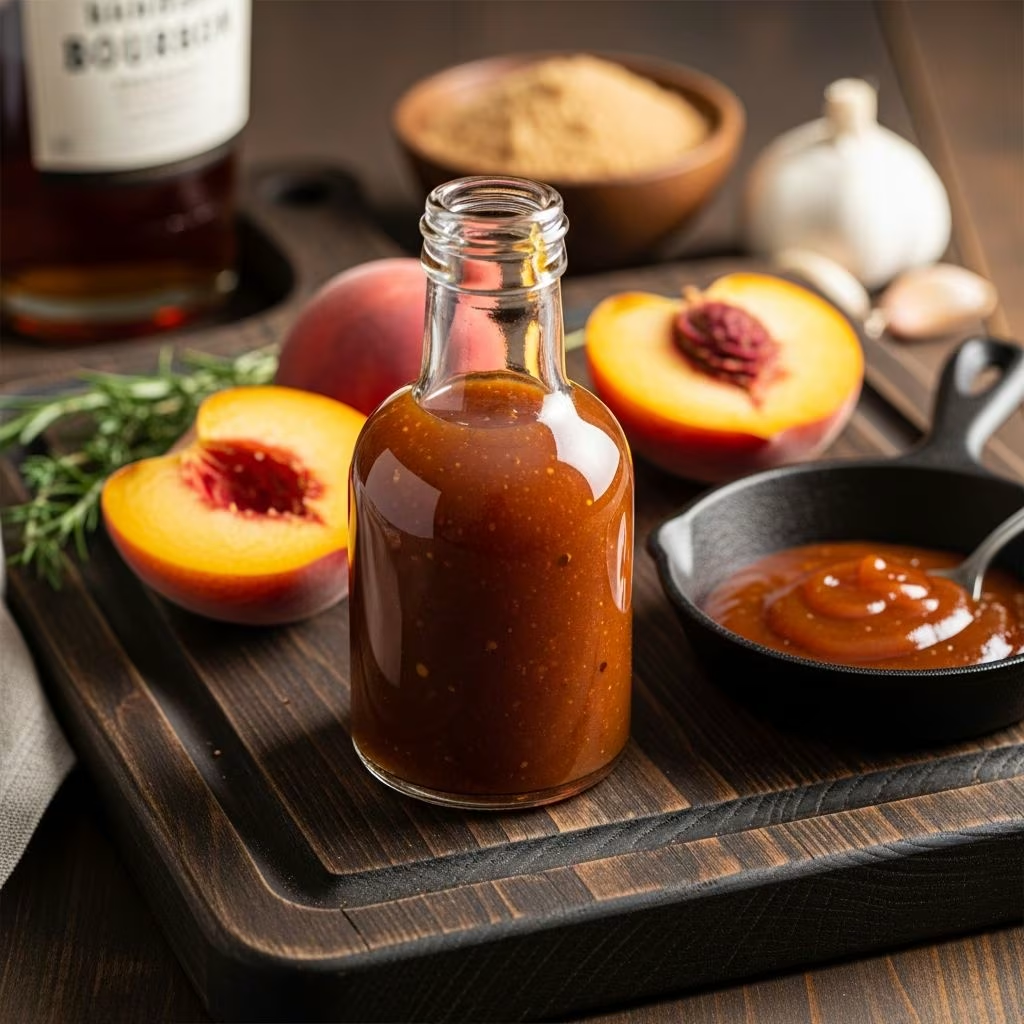
Creating a distinctive barbecue sauce that captures the essence of summer flavors requires understanding how individual components work together to produce a harmonious taste profile. A peach and bourbon-based sauce represents an elegant departure from conventional tomato-heavy condiments, offering complexity that enhances rather than masks the natural qualities of your grilled proteins. This comprehensive guide walks you through the methodology of developing this sophisticated accompaniment in your own kitchen.
Understanding the Foundation of Fruit-Based BBQ Sauces
The transition from store-bought to homemade barbecue sauces opens possibilities for customization and quality control that commercial products rarely match. When constructing a peach-forward sauce, you’re building upon a framework where stone fruit provides both natural sweetness and textural substance. Unlike berry-based alternatives or those relying exclusively on tomato derivatives, peach sauce demands careful attention to cooking times and blending techniques to achieve optimal consistency and flavor distribution.
The role of bourbon in this preparation extends beyond simple flavoring. Spirits in cooking serve multiple functions: they introduce depth through caramelization, add subtle oaken undertones, and can brighten flavors that might otherwise become cloying when relying solely on fruit and sugar combinations. The cooking process evaporates most alcohol content while preserving the character bourbon brings to the final product.
Essential Ingredients and Their Contributions
Building your sauce begins with selecting high-quality fresh peaches. Medium to large specimens work best, as they contain more flesh relative to pit size and typically offer superior flavor concentration compared to smaller varieties. The preparation stage—peeling, pitting, and dicing—represents your first significant time investment but directly impacts the final texture and taste.
- Fresh peaches — Provide natural pectin for body and delicate flavor that intensifies through cooking
- Bourbon whiskey — Adds complexity and subtle woodsy notes; can be substituted with water if preferred
- Apple cider vinegar — Balances sweetness and provides subtle tartness that prevents monotony
- Brown sugar — Deepens the peach foundation and contributes molasses undertones
- Aromatic vegetables — Garlic, onions, or shallots build savory depth
- Spice components — Smoked paprika, chili powder, dry mustard, and cayenne pepper create layered heat and complexity
- Worcestershire sauce — Introduces umami qualities and fermented depth
- Ketchup or tomato base — Optional component that thickens the sauce and adds conventional BBQ character
Preparation Techniques for Superior Results
The preliminary work of preparing ingredients significantly influences your final outcome. When selecting peaches, choose specimens that yield slightly to gentle pressure but remain firm enough to hold their shape during initial cutting. Peaches that are too soft will break down excessively during cooking, while unripe ones may not deliver adequate flavor or texture.
For peeling peaches efficiently, score a shallow X on the bottom of each fruit, then briefly immerse them in boiling water—typically thirty seconds suffices. This blanching technique loosens the skin without cooking the flesh. Transfer blanched peaches immediately to ice water to halt the cooking process. Once cooled, the skin should slip away with minimal effort using a paring knife.
Mincing garlic and finely dicing other aromatics creates more surface area for flavor extraction during the initial sautéing phase. Uniformity in peach cutting ensures even cooking throughout your batch, preventing some pieces from becoming mushy while others remain insufficiently softened.
The Step-by-Step Cooking Process
Beginning with a large, heavy-bottomed saucepan prevents hot spots that could cause scorching. Heat neutral oil over medium heat for approximately thirty seconds to achieve proper temperature without reaching the smoke point. This brief preheating prevents sticking and promotes even cooking of aromatics.
Add your minced garlic along with dry spices—typically smoked paprika, chili powder, ground mustard, and any cayenne pepper you’re incorporating. The dry spices bloom in hot oil, releasing volatile compounds that distribute throughout the sauce. Stir continuously for about thirty seconds until the aroma becomes noticeably more pronounced but before any browning occurs.
Introduce your diced peaches next, tossing them gently to coat with the fragrant oil and spice mixture. This distributes flavoring evenly and begins the process of extracting juice from the fruit. Pour bourbon into the mixture and increase heat to bring everything to a simmer—the alcohol will begin evaporating immediately.
Once simmering, add remaining ingredients: ketchup, apple cider vinegar, Worcestershire sauce, brown sugar, salt, and black pepper. Stir thoroughly to combine all components, then bring the mixture to a gentle boil over medium heat. Reduce heat to maintain a steady simmer and continue cooking with frequent stirring.
The cooking duration typically ranges from fifteen to forty-five minutes depending on your desired final consistency and which recipe variation you’re following. Initially, you’ll notice the mixture bubbling vigorously; as cooking progresses, the surface will bubble less frequently as liquid reduces and the sauce thickens. The target consistency is typically when the mixture coats the back of a spoon when stirred, with roughly one-third of the original volume having evaporated through reduction.
Achieving the Perfect Texture
Texture preferences vary considerably among cooks. Some prefer a chunky sauce where visible peach pieces remain suspended, while others favor a completely smooth consistency achieved through blending. If you desire a smoother texture, allow the sauce to cool slightly after cooking, then use an immersion blender to achieve your preferred smoothness. For those without an immersion blender, carefully transfer cooled sauce in batches to a traditional blender, being mindful of steam release from the hot mixture.
An alternative approach involves pushing the cooked sauce through a fine mesh strainer for partial smoothing while retaining some texture. This middle-ground option captures some rustic character while removing larger pieces.
Flavor Balancing and Adjustment
Taste your sauce while it’s still warm, as flavors will feel more pronounced than they will once cooled. The balance you’re seeking involves pleasant interplay between sweetness, acidity, and savory elements, with no single component dominating others.
If your sauce tastes excessively sweet, increasing the acid component through additional vinegar works effectively. Add vinegar gradually—typically a tablespoon at a time—tasting between additions. Conversely, if the sauce seems too sharp or vinegary, incorporating additional brown sugar or a small amount of honey helps restore balance.
For those preferring additional heat, cayenne pepper can be increased incrementally, or fresh chili peppers can be incorporated during the spice-blooming phase. The smoked paprika can be doubled if you desire more pronounced smokiness, though remember that cooking intensifies all spice flavors, so conservative additions initially prove wiser than aggressive seasoning.
Storage and Preservation Methods
Once cooled completely, transfer your sauce to airtight glass containers and refrigerate. Under proper refrigeration, homemade peach bourbon sauce remains flavorful for two to three weeks. The flavors actually deepen and integrate further during the first few days of storage, so preparing sauce several days in advance of a gathering allows flavor development.
For longer preservation, proper canning techniques can extend shelf life substantially. If pursuing this route, follow established canning safety protocols carefully. The high sugar and acid content of this sauce supports successful canning, but detailed instructions should be consulted through official resources like university extension programs.
Freezing offers another storage option that maintains quality for several months. Portion sauce into smaller containers before freezing to avoid repeated thawing cycles, which can degrade quality.
Variations and Creative Adaptations
The basic framework of this sauce accommodates numerous adaptations based on available ingredients and personal preferences. Substituting white donut peaches for traditional yellow varieties produces a subtly different flavor profile with slightly less intensity. Honey can partially replace brown sugar for a lighter sweetness and smoother mouthfeel.
Different spirits create distinct characteristics: rye whiskey introduces spicier notes, while brandy or cognac brings fruity complexity. Some recipes incorporate peach preserves or peach nectar to intensify the fruit component without requiring as many fresh peaches.
The vegetable components can be adjusted based on preference—some cooks incorporate bell peppers for additional body and sweetness, while others add fresh chili peppers alongside conventional spices. Worcestershire can be supplemented with soy sauce for deeper umami qualities.
Ideal Uses and Serving Suggestions
This sauce particularly complements pork products—ribs, pulled pork, pork chops, and bacon all benefit from its sweet-smoky profile. Poultry applications work equally well, whether grilled chicken breasts, drumsticks, or wings. Even fish and seafood can showcase this sauce’s versatility, particularly when applied during the final minutes of cooking to prevent burning.
Beyond traditional grilling applications, this sauce functions excellently as a glazing component for roasted vegetables, a dipping accompaniment for appetizers, or a finishing sauce drizzled over cheese boards. Its complexity makes it suitable for entertaining, as it suggests more effort than quick, everyday preparations.
Comparison of Key Preparation Variables
| Variable | Impact on Final Result | Recommended Approach |
|---|---|---|
| Cooking Duration | Longer cooking intensifies flavors and thickens consistency | 15-45 minutes depending on desired thickness |
| Blending Method | Determines texture smoothness and visual appeal | Immersion blender for partial smoothing or traditional blender for complete purée |
| Bourbon Quantity | More bourbon increases depth but shouldn’t dominate | 2-4 tablespoons per batch; can substitute water if preferred |
| Spice Levels | Defines heat and aromatic complexity | Start conservatively; increase incrementally based on taste tests |
| Peach Ripeness | Affects natural sugar concentration and flavor intensity | Select ripe but firm specimens; avoid overripe fruit |
Frequently Asked Questions
Can I make this sauce without alcohol?
Yes, substitute water or additional apple cider vinegar for the bourbon. The sauce will lack the subtle depth that spirits provide, but it remains delicious and functions perfectly well as a family-friendly option.
How do I prevent the sauce from burning during cooking?
Stir frequently throughout the cooking process, maintain medium or medium-low heat, and ensure adequate liquid remains in the pan. If sticking occurs, reduce heat and add small amounts of water to prevent scorching.
What if my peaches aren’t ripe enough?
Underripe peaches will require longer cooking to break down and may not deliver optimal flavor. Consider adding peach preserves or peach nectar to supplement the fresh fruit, or purchasing additional ripe specimens.
Can I use canned or frozen peaches instead?
While fresh peaches are ideal, canned or frozen varieties work when fresh options aren’t available. Ensure canned peaches are packed in juice rather than heavy syrup, and thaw frozen peaches before using.
How long does homemade sauce last?
Refrigerated sauce keeps for two to three weeks in airtight containers. Frozen sauce maintains quality for several months. Properly canned sauce can last a year or longer when stored in cool, dark conditions.
What consistency should the finished sauce have?
The ideal texture coats a spoon thickly without being pasty. If your sauce seems too thin after cooking, continue simmering to reduce further. If too thick, thin with small amounts of water or vinegar.
Conclusion: Mastering Your Homemade Creation
Developing proficiency in creating homemade peach bourbon barbecue sauce involves understanding ingredient interactions, respecting cooking times, and remaining willing to adjust seasoning based on personal preference. The investment of time and attention yields a product incomparably superior to commercial alternatives, with the added satisfaction of having created something entirely from scratch. As you gain experience, you’ll develop intuition about texture, flavor balance, and timing that allows for confident variations and adaptations. Your homemade sauce becomes a signature element of your cooking repertoire, impressing guests and elevating ordinary grilled meals into memorable dining experiences.
References
- Peach Bourbon BBQ Sauce — Sweet Cayenne. 2024. https://sweetcayenne.com/peach-bourbon-bbq-sauce/
- Brown Butter Peach Bourbon BBQ Sauce Recipe — Not Entirely Average. 2024. https://notentirelyaverage.com/bourbon-bbq-sauce-recipe/
- Peach Bourbon BBQ Sauce Recipe — Pook’s Pantry. 2024. https://www.pookspantry.com/peach-bourbon-bbq-sauce-recipe/
- Whiskey Peach BBQ Sauce Recipe — Hey Grill Hey. 2024. https://heygrillhey.com/whiskey-peach-barbecue-sauce/