Fruit crumbles represent one of the most approachable yet impressive desserts in any home baker’s repertoire. The beauty of this category lies in its fundamental simplicity—fresh fruit meets a buttery, crunchy topping, and the result feels both homey and refined. When you introduce sesame into the equation, however, something remarkable happens. The nutty, toasted character of sesame seeds and tahini elevates an already delightful dessert into something with genuine sophistication and depth.
This combination of stone fruit and sesame has ancient roots, appearing in cuisines across the Mediterranean, Middle East, and Asia. The marriage of these ingredients creates a complex flavor profile that surprises and delights the palate. What makes this approach particularly valuable for contemporary cooking is how it honors traditional flavor combinations while presenting them in an accessible, modern format.
Understanding the Foundation: Why Peaches and Sesame Complement Each Other
Peaches possess a delicate sweetness with underlying floral notes and a subtle tartness that develops as they ripen. Their tender texture when cooked becomes almost silky, providing an ideal canvas for other flavors. Sesame, by contrast, brings earthiness, complexity, and a sophisticated toasted quality that the average home cook might not immediately consider pairing with stone fruits.
The pairing works because both ingredients share a certain warmth. When sesame seeds are toasted, their natural oils release, creating a fragrant, almost caramel-like quality. This toasted character harmonizes beautifully with the natural sweetness of ripe peaches. Additionally, tahini—ground sesame paste—adds a creamy dimension to the crumble topping, preventing it from becoming dry while contributing richness without heaviness.
The complementary nature of these ingredients means that each enhances the other’s best qualities. The peaches prevent the sesame flavor from becoming overpowering, while the sesame prevents the peaches from tasting one-dimensional or overly sweet.
Selecting and Preparing Your Peaches
The quality of your final dessert depends almost entirely on the quality of your peaches. Unlike some ingredients where mediocre versions can be masked or improved through cooking, peaches demand respect. Choose specimens that yield slightly to gentle pressure and emit a fragrant aroma. The skin should show some blushing or color variation rather than appearing uniformly pale.
When your peaches arrive home, resist the urge to refrigerate them immediately. Peaches continue to develop flavor and sweetness at room temperature. Store them stem-side down on a counter away from direct sunlight. If you find your peaches are slightly underripe, place them in a paper bag with an apple or banana to accelerate ripening through ethylene gas production.
Preparation depends on your preference for texture. Some bakers prefer leaving peach skins intact for a rustic appearance and additional fiber, while others remove them for a more refined presentation. To remove skins, briefly blanch peaches in boiling water for thirty to sixty seconds, then transfer them to an ice bath. The skins slip away easily afterward. Alternatively, a vegetable peeler works effectively for those preferring a more controlled approach.
Once peeled or left whole, slice peaches into uniform pieces roughly one-quarter to one-half inch thick. Uniformity ensures even cooking and a more professional appearance in your finished dessert. As you slice, place peaches into a bowl with fresh lemon juice and zest. The acid prevents oxidation and adds brightness that balances the sweetness while beginning the process of drawing out the peaches’ natural juices.
Building the Sesame Crumble Topping: Technique and Timing
The crumble topping represents where most of the flavor complexity emerges in this dessert. Rather than simply mixing ingredients together, understanding the technique behind creating an ideal crumble texture elevates your results significantly.
Toasting the Sesame Seeds
Beginning with raw sesame seeds, spread them in a single layer across a dry skillet over medium heat. Toast for approximately three to five minutes, stirring frequently to ensure even browning. You’re looking for seeds to transition from pale cream to light golden, releasing their characteristic nutty fragrance. This step cannot be rushed or overlooked—it fundamentally transforms the sesame flavor from mild and subtle to robust and complex.
As soon as the seeds reach the desired color, transfer them to a bowl with the lemon zest. Leaving them in the hot pan will cause them to continue cooking and potentially burn. If you notice any seeds darkening too quickly, remove the pan from heat and proceed with transferring immediately.
Combining Dry Ingredients
To your toasted sesame seeds, add all-purpose flour, granulated sugar, and kosher salt. Some recipes include warm spices such as ground cinnamon or ginger, which harmonize beautifully with both sesame and peach. Whisk these ingredients together thoroughly, ensuring the salt distributes evenly. This whisking step also aerates the flour slightly, which contributes to a lighter final texture.
Incorporating Fats
Cut cold butter into half-inch cubes and add to the flour mixture. Using either your fingertips or a pastry cutter, work the butter into the dry ingredients until the mixture resembles coarse breadcrumbs with some slightly larger pea-sized pieces of butter remaining visible. This partial incorporation of butter creates steam pockets during baking, resulting in the characteristic crumbly texture.
Next, add tahini—the ground sesame paste that provides richness and creaminess. Mix gently until the ingredients just hold together when squeezed. This point requires attention; overmixing creates a paste-like consistency rather than a crumbly topping, while undermixing results in a topping that falls apart excessively during serving.
Preparing the Peach Filling and Moisture Management
Fresh peaches release considerable liquid as they cook, which can result in a filling that becomes too soupy for an elegant presentation. The degree to which you need to manage this moisture depends entirely on your peaches’ ripeness and water content.
After combining sliced peaches with lemon juice and zest, taste one slice to assess sweetness. Ripe peaches often require minimal additional sugar—sometimes only a small drizzle of sweetener or none at all. Add any additional sugar or liquid caramel sweetener at this stage, stirring gently.
To control excess liquid, use cornstarch as a thickening agent. Mix one to two teaspoons of cornstarch with equal parts water to create a slurry, then add to the peach mixture. Toss gently to combine. The cornstarch will thicken the peach juices as they cook, creating a filling that maintains structure without becoming gelatinous. The amount needed varies based on peach ripeness—begin conservatively with one teaspoon and adjust if you find excessive juices accumulating during baking.
Assembly and Baking Considerations
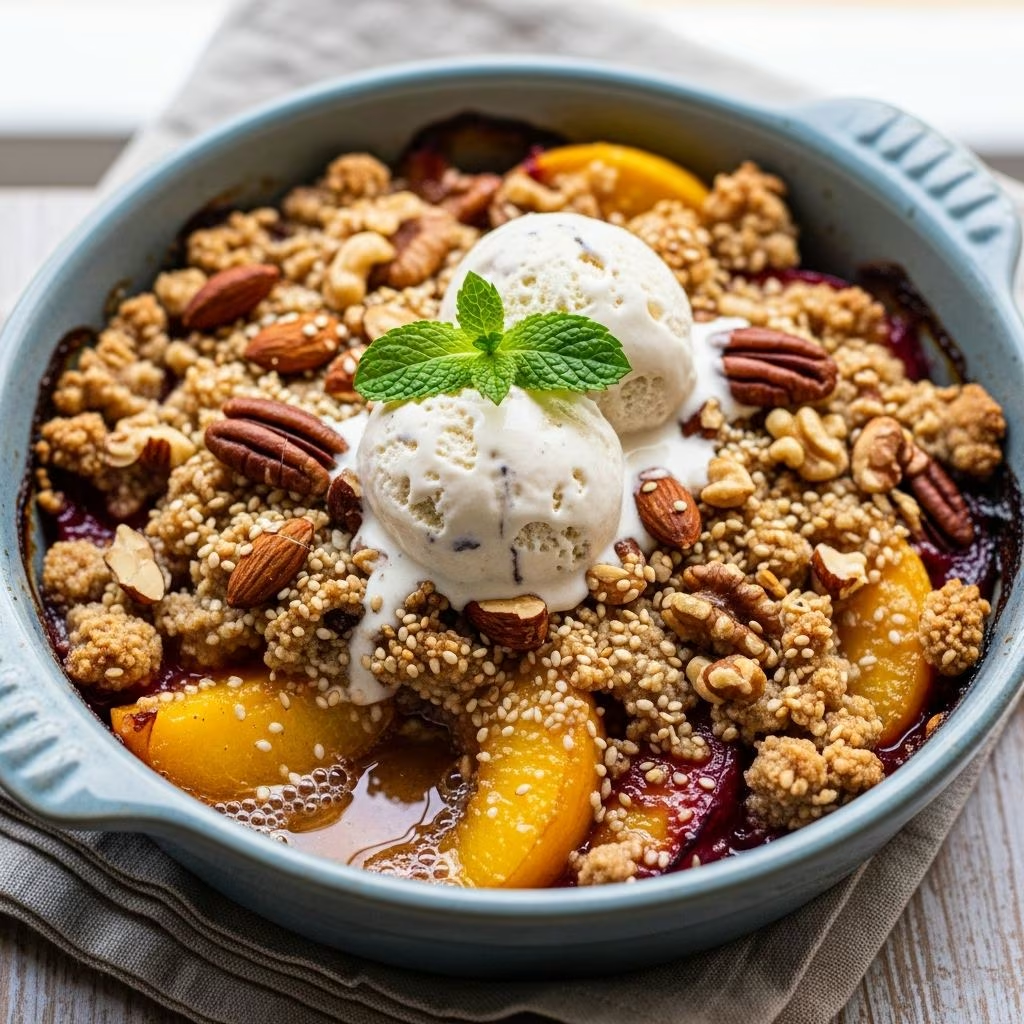
Transfer your prepared peaches to a baking dish, choosing a vessel that will showcase your beautiful work. A nine-inch ceramic dish, eight-by-eight-inch square pan, or even individual ramekins all work effectively. Distribute the peaches evenly, then scatter pieces of the crumble topping over the surface, using your hands to squeeze some portions into larger clusters while leaving other areas more loosely scattered.
Preheat your oven to 375 degrees Fahrenheit. Place the assembled crumble in the center of the oven and bake until the topping turns deep golden brown and the peach filling bubbles noticeably around the edges. Most crumbles require forty-five to seventy minutes depending on your oven’s characteristics and the depth of your filling. Begin checking for doneness at the forty-five-minute mark.
If the topping begins browning too quickly before the peaches have finished cooking and releasing their juices, tent the top loosely with aluminum foil to slow the browning while allowing steam to escape. Remove the foil in the final fifteen minutes if desired to achieve additional color.
Flavor Variations and Creative Adaptations
While the classic combination of peaches with white sesame seeds creates an elegant dessert, numerous variations expand the possibilities:
- Black Sesame Addition: Substitute half the white sesame seeds with black sesame seeds for a more dramatic appearance and slightly earthier flavor profile. Black sesame has a distinctive taste that some find more complex than white sesame.
- Umami Depth with Miso: Add one tablespoon of white miso to the crumble topping, which introduces subtle umami notes that deepen the overall flavor complexity without creating an overtly savory result.
- Spice Integration: Include ground cinnamon, cardamom, or ginger in the topping mixture. These warm spices enhance both the peach and sesame flavors while adding aromatic interest.
- Nut Combinations: Incorporate chopped walnuts, pistachios, or almonds into the crumble topping alongside the sesame seeds for added textural variety and complementary flavors.
- Oil Infusions: Use toasted sesame oil in place of a small portion of the butter for intensified sesame flavor, though use sparingly as the oil can overwhelm other ingredients.
Serving Suggestions and Timing
Serve the crumble warm, ideally within thirty minutes of coming from the oven. At this temperature, the contrast between the warm fruit filling and the crispy topping achieves maximum impact. A generous scoop of premium vanilla ice cream, crème fraîche, or lightly whipped cream provides a cooling counterpoint that balances the warm spiced fruit.
Leftover crumble can be refrigerated for up to three days in an airtight container. Interestingly, some home bakers report that leftovers transform into an unexpectedly delightful breakfast treat, enjoyed cold or gently reheated with a cup of strong coffee.
Common Questions About Peach and Sesame Crumble
Can I prepare this dessert ahead of time?
Yes. Combine the dry crumble ingredients several hours in advance and store in an airtight container. Prepare the peach filling up to four hours before baking. Assemble and bake shortly before serving for optimal texture of the topping. Alternatively, assemble completely and refrigerate for up to four hours, then bake when ready, adding five to ten minutes to the baking time due to the cooler starting temperature.
What if I cannot find tahini?
Tahini contributes richness and creaminess but isn’t absolutely essential. Substitute with almond butter, sunflower seed butter, or even additional melted butter. The topping will be slightly less creamy but still delicious. For authentic sesame flavor, ensure you use high-quality sesame seeds toasted properly.
How do I know if my peaches are sufficiently ripe?
Ripe peaches yield gently to pressure when held in your palm and emit a sweet, fragrant aroma from the stem end. They should feel slightly heavier than their size suggests, indicating juice content. Avoid rock-hard peaches or those with no fragrance, as these will not develop proper flavor during baking.
Can I use frozen peaches?
Frozen peaches work in this application, though they typically release more liquid than fresh peaches. Thaw them completely and drain thoroughly before using. You may need to increase the cornstarch slightly to compensate for the additional moisture.
What baking dish size do you recommend?
A nine-inch round ceramic baking dish or eight-by-eight-inch square baking pan works ideally for most recipes. If using a smaller or larger dish, adjust baking time accordingly—smaller dishes may cook five to ten minutes faster, while larger dishes may require additional time for the filling to bubble properly.
Conclusion: Mastering an Elegant Dessert
Creating a peach and sesame crumble represents more than simply combining ingredients; it represents an opportunity to explore how diverse flavor profiles can enhance one another. By understanding the role of each component—from the carefully toasted sesame seeds to the precisely measured lemon juice—you develop skills applicable across numerous baking projects.
The beauty of this dessert lies in its accessibility to home bakers while maintaining enough sophistication for impressive entertaining. Whether you’re hosting an elegant dinner party or simply treating your family to something special on a summer evening, mastering this recipe opens doors to culinary confidence and creative exploration.
References
- Peach & Sesame Crumble — Bon Appétit. https://www.bonappetit.com/recipe/peach-and-sesame-crumble
- Sesame: Global Recipes + Stories of an Ancient Seed — Rachel Simons. Jewish Journal. https://jewishjournal.com/culture/food/384839/rachel-simons-sesame-seeds-and-peach-crumble/
- Sesame and Miso Peach Crumble — The Jewish Table/Substack. https://thejewishtable.substack.com/p/sesame-and-miso-peach-crumble