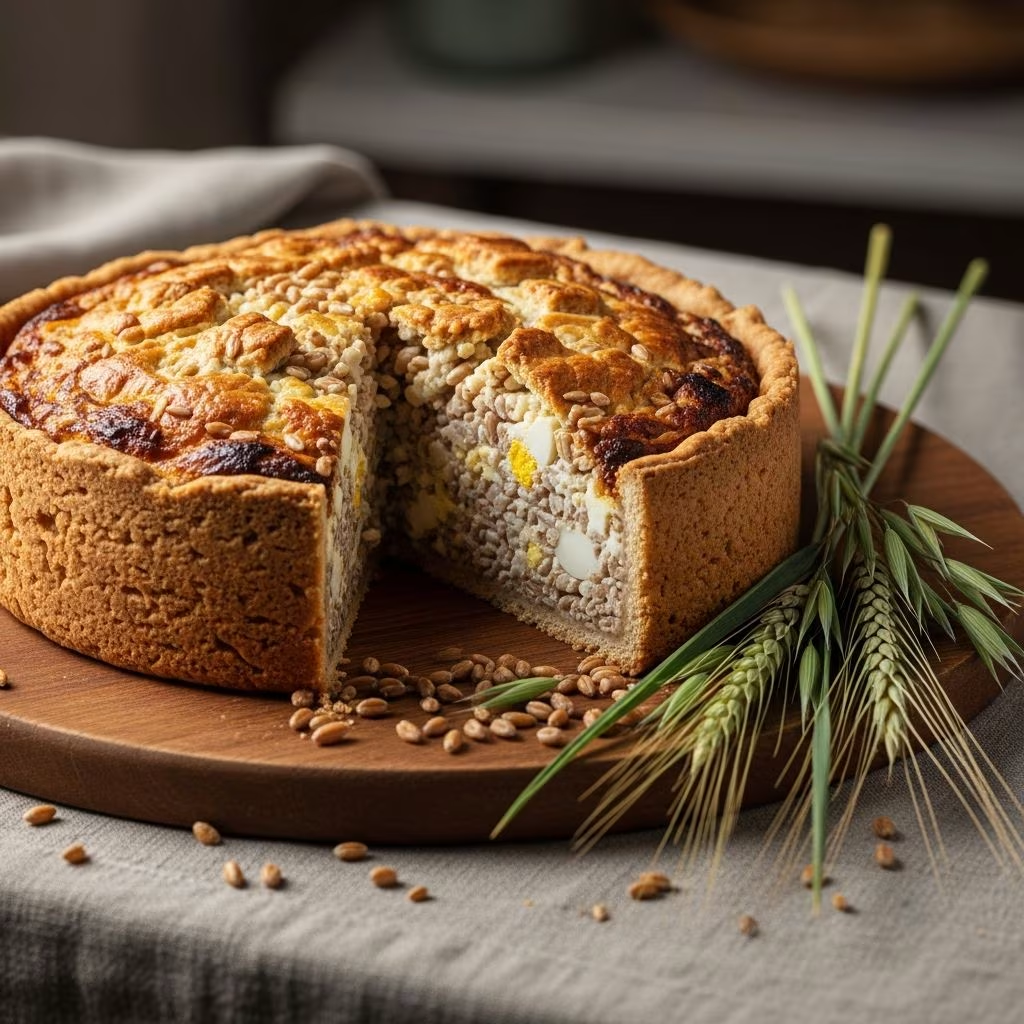
Easter Grain Pie, known as Pastiera Napoletana in its Neapolitan origins, stands as a symbol of renewal and celebration in Italian culture. This decadent dessert combines the earthy texture of cooked wheat berries with the smooth creaminess of ricotta cheese, accented by citrus zests and subtle spices. Families across Italy and Italian-American communities eagerly anticipate its appearance on Easter tables, where it represents spring’s bounty and spiritual rebirth.
The Cultural Roots of Easter Grain Pie
Originating from Naples, Pastiera traces its history to ancient agrarian rituals honoring Ceres, the Roman goddess of agriculture. Legend ties it to a miracle where a siren’s gift of wheat, eggs, and ricotta inspired the pie’s creation for Easter. Over centuries, it evolved into a staple, with each region adding unique twists like candied fruits or orange blossom water. In Italian-American households, it became a bridge to heritage, passed down through generations with personal adaptations.
Today, this pie embodies festivity, often baked in multiple batches for sharing. Its preparation, which can span days due to soaking grains, fosters family bonding, much like holiday cookie-making traditions elsewhere.
Essential Ingredients for Authentic Flavor
Crafting Easter Grain Pie requires quality components that balance sweetness, texture, and aroma. The foundation is grano cotto, pre-cooked wheat berries available in jars at Italian markets, offering a chewy, nutty base without hours of cooking.
- Wheat grains (grano cotto): 10-16 oz jar, simmered with milk and citrus zest for creaminess.
- Ricotta cheese: 2-3 lbs fresh, whole-milk variety, drained to remove excess moisture for a dense filling.
- Eggs: 4-9 whole eggs plus yolks, providing structure and lightness when beaten separately.
- Citrus elements: Zest from 1-2 lemons and oranges, plus optional orange blossom water or extract for floral notes.
- Sugar: 1-2 cups granulated, adjusted for sweetness without overpowering the ricotta.
- Crust dough: Flour, butter or shortening, eggs, sugar, and lemon zest for a tender, shortbread-like pastry.
- Optional add-ins: Candied citron, cherries, or cinnamon for varied texture and spice.
These ingredients harmonize: wheat adds earthiness, ricotta creaminess, eggs lift, and citrus brightens, creating a pie that’s rich yet refreshing.
Step-by-Step Guide to Preparing the Pie
Making Easter Grain Pie involves multiple stages: dough, grain preparation, filling, and assembly. Allow 1-2 days for best results, as flavors deepen when chilled overnight.
1. Prepare the Pasta Frolla Dough
This sweet, crumbly crust contrasts the lush filling. In a food processor or by hand, blend 2.5-4 cups flour, 0.5-2 cups sugar, 2-4 egg yolks, lemon zest, and 1-2 cups cold butter or shortening until dough forms. Chill for 1 hour or overnight. Divide into portions for bottom crust and lattice top.
2. Cook the Wheat Berries
If using dry wheat, soak 24 hours then boil until tender (45-60 minutes). For convenience, use a 560g jar of grano cotto. Simmer with 1 cup milk, 2-3 tbsp butter, citrus zests, and a pinch of sugar for 10-30 minutes until porridge-like and fragrant. Cool completely.
3. Make the Ricotta Filling
Drain ricotta thoroughly. Beat with sugar until smooth, then incorporate eggs (yolks first, whites whipped to stiff peaks and folded in last for airiness). Mix in cooled grains, vanilla or orange extract, cinnamon, and candied fruits. The filling should be thick and spoonable.
4. Assemble and Bake
Roll dough to line a 9-10 inch pan, add filling, and top with lattice strips. Bake at 350°F for 60-75 minutes until golden and set, with minimal jiggle in the center. Cool fully before dusting with powdered sugar.
| Method | Time | Texture | Best For |
|---|---|---|---|
| Jarred Grano Cotto | 10-30 min | Creamy, uniform | Beginners, quick prep |
| Dry Wheat Berries (soaked) | 24+ hrs soak + 45 min cook | Chewy, rustic | Traditionalists |
| Cooked Rice/Barley Sub | 30 min | Softer | Substitutes when unavailable |
Variations and Modern Twists
While traditional recipes stay true to Neapolitan roots, adaptations abound. Some skip candied fruits for chocolate chips or raisins. Gluten-free versions use almond flour crusts, and vegan ones swap ricotta for cashew cream with coconut milk-cooked grains. Mini tarts or muffin tin versions suit parties. For deeper flavor, refrigerate assembled (unbaked) pie overnight.
Regional differences shine: Sicilian versions lean heavier on cinnamon, while American ones might add more sugar. Experiment, but preserve the wheat-ricotta core.
Storage, Serving, and Pairing Suggestions
Freshly baked pie tastes best at room temperature after a night in the fridge, allowing flavors to meld. Store covered up to 5 days refrigerated; freeze slices for months. Serve plain or with espresso, vin santo, or limoncello to cut richness.
- Serving size: Cuts into 8-12 slices per 9-inch pie.
- Make-ahead: Filling and dough freeze well separately.
- Reheating: Warm slices gently in a 300°F oven.
Common Challenges and Pro Tips
Soggy crust? Blind-bake bottom for 10 minutes. Grain too tough? Extend simmering. Curdled filling? Use room-temp ingredients and fold whites gently. Drain ricotta overnight in cheesecloth for optimal texture. High-quality, fresh ricotta elevates the pie dramatically.
For lattice mastery, chill strips before weaving to prevent softening. If dough tears, patch with scraps—moisture from filling seals it during baking.
Frequently Asked Questions (FAQs)
Where can I find grano cotto?
Italian delis, online retailers like Amazon, or specialty stores stock it, especially pre-Easter. Sub with farro or pearl barley if needed.
Can I make Easter Grain Pie dairy-free?
Yes—use plant-based ricotta, coconut milk for grain cooking, and vegan butter in dough. Results approximate traditional taste.
How far ahead can I bake it?
Up to 3 days ahead; flavors improve. Freeze unbaked for up to 2 months, adding 10-15 bake minutes.
Is candied fruit necessary?
Optional but traditional for texture contrast. Dice finely or omit for purists.
Why is my pie watery?
Undrained ricotta or insufficient grain cooking. Press ricotta and cool grains fully before mixing.
Nutritional Insights and Serving Ideas
Per slice (1/12 of 9-inch pie): ~400 calories, high in protein from ricotta/eggs, calcium, and fiber from grains. Moderate indulgence for holidays. Pair with fresh berries or whipped cream for contrast, or serve as breakfast pastry post-Easter feast.
This pie’s allure lies in its layered flavors and heritage, making every bite a nod to tradition. Whether for Easter brunch or any gathering, it delivers joy in every creamy, citrus-kissed forkful.
References
- Making Italian American Easter Grain Pie Pastiera in the Cucina Quarantena — OrderISDA. 2020. https://orderisda.org/culture/our-recipes/making-italian-american-easter-grain-pie-pastiera-in-the-cucina-quarantena/
- Grain and Ricotta Pie — Lidia’s Italy. N/A. https://lidiasitaly.com/recipes/grain-and-ricotta-pie/
- Pastiera Napoletana – Pastiera di Grano – Easter Wheat Pie — Cooking with Nonna. N/A. https://cookingwithnonna.com/italian-cuisine/pastiera-napoletana-pastiera-di-grano-easter-wheat-pie.html
- Easter Grain & Ricotta Pie | Kitchen on the Cliff — YouTube (Giovanna Bellia). N/A. https://www.youtube.com/watch?v=wW8Ykw1evhI
- Pastiera Napoletana (Italian Easter Pie) — Marcellina in Cucina. N/A. https://www.marcellinaincucina.com/la-pastiera-for-easter-and-beyond/
- Pastiera Napoletana — Sip and Feast. N/A. https://www.sipandfeast.com/pastiera-napoletana/