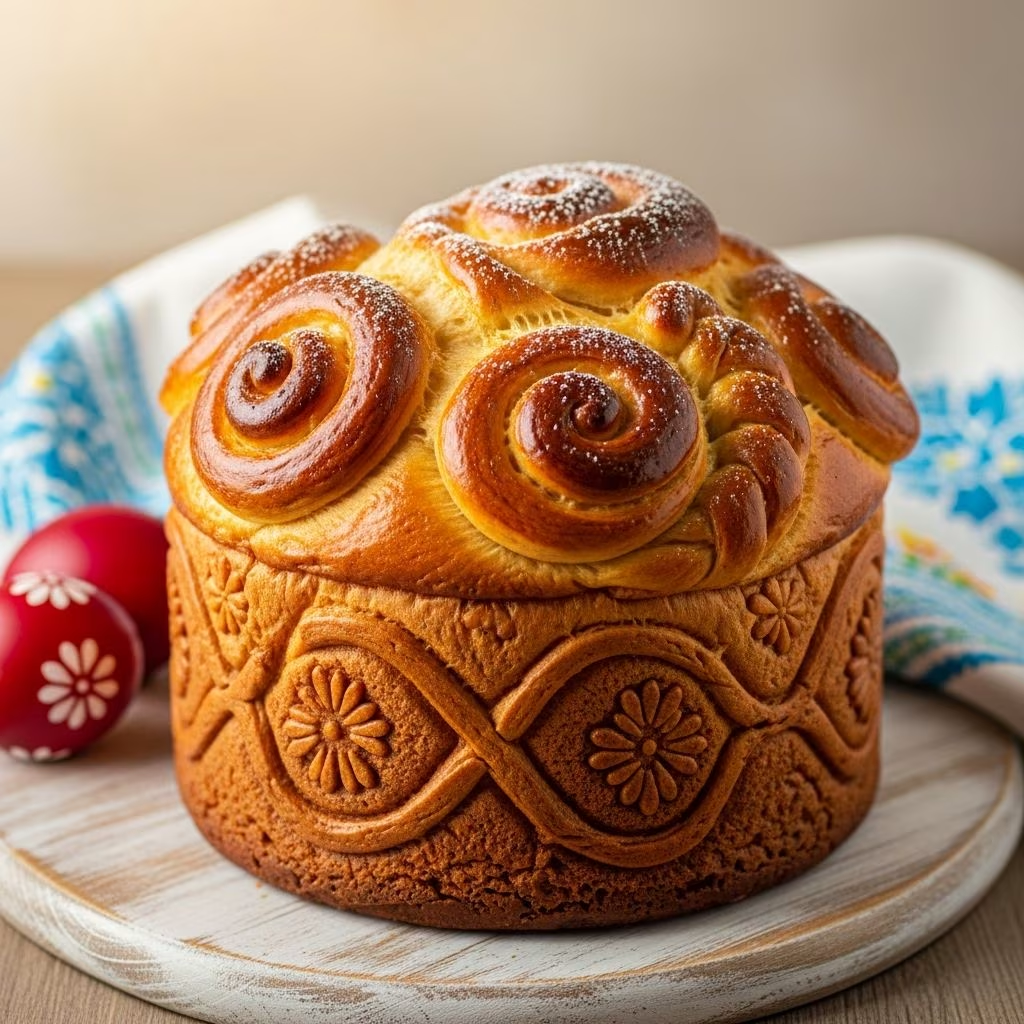
Golden, towering loaves of Paska Easter bread symbolize joy and resurrection in Eastern European cultures, particularly among Ukrainian and Slovak communities. This enriched yeast bread, subtly sweet and studded with raisins, rises dramatically in the oven, creating a dome of fluffy perfection ideal for breaking bread with family on Easter morning.
The Cultural Roots of Paska
Paska, also known as Slovak Easter bread or Ukrainian kulich in some regions, traces its origins to ancient Christian rituals where bread represented life’s renewal. Families prepare it days in advance, filling homes with the aroma of warm milk, butter, and yeast. In Slovakia, bakers form crosses from braided dough atop the loaves, evoking spiritual significance, while Ukrainian versions often incorporate citrus zest for a fragrant twist.
Passed down through generations, Paska recipes vary slightly by family, but core elements remain: a soft, pull-apart crumb from eggs and butter, a shiny crust from egg wash, and optional add-ins like golden raisins or slivered almonds. Today, it graces Easter tables alongside dyed eggs and smoked meats, bridging old-world customs with modern kitchens.
Essential Ingredients for Authentic Paska
Creating Paska starts with high-quality staples. The dough’s richness comes from full-fat dairy and fresh eggs, ensuring tenderness and height.
- Yeast: Active dry or instant, about 2¼ teaspoons (one packet), proofed in warm milk for reliability.
- Milk: Whole milk, 1-2 cups warmed to 100-110°F, activates yeast without scalding.
- Butter: Unsalted, softened or melted, ½ to 1 cup for brioche-like moisture.
- Eggs: 2-4 large eggs in the dough, plus one for egg wash, contributing structure and golden hue.
- Sugar: ⅓ to 1 cup granulated, balancing flavors without overpowering yeast.
- Flour: 4-6 cups all-purpose, sifted for lightness; bread flour adds chew if desired.
- Salt: 1-2 teaspoons to enhance taste and control fermentation.
- Add-ins: ½ cup golden raisins (plumped in warm water), vanilla extract, or orange zest for aroma.
These components yield 1-2 large loaves, scalable for crowds. Measure by weight for precision: 600g flour approximates 5 cups.
Step-by-Step Guide to Baking Paska
Baking Paska demands patience, with multiple rises building flavor and volume. Plan 4-6 hours total, mostly hands-off.
1. Proof the Yeast
Warm ½-1 cup milk to 100-110°F (microwave 30 seconds). Stir in 1-2 teaspoons sugar and yeast. Rest 5-10 minutes until foamy, confirming viability. Discard if inactive to avoid flat loaves.
2. Mix the Wet Base
In a stand mixer bowl or large vessel, combine remaining milk, softened butter, eggs, sugar, vanilla, and salt. Add proofed yeast. Whisk until smooth, creating an emulsified foundation.
3. Incorporate Flour and Knead
Gradually add 2 cups flour, mixing on low with dough hook. Continue with 2-4 more cups until a shaggy, sticky dough forms. Knead 5-8 minutes (machine) or 10 minutes (hand) to develop gluten—a smooth, elastic ball that passes the windowpane test (stretch thin without tearing). Add flour sparingly; dough should be tacky, not dry.
4. First Rise
Transfer to oiled bowl, cover with plastic or damp towel. Rise in warm spot (75-85°F) 1-2 hours until doubled. Poke test: indentation should slowly spring back.
5. Shape the Loaves
Gently deflate. Divide into 2-3 portions for 9-inch round pans (springform ideal for easy release). For tradition, reserve strands to braid crosses atop main balls. Place in greased pans; cover and rise 45-60 minutes near pan rims.
6. Bake to Perfection
Preheat oven 350-400°F. Brush with egg wash (1 egg + 1 tbsp water), sprinkle sugar. Bake 15 minutes high heat, reduce to 350°F for 25-35 minutes until 190°F internal, golden, and hollow-sounding when tapped. Tent foil if browning fast. Cool on rack before slicing.
Pro Tips for Flawless Paska Every Time
- Temperature Control: Too-hot milk kills yeast; use thermometer.
- Humidity Adjustments: Humid days need less flour; dry ones more.
- Make-Ahead: Refrigerate shaped loaves overnight for deeper flavor; bring to room temp before baking.
- Freezing: Bake, cool, wrap airtight; thaw overnight, refresh at 350°F 10 minutes.
- Troubleshooting: Dense loaf? Under-kneaded or old yeast. Pale crust? Weaker egg wash.
For shine, apply egg wash twice: pre-bake and midway.
Customizing Your Paska with Variations
Adapt Paska to tastes while honoring tradition.
| Variation | Add-Ins | Notes |
|---|---|---|
| Citrus Paska | 2 tsp orange zest, ¼ cup juice | Substitute ¼ cup milk; brightens flavor. |
| Nutty Delight | ½ cup slivered almonds or walnuts | Toast lightly; fold in post-first rise. |
| Chocolate Twist | ½ cup chocolate chips | Mini chips prevent sinking; modern favorite. |
| Spice Infusion | 1 tsp cardamom or nutmeg | To dough with sugar; evokes holiday warmth. |
| Vegan Option | Plant milk, vegan butter, egg replacer | Aquafaba for wash; rises similarly. |
Pairing Paska with Easter Feasts
Serve warm, slathered in butter or alongside pysanky eggs. In Ukrainian meals, it complements kovbasa sausage, horseradish, and babka cheese dessert. Slice thick for French toast or cube for bread pudding with rum custard.
Frequently Asked Questions
Why does my Paska sink in the oven?
Over-proofing causes collapse; rise until just puffy, not overflowing pans. High oven heat initially sets structure.
Can I use bread flour?
Yes, for chewier texture; mix 50/50 with all-purpose for balance.
How long does Paska keep?
2-3 days room temp in airtight; freezes 2 months.
Is instant yeast okay?
Absolutely; skip proofing, mix directly—reduces time by 10 minutes.
Gluten-free Paska possible?
Blend gluten-free flours with xanthan gum; expect denser result, add extra eggs for lift.
Nutrition Snapshot
Per slice (1/12 loaf): ~250 calories, 8g fat, 35g carbs, 6g protein. Enriched with eggs and dairy for nutrient density; moderate indulgence.
References
- Paska Easter Bread Recipe — Brown Eyed Baker. 2018-04-10. https://www.browneyedbaker.com/paska-bread-ukrainian-or-polish-easter-bread/
- Paska Bread (Easter Bread Recipe) — Meatloaf and Melodrama. 2023-03-20. https://www.meatloafandmelodrama.com/paska-bread/
- Paska Slovak Easter Bread — Cook Like Czechs. 2022-04-15. https://www.cooklikeczechs.com/paska-easter-bread/
- Paska (Ukrainian Easter Bread) — Stephie Cooks. 2021-04-02. https://www.stephiecooks.com/paska-ukrainian-easter-bread/
- Homemade Paska – Slovak Easter Bread — Nourish and Fete. 2020-04-10. https://www.nourish-and-fete.com/homemade-paska-slovak-easter-bread/