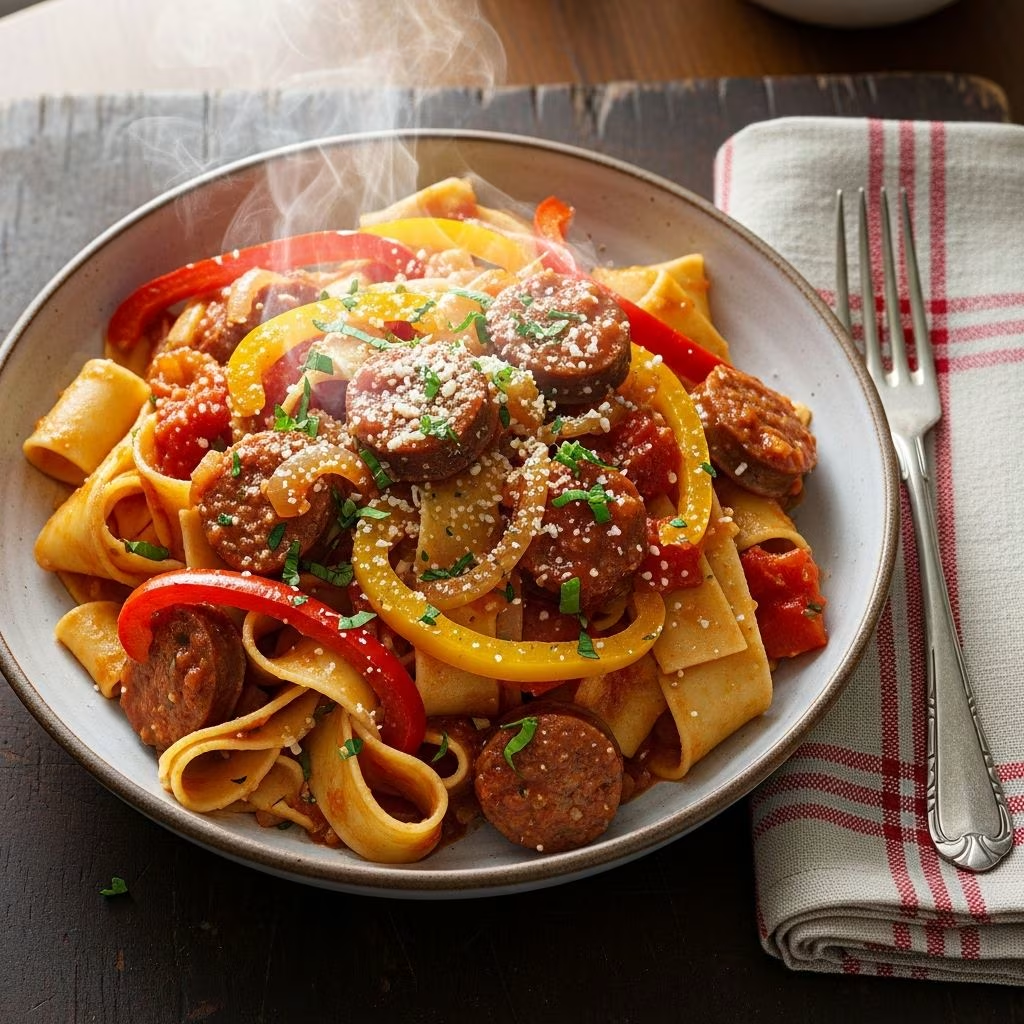
Pappardelle stands as one of Italy’s most beloved pasta shapes, recognized by its distinctive wide ribbons that gracefully capture rich sauces. This particular preparation, featuring Italian sausage and bell peppers, draws inspiration from the traditional recipes served in Bologna’s finest restaurants. The combination of tender pasta, seasoned meat, and caramelized vegetables creates a harmonious dish that celebrates Italian culinary traditions while remaining approachable for home cooks.
Understanding the Historical Origins
The roots of this dish trace back to a celebrated restaurant in Bologna, where chefs perfected the balance between savory sausage, vibrant peppers, and buttery pasta. The original preparation involved meticulous technique, with ingredients cooked separately before combining to create layers of flavor. Modern adaptations have streamlined this process while maintaining the essential character that makes this dish memorable. Understanding this heritage helps home cooks appreciate why certain ingredient selections and techniques matter when recreating this classic preparation.
Selecting Quality Ingredients for Maximum Flavor
The foundation of an excellent pappardelle dish begins with thoughtful ingredient selection. Each component contributes distinct flavors and textures that must work in concert.
Choosing Your Sausage
Italian sausage forms the protein backbone of this dish. Fennel-infused varieties offer subtle licorice notes that complement the peppers beautifully. When selecting sausage, look for products with high meat content and minimal fillers. Fresh sausage in casings provides superior flavor compared to pre-crumbled options. The fat content within quality sausage enriches the sauce naturally, creating glossy coatings that cling elegantly to each pasta ribbon.
Bell Pepper Selection and Preparation
Red and yellow bell peppers bring sweetness and visual appeal to this preparation. These varieties offer more refined flavors compared to green peppers, which tend toward herbaceous notes. When preparing peppers, remove seeds and white membranes completely, then cut into uniform pieces that will soften consistently during cooking. Consistent sizing ensures even caramelization and prevents some pieces from becoming mushy while others remain firm.
Pasta Specifications
True pappardelle features wide ribbons, typically three-quarters of an inch across. This width allows the pasta to hold sauce generously without becoming unwieldy to eat. Fresh pappardelle, when available, offers superior texture compared to dried varieties, though quality dried pappardelle produces excellent results. Budget approximately four ounces of dried pasta per person for main course servings.
Pantry Essentials
Extra-virgin olive oil serves as your cooking fat and should be of good quality, as its flavor will be noticeable in the finished dish. Tomato paste or fresh tomatoes provide acidity and depth. Fresh herbs—oregano and rosemary—add aromatic complexity that dried alternatives cannot replicate. Butter and Parmigiano-Reggiano cheese finish the dish with richness and umami intensity.
Preparation Techniques and Cooking Methods
This recipe follows a logical progression that builds flavor systematically. Understanding the reasoning behind each step improves your ability to adapt and troubleshoot as needed.
Initial Sausage Preparation
Begin by removing sausage from casings and breaking it into small pieces. Heat one tablespoon of olive oil in a large pot or Dutch oven over medium heat, then add the sausage. Cook for five to six minutes, breaking the meat into small chunks with a wooden spoon as it browns. Avoid high heat, which may burn the meat before it cooks through. Once lightly browned, remove the sausage to a clean plate and set aside. This step renders some fat from the sausage while developing initial flavor through browning.
Building Aromatic Base
Add the remaining two tablespoons of olive oil to the same pot and introduce finely diced yellow onion. Cook the onion over medium heat for approximately five minutes until it turns golden and begins releasing its natural sugars. This caramelization process sweetens the onion and creates flavor compounds that provide depth to the finished sauce.
Pepper Cooking Process
Add your prepared bell pepper pieces to the pot with the golden onion and season generously with kosher salt. Continue cooking for seven to eight minutes, stirring occasionally, until the peppers soften and their edges begin caramelizing. The salt draws moisture from the peppers initially, then helps them release this liquid as they soften, creating a concentrated vegetable base.
Tomato Integration
Combine tomato paste with water—approximately three tablespoons each—to create a smooth mixture, or use six tablespoons of tomato sauce as an alternative. Add this mixture to your peppers and onions, stirring to incorporate thoroughly. Include chopped fresh rosemary and oregano at this stage. The tomato provides acidity, which brightens flavors and prevents the dish from becoming too rich. Fresh herbs add aromatic complexity and freshness that cannot be replicated with dried alternatives.
Sauce Assembly and Simmering
Return the reserved sausage to the pot and reduce heat to low. Allow the sauce to simmer gently while you prepare the pasta, which should happen next. This gentle simmering allows flavors to meld and deepen without breaking down vegetables excessively or burning the bottom of the pot.
Pasta Cooking and Integration
While the sauce simmers, fill a large pot with water and bring it to a rolling boil. Salt the water generously—it should taste similar to seawater. Add pappardelle and cook until it reaches al dente texture, which typically requires eight to ten minutes for fresh pasta or twelve to fourteen minutes for quality dried pasta. Reserve one full cup of pasta water before draining. This starchy water becomes essential for creating the glossy sauce coating.
Combining Components
Transfer the drained pasta directly to the pot containing your sauce. Add one tablespoon of cold butter and one-third cup of freshly grated Parmigiano-Reggiano cheese. Toss gently but thoroughly to coat every strand with sauce and cheese. Begin adding reserved pasta water slowly, stirring continuously—start with approximately half a cup. The starch in this water emulsifies with the fat and cheese to create a silky, glossy sauce that clings to the pasta. Add additional pasta water gradually until you achieve the desired consistency; the sauce should be fluid but not soupy.
Service and Presentation Considerations
Plate the pasta while it remains hot, dividing it evenly among serving dishes. Top each portion with additional grated Parmigiano-Reggiano cheese and a light dusting of freshly cracked pepper. Serve immediately, as pappardelle’s delicate texture begins drying and losing its ideal consistency within minutes of plating.
Variations and Adaptations
While the classical preparation remains elegant in its simplicity, several variations offer interesting alternatives. Some preparations incorporate mushrooms, which add earthiness and umami complexity. White button mushrooms and crimini varieties work particularly well, sliced and cooked until golden before combining with other components. Wine reduction can replace or supplement tomato products, with red wine adding depth and slight tannin structure. Fresh basil stirred in at the final moment provides brightness and herbaceous notes distinct from the woody character of rosemary and oregano.
Ingredient Substitution Guide
| Ingredient | Standard Option | Alternative Choices |
|---|---|---|
| Sausage Type | Fennel Italian sausage | Sweet Italian sausage, mild Italian sausage, or spicy varieties for heat |
| Bell Peppers | Red and yellow peppers | Orange peppers, or combination with red peppers only for deeper color |
| Tomato Component | Tomato paste plus water | Fresh crushed tomatoes or canned San Marzano tomatoes |
| Fresh Herbs | Oregano and rosemary | Thyme, marjoram, or basil depending on preference |
| Cheese | Parmigiano-Reggiano | Grana Padano or aged Pecorino Romano for more assertive flavor |
Frequently Asked Questions
Can I prepare this dish in advance?
The sauce can be prepared several hours ahead and refrigerated. Reheat gently over low heat while preparing fresh pasta. However, combining the pasta with sauce is best done immediately before serving, as pappardelle’s texture deteriorates if held in sauce for extended periods.
What if I cannot find fresh pappardelle?
Quality dried pappardelle produces excellent results, though cooking time extends by several minutes. Follow package directions for timing, testing for al dente texture a minute or two before the suggested time.
How do I prevent the sauce from breaking when adding pasta water?
Add pasta water gradually while maintaining gentle heat and constant stirring. The starch gradually emulsifies with fat and cheese. If the sauce breaks, remove from heat and whisk vigorously while adding a splash of cold milk to reset the emulsion.
Can this recipe serve more people?
This recipe scales proportionally. For six servings, multiply all ingredients by 1.5. For eight servings, double all quantities. Cooking time may increase slightly for larger batches.
What wine pairs well with this dish?
Medium-bodied red wines such as Barbera or Chianti complement the rich sausage and peppers beautifully. Lighter reds like Pinot Noir also work well, while white wines generally lack the structure to balance this hearty dish.
Storage and Reheating Instructions
Leftover sauce keeps refrigerated for up to three days in an airtight container. The finished pasta dish, however, should be consumed the same day it is prepared. To reheat sauce, warm gently in a pan over low heat, adding a splash of water if needed to restore consistency. Cook fresh pasta separately and combine with warmed sauce, adding a touch more butter and cheese to restore its luster.
Mastering the Technique
Creating exceptional pappardelle with sausage and peppers requires attention to several key principles. First, respect ingredient quality—superior sausage, fresh peppers, and authentic Parmigiano-Reggiano substantially impact the final result. Second, control heat carefully; moderate temperatures encourage proper browning and caramelization without burning delicate onions and garlic. Third, reserve pasta water before draining—this starchy liquid transforms into the glossy sauce that distinguishes restaurant-quality preparations from ordinary renditions. Finally, serve immediately while pasta maintains its ideal texture and temperature.
This classic Italian preparation rewards practice and refinement. Each repetition builds your intuition for timing, heat management, and seasoning adjustments. As you become comfortable with the fundamental technique, you can confidently explore variations and personal adaptations while maintaining the essential character that makes this dish timeless.
References
- Pappardelle with Sausage and Peppers — Harvest & Nourish. https://harvestandnourish.com/pappardelle-sausage-peppers/
- Pappardelle with Sweet Italian Sausage, Peppers, Onions, and Red Wine — Spices in My DNA. https://www.spicesinmydna.com/pappardelle-with-sweet-italian-sausage-peppers-onions-and-red-wine/
- Red and Yellow Pepper Sauce with Sausages — Classic Pasta Dishes. https://classicpasta.wordpress.com/2023/08/06/red-and-yellow-pepper-sauce-with-sausages/