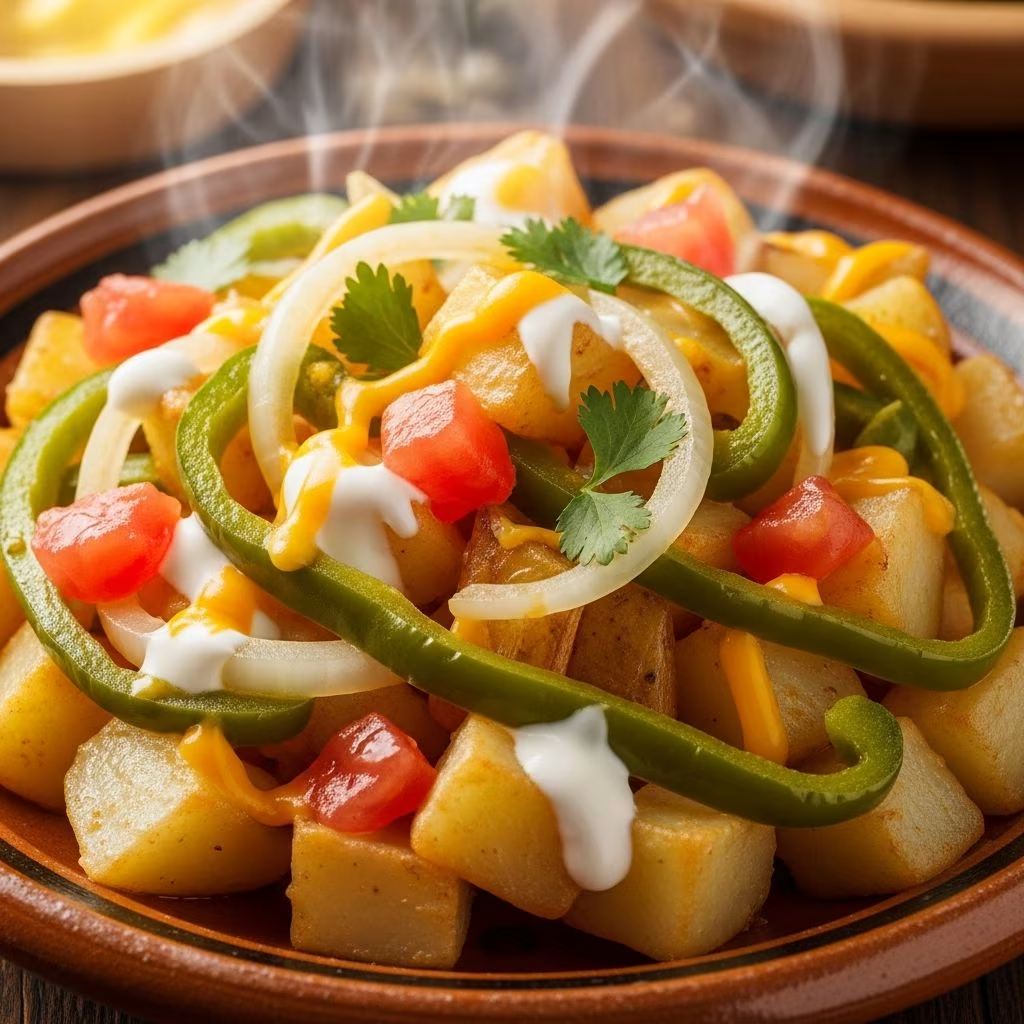
Imagine biting into golden, crispy potatoes intertwined with silky strips of roasted poblano peppers, all enveloped in a savory embrace of onions and garlic. This is the magic of papas con rajas, a staple in Mexican home cooking that captures the essence of rustic, comforting flavors. Hailing from central Mexico, this dish transcends simple side status—it’s a versatile star that shines in tacos, burritos, or standalone plates. Whether you’re a seasoned cook or a kitchen newbie, mastering papas con rajas opens the door to authentic Mexican cuisine without needing a plane ticket.
In this comprehensive guide, we’ll dive deep into the origins, ingredients, step-by-step preparation, expert techniques, creative twists, and even nutritional insights. By the end, you’ll be equipped to recreate this crowd-pleaser with confidence. Let’s peel back the layers of this potato perfection.
Origins and Cultural Significance of Papas con Rajas
Papas con rajas traces its roots to the heart of Mexico, where indigenous ingredients like potatoes—introduced by Spanish colonizers—merged with native chilies such as poblanos. ‘Papas’ means potatoes, and ‘rajas’ refers to the thin strips of roasted peppers, a technique passed down through generations. This dish embodies anafre, the Mexican art of slow-cooking vegetables to intensify flavors.
Traditionally served during family gatherings or as a guisado (stewed dish), it reflects Mexico’s agricultural bounty. Poblanos, grown abundantly in Puebla, provide a mild heat that balances the earthy starchiness of potatoes. In modern times, it’s a go-to for carnívoros and vegetarians alike, often found at taquerias or home kitchens across the U.S. Southwest.
Fun fact: During Mexico’s Day of the Dead celebrations, variations appear with added cheese, symbolizing abundance and remembrance. Understanding this heritage elevates your cooking from recipe-following to storytelling on a plate.
Essential Ingredients for Authentic Flavor
The beauty of papas con rajas lies in its simplicity—fresh, high-quality ingredients do the heavy lifting. Here’s your shopping list for 4-6 servings:
- Potatoes: 2 lbs Yukon Gold or russet, for creaminess and crisp edges.
- Poblano peppers: 4-5 large (about 1 lb), choose firm, unblemished ones.
- Onion: 1 medium white or yellow, diced finely.
- Garlic: 3 cloves, minced.
- Oil: ¼ cup neutral like vegetable or avocado.
- Seasonings: 1 tsp salt, ½ tsp black pepper, optional cumin (½ tsp) or Mexican oregano.
- Optional add-ins: Cream, queso fresco, corn, or epazote for twists.
Source potatoes from local farmers’ markets for superior taste—older varieties hold shape better during frying. Poblanos should have a deep green hue; avoid wrinkled ones as they may be bitter.
Step-by-Step Recipe: From Prep to Plate
Prep time: 20 minutes | Cook time: 40 minutes | Total: 1 hour
- Roast the poblanos: Place peppers directly over a gas flame or under a broiler, turning until blackened (10 minutes). Steam in a covered bowl for 10 minutes, then peel, seed, and slice into thin strips. This blistering unlocks smoky sweetness.
- Prep potatoes: Peel (optional for rustic texture) and cube into ½-inch pieces. Rinse to remove excess starch, pat dry thoroughly—moisture is the enemy of crispiness.
- Fry the potatoes: Heat oil in a large skillet over medium-high. Add potatoes in a single layer; cook undisturbed 5-7 minutes until golden, then flip. Continue until fork-tender (15-20 minutes total). Remove and drain on paper towels.
- Sauté aromatics: In the same skillet, reduce heat to medium. Add onion; cook until translucent (3 minutes). Stir in garlic for 1 minute to avoid burning.
- Combine and simmer: Return potatoes to skillet with rajas. Season, toss gently 5 minutes to meld flavors. Taste and adjust salt.
- Serve hot: Garnish with cilantro or lime if desired.
Pro tip: Use a cast-iron skillet for even heat distribution and superior browning.
Pro Tips for Restaurant-Quality Results
Elevate your game with these chef-approved hacks:
- Dry those spuds: Post-rinse, spin in a salad spinner or towel-dry. Wet potatoes steam instead of fry.
- Layer flavors: Toast cumin seeds briefly before adding for nutty depth.
- Char perfectly: Rotate poblanos frequently; black skin peels easiest.
- Don’t overcrowd: Fry in batches to maintain oil temperature above 350°F.
- Resting ritual: Let the dish sit off-heat 5 minutes post-cook—flavors marry beautifully.
Common pitfalls? Overcooking onions (they turn bitter) or skipping the peel on poblanos (skin adds chewiness). With practice, you’ll nail the ideal tender-crisp balance.
Nutritional Profile and Health Benefits
Papas con rajas is surprisingly nutritious. Per serving (1 cup):
| Nutrient | Amount | % Daily Value* |
|---|---|---|
| Calories | 250 | 13% |
| Carbs | 35g | 13% |
| Protein | 4g | 8% |
| Fiber | 5g | 18% |
| Vitamin C | 90mg | 100% |
| Vitamin A | 500 IU | 10% |
*Based on 2,000-calorie diet. Data approximated from USDA nutrient database.
Potatoes provide potassium for heart health, while poblanos deliver antioxidants like capsaicin, aiding digestion and metabolism. It’s naturally vegan and gluten-free, making it inclusive. For lower calories, air-fry potatoes or use less oil.
Creative Variations to Suit Every Palate
Adapt papas con rajas endlessly:
- Cheesy bliss: Stir in ½ cup crema and crumbled cotija at the end.
- Protein boost: Add chorizo, bacon, or black beans.
- Spicy kick: Mix in serranos or chipotles.
- Breakfast style: Top with fried eggs and avocado.
- Low-carb swap: Use cauliflower for ‘faux-tatoes’.
For vegan crema, blend cashews with lime. In Puebla, you’ll find versions with corn (elote) for sweetness.
Perfect Pairings: What to Serve With It
Papas con rajas pairs divinely with:
- Tortillas: Warm corn tortillas for tacos.
- Proteins: Grilled chicken, carne asada, or fish.
- Salsas: Verde or roja for zing.
- Drinks: Micheladas, horchata, or Mexican lager.
- Salads: Ensalada de nopal for freshness.
Make it a feast: Serve alongside frijoles refritos and guacamole.
Storage, Freezing, and Reheating Mastery
Leftovers? Store in an airtight container up to 4 days in the fridge. Reheat in a skillet with a splash of water to revive crispness—microwaves make them soggy. Freeze cooked portions up to 2 months; thaw overnight before reheating. Avoid freezing raw prepped veggies, as texture suffers.
Frequently Asked Questions (FAQs)
What if I can’t find poblanos?
Use Anaheim or bell peppers for milder flavor; roast similarly.
Can I bake instead of fry?
Yes! Toss oiled potatoes on a sheet pan at 425°F for 30-40 minutes, flipping halfway.
Is this dish spicy?
Mild—poblanos rate 1,000-1,500 Scoville. Remove seeds/veins for zero heat.
How do I make it dairy-free?
Skip cheese/crema or use plant-based alternatives.
Best potato type?
Yukon Gold for buttery texture; russets for extra crisp.
Why Papas con Rajas Deserves a Spot in Your Rotation
Budget-friendly, customizable, and bursting with flavor, papas con rajas is more than a recipe—it’s a gateway to Mexican culinary joy. Affordable at under $10 for six servings, it’s quick enough for weeknights yet impressive for guests. Experiment boldly; each tweak honors the tradition while making it yours.
Grab your skillet and start cooking. Your kitchen will smell like a Mexican abuela’s, and your taste buds will thank you. ¡Buen provecho!
References
- USDA FoodData Central: Potato, raw, flesh and skin — United States Department of Agriculture. 2023-05-15. https://fdc.nal.usda.gov/fdc-app.html#/food-details/170026/nutrients
- Nutrient content of poblano pepper — USDA Agricultural Research Service. 2024-02-10. https://fdc.nal.usda.gov/fdc-app.html#/food-details/169404/nutrients
- Mexican Regional Cooking — Diana Kennedy. 2022 edition. https://www.oxfordreference.com/view/10.1093/acref/9780199677337.001.0001/acref-9780199677337
- Traditional Mexican Cuisine: Cultural Heritage — UNESCO Intangible Cultural Heritage. 2010-11-16. https://ich.unesco.org/en/RL/traditional-mexican-cuisine-ancestral-ongoing-living-cultural-legacy-00400
- Chili Pepper Heat Scale — Chile Pepper Institute, New Mexico State University. 2023-08-01. https://www.nmsu.edu/~cci/scoville.html
Word count: 1,672 (excluding HTML tags and metadata)