Panna cotta stands as one of the most elegant yet deceptively simple desserts in the culinary world. This Italian delicacy, whose name translates to \”cooked cream,\” has captivated diners for generations with its luxurious texture and versatile flavor profile. Despite its sophisticated appearance and refined taste, creating this dessert at home requires only basic ingredients and straightforward techniques. Understanding the fundamentals of panna cotta preparation empowers both novice and experienced cooks to produce consistently excellent results.
Understanding the Essence of Panna Cotta
At its core, panna cotta represents the pinnacle of culinary simplicity transformed into elegance. The dessert consists primarily of heavy cream, sugar, and a gelling agent—traditionally gelatin—combined with various flavorings. What makes panna cotta remarkable is how these humble components unite to create a texture that is simultaneously creamy, light, and cloud-like on the palate. The dessert occupies a unique position between a pudding and a mousse, offering a delicate wobble when plated and a silken mouthfeel that dissolves almost instantly.
The beauty of panna cotta extends beyond its texture to its remarkable adaptability. Whether served as a standalone dessert or as the foundation for elaborate plated presentations, panna cotta accommodates virtually any flavor profile imaginable. From classic vanilla and espresso to exotic combinations featuring passion fruit, cardamom, or lavender, this dessert serves as a blank canvas for culinary creativity.
Essential Ingredients and Their Roles
Creating authentic panna cotta begins with sourcing high-quality ingredients, each of which plays a critical role in achieving the desired final product.
Heavy Cream and Dairy Components
The foundation of panna cotta relies entirely on cream quality. Heavy cream with a fat content between 36-40% produces the most luxurious results, creating a dessert that is both rich and refined. Some variations incorporate additional dairy elements such as whole milk, which can lighten the texture, or mascarpone, which adds subtle tang and complexity. The choice between pure cream and cream-based combinations depends on personal preference and the desired final consistency. Selecting dairy products from reputable sources ensures consistent protein content, which contributes to proper gelling and texture development.
Gelatin: The Binding Agent
Gelatin serves as the structural component that transforms liquid cream into a spoonable, elegant mousse-like dessert. Both sheet gelatin and powdered gelatin produce excellent results, though they require slightly different handling. Sheet gelatin, also called leaf gelatin, offers more precise control over the gelling process and produces a cleaner taste profile. Powdered gelatin, more readily available in most kitchens, requires blooming in cool liquid before incorporation. The concentration of gelatin determines the firmness of the final product—too much creates an unpleasantly rubbery texture, while insufficient amounts result in a dessert that fails to hold its shape.
Sweeteners and Flavor Foundations
Sugar provides not only sweetness but also contributes to the mouthfeel and texture of panna cotta. The quantity of sugar should be carefully calibrated to complement rather than overwhelm accompanying flavors. Complementary ingredients such as vanilla extract, espresso powder, fruit purees, or liqueurs add complexity and personalization to the basic formula. When incorporating alcohol, recipes typically call for modest quantities—just enough to enhance flavor without compromising the gelling process.
Fundamental Techniques for Preparation
Tempering and Blooming Strategies
The initial stages of panna cotta preparation establish the foundation for success. When using powdered gelatin, the blooming process—mixing gelatin with cold liquid and allowing it to absorb moisture—prevents lumping when the gelatin subsequently melts. This step requires patience; premature combination of gelatin with hot liquid results in uneven dissolving and potential texture problems. Sheet gelatin requires a different approach: brief soaking in ice-cold water followed by careful squeezing to remove excess moisture before addition to warm cream.
Heating and Dissolution Protocol
The cream mixture is traditionally warmed gently, just until steam begins to rise and the surface shows small bubbles around the edges. This temperature, typically around 160-170°F (71-77°C), proves sufficient to infuse flavoring elements and begin the dissolving process. Once the cream reaches this point, the bloom gelatin is introduced gradually while stirring continuously. Proper stirring ensures even distribution and prevents the formation of gelatin clumps that persist despite subsequent straining.
Straining for Pristine Texture
After combining all components, passing the mixture through fine mesh strainers or cheesecloth removes any undissolved particles, spice fragments, or textural irregularities. This single step dramatically improves the final mouthfeel and appearance, producing the signature smooth, glossy finish that distinguishes professional-quality panna cotta. Many experienced practitioners perform multiple strainings to achieve optimal clarity and texture.
Cooling and Setting Progression
Patience defines the chilling phase. Allowing the mixture to cool to room temperature before refrigeration prevents thermal shock and potential separation issues. The dessert is then transferred to serving vessels or molds and refrigerated for a minimum of four hours, though overnight refrigeration ensures complete, stable gelling. This unhurried process allows the gelatin network to form gradually and evenly throughout the mixture.
Troubleshooting Common Preparation Issues
| Problem | Likely Cause | Solution |
|---|---|---|
| Grainy or separated texture | Overheating cream or inadequate straining | Heat cream more gently and strain multiple times |
| Excessively firm, rubbery consistency | Excessive gelatin concentration | Reduce gelatin by 25-30% in future batches |
| Panna cotta fails to set | Insufficient gelatin or acid content interferes | Verify gelatin quantity and reduce acidic ingredients |
| Unpleasant metallic taste | Gelatin quality issues | Switch to premium gelatin brands |
| Surface develops skin during cooling | Exposed to air during refrigeration | Cover with plastic wrap before chilling |
Creative Flavor Variations and Combinations
The versatility of panna cotta permits endless exploration of flavor possibilities. Classic interpretations maintain traditional simplicity, while contemporary approaches embrace bold, unexpected combinations.
Traditional and Time-Honored Variations
Vanilla panna cotta remains the quintessential expression of this dessert, showcasing the textural qualities that define the category. Espresso and coffee variations introduce subtle bitterness that balances the richness of cream. Chocolate-infused versions, made by incorporating melted dark chocolate or cocoa powder into the cream, offer depth and indulgence. These foundational variations serve as starting points for experimentation and personalization.
Fruit-Inspired Interpretations
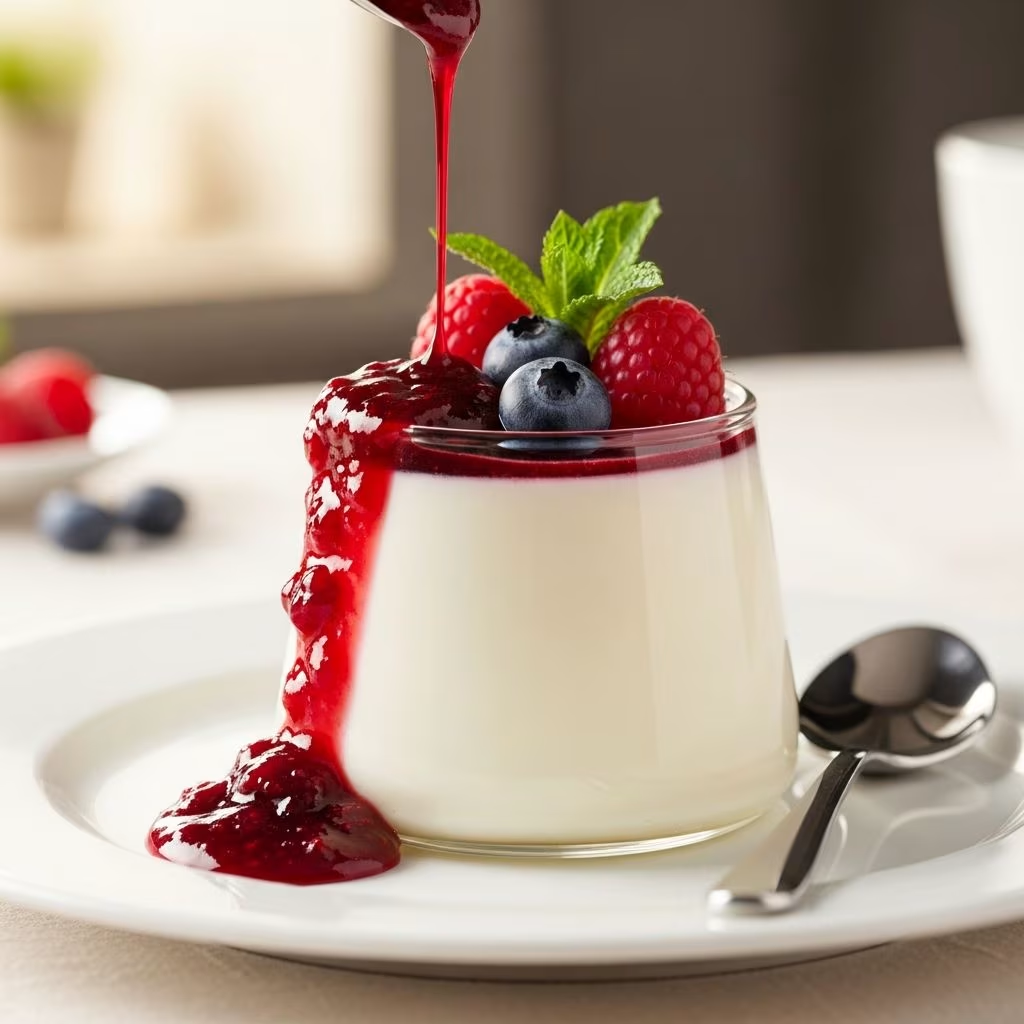
Pairing panna cotta with fruit introduces brightness and acidity that contrasts beautifully with cream richness. Raspberry coulis drizzled over vanilla panna cotta creates visual drama and tart complexity. Passion fruit curd layered with creamy panna cotta produces sophisticated multi-dimensional flavor experiences. Fresh berry compotes, citrus zests, and stone fruit reductions all contribute distinctive character to this adaptable dessert.
Spiced and Aromatic Approaches
Incorporating warming spices such as cardamom, cinnamon, or nutmeg transforms panna cotta into something unexpectedly sophisticated. Floral notes from lavender or rose water introduce delicate complexity. These variations showcase how traditional desserts can be reimagined through ingredient exploration while maintaining essential character and technique.
Presentation and Serving Recommendations
The visual presentation of panna cotta significantly impacts the dining experience. Traditional presentations include unmolding onto plates and garnishing with fruit, coulis, or candied accompaniments. Contemporary approaches often feature panna cotta served directly in glasses or bowls, layered with complementary components for visual interest and textural contrast. Careful attention to plating height, sauce placement, and garnish selection elevates even simple panna cotta preparations into memorable presentations.
Temperature considerations affect both flavor perception and texture experience. Serving panna cotta well-chilled but not frozen allows subtle flavors to emerge fully. Removal from refrigeration 5-10 minutes before serving permits the natural wobble to develop fully, contributing to the sensory experience that defines this dessert.
Storage and Make-Ahead Advantages
Panna cotta represents an exceptionally convenient dessert option for entertaining, as it must be prepared in advance. Properly made panna cotta maintains peak quality for up to three days when covered and refrigerated. This extended shelf life permits preparation several days before serving, reducing last-minute kitchen pressure. Certain components, such as fruit coulis or chocolate ganache, can be prepared even earlier, further streamlining the entertaining process.
Frequently Asked Questions
Can panna cotta be made without gelatin?
While gelatin represents the traditional gelling agent, substitutes including agar-agar, cornstarch slurry, or tapioca starch can produce acceptable results. These alternatives produce slightly different textures and require adjusted quantities, but permit adaptation for dietary preferences or allergies.
How does altitude affect panna cotta preparation?
High altitude cooking rarely significantly impacts panna cotta preparation, as the dessert relies on chemistry rather than the baking process. The primary consideration involves ensuring adequate gelatin concentration for reliable setting.
What is the optimal serving temperature?
Panna cotta achieves optimal flavor expression and texture when served between 40-45°F (4-7°C). This temperature maintains the silky texture while permitting subtle flavor notes to develop fully.
Can panna cotta be frozen successfully?
Freezing panna cotta significantly compromises texture, as the ice crystal formation destroys the delicate gel structure. Refrigeration remains the preferred preservation method.
How can dietary restrictions be accommodated?
Substituting gelatin with vegetarian or vegan gelling agents, using non-dairy cream alternatives, and adjusting sweeteners permits adaptation for virtually any dietary requirement.
References
- Gelatin: Properties and Applications in Food — Journal of Food Science and Technology, Springer Publishing. 2022. https://link.springer.com/article/10.1007/s13197-021-05202-5
- Cream and Dairy Protein Functionality in Dessert Systems — International Dairy Federation Technical Report. 2023. https://www.idf.org
- Temperature Control in Culinary Preparation — Food Science Institute, North Carolina State University. 2024. https://www.ncsu.edu
- Hydrocolloid Applications in Modernist Cuisine — Culinary Institute of America Professional Development Series. 2023. https://www.culinaryinstitute.edu
- Food Safety Guidelines for Dairy-Based Desserts — FDA Food Safety Modernization Act. 2024. https://www.fda.gov/food